

 News
News  Coin Information
  About us
  Customer Service


 Add as a preferred source on Google
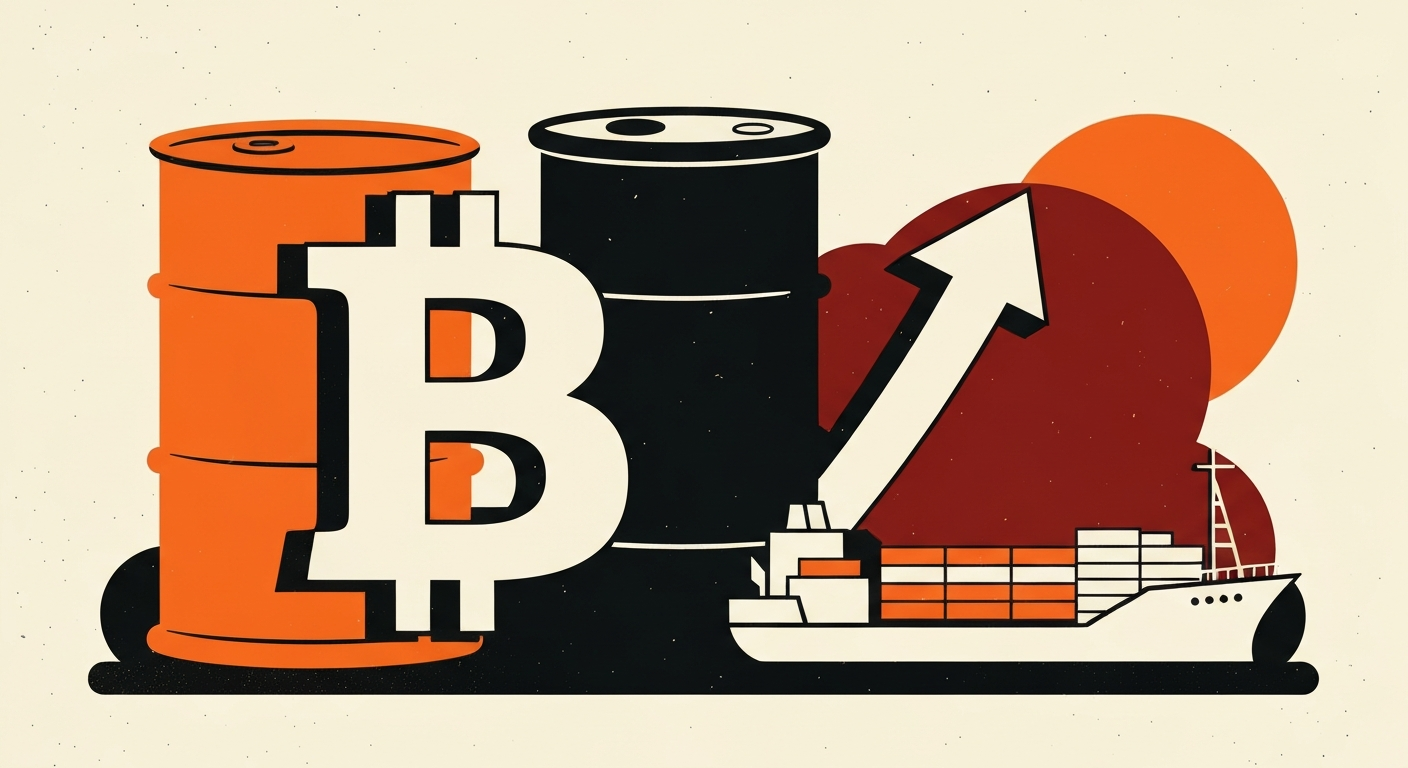
Europe’s push to safeguard shipping through the Strait of Hormuz is being read in Seoul as more than a late-arriving security initiative—it is a warning about what “autonomy” looks like when a nation lacks both hard-power readiness and monetary control in a world where finance has become a frontline tool.
On April 17 (UTC), the United Kingdom and France led a video conference hosted from Paris to rally support for an international effort framed around ‘freedom of navigation’ in the Strait of Hormuz. Leaders from Germany and Italy joined directly, and more than 50 countries—including South Korea—participated. Notably, the United States did not attend the meeting, even though Washington had been central to the preceding phase of the crisis, when U.S. and Israeli military action pressured Iran before de-escalation took hold.
The optics were hard to miss: as the guns fell silent, Europe moved in to organize the cleanup. Critics argue the initiative underscores a familiar imbalance—Europe seeking the dividends of stability while avoiding the costs of enforcing it. Earlier, when Washington sought greater European naval participation, major capitals were reluctant. Only after the immediate danger eased did flags appear, reinforcing perceptions of Europe’s limited operational capacity in an increasingly volatile geopolitical environment.
Germany’s reported contributions—mine countermeasure vessels, a replenishment ship, and surveillance aircraft—were viewed by analysts as underwhelming for Europe’s largest defense spender. With key frigates tied up in North Atlantic NATO missions, the episode revived an old question: where, exactly, has Europe’s vast defense budget translated into deployable capability? Defense contractors’ earnings and expanding bureaucracies may provide part of the answer, but the larger issue is Europe’s apparent difficulty converting awareness into reform.
Yet the most consequential development for global markets was not Europe’s military posture. It was the evolving architecture of U.S. power—where control over physical chokepoints is paired with increasing leverage over digital money flows.
On April 23 (UTC), Tether, the issuer of Tether (USDT), said it worked with the U.S. Treasury Department’s Office of Foreign Assets Control (OFAC) to freeze approximately $344 million worth of USDT across two wallets on the TRON network. The action was described as the largest single enforcement freeze in Tether’s history. U.S. Treasury Secretary Scott Bessent publicly framed the move as part of an ‘Economic Fury’ operation aimed at systematically degrading Iran’s ability to raise, move, and repatriate funds.
The mechanism mattered as much as the message. This was not a SWIFT cutoff or a traditional bank-account seizure. It was an on-chain enforcement action executed through a dollar-pegged stablecoin—illustrating how the U.S. sanctions toolkit is extending beyond correspondent banking into blockchain-based settlement rails.
In practical terms, the episode highlighted a new dual-track model: U.S. naval power can help secure Hormuz, while ‘digital dollar’ instruments can constrict liquidity routes that adversaries might use to bypass conventional controls. Dollar supremacy, long rooted in oil trade settlement and later reinforced by payments infrastructure like SWIFT, is increasingly being operationalized through stablecoins—where issuers can freeze assets and compliance can be coordinated with regulators at speed.
For countries exploring ‘de-dollarization,’ the implication is uncomfortable. If stablecoins were viewed as an alternative pathway around traditional banking chokepoints, the Tether freeze suggests that route may be narrower than assumed when the underlying asset and issuer remain connected—directly or indirectly—to U.S. jurisdiction and enforcement influence.
South Korea’s exposure is uniquely acute. Roughly 95% of the crude oil South Korea imports passes through the Strait of Hormuz, making energy security structurally dependent on U.S.-backed stability in the region. That reliance is not new. What is new, observers argue, is the emergence of a second dependency axis: dollar stablecoins as a de facto base layer of crypto liquidity and settlement in the domestic market.
USDT and USD Coin (USDC) are widely used across exchanges, OTC desks, and cross-border crypto transactions. But the Iran-related freeze reinforced a blunt reality: once funds sit in a dollar stablecoin, they can fall within the effective reach of U.S. sanctions policy. If OFAC designates an address or linked entity, wallets can be frozen rapidly. The logic applied to Iran could, in principle, be applied to other regions, disputes, or policy priorities—turning stablecoin liquidity into a ‘geopolitical lever’ as much as a market utility.
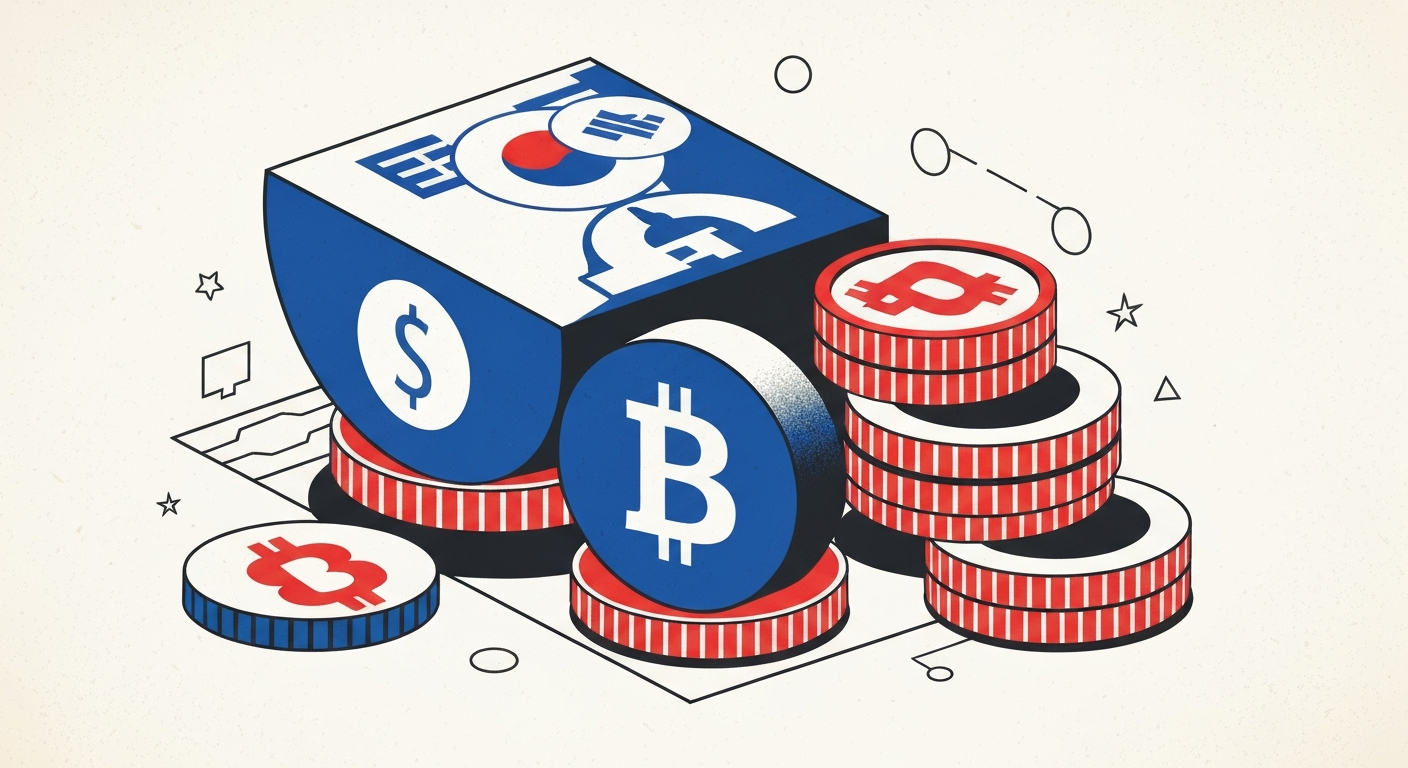
This convergence—physical energy flows and digital money flows both constrained by U.S. control—has intensified debate in Seoul about ‘digital currency sovereignty.’ The argument is not simply about fintech convenience. It is about ensuring that Korea’s currency, the won, has a viable legal and technical pathway for digital circulation under domestic rules, rather than defaulting to dollar instruments for blockchain-based finance.
Policy advocates say the answer is clear: South Korea needs to accelerate legislation enabling a ‘won stablecoin’ framework. Without it, they warn, Korean users and firms will continue deepening reliance on dollar stablecoins, and the longer that pattern persists, the harder it becomes for won-based digital settlement to compete. Market participants also point to a competitiveness risk, as crypto and fintech projects may prefer jurisdictions with clearer licensing regimes and more predictable compliance environments.
Regional peers are already moving. Hong Kong has advanced stablecoin issuer licensing structures, while Singapore is pursuing regulatory changes that would allow banks to treat certain blockchain-based crypto assets as eligible holdings under updated prudential standards. As Asia’s financial hubs raise their pace, Korea’s drawn-out parliamentary deliberations are increasingly viewed as a strategic delay, not merely administrative friction.
The Hormuz episode delivered a broader lesson: autonomy without preparation is not autonomy. Europe’s credibility took a hit for arriving after the decisive phase of conflict. Korea, analysts argue, should avoid a similar fate—discovering too late that it lacks the tools to protect critical economic lifelines, whether they run through a maritime chokepoint or across a blockchain ledger. In a market era where dollar stablecoins can function as instruments of statecraft, Seoul’s debate over won-denominated stablecoins is shifting from innovation policy to national resilience.








Comment 0