

 News
News  Coin Information
  About us
  Customer Service


 Add as a preferred source on Google

The U.S. Treasury has sanctioned multiple cryptocurrency wallets allegedly linked to Iran and said it has frozen roughly $344 million in digital assets, underscoring Washington’s growing reliance on blockchain intelligence and stablecoin issuers to disrupt sanctions evasion.
According to Odaily, U.S. Treasury Secretary Scott Bessent said the department is tracking and blocking financial networks connected to the Iranian regime. Stablecoin operator Tether said it supported the U.S. government by freezing the assets held at two addresses, a move that highlights how centralized issuers can act quickly when enforcement actions target funds circulating on public blockchains.
Chainalysis, a leading blockchain analytics firm, assessed that the transaction behavior of the sanctioned wallets resembles on-chain flows historically associated with wallets tied to Iran’s Islamic Revolutionary Guard Corps (IRGC). U.S. authorities said blockchain analysis indicated the assets moved through intermediary addresses before interacting with wallets linked to Iran’s central bank, and that the funds were used in activity consistent with sanctions circumvention and the facilitation of international trade.
The enforcement action comes as estimates of Iran’s crypto holdings continue to draw attention. The report cited figures suggesting Iran’s cryptocurrency reserves were about $7.8 billion in 2025, with around half believed to be associated with the IRGC as of the fourth quarter of last year—an alleged concentration that, if accurate, would reinforce U.S. claims that digital assets can serve as a parallel financial rail for sanctioned actors.
In the U.S. market, Bitcoin (BTC) spot exchange-traded funds extended their recent streak of inflows. Odaily reported that on April 24 U.S. Eastern Time, the group recorded net inflows of $14.45 million, marking nine consecutive trading days of positive flows. BlackRock’s iShares Bitcoin Trust (IBIT) led the day with $22.88 million in net inflows, while MSBT drew $11.13 million. ARK 21Shares Bitcoin ETF (ARKB) posted the largest net outflow at $9.02 million.
Total net asset value across U.S. Bitcoin spot ETFs was reported at $102.64 billion, representing about 6.6% of Bitcoin’s total market capitalization, with cumulative net inflows of $58.56 billion. Market participants often treat ETF flows as a proxy for 'institutional demand'—and the persistence of net inflows has kept focus on near-term supply dynamics and liquidity conditions.
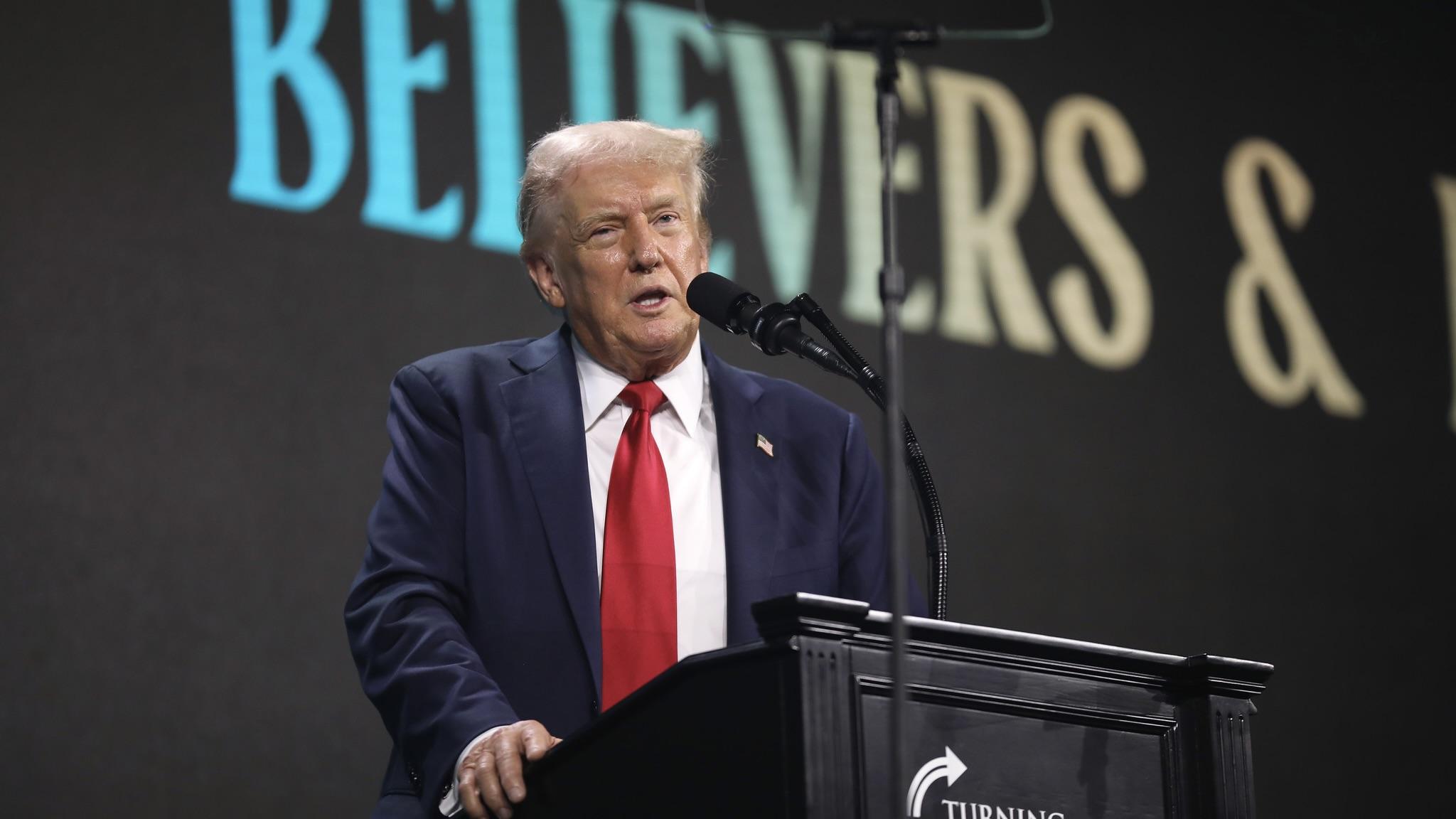
Policy signaling also remained in the spotlight. Journalist Pete Rizzo wrote on X that President Trump is scheduled to speak at a Bitcoin and digital asset conference at Mar-a-Lago. Observers view the appearance as another indication that crypto remains a live topic on Washington’s policy agenda, after Trump has repeatedly emphasized industry growth and the need for clearer rules.
Elsewhere, concerns mounted in Europe after reports that Polish crypto exchange Zondacrypto’s CEO Przemysław Kral left for Israel as the platform faces a potential insolvency. The episode could involve losses exceeding $100 million, with local reporting suggesting that approximately 99% of a purported Bitcoin reserve has disappeared. Wu Blockchain, citing Polish outlet Onet, said Kral may be difficult to extradite due to Israeli citizenship.
Kral has reportedly claimed he cannot access roughly 4,500 BTC, saying the private keys were held by the exchange’s founder, Sylwester Suszek. Suszek has been missing since 2022, and Polish prosecutors reportedly consider the possibility he was killed. Zondacrypto has halted withdrawals and management has stepped down, according to the report, while Polish authorities have opened criminal and financial investigations into reserve controls and potential customer asset losses.
In the U.S., Tennessee moved to ban crypto ATM operations statewide, a rare step amid a broader trend of tightening oversight. Odaily reported that Governor Bill Lee signed House Bill 2505, making Tennessee the second U.S. state after Indiana to impose a full ban. The law is set to take effect July 1 and classifies crypto ATMs as 'virtual currency self-service terminals.' Operating or installing one will be treated as a Class A misdemeanor, punishable by up to one year in jail and a $2,500 fine, and businesses that allow installation could also face liability.
Ethereum (ETH) spot ETFs also saw activity, though flows were mixed across products. Odaily reported total net inflows of $23.39 million on April 24 U.S. Eastern Time. BlackRock’s ETHB recorded the largest net inflow at $32.25 million, bringing its cumulative net inflows to the same amount, while BlackRock’s ETHA posted the largest net outflow at $7.71 million, taking its cumulative net outflows to $28.66 million. Total net assets across Ethereum spot ETFs were reported at $13.79 billion, about 4.91% of Ethereum’s market capitalization, with cumulative net inflows of $12.10 billion.
In DeFi, Aave DAO published a proposal to contribute 25,000 ETH to recovery efforts following the Kelp rsETH bridge incident. Wu Blockchain reported that the plan would allocate a fixed contribution from the Aave DAO treasury to support DeFi United’s ongoing remediation. The April 18 incident initially left an estimated shortfall of about 163,183 ETH, which has since narrowed to roughly 75,081 ETH after asset freezes and expected recoveries were factored in.
Support commitments totaling about 14,570 ETH have reportedly been secured so far, and Mantle has provided up to 30,000 ETH in credit. Under the proposal, additional donations would be prioritized toward repaying Mantle’s loan—an approach aimed at stabilizing the rsETH ecosystem and demonstrating coordinated industry response after high-impact infrastructure failures.
On-chain watchers also flagged potential short-term selling pressure after an early Ethereum ICO whale moved 10,000 ETH. PANews cited analyst AI Yi as saying the wallet transferred roughly $23.21 million worth of ETH to a multisig address (0x26c…B9392) after about a week of inactivity. The receiving address has reportedly served as an intermediary for large holders, with 12,001 ETH deposited to OKX via the address over the past two months. Analysts noted that in prior cases, ETH routed through the address often ended up on exchanges and was sold in batches.
Meanwhile, Mastercard ($MA) joined the Blockchain Security Standards Council (BSSC), a nonprofit consortium focused on developing and maintaining blockchain security standards, PANews reported. Mastercard is also expected to participate in BSSC’s security and privacy working group, contributing operational experience and technical input. The consortium’s participants reportedly include Figment, Coinbase ($COIN), Fireblocks, and Anchorage Digital, reflecting a broader push to formalize security baselines as traditional finance deepens its engagement with crypto infrastructure.
In Latin America, Brazil moved to ban prediction markets and related betting platforms, with Kalshi and Polymarket reportedly blocked in the country. Wu Blockchain said Brazil’s central bank cited concerns that the platforms do not comply with derivatives rules and could threaten investor protection and market integrity. Finance Minister Dario Durigan said the ban could cover around 28 platforms, extending Brazil’s crackdown on financialized betting services operating outside established regulatory frameworks.
🔎 Market Interpretation
- Sanctions meet stablecoins: The U.S. Treasury’s action against Iran-linked wallets and the reported freeze of ~$344M in digital assets signals an enforcement model increasingly dependent on blockchain forensics (e.g., Chainalysis tracing) plus centralized stablecoin issuers (e.g., Tether) that can freeze funds at the token level.
- Risk premium around “state-linked crypto” persists: Claims that Iran holds sizable crypto reserves (cited ~$7.8B, with a large share allegedly IRGC-related) reinforce the narrative that sanctioned entities may use crypto as an alternative settlement rail—supporting continued regulatory scrutiny of on/off-ramps and stablecoin flows.
- ETF flows remain a sentiment barometer: U.S. spot Bitcoin ETFs logged a ninth straight day of net inflows (+$14.45M), while spot Ethereum ETFs showed net inflows (+$23.39M) but with dispersion across products—suggesting selective positioning rather than one-way broad buying.
- Regulatory divergence accelerates: Tennessee’s statewide ban on crypto ATMs (effective July 1) contrasts with broader U.S. adoption trends, highlighting uneven state-level approaches as federal policy messaging (Trump conference appearance) stays active.
- Operational and counterparty risk in focus: The Zondacrypto insolvency allegations and missing reserves claims (potentially >$100M) underscore persistent exchange governance/custody risks—especially when private key control and reserve attestations are unclear.
- DeFi resilience through coordination: Aave DAO’s proposal to contribute 25,000 ETH toward rsETH bridge recovery illustrates how major protocols may increasingly act as backstops after infrastructure incidents, prioritizing system stability and repayment of emergency credit lines (e.g., Mantle).
- Short-term ETH supply overhang watch: Movement of 10,000 ETH by an early ICO whale to an address historically associated with exchange deposits raises near-term sell-pressure alerts for traders monitoring exchange inflows.
- TradFi security standardization advances: Mastercard joining BSSC reflects institutional push to formalize blockchain security/privacy baselines as traditional finance integrates deeper with crypto rails.
- Global compliance tightening: Brazil’s reported blocking of prediction markets (Kalshi/Polymarket) indicates regulators are increasingly treating these products as derivatives-like instruments requiring authorization and investor-protection controls.
💡 Strategic Points
- For exchanges, OTC desks, and custodians: Expect heightened screening around Iran-adjacent counterparties and stablecoin flows; strengthen exposure mapping to sanctioned clusters and intermediary addresses to reduce secondary-risk events.
- For stablecoin issuers and integrators: Freezing capability is a competitive compliance feature but also a centralization trade-off; clearly document freeze/appeal processes and address-level risk policies for enterprise partners.
- For investors tracking BTC/ETH: Use ETF net flows as a liquidity and positioning signal, but read product-level dispersion (IBIT/ETHB inflows vs. ARKB/ETHA outflows) to gauge rotation rather than macro “risk-on” alone.
- For DeFi protocols/DAOs: Bridge and LRT/LST ecosystem incidents can become systemic; consider pre-funded insurance, clearer incident playbooks, and coordinated recovery frameworks to preserve user confidence.
- For users: Exchange “reserve” claims are not substitutes for real-time solvency assurance—prioritize platforms with transparent custody controls, audits/attestations where applicable, and proven withdrawal reliability.
- For ATM operators and retail fintechs: Tennessee’s ban suggests a compliance reset—evaluate state-by-state licensing, fraud controls, disclosure requirements, and potential business model pivots away from physical kiosks.
- For prediction market platforms: Brazil’s block signals rising jurisdictional enforcement; proactive licensing strategy, geofencing, and product redesign (to avoid unlicensed derivatives characterization) may be necessary.
- For risk managers: Monitor whale-to-exchange pathways and known “intermediary” deposit addresses as short-horizon volatility catalysts, especially around major macro/regulatory headlines.
📘 Glossary
- Sanctions evasion: Attempts to bypass government restrictions on financial activity, often by routing funds through intermediaries or alternative payment rails.
- Stablecoin issuer freeze: A centralized stablecoin operator’s ability to block token transfers at specific addresses (e.g., due to legal orders or compliance policy).
- Blockchain analytics: Tools and methods (e.g., clustering, heuristics, attribution) used to trace on-chain transactions and link addresses to entities or behaviors.
- IRGC: Iran’s Islamic Revolutionary Guard Corps; frequently referenced in sanctions and illicit finance risk discussions.
- Spot ETF (Bitcoin/Ethereum): An exchange-traded fund designed to track the spot price of an asset by holding it directly rather than using futures.
- Net inflows/outflows (ETF): Daily net creation/redemption activity indicating whether capital is entering or leaving ETF products.
- Net asset value (NAV): The total value of an ETF’s holdings minus liabilities; a key measure of fund size.
- Crypto ATM / “virtual currency self-service terminal”: A kiosk enabling purchase/sale of crypto, often targeted by regulators due to fraud and consumer protection concerns.
- Bridge incident: A security or operational failure involving cross-chain bridges that can cause asset shortfalls or depegging events.
- DAO (Decentralized Autonomous Organization): A governance structure where token holders vote on proposals controlling treasury and protocol parameters.
- Multisig address: A wallet that requires multiple approvals (signatures) to authorize transactions, commonly used for treasury or institutional custody.
- Prediction markets: Platforms enabling trading on event outcomes; often regulated as gambling, securities, or derivatives depending on jurisdiction and structure.
- BSSC: Blockchain Security Standards Council, a consortium working on security standards and best practices for blockchain systems.














Comment 0