

 News
News  Coin Information
  About us
  Customer Service


 Add as a preferred source on Google
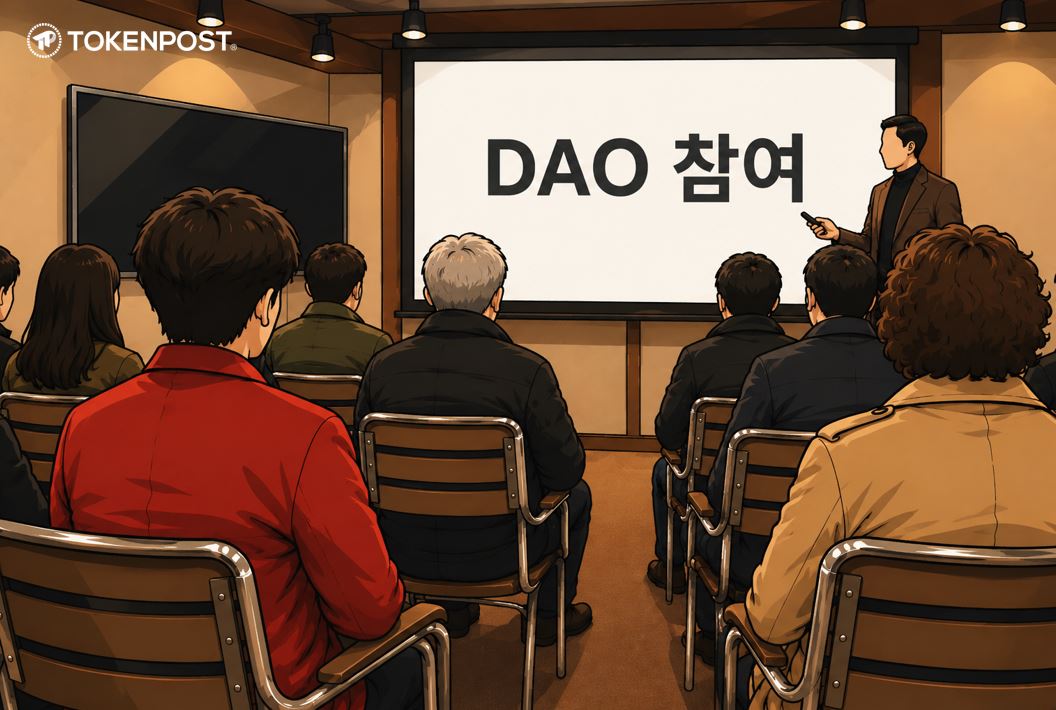
South Korean retail crypto circles are increasingly being pitched on a simple promise: join a ‘DAO’ and receive a share of ‘ecosystem revenue.’ But documents reviewed by TokenPost suggest that, in some cases, what is advertised as decentralized participation looks far more like a tiered sales structure—complete with rank tables, team-building targets, differential payouts, referral commissions, and vaguely defined “platform dividends.”
The distinction matters because a decentralized autonomous organization, or ‘DAO,’ has a specific meaning in the crypto industry. In widely cited Ethereum (ETH) documentation, a DAO is described as a collectively owned organization governed by blockchain-based rules, where members propose and vote on decisions and treasury spending is executed transparently—often via smart contracts. The core attributes are ‘member ownership,’ ‘transparent rules,’ and ‘collective decision-making.’
In the materials TokenPost obtained, however, governance mechanics are not front and center. Instead of questions like who can submit proposals, how voting power is calculated, what the treasury address is, whether decisions are verifiable on-chain, or whether administrators can unilaterally change rules, the first questions are sales-oriented: “How much do I need to deposit to reach a certain rank?” “How many people do I need to bring in to earn a percentage?” “What team volume is required for promotion?” and “How large is the dividend at higher levels?” In that framing, ‘DAO’ becomes less a governance model and more a marketing label that lends credibility to a recruitment-driven operation.
One circulated guide—titled “DAO daily mission guide”—goes further, describing coordinated behavior intended to influence market prices. The document’s messaging portrays participants not as passive investors but as actors “making the market,” a rhetorical pattern critics say is common in pyramid-style communities that attempt to normalize price manipulation as collective “leadership.”
When ‘community performance’ really means recruitment
A recurring phrase in the materials is ‘community performance,’ which on the surface implies contributions to a protocol or ecosystem. In practice, TokenPost says the term is often used to mean the number of new sign-ups, purchases made by downstream members, and total team sales volume.
The structure described in tipster documents follows a familiar pattern. An initial purchase or deposit above a threshold grants a base level. Additional ranks are unlocked as the participant recruits others and as the recruits’ purchases accumulate across a multi-layer network. Higher ranks then receive better payout rates, a larger share of platform revenue, enhanced “governance” privileges, or special bonuses.
In such a model, the most important activity is not deliberation or proposal-writing—it is expansion. Participants who think they are joining a governance community can quickly become informal sales agents, while the “community” functions as a performance scoreboard. TokenPost argues that if influence and rewards come primarily from capital size and recruitment metrics, the structure resembles a tiered sales network more than a DAO.
Referral commissions are the key inflection point
TokenPost notes that the most consequential dividing line is whether there are referral commissions tied to downstream activity. A straightforward token-holding and voting arrangement could plausibly be considered DAO participation. But when rewards scale based on recruiting sub-members—and on those members’ spending or activity—legal and regulatory considerations change.
Under South Korea’s door-to-door sales framework, regulators commonly examine whether a program has a hierarchical enrollment structure and whether it pays ‘sponsorship allowances’ to upstream participants who bring in new sellers or members. The name of the product—membership rights, participation slots, points, or tokens—does not necessarily resolve the issue if the economic reality is recruitment-driven compensation.
Not every referral program is inherently illicit; exchanges and apps often use referral links to acquire users. The concern escalates when the incentives expand into multi-level reward layers—such as 1st-, 2nd-, and 3rd-tier commissions—paired with concepts like team volume, small-group performance metrics, leader bonuses, and dividend-like profit sharing.
‘Platform dividends’ without a clear source
Another prominent talking point in the materials is ‘platform dividends’—the claim that as a platform grows, participants will share in its profits. TokenPost emphasizes that legitimate profit-sharing requires transparency around the source of funds. On-chain revenue should be traceable to known wallet addresses and fee flows, while off-chain revenue should be supported by corporate disclosures, accounting records, and clear payout rules.
In the cases highlighted, the claimed revenue source is often described in broad terms—“ecosystem revenue,” “platform growth profits,” “swap fees,” or “community reward pools”—without verifiable detail. By contrast, the recruiting incentives and rank conditions are presented with specificity. When inflows are opaque but recruitment rewards are explicit, TokenPost argues, participants should treat it as a warning sign.
‘Principal recovery’ and ‘guaranteed returns’ raise the stakes
Some promotional materials reportedly combine DAO language with promises such as ‘principal recovery,’ “daily payouts,” “monthly dividends,” profit-sharing, or gains after a future exchange listing. That kind of messaging can shift what is presented as community participation toward what resembles an investment solicitation.
South Korea’s law regulating quasi-deposit-taking restricts raising funds from the public without authorization while promising full repayment or repayment exceeding the original contribution. TokenPost notes that even if the scheme avoids words like “dividend” by using “rewards,” or replaces “principal” with euphemisms, the substance is what matters: whether participants are led to expect the return of their capital plus additional profit.
‘Overseas project’ defenses and domestic responsibility
A common defense in these cases is that the underlying project is “overseas,” and that domestic promoters are merely introducing it. TokenPost argues that this can create a responsibility gap: the official project may deny knowledge of local sales materials, while local recruiters portray themselves as unaffiliated marketers—leaving participants uncertain about who is accountable.
To assess responsibility, TokenPost highlights several practical questions: Are domestic promoters officially authorized? Are the rank and payout tables circulating in Korea official? And how directly did local recruiters assist with payments, wallet creation, token purchases, and referral-code registration?
These details matter because South Korea’s Act on Reporting and Using Specified Financial Transaction Information (often referred to as the ‘Specific Financial Information Act’) covers business activities involving the sale, purchase, exchange, transfer, custody, or management of virtual assets—or brokering and arranging such transactions. The Korea Financial Intelligence Unit (KoFIU) has also warned about the growth of unregistered virtual asset operators active through Telegram groups, open chat rooms, YouTube, and social platforms, including conduct such as arranging stablecoin trades without reporting and promoting unregistered operators via referral-style marketing.
TokenPost notes that factors such as Korean-language websites, support for KRW payments, and Korea-targeted customer acquisition campaigns are often cited as indicators of domestic business activity. In other words, “we only introduced a foreign project” may not be a complete defense if an organized domestic network facilitated onboarding, payment flows, and a structured compensation model.
Red flags: when a ‘DAO’ behaves like a sales organization
TokenPost lists a set of warning signals for would-be participants encountering a DAO-branded opportunity:
- Rank tables appear before a white paper or governance rules.
- Voting rights are de-emphasized while payout rates are emphasized.
- Levels such as V1, V2, V3 are assigned based on purchase size.
- Recruitment performance is a requirement for promotion.
- Multi-tier referral commissions or team-volume rewards are offered.
- The source of ‘platform dividends’ is unclear or unverifiable.
- Treasury addresses, smart contracts, and voting records are not disclosed.
- Messaging repeatedly references centralized “headquarters” or “leaders” managing the system.
- Promotions imply principal recovery, daily payouts, or guaranteed profits.
- It is unclear whether domestic promoters are officially authorized.
A decentralization narrative—and a leader-driven reality
The most glaring contradiction, TokenPost argues, is that these networks often operate around a small number of “leaders” who distribute materials, announce price-related schedules, encourage purchases, and manage downstream teams. Participants wait for announcements rather than submitting proposals or voting. A functioning DAO should not depend on a few organizers for rules, enforcement, or continuity; its procedures should be publicly verifiable and resilient even if prominent community figures disappear.
In practice, TokenPost warns, when leaders vanish, explanations, rewards, and accountability can disappear with them—leaving only chat-room notices and screenshots. The label ‘DAO’ does not, by itself, protect participants; it can also blur responsibility when legal entities are unclear, operators are offshore, and domestic promoters claim they were only intermediaries.
Bottom line: a real DAO can show its votes
DAOs remain one of crypto’s most significant governance experiments, with the potential to enable transparent treasuries, on-chain voting, and distributed decision-making. But TokenPost’s reporting argues the term is increasingly being used in South Korea to repackage old-style recruitment economics in new terminology.
The first question, the outlet concludes, should not be “How much can I earn?” but “Where does governance happen?” Participants should demand verifiable voting records, disclosed treasury addresses, auditable smart contracts, and a clear explanation of why ranks are necessary and whether rewards come from ‘contribution’ or from ‘recruitment.’ If income depends on downstream performance and the funding source for dividends is unclear, the operation may be a tiered sales network wearing the language of decentralization.
Next in the series
In the next installment, TokenPost will examine “exchange referral” structures that use offshore exchange sign-ups, fee paybacks, referral codes, and yield products as recruitment tools—probing where legitimate marketing ends and unregistered domestic solicitation may begin.
🔎 Market Interpretation
- “DAO” is being used as a marketing wrapper: Some South Korean retail-facing crypto groups pitch “join a DAO + share ecosystem revenue,” but the underlying materials emphasize ranks, deposits, and recruitment—closer to a tiered sales network than on-chain governance.
- Governance signals are missing where they should be easiest to show: Instead of proposal/voting rules, treasury addresses, and verifiable on-chain records, the documents prioritize “how to rank up,” “team volume,” and payout percentages.
- Price-influence rhetoric appears in guidance: A circulated “DAO daily mission guide” frames participants as “making the market,” a narrative the article links to communities that normalize coordinated behavior as “leadership.”
- Incentive design drives behavior: When rewards disproportionately track recruitment and downstream spending, member activity shifts from collective decision-making to expansion and sales-like performance management.
- Regulatory exposure increases with multi-level commissions and ‘guaranteed’ language: Referral layers, sponsorship-style allowances, and claims like principal recovery/daily payouts can shift the activity toward MLM-like scrutiny and quasi-deposit-taking concerns.
- “Overseas project” positioning may not shield domestic operators: Korea-targeted onboarding, KRW rails, Korean-language support, and organized local recruitment can indicate domestic business activity even if the project claims to be foreign.
💡 Strategic Points
- Start with verifiable governance, not earnings: Ask where proposals are submitted, how voting power is determined, whether votes are publicly auditable, and which smart contracts execute treasury actions.
- Demand treasury and revenue traceability: “Platform dividends/ecosystem revenue” should map to identifiable sources—on-chain fee flows to known wallets, or off-chain profits supported by disclosures, accounting, and explicit distribution rules.
- Treat rank tables and team KPIs as a structural tell: If rank conditions (deposit thresholds, team volume, promotion targets) are clearer than governance mechanics, the program likely prioritizes recruitment economics.
- Identify the inflection point: referral commissions: Single-level referrals used for user acquisition are common; risk escalates with multi-tier commissions (1st/2nd/3rd) tied to downstream purchases, “small-group performance,” leader bonuses, and dividend-like sharing.
- Watch for investment-solicitation language: “Principal recovery,” “guaranteed returns,” “daily payouts,” “monthly dividends,” or listing-based profit promises can implicate rules on quasi-deposit-taking regardless of euphemisms (“rewards” vs. “dividends”).
- Clarify who is accountable in Korea: Verify whether local promoters are officially authorized; whether Korea-circulated rank/payout documents are official; and whether recruiters directly assist with wallets, payments, token buys, or referral-code registration.
- Use the article’s red-flag checklist before participating: Missing treasury/vote disclosures, leader-centric “headquarters” messaging, recruitment-based promotions, opaque dividend sources, and payout-heavy marketing are presented as warning signals.
📘 Glossary
- DAO (Decentralized Autonomous Organization): A collectively owned organization governed by transparent, typically on-chain rules where members propose/vote and treasury actions are verifiable (often via smart contracts).
- On-chain governance: Decision-making recorded on a blockchain (proposals, votes, execution), enabling public verification.
- Treasury address: A publicly viewable wallet (or contract) holding DAO funds; used to verify inflows/outflows and spending decisions.
- Rank table / tier system (e.g., V1/V2/V3): A hierarchy where benefits increase with deposit size and/or team performance—commonly used in sales-network structures.
- Team volume / community performance: Metrics attributed to a participant’s downstream network (sign-ups and purchases), often used to unlock higher payout rates or promotions.
- Referral commission (multi-level): Compensation paid to upstream participants based on the activity/spending of recruited members across multiple layers (1st/2nd/3rd tier).
- Platform dividends / ecosystem revenue: Claimed profit-sharing from a platform’s growth; legitimacy depends on clear, auditable revenue sources and distribution rules.
- Quasi-deposit-taking (Korea): Raising funds from the public while promising full repayment or returns above principal without proper authorization—risk increases with “principal recovery/guaranteed payout” messaging.
- Specific Financial Information Act (Korea) & KoFIU: Regulatory framework and the financial intelligence unit overseeing reporting/controls related to virtual-asset business activities; cited regarding unregistered operators and referral-style solicitation.





















Comment 0