

 News
News  Coin Information
  About us
  Customer Service



SEOUL — South Korea accounts for roughly 30% of global cryptocurrency trading volume. Its retail investors hold more altcoins, proportionally, than almost anywhere else in the world. And yet, when those investors try to contact the teams behind the tokens they own, most of the time, nobody answers.
That is the central finding of a two-week investigation by TokenPost, which attempted to reach all 637 projects listed on South Korea's five major won-denominated exchanges — not as journalists, but as ordinary retail investors.
The results were stark. Only 51 projects, or about 8%, responded. More than 140 had no publicly available email address. Twenty-seven are currently suspended or facing delisting. The remaining majority offered silence.
"This isn't a PR problem," said Sungmin Kwon, Editorial Director of TokenPost, which has covered the domestic crypto market since its founding in 2017. "It's a gap in investor protection."
A Market Built on Altcoins, Increasingly in the Dark
South Korea's outsized role in global crypto markets has long been documented. According to research firm Kaiko, the country's weekly trading volume reached $26 billion, representing approximately 30% of worldwide crypto turnover — a figure that dwarfs Japan's monthly volume of $20 billion to $30 billion.
The composition of that trading, however, raises concerns. Kaiko data shows that retail investors in Korea allocate 85% of their crypto holdings to altcoins, with Bitcoin accounting for just 9% and Ethereum 6%. Korea is, by this measure, the world's most aggressively altcoin-oriented market.
The timing is troubling. Roughly 40% of altcoins are currently trading near all-time lows — a level that exceeds the 37.8% recorded in the immediate aftermath of the FTX collapse in late 2022. Korean retail investors are heavily exposed to some of the most distressed assets in the global crypto market, and many of them cannot get a response from the teams managing those assets.
The Numbers Behind the Silence
TokenPost's investigation, conducted between April 21 and May 5, covered all projects listed across Upbit (254 tokens), Bithumb (453), Coinone (387), Korbit (198), and Gopax (132), with duplicates removed to arrive at 637 unique projects. Only 32 tokens are listed across all five exchanges simultaneously.
Critically, the investigation deliberately avoided using journalist access, exchange relationships, or industry contacts. The team used only the methods available to any retail investor: official project websites, public social channels, and publicly listed email addresses.
The methodology was intentional. "We wanted to answer one question," Kwon said. "If you bought a token and something felt wrong, could you actually reach anyone? For most projects, the answer is no."
The breakdown tells its own story. Of 637 projects contacted:
51 responded — approximately 8% of the total. 27 are currently flagged for trading suspension or delisting. 31 were confirmed to have domestic Korean addresses. More than 140 had no publicly available email address of any kind.
Of those 140-plus projects, many maintain dormant social channels and outdated websites. They appear on exchange listing pages alongside live prices and trading volumes. They hold real money belonging to real people. And there is no public channel through which those people can ask a single question.
A Market in Structural Decline
The findings arrive as South Korea's crypto market shows signs of sustained contraction. April trading volume across domestic won-denominated exchanges totaled approximately 81 trillion won ($58 billion), the lowest monthly figure since September 2023, according to data cited by Bizwatch. Upbit, the country's largest exchange, saw monthly volume fall 36% between February and April, from roughly 78 trillion won to 50 trillion won. Bithumb declined from 34 trillion won to 23 trillion won over the same period.
Regulatory data paints an equally sobering picture. The Korea Financial Intelligence Unit and Financial Supervisory Service, in their second-half 2025 survey of domestic virtual asset operators, reported that total domestic crypto market capitalization fell 8% to 87.2 trillion won in the six months to December. Average daily trading volume dropped 15% to 5.4 trillion won. Operating profit across exchanges collapsed 38% to 380.7 billion won.
Price volatility, measured by maximum drawdown, stood at 73% — more than double the 28.3% recorded by the Kospi index over the same period. The comparison is not academic. It means that the average token listed on a Korean exchange lost nearly three-quarters of its peak value at some point in the past six months, in a market where retail investors have no straightforward way to ask the issuing team what happened or what comes next.
The user base, however, continued to grow. The number of active trading accounts reached 11.13 million, up 3% from six months prior. Of those, 74% hold assets valued at less than one million won, or roughly $720. These are not sophisticated institutional players with access to private briefings and bilateral communications. These are individuals — the 30-somethings and 40-somethings who make up the bulk of Korean crypto users — who bought tokens on a domestic exchange and are now sitting with losses, questions, and no one to call.
Delistings accelerated sharply. In the second half of 2025, 54 tokens were removed from won-denominated exchanges, a 50% increase from the prior period. Project risk — defined as concerns over business continuity or issuer communication — was cited as the leading cause in 59% of cases. The pattern is consistent: projects go quiet, then they disappear. TokenPost's investigation suggests the pipeline of projects currently in that early stage of silence is substantial.
A Global Warning Sign
The domestic transparency deficit coincides with a period of elevated risk in global decentralized finance. In April alone, KelpDAO, a DeFi restaking protocol, suffered approximately $292 million in losses from a cross-chain bridge exploit attributed to North Korea's Lazarus Group. Drift Protocol lost $285 million in a separate attack by the same group roughly two weeks earlier — bringing total Lazarus-linked theft to $577 million in 18 days.
In a separate incident, the RAVE token issued by RaveDAO surged more than 4,500% before collapsing 95% within 24 hours. On-chain analyst ZachXBT published evidence suggesting that developer wallets moved large token allocations to exchanges immediately before the price spike, prompting investigations by Binance and Bitget. Approximately 95% of RAVE's total supply was found to be concentrated in a small cluster of wallets.
In each case, retail investors lacked timely access to information that might have informed their decisions. Korean investors, holding tokens whose issuers do not respond to basic inquiries, face a structurally similar information asymmetry every single day — not during a crisis, but as a baseline condition of participating in the market.
Regulation Is Coming. The Gap Exists Now.
South Korea's financial authorities are currently deliberating second-stage amendments to the Virtual Asset User Protection Act, which would impose disclosure obligations on token issuers comparable to securities registration requirements. The direction of travel is clear. Industry observers expect the legislation to significantly improve transparency standards once enacted.
That timeline, however, offers little comfort to investors today. The law is being written. The exchanges are running. The tokens are trading. And 92% of the projects behind those tokens did not respond when someone asked a basic question.
"The regulation will come," Kwon said. "But the gap exists right now, and we think it's the media's job to fill it until the rules catch up."
TokenPost plans to share its full investigation findings with the Financial Services Commission and the Korea Financial Intelligence Unit. The data — which projects responded, which did not, which are facing suspension, and which cannot be reached at all — will be submitted as a reference document for ongoing regulatory deliberation.
What Comes Next
Beginning today, TokenPost will publish a series of individual project features drawn from the 51 respondents. Each article is based on a written interview conducted with the project team. Projects that answered are documented. Projects that did not are documented equally. Non-response, TokenPost argues, is itself material information for any investor trying to make an informed decision.
The 27 projects currently facing trading suspension or delisting will be tracked through to resolution. The more than 140 projects with no publicly available contact information will be revisited as the series progresses. If their status changes, that will be reported. If it does not, that will also be reported.
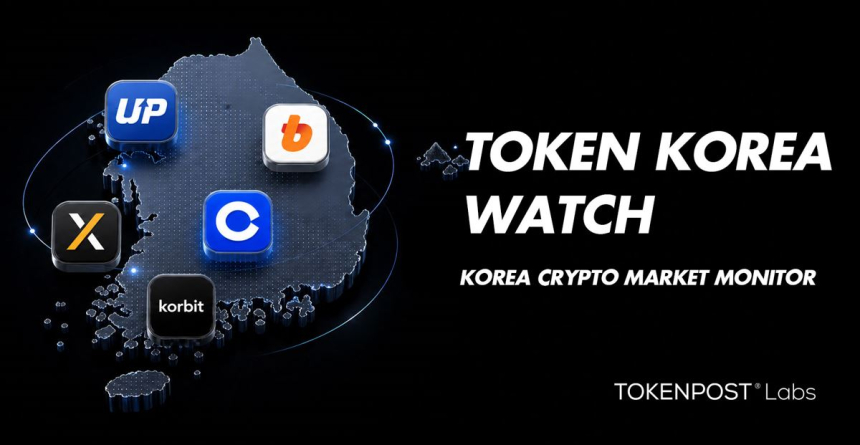
The series, Token Korea Watch, will publish on a weekly basis.
South Korea is the world's most active retail crypto market by volume. The investors driving that volume deserve to know whether the projects they hold still exist. For most of them, right now, there is no way to find out. Today is Children's Day in Korea — a national holiday meant to celebrate those who deserve protection. The country's retail crypto investors, most of whom hold less than one million won, are still waiting for theirs.
Token Korea Watch publishes weekly. Press inquiries and campaign participation: https://www.tokenpost.kr/about/report



Comment 0