

 News
News  Coin Information
  About us
  Customer Service


 Add as a preferred source on Google

Crypto trading communities on Telegram are rotating back toward ‘checklist-style’ decision-making, as short-term trade signals, U.S. regulatory optimism, airdrop claim guides, and geopolitical headlines converged in the same news cycle—an unusual mix that underscores how sentiment remains cautious even when catalysts appear constructive.
The latest edition of the KOL Index—a community-interest tracker compiled by TokenPost and DataMaxiPlus using Telegram message analysis—flagged a spike in attention around a potential long setup in Dash (DASH), alongside renewed chatter about the U.S. ‘CLARITY Act’ and practical, step-by-step guides for claiming rewards tied to Kaito and Billions. The discussion took place Monday UTC (May 4), with posters simultaneously noting that the broader market remained in the ‘Fear’ zone on the Fear & Greed Index, tempering conviction despite pockets of bullish positioning.
Dash long signals spread as traders cite 4H breakout and momentum indicators
The most shareable content across channels centered on Dash (DASH) versus Tether (USDT), where traders circulated two separate long-position “signal” posts that emphasized technical confirmation on the 4-hour (4H) chart. In the Bitcoin Bullets® channel, one setup suggested an entry zone around 48.6–48.9 with tiered targets at 49.6, 50.4, 51.6, 53.2, and 56.0, alongside a stop-loss at 47.0. A second post outlined a lower entry band around 46.9–47.2, targets at 47.9, 48.8, 50.2, 52.0, and 55.0, and a stop-loss at 45.4.
Both posts leaned on similar rationale: an ‘EMA ribbon’ alignment (a trend-following method that uses multiple exponential moving averages), rising MACD momentum, and a pickup in volume—ingredients typically cited to support a ‘bullish breakout.’ Notably, the community framing was less about directional certainty and more about defining levels—calling out “initial resistance” near 49.6 in one case and “key support” at 45.4 in the other—suggesting traders are prioritizing risk controls as volatility remains elevated.
Regulatory narrative returns: ‘CLARITY Act’ seen as potential on-ramp for institutions
Alongside the Dash (DASH) trading chatter, regulatory speculation resurfaced around the U.S. ‘CLARITY Act,’ which some community commentators argued could reduce uncertainty by clarifying whether digital assets are treated as securities or commodities. In posts circulated via GMB LABS, the thesis was straightforward: if the U.S. establishes a clearer market structure, perceived regulatory overhang could ease, making it easier for larger institutions to participate.
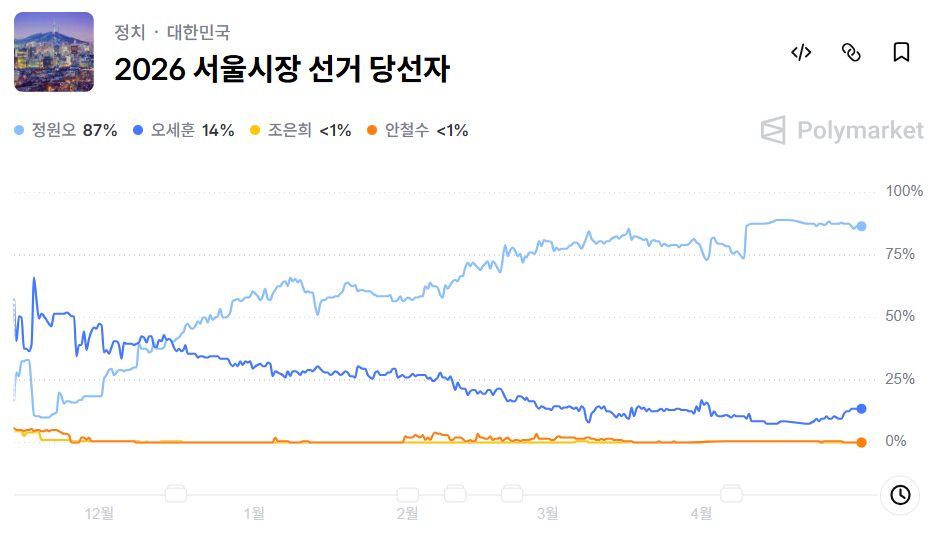
Telegram participants also amplified commentary claiming that recent negotiations touched on stablecoin-related issues—particularly approaches to yield or interest-like mechanisms—and pointed to Polymarket odds implying a roughly 70% probability of passage within 2026. While such probability markets are not definitive forecasts, the repeated framing of “bill progress equals sentiment improvement” illustrated how quickly regulatory expectations can become a psychological tailwind, even before any legislative outcome is locked in.
Airdrop and rewards guides dominate ‘actionable’ content: Kaito and Billions
Practical “do-this-now” posts around rewards and airdrops also drew high engagement, reflecting a continued retail appetite for low-friction opportunities amid risk-off market mood. In particular, the Marshall Sharing Room 2.0 community circulated links and instructions related to Kaito, with some posts estimating the current value of a claim at roughly $180. Users shared operational tips such as claiming via the Ethereum network and the possibility of depositing to Bybit, underscoring that execution details—not just announcements—are what drive engagement.
Posts also referenced follow-up steps for Billions, including guidance that rewards could be claimed and then bridged to BNB Chain (BSC). Separately, discussion spilled into the broader “participation economy” surrounding airdrops, with chatter about Kaito Studio and activity or contributor requirements—highlighting how community members increasingly treat airdrop ecosystems as structured campaigns rather than one-off giveaways.
Market briefings, CME gaps, and Strait of Hormuz risk add macro pressure
Beyond individual tokens and reward campaigns, community channels circulated morning market briefs tracking total market capitalization, Bitcoin (BTC) dominance, and the Fear & Greed Index—reported around 40, still within ‘Fear.’ Technical commentary about Bitcoin (BTC) futures also gained traction, with one channel noting that an upside CME gap around roughly 81.2K–79.6K had been “mostly filled,” while a remaining downside gap near 70K–69.7K continued to be watched as a potential magnet for price action.
Adding nuance to that discussion, posters highlighted that CME is expected to shift to 24-hour trading from May 29, 2026, a change that could reduce the frequency—and perceived usefulness—of “gap” analysis over time, since gaps often form during hours when the futures venue is closed.
At the same time, risk headlines from the Middle East cut through the trading talk. Some channels circulated breaking-style messages alleging attacks or explosions involving ships near the Strait of Hormuz, a chokepoint for global energy flows. While details were not consistently verified in community posts, the reaction itself was notable: traders treated the topic as a potential volatility trigger, reinforcing a broader pattern of heightened sensitivity to ‘risk events’ beyond crypto-native catalysts.
Overall, the KOL Index captured a market that is not committing to a single narrative. Instead, Telegram communities are bundling ‘immediately actionable’ trade setups like Dash (DASH) entries, policy-driven optimism around the ‘CLARITY Act,’ and step-by-step airdrop claim guides—while keeping one eye on macro indicators and geopolitics. The result is a cautious, level-driven posture: less about predicting direction, more about mapping what to watch and what can be executed now.
🔎 Market Interpretation
- Checklist-style trading is back: Telegram traders are prioritizing defined entry/target/stop levels over broad directional conviction, reflecting cautious sentiment despite multiple “positive” catalysts.
- Selective bullishness in a risk-off backdrop: Dash (DASH) long setups gained outsized attention, but the broader mood stayed restrained as the Fear & Greed Index hovered around 40 (Fear).
- Constructive narratives are competing, not converging: Technical breakouts, U.S. regulatory optimism (CLARITY Act), airdrop execution guides, and geopolitical risk all hit at once—keeping positioning tactical rather than thematic.
- Macro and headline sensitivity remains high: CME gap discussion and unverified Strait of Hormuz alerts were treated as potential volatility triggers, reinforcing “event-risk awareness” across the community.
💡 Strategic Points
- DASH trade planning focuses on confirmation + risk control: The most-shared setups referenced 4H breakout confirmation, EMA ribbon alignment, rising MACD, and increased volume—paired with explicit stops (e.g., ~47.0 / ~45.4) and tiered take-profit ladders.
- Level mapping over prediction: Traders emphasized nearby resistance (~49.6) and support (~45.4), signaling a “manage the trade” mindset amid elevated volatility.
- Regulatory optimism as sentiment optionality: CLARITY Act chatter framed clearer U.S. market structure as a possible on-ramp for institutional participation, with Polymarket odds cited (~70% passage by 2026) as a confidence anchor—even though it is not a guarantee.
- Airdrops drive engagement when they are executable: Kaito and Billions posts performed well because they provided step-by-step, operational instructions (network choice, bridging, exchange deposit), aligning with retail demand for low-friction opportunities in a cautious market.
- Watchlist for BTC structure: Channels tracked CME gaps (upside mostly filled around ~81.2K–79.6K; downside gap ~70K–69.7K still monitored) while noting CME’s planned move to 24-hour trading (May 29, 2026) could reduce future gap relevance.
- Headline-risk playbook: Geopolitical alerts (Strait of Hormuz) were treated as immediate volatility catalysts, suggesting traders may tighten risk, reduce leverage, or wait for confirmation during fast-moving news.
📘 Glossary
- KOL Index: A community-interest tracker by TokenPost and DataMaxiPlus built from Telegram message analysis to measure what topics and assets are drawing attention.
- 4H chart: A price chart where each candle represents 4 hours, commonly used for swing-trade confirmation.
- EMA ribbon: A set of multiple exponential moving averages used to gauge trend direction and strength; “aligned” ribbons often imply trend continuation.
- MACD: Moving Average Convergence Divergence, a momentum indicator used to identify trend shifts and momentum acceleration.
- Entry / Targets / Stop-loss: Predefined price levels for opening a trade, taking profit, and limiting loss—core to “checklist-style” execution.
- Fear & Greed Index: A sentiment gauge; readings near 40 are generally interpreted as “Fear,” often associated with risk aversion.
- CME gap: A price gap that can appear on Chicago Mercantile Exchange BTC futures when the market is closed; some traders view gaps as potential “magnets” for later price action.
- Stablecoin yield/interest-like mechanisms: Designs that provide returns on stablecoins (directly or indirectly), often a focus of regulatory scrutiny.
- Airdrop: Token distributions to users (often tied to prior activity); “claim guides” provide steps to capture the allocation.
- Bridge / BNB Chain (BSC): Tools and networks used to move assets between chains; bridging enables users to transfer claimed tokens to another ecosystem.
- Strait of Hormuz: A major global energy-shipping chokepoint; disruptions can influence broader risk markets and volatility expectations.























Comment 0