

 News
News  Coin Information
  About us
  Customer Service


 Add as a preferred source on Google
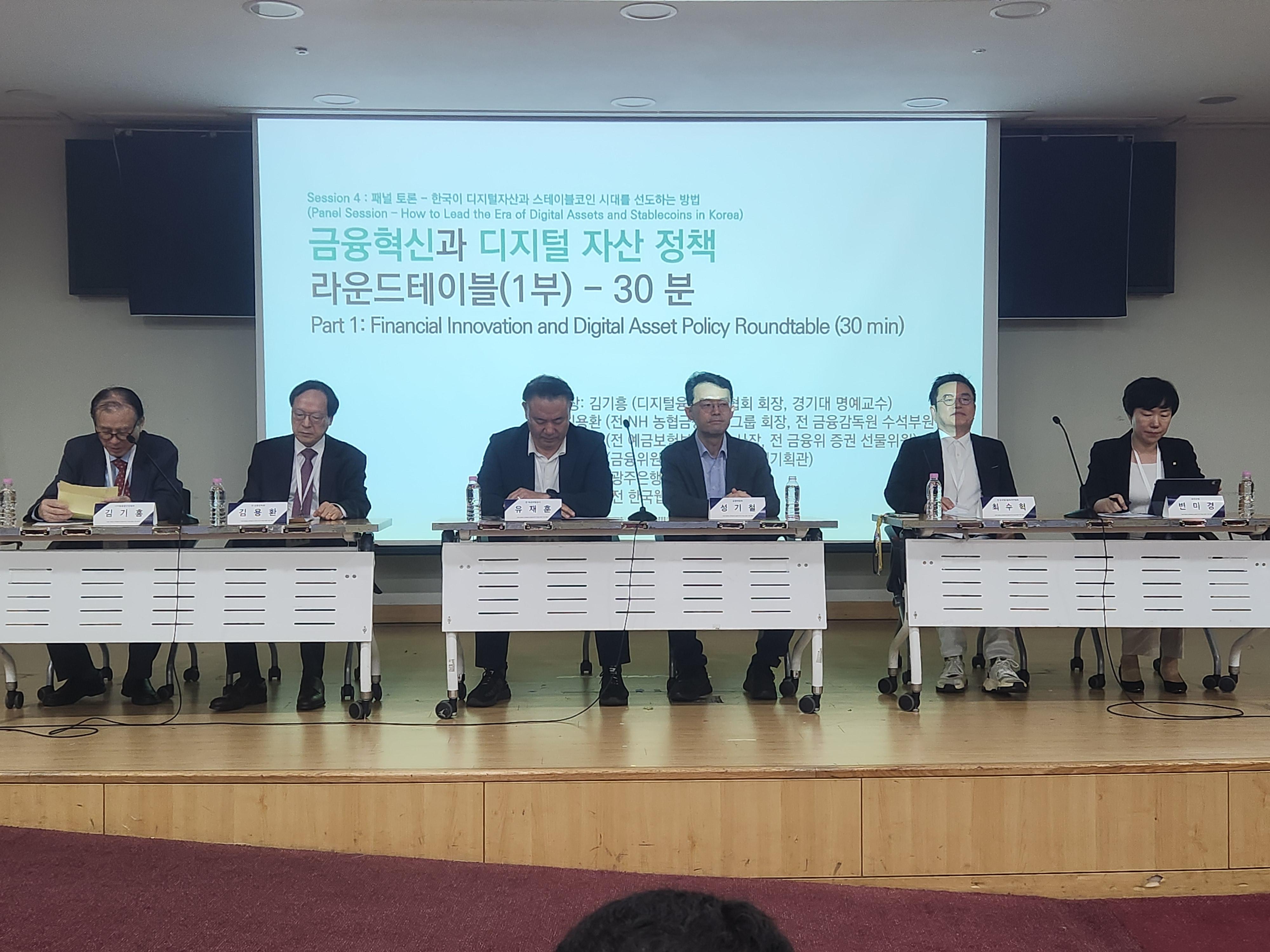
South Korean regulators, bankers and industry representatives are increasingly converging on a pragmatic view of how a won-denominated stablecoin could be introduced—starting with bank-led issuance and conservative reserve rules, while leaving room to expand toward broader public-sector use cases such as regional vouchers and even government budget disbursement.
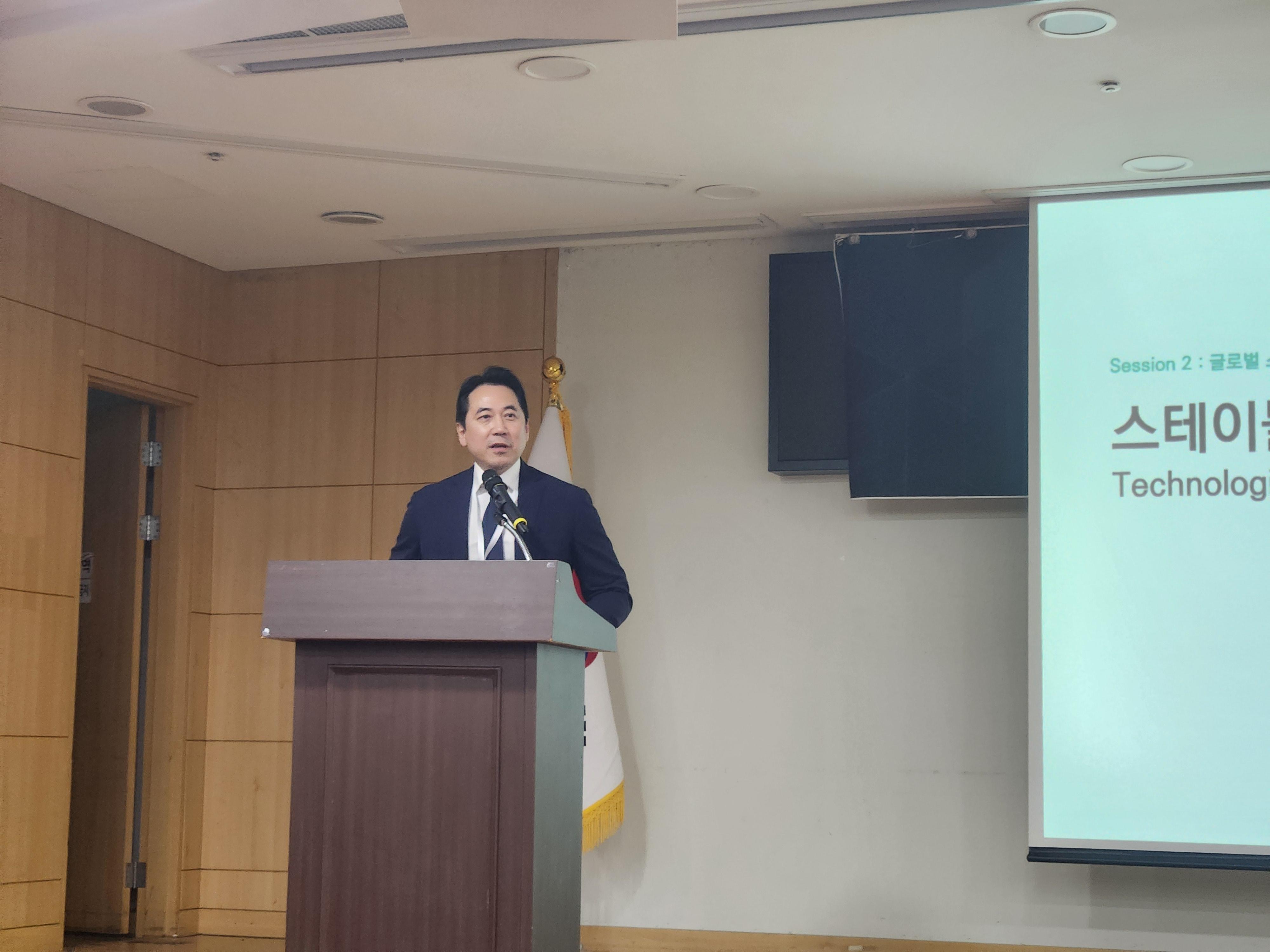
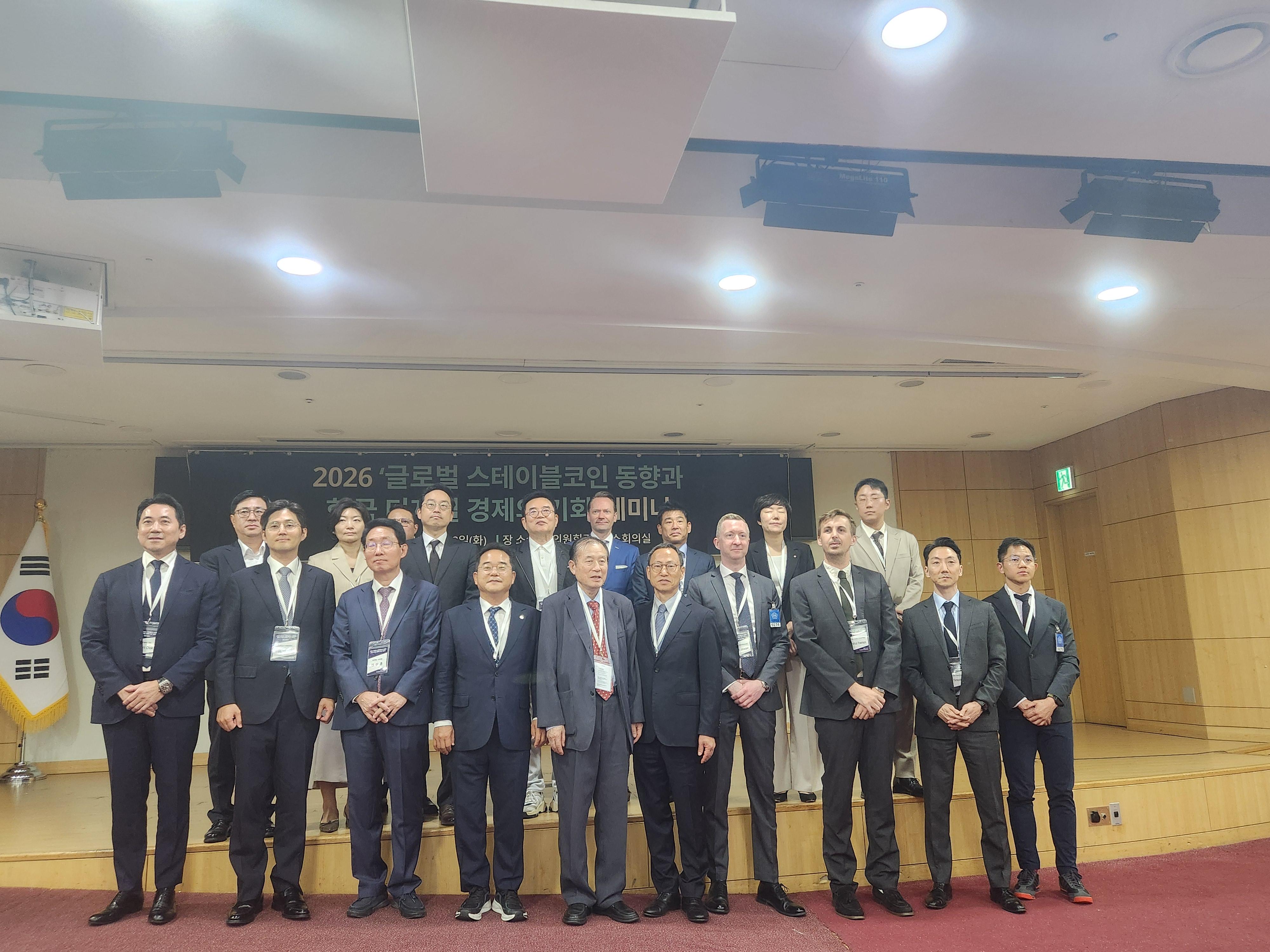
The debate played out on May 12 in Seoul (May 12 UTC) at a National Assembly seminar titled “2026 Global Stablecoin Trends and Opportunities for Korea’s Digital Economy,” where a policy panel discussed how Korea can modernize payments infrastructure without repeating past regulatory delays in digital assets.
The roundtable—moderated by Kim Ki-heung, chairman of the Digital Convergence Industry Association (DCIA)—brought together former senior officials and market participants including Kim Yong-hwan, former chairman of NH NongHyup Financial Group; Yoo Jae-hoon, former president of the Korea Deposit Insurance Corporation; Seong Gi-cheol, a former official with Korea’s Financial Services Commission (FSC) and ex-economic planning chief for Gyeonggi Province; Byun Mi-kyung, executive vice president at Gwangju Bank; and Choi Soo-hyuk, former head of the Korea Web3 Blockchain Association (KWBA). The event was hosted by lawmakers Lee Kang-il and Min Byeong-deok from the Democratic Party’s digital assets task force, alongside the “Coexistence and Unification Forum.” Major local exchanges Bithumb, Coinone and Korbit participated as sponsors.
Korea’s “missed window” and renewed urgency
Kim Yong-hwan argued that Korea lost momentum by failing to legislate early in the market’s formative period, and warned that continued delays could widen the gap with global peers. Recalling the early institutional response to crypto in 2017, he said efforts to verify real-name accounts tied to exchanges such as Bithumb and Coinone stalled amid law-enforcement skepticism, and responsibility later shifted through interagency task forces to the FSC.
Kim also pointed to growing reliance on offshore platforms and foreign-token listings as a structural source of capital outflow. Domestic exchanges, he said, often list more overseas assets than homegrown projects, reinforcing the perception that Korea is consuming rather than exporting digital-asset innovation. He contrasted Korea’s pace with Japan’s progress on a framework law and separate legislation for yen stablecoins, calling for faster coordination between the central bank and supervisory authorities to prevent Korea from falling behind in the global regulatory race.
From issuer-focused rules to a new payments vision
Yoo Jae-hoon urged policymakers to move beyond a narrow focus on stablecoin issuance structures and exchange oversight, and instead design rules around an integrated, future-facing payments architecture. He identified three priorities: cross-chain interoperability for cross-border transactions, a unified payments structure spanning stablecoins, security token offerings (STOs) and real-world assets (RWAs), and robust connectivity between blockchain networks and existing financial rails.
According to Yoo, regulation driven primarily by political narratives—such as concerns over monetary sovereignty or capital flight—risks producing skewed rules that reduce economic efficiency and diverge from emerging global standards. A broader framing around 'next-generation payments' would, he argued, help Korea align faster with mature markets while keeping room for innovation.
A “realistic” Korean path: strong licensing, bank leadership, conservative reserves
Seong Gi-cheol emphasized that Korea’s legal and regulatory culture—where authorities take direct responsibility through strict licensing and entry requirements—makes rapid liberalization less feasible than in common-law jurisdictions. He contrasted Korea with the U.S. and U.K., where looser initial market access is often paired with powerful ex-post enforcement tools such as punitive damages and class actions that pressure firms to self-regulate.
In Korea’s system, Seong argued, the most workable starting point is one regulators can supervise easily: bank-led stablecoin ownership and issuance, at least early on. That approach could lower institutional resistance and increase the odds of passing enabling legislation. He added that reserve and liquidity requirements could begin conservatively—potentially at or above full backing—and be recalibrated once real-world operating data accumulates.
Stablecoins as administrative infrastructure: from local vouchers to budget execution
Perhaps the most striking theme was stablecoins’ potential role beyond retail payments and trading. Seong said a won stablecoin with 'programmable' features could simplify how the government distributes and tracks public funds—an area he described as operationally complex and costly today. Korea’s combined central and local government budgets amount to roughly 720 trillion won annually, and the administrative burden of disbursement and compliance monitoring remains significant.
He also argued that Korea’s existing local currency programs—often supported by incentives around 10%—create a ready-made adoption channel. Converting those programs into stablecoin-based systems could accelerate usage quickly, and if successful, the model could scale toward broader public-budget applications, he said.
Industry calls for “inclusive” growth, not artificial scarcity
Choi Soo-hyuk framed stablecoins as a pillar of the digital finance industry and warned against policy that prioritizes control at the expense of expansion. While acknowledging the need for sound oversight, Choi argued that excessive restrictions—such as capping the number of issuers from the outset—could undermine network effects and slow adoption. Even if multiple stablecoins emerge, he said, market dynamics will likely consolidate the landscape over time.
He also pointed to consumer-facing catalysts, suggesting that attaching stablecoin payments to high-demand digital commerce—such as entertainment ticketing—could rapidly create large numbers of wallet accounts, potentially seeding broader usage. In his view, specialized and region-specific stablecoins could emerge alongside more general-purpose products.
Banks: consumer protection first, then expansion with fintech partners
From the banking sector, Gwangju Bank’s Byun Mi-kyung stressed that stablecoins sit at the intersection of payments and trust, making consumer protection, know-your-customer (KYC), anti-money laundering (AML) compliance, and reserve asset management foundational requirements. She endorsed a phased approach: begin with bank-centered issuance to establish credibility and operational stability, then expand quickly to non-financial firms once the market and legal framework mature.
Byun emphasized that banks and fintech companies should not be treated as competing silos. Banks bring stability and trust, while fintech firms contribute speed, user experience and technical innovation—an arrangement that could produce both 'safety' and 'innovation' if roles are clearly defined.
She added that regional banks may have distinct incentives. Gwangju Bank, founded 58 years ago, is already operating a local voucher program of about 800 billion won. For regions facing population decline, fragmented local economies and capital leakage, Byun said stablecoins could become a practical tool to attract tourism and support local commerce. While banks worry deposits could migrate into stablecoins, she argued that new flows—such as B2B trade settlement—could create 'fresh liquidity inflow' opportunities.
What comes next
The seminar underscored how Korea’s stablecoin debate is shifting from abstract questions of legitimacy to implementation details: who issues, how reserves are held, and what role stablecoins should play in the country’s payments and administrative systems. With global competition accelerating around stablecoin frameworks, participants broadly agreed that Korea’s challenge is to balance 'regulatory credibility' with 'industrial scalability'—and to do so fast enough that domestic innovators are building for global markets rather than routing activity offshore.
🔎 Market Interpretation
- Korea is moving from “should we” to “how to”: The stablecoin discussion has shifted from legitimacy debates to execution details—issuer eligibility, reserve custody, and integration with existing payment and administrative rails.
- Pragmatic entry path is forming: A consensus is emerging around a bank-led won stablecoin as the most politically and regulatorily feasible starting model, aligning with Korea’s strict licensing culture.
- Regulatory delay is now viewed as an economic leak: Panelists link slow domestic frameworks to capital outflow via offshore platforms and foreign-token dependence, weakening Korea’s ability to “export” digital-asset innovation.
- Stablecoins framed as payments infrastructure, not just crypto products: The emphasis is shifting toward next-generation payments architecture—cross-chain and cross-border capability, and a unified stack encompassing stablecoins, STOs, and tokenized real-world assets.
- Public-sector use cases could be a major adoption catalyst: Beyond retail payments, programmable won stablecoins are being discussed as tools for local voucher programs and potentially government budget disbursement/monitoring, targeting efficiency in Korea’s large (≈720T won) annual budget operations.
💡 Strategic Points
- Start with supervised issuers to unlock legislation: Begin with banks as primary issuers/owners to reduce institutional resistance and raise the probability of enabling laws passing quickly.
- Adopt conservative reserve rules first, then iterate: Launch with high or full backing and strong liquidity standards; recalibrate requirements after collecting real-world operational data and stress-test results.
- Design regulation around system outcomes: Avoid rules driven mainly by political narratives (sovereignty/capital flight). Instead, optimize for interoperability, settlement efficiency, and compatibility with existing financial rails and global standards.
- Build a unified tokenized payments stack: Plan for a payments environment where stablecoins + STOs + RWAs interoperate, rather than regulating each as isolated silos. This reduces fragmentation and improves scalability.
- Pair “trust” (banks) with “speed” (fintech): Implement a phased rollout where banks anchor compliance (KYC/AML, reserve management), while fintech partners accelerate UX, distribution, and innovation—clear role separation prevents duplication and conflict.
- Don’t enforce artificial scarcity among issuers too early: Over-capping issuer numbers may suppress network effects. Allow measured competition; market forces can consolidate later if needed.
- Use high-frequency consumer channels to seed wallets: Tie stablecoin payments to digital commerce with strong demand (e.g., ticketing) to rapidly grow wallet adoption, then expand into broader merchant and public-sector payments.
- Leverage existing local voucher programs as “distribution rails”: Regions already running incentive-backed local currencies (often ~10%) can migrate to stablecoin-based systems for faster uptake, improved tracking, and tourism/commerce stimulation.
- Watch deposit migration vs. new liquidity: Banks should model potential deposit outflows into stablecoins, but also pursue B2B settlement and regional commerce flows that could create net-new liquidity inflows.
📘 Glossary
- Won-denominated stablecoin: A digital token designed to maintain a 1:1 value with the Korean won, typically via reserves and redemption mechanisms.
- Bank-led issuance: A model where licensed banks issue and manage stablecoins, leveraging existing compliance, custody, and trust frameworks.
- Reserve backing (full backing): Holding high-quality liquid assets (cash, deposits, short-term government securities, etc.) equal to (or exceeding) the stablecoin supply to support redemptions.
- Liquidity requirements: Rules ensuring reserve assets can be quickly converted to cash to meet redemption demands, especially during stress events.
- KYC / AML: “Know Your Customer” identity verification and “Anti-Money Laundering” controls used to prevent illicit finance and comply with financial regulations.
- Interoperability (cross-chain): The ability for stablecoins and tokenized assets to move or be used across different blockchain networks without friction.
- Financial rails: Traditional payment and settlement infrastructure (bank transfers, card networks, clearing systems) that stablecoins may connect to or augment.
- STO (Security Token Offering): Issuance of tokenized securities (e.g., equity, debt) under applicable securities regulations.
- RWA (Real-World Asset): A tokenized representation of off-chain assets (e.g., bonds, invoices, real estate), enabling on-chain transfer/settlement.
- Programmable money: Digital currency with embedded rules (e.g., spending restrictions, automatic reporting, conditional disbursement) enforced by code.
- Local vouchers / local currency programs: Municipality-backed payment instruments (often with incentives/discounts) designed to stimulate regional spending and support local merchants.











Comment 0