

 News
News  Coin Information
  About us
  Customer Service


 Add as a preferred source on Google
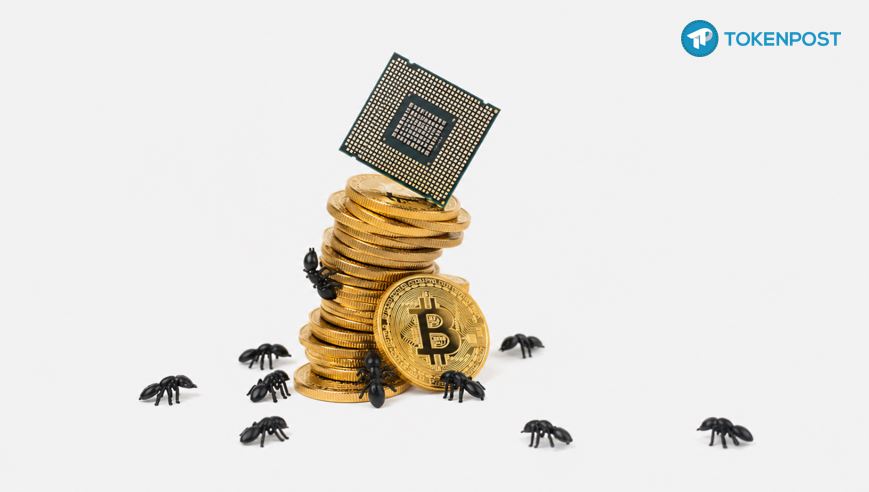
South Korea’s retail investors—once among the world’s most aggressive participants in crypto markets—are increasingly shifting their risk appetite from Bitcoin (BTC) to domestic equities, where leverage is now building to levels that some analysts say look even more extreme than the most overheated phases of the digital-asset cycle.
The pivot has been most visible since around September last year, when the long-observed tendency for Bitcoin and South Korea’s benchmark KOSPI to move in broadly similar directions began to break down. While the KOSPI accelerated toward record highs, Bitcoin largely stalled, weakening the short-term, momentum-driven trade that has historically attracted local “ant” investors—Korea’s nickname for retail traders. Money instead flowed toward a new source of perceived upside: memory semiconductor stocks tied to the global AI buildout.
Shares of Samsung Electronics (005930.KS) and SK hynix (000660.KS) surged as the rally broadened into a national obsession with the AI-linked chip cycle. Overseas peers, including Micron Technology ($MU), also benefited as investors latched onto the expectation that AI demand will keep tightening memory markets through the latter half of the decade.
But the defining feature of the trade has not been stock selection—it has been leverage.
On May 8 (UTC), a post on Blind, an anonymous workplace community widely used in South Korea, went viral after a civil servant shared a brokerage screenshot showing a roughly 2.3 billion won (about $1.7 million) position in SK hynix, financed largely with margin loans. According to the post, around 1.7 billion won was borrowed via brokerage credit. The author argued that semiconductors could remain in an uptrend through 2028 and said an “aggressive” structure was necessary to accelerate wealth accumulation. Four days later, on May 12 (UTC), the same user claimed an unrealized profit of roughly 267 million won.
Another widely shared Blind post the same day, reportedly from a Seoul Metro employee in their twenties, described using margin to establish a full-leverage position—framing the bet as preferable to missing the rally altogether. The anecdotes landed because they matched what official data have been showing: a market increasingly defined by retail borrowing.
According to the Korea Financial Investment Association, outstanding margin credit reached 36.47 trillion won as of last Friday (UTC), marking a record high. For comparison, balances during the 2020–2021 retail-led surge known as the “Donghak Ant Movement” hovered around the mid-20 trillion won range, making the recent increase notable both for its scale and speed.
The immediate winners have been brokerages. The country’s top 10 securities firms—including Korea Investment & Securities, Mirae Asset Securities, Samsung Securities, Kiwoom Securities, NH Investment & Securities, KB Securities, Shinhan Securities, Hana Securities, Meritz Securities and Daishin Securities—generated a combined roughly 600 billion won in padding-interest income in the first quarter, up 55.9% from a year earlier, according to the column’s cited aggregation. Margin loans, typically priced around 7% to 9% annually, are secured by an investor’s stock holdings and cash balance. When collateral values fall below required thresholds, brokerages can liquidate positions through forced selling—mechanics that tend to amplify downside when markets turn.
The KOSPI’s ascent has been breathtaking. The index, the column notes, rose from around the 4,000 level at the end of last year to above 8,000 in less than half a year—an increase of roughly 75% year-to-date—with more than two-thirds of the gain attributed to Samsung Electronics and SK hynix alone. In a May 10 report (UTC), JPMorgan raised its KOSPI targets, setting a base-case level of 9,000 and a bull-case of 10,000, citing a longer memory cycle driven by AI infrastructure spending. The bank argued investors should avoid calling an early end to the cycle and highlighted brokerage, insurance, holding companies and high-dividend stocks as potential beneficiaries.
Still, signs of strain are emerging beneath the index-level optimism. Market breadth has deteriorated, with the share of KOSPI constituents trading above their 50-day moving average falling from about 70% three weeks earlier to roughly 33%, according to figures cited in the source. Only around 2% of names were posting 52-week highs, concentrated heavily in memory and semiconductors—an increasingly narrow rally even as the headline index sets records.
Earnings contributions reinforce the same pattern. BNP Paribas’ Asia-Pacific cash equities research head William Bratton was cited as saying that, since September last year, non-tech companies accounted for only about 4% of the total 12-month earnings growth—suggesting that “buying the index” has effectively become a concentrated wager on the memory cycle rather than broad exposure to the Korean economy.
Valuations in some “AI-adjacent” areas look stretched as well. The report pointed to the secondary battery and EV materials complex, where forward price-to-earnings multiples have climbed toward levels that imply years of execution with little room for policy shocks, demand setbacks or pricing pressure. POSCO Future M (003670.KS), a key battery-materials name, was cited as trading above 300x forward earnings and, by Bloomberg tallies referenced in the column, among the most “sell”-rated shares in the KOSPI.
Against that backdrop, regulators are starting to publicly flag risk. The head of South Korea’s Financial Supervisory Service, Lee Chan-jin, warned in a consumer-risk response meeting on Monday (UTC) about the potential for retail losses, while highlighting concerns that new single-stock leveraged and inverse ETFs—expected to launch next week—could accelerate the shift into high-risk products. With margin balances already at record highs, critics argue the introduction of additional leverage vehicles risks turning concentrated positioning into a more systemic vulnerability.
Volatility metrics are also flashing unusual signals. On Tuesday (UTC), the KOSPI fell about 5%, underperforming other major Asian markets, as semiconductor shares dropped in response to rising U.S. Treasury yields. More striking, the column noted, was the behavior of the local volatility index: instead of declining as equities rose, volatility increased alongside prices—a pattern often associated with a late-stage ‘melt-up,’ when aggressive call buying and ‘FOMO’ can overpower cautious positioning. Current volatility levels, according to the cited estimate, imply daily index moves of roughly 4.5%, a range that can quickly push leveraged retail accounts toward margin calls.
Flows suggest the leverage is increasingly being used to absorb foreign selling. Goldman Sachs was cited as reporting that foreign investors had been net sellers of KOSPI shares for nine straight sessions, including approximately $3.4 billion of tech-sector selling on Tuesday (UTC). Local institutions finished slightly net positive, still concentrated in tech, while retail investors were described as the key buyers taking the other side—effectively using borrowed funds to meet foreign profit-taking near peak margin balances.
For crypto markets, the episode carries an uncomfortable implication: South Korean retail investors did not leave Bitcoin because they suddenly became volatility-averse. They appear to have migrated in search of stronger ‘momentum’—and found it in a stock market rally where leverage can produce losses beyond an investor’s initial capital. Unlike spot crypto trading, where losses are typically capped at contributed funds (absent derivatives), padding-financed equity positions can turn a sharp drawdown into a debt problem. The column offered a blunt illustration: with roughly 150% margin usage, a 40% drop in the underlying equity can wipe out principal and trigger additional liabilities.
The broader question is whether the KOSPI’s AI-driven narrative remains an engine of sustained earnings growth—or becomes a source of financial stress if crowded positioning unwinds. In a market structure where forced selling can beget more forced selling, the cost of excessive leverage may ultimately prove higher than the “tuition” retail traders once paid in Bitcoin’s most turbulent cycles.
🔎 Market Interpretation
- Risk shifted, not reduced: South Korea’s retail “ant” investors are rotating from BTC into domestic equities—especially AI/memory semiconductors—seeking stronger momentum rather than lower volatility.
- Leverage is the real story: The equity rally is increasingly financed by margin credit, with anecdotal viral posts aligning with official data showing record borrowing.
- Index strength masks narrowing breadth: KOSPI gains are heavily concentrated in Samsung Electronics and SK hynix, while participation across the broader market has weakened.
- Late-cycle behavior signals: Volatility rising alongside prices suggests “melt-up” dynamics driven by FOMO and aggressive positioning, increasing the risk of abrupt unwind.
- Retail is absorbing foreign selling: Foreign investors have been net sellers as retail buys—potentially using borrowed funds—near peak margin balances.
💡 Strategic Points
- Track padding-credit as a systemic indicator: Outstanding margin credit hit ~36.47T won (record), well above the mid-20T won range seen during the 2020–2021 “Donghak Ant Movement.” A fast rise can precede forced deleveraging.
- Concentration risk is increasing: With a large share of index performance driven by a small set of memory/semiconductor names, “buying the index” increasingly resembles a single-theme bet on the AI memory cycle.
- Watch breadth and leadership rollover: The share of KOSPI stocks above the 50-day moving average reportedly fell from ~70% to ~33%, and only ~2% were at 52-week highs—warning signs even if the index hits records.
- Understand margin downside asymmetry: Unlike spot crypto where losses are generally capped at invested capital, padding-financed equities can create liabilities. The article notes that at ~150% margin usage, a ~40% drop can wipe equity and leave debt.
- Regulatory catalysts may amplify volatility: Upcoming single-stock leveraged/inverse ETFs could add additional leverage channels and speed up both inflows and forced unwinds.
- Rates sensitivity is key: Semiconductor-heavy KOSPI weakness linked to higher U.S. Treasury yields highlights duration/valuation sensitivity; rising yields can pressure high-multiple themes and collateral values simultaneously.
- Brokerage incentives matter: Margin-interest income surged (top 10 firms ~600B won in Q1, +55.9% YoY). Higher lending profitability can coincide with looser risk appetite in the ecosystem.
- Risk management checklist for investors:
- Limit leverage and set pre-defined liquidation thresholds before volatility spikes.
- Stress-test positions for 5–10% daily index moves (article implies ~4.5% daily moves).
- Diversify away from single-theme exposure (memory/AI) and avoid chasing crowded trades late in the cycle.
- Monitor foreign flow data; persistent foreign selling into retail buying can precede sharp reversals.
📘 Glossary
- KOSPI: South Korea’s main stock index, often used as a barometer for domestic equities.
- “Ant” investors: Nickname for South Korea’s retail traders, known for active participation in speculative cycles.
- Margin credit / margin loan: Borrowed funds from a brokerage to buy stocks, secured by the investor’s holdings and cash; typically incurs interest (noted around 7–9% annually).
- Margin call: A demand to add cash/collateral when account equity falls below maintenance requirements.
- Forced selling (liquidation): Brokerages selling client holdings to restore margin requirements, which can accelerate market declines.
- Market breadth: Measures how widely a rally is shared across stocks (e.g., % of constituents above a moving average).
- 50-day moving average: Common trend indicator; fewer stocks above it can signal weakening participation.
- Melt-up: A late-stage surge where prices and volatility rise together, often driven by FOMO and speculative positioning.
- Single-stock leveraged/inverse ETF: ETF designed to deliver amplified (or opposite) daily returns of a single stock; can magnify gains and losses and is path-dependent.
- Forward P/E: Valuation metric based on expected future earnings; extremely high forward P/Es imply high growth expectations and low tolerance for disappointment.
- Memory cycle: Periodic booms/busts in DRAM/NAND pricing and profits; here linked to AI infrastructure demand expectations.
















Comment 0