

 News
News  Coin Information
  About us
  Customer Service


 Add as a preferred source on Google
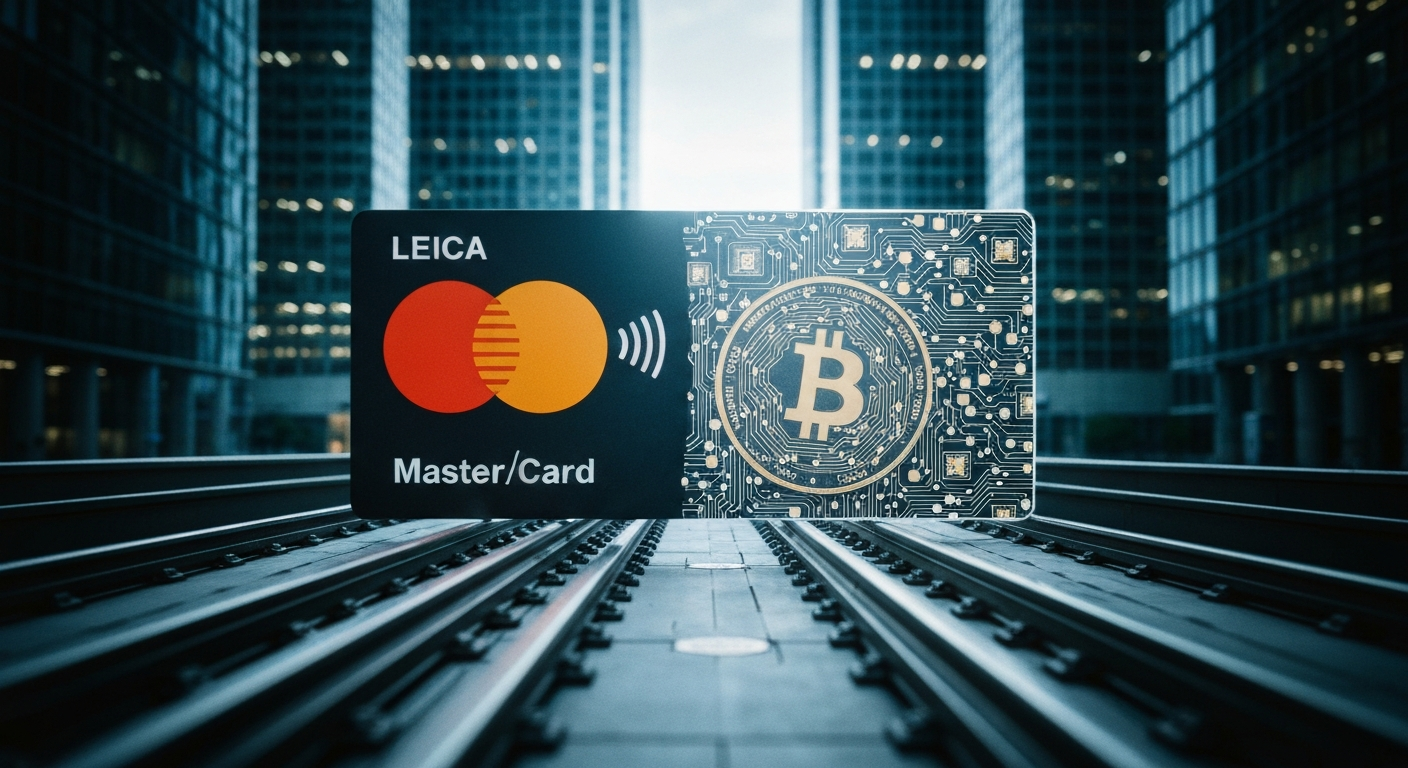
South Korea’s payments experience looks 'cutting-edge' on the surface—tap-to-pay works almost everywhere, from subways to neighborhood shops, and mobile wallets are deeply embedded in daily life. But beneath that seamless consumer layer sits an aging settlement architecture that is increasingly out of sync with where global payments are heading, raising concerns that Korea’s 'domestic-optimized' system is becoming a modern-day Galápagos: highly evolved locally, yet isolated from broader international standards.
The core of Korea’s payments rails remains anchored in a vertically integrated model centered on 1990s-era value-added network (VAN) operators and card-led processing. Smartphone-based “pay” services, in this view, function largely as an interface sitting on top of legacy plumbing rather than a rebuild of the underlying settlement engine. The most visible symptom is settlement speed. While much of the world is experimenting with real-time settlement via 'pay-by-bank' transfers and stablecoin-based rails, many Korean merchants still wait roughly three business days (T+3) to receive card sales proceeds—an outcome that feels increasingly anachronistic in an economy known for high-speed connectivity.
This gap matters because payments are no longer a purely domestic utility. As cross-border commerce, digital platforms, and creator-led microbusinesses expand, the ability to settle instantly and transparently across jurisdictions is becoming a competitive input. In markets where stablecoins and real-time account-to-account systems are gaining traction, settlement latency is not just an inconvenience; it can shape working capital needs, pricing, and the viability of smaller merchants operating on thin margins.
Industry participants argue the obstacle is not technical capability but institutional inertia. Several Korean financial and payments players—including BC Card, NHN KCP, and NongHyup Bank—have already completed real-world tests of won-denominated stablecoin payment flows, demonstrating that tokenized settlement can function in retail-like environments. Yet these pilots have not translated into a wide-scale shift, amid a perceived regulatory gray zone and a broadly held sentiment that “the current system is already convenient enough.”
That complacency, the column warns, is precisely what makes the moment risky. The analogy offered is Nokia: once dominant in feature phones, it missed the smartphone inflection and lost relevance in a matter of years. Payments infrastructure—often treated as slow-changing, foundational plumbing—can also face abrupt competitive reordering when a new settlement layer becomes widely adopted, especially if it reduces intermediaries and compresses fees.
Stablecoins, in this framing, are not merely a different way to pay. They represent 'programmable money'—financial rails that can embed logic directly into transactions, enabling conditional payments, automated revenue splits, and near-instant cross-border settlement through code. Where Korea’s existing card-and-VAN structure is optimized around incumbent fee and routing economics, stablecoin-based settlement opens the possibility of re-architecting the value chain—from authorization and clearing to distribution and reconciliation.
The central question, then, is governance and incentives. The column calls on financial regulators to treat stablecoins not only as an object of compliance, but as infrastructure that can be brought inside the rulebook through expanded testing frameworks and sandboxes. That would allow controlled experimentation with consumer protection, reserve standards, auditability, and transaction monitoring—not in theory, but under live conditions.
It also suggests incumbent card companies and VAN operators will need to plan for business models that sit atop new settlement rails rather than focusing solely on defending legacy fee structures. In practical terms, that could mean building services around compliance, identity, fraud prevention, smart-contract-enabled merchant tools, and interoperability with bank accounts—areas where scale and trust still matter even if settlement becomes faster and cheaper.
The broader implication is that preserving today’s convenience and modernizing the underlying financial network are not mutually exclusive. But the window to choose the terms of that transition may not remain open indefinitely. As global payments move toward real-time and tokenized settlement, a system built for local efficiency could increasingly resemble an island—highly refined, yet progressively disconnected from the evolving standards of borderless commerce.

















Comment 0