

 News
News  Coin Information
  About us
  Customer Service


 Add as a preferred source on Google
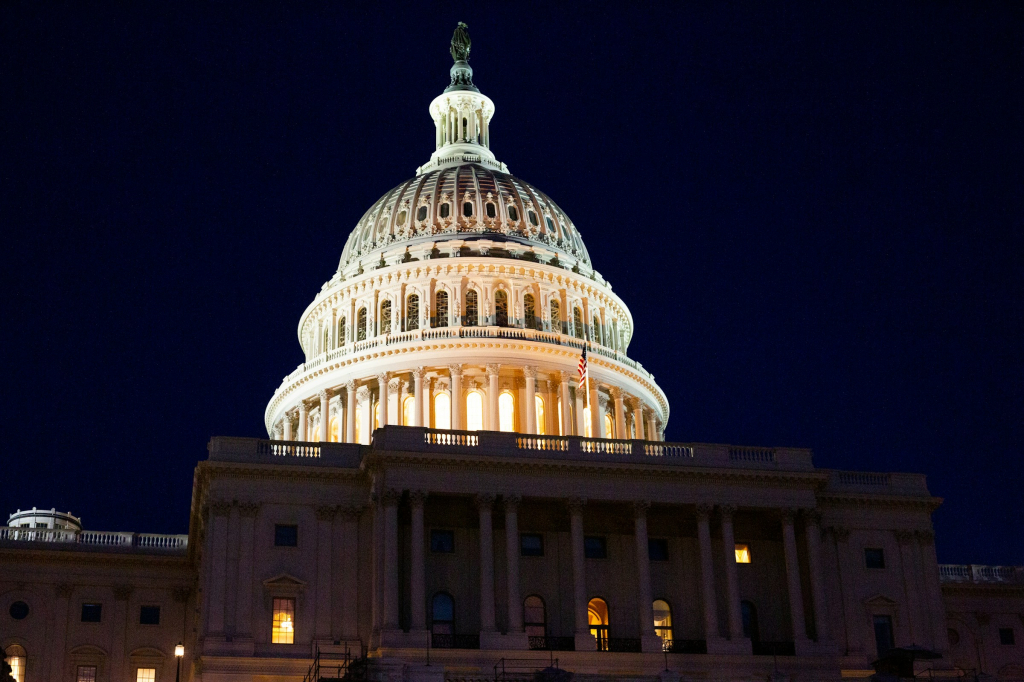
A key U.S. Democratic senator has signaled the party will not block a high-profile ‘clarity’ bill tied to Bitcoin (BTC) and broader digital-asset oversight, adding momentum to a bipartisan push in Congress to define who regulates what in crypto—and on what terms.
According to reporting cited by journalist Pete Rizzo, the senator said Democrats would not seek to stop the legislation and were open to advancing it with cross-party support. The remarks arrive as lawmakers intensify negotiations on a broader market-structure package that could redraw regulatory boundaries between agencies and set clearer compliance expectations for exchanges, issuers, and intermediaries.
Senate Majority Leader Chuck Schumer also struck a constructive tone, according to Punchbowl News as cited by Bitcoin Magazine, saying he hopes a “good crypto bill” can pass. Democrats, the report added, are preparing for a round of market-structure consideration scheduled for this week. In practice, market-structure legislation is viewed as a cornerstone effort to formalize U.S. crypto supervision—especially around when a token is treated as a security versus a commodity, and which regulator holds primary authority.
The shift in rhetoric matters for markets because Washington’s regulatory ambiguity has long been a drag on U.S.-based product development and institutional participation. Even incremental progress toward statutory definitions can reduce legal uncertainty, potentially lowering ‘compliance risk’ for firms offering custody, trading, and settlement services.
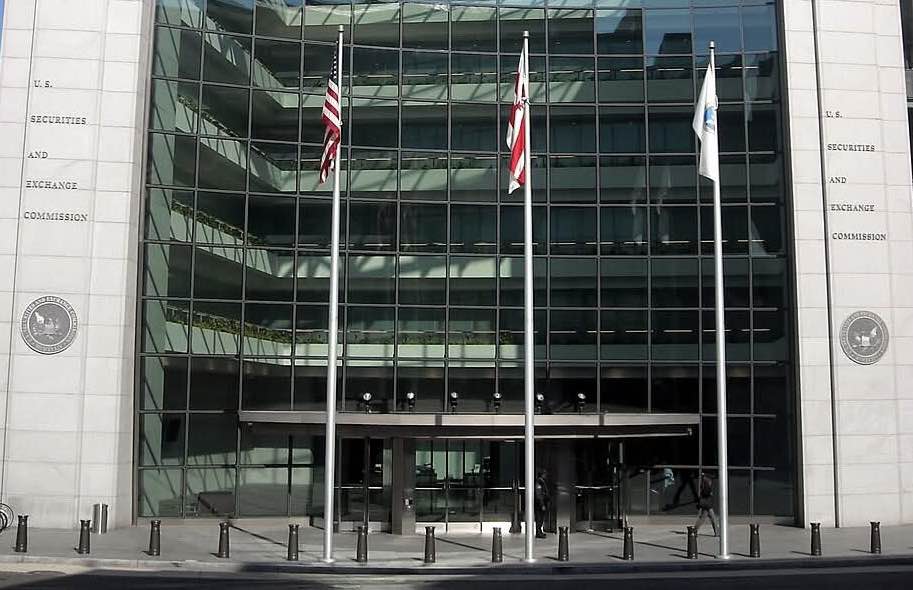
Separately, BlackRock ($BLK) has filed with the U.S. Securities and Exchange Commission for a new tokenized fund structure, according to Odaily. The asset manager again selected Securitize as the technology and issuance infrastructure provider. The filing describes a structure that records ownership on blockchain rails while connecting to regulated transfer-agent functions and investor access systems. Securitize’s transfer-agent unit would manage official registration and ownership records for fund interests across multiple public blockchains.
The move follows BlackRock’s expansion of its first tokenized fund, BUIDL, which has grown to roughly $2.3 billion since launching in 2024, the report said. Tokenized real-world assets—often referred to as ‘RWA tokenization’—have now surpassed $30 billion in total market size by some industry estimates, underscoring a rapid convergence between traditional finance and onchain settlement.
In another sign of that convergence, Franklin Templeton and Payward—the parent company of Kraken—announced a strategic partnership to expand tokenized equities and yield-bearing products onto blockchain networks, PANews reported on May 12 UTC. The firms plan to integrate Franklin Templeton’s tokenized money market fund BENJI into Kraken’s platform, positioning it as a collateral and cash-management tool for institutional clients.
Payward’s xStocks framework, the companies said, will also be used to develop new onchain actively managed products and provide related strategies to eligible institutional and retail investors in select jurisdictions. Franklin Templeton has been expanding its crypto footprint through its Franklin Crypto unit, including its acquisition of digital-asset investment firm 250 Digital.
On the corporate treasury front, Strategy ($MSTR) is estimated to have purchased more than 1,444 Bitcoin (BTC) via STRC, according to Bitcoin Magazine. The amount would exceed three times the daily new supply created by miners, highlighting how large, concentrated buyers can influence ‘liquidity conditions’—particularly during periods of thinner order books or heightened macro sensitivity.
Meanwhile, blockchain analytics firm Elliptic raised $120 million in a Series D round at an approximate $670 million valuation, Bloomberg reported, according to UBlockchain. The round was led by One Peak Partners, with participation from Deutsche Bank ($DB), Nasdaq Ventures, the British Business Bank, and additional investment from existing backer JPMorgan Chase ($JPM). Founded in 2013, Elliptic sells transaction-monitoring, anti-money-laundering, and sanctions compliance tools to financial institutions and law-enforcement agencies—an area seeing growing demand as regulators push for stronger controls across the crypto stack.
Coinbase ($COIN) is also expanding its onchain credit offering by adding Solana (SOL) as eligible collateral, according to Odaily. The product allows users to borrow up to $100,000 against SOL holdings, leveraging Morpho lending infrastructure deployed on Base, Coinbase’s Ethereum layer-2 network. Coinbase executive Ben Schenck said SOL support should improve capital efficiency and access to liquidity for users active in the Solana ecosystem.
On the security and UX front, a working group led by the Ethereum Foundation published an open standard for ‘clear signing’ aimed at addressing the long-standing risks of ‘blind signing,’ Odaily reported. Built on the ERC-7730 specification, the standard focuses on letting users see—before approving a transaction—a readable, standardized representation of what a signature will actually execute. Rather than changing onchain transaction formats, the approach relies on offchain explanation templates, registries, and independent verification and audit processes to standardize intent display in wallets.
Payments adoption in emerging markets also remains in focus. Coins.ph Global Marketing Director Aamir said crypto payments are helping reduce high reliance on cash in developing economies, according to UBlockchain. He cited everyday purchases, such as coffee, increasingly being made with stablecoins—crypto assets typically pegged to fiat currencies like the U.S. dollar—because they can be more practical for payments and remittances than volatile tokens.
Finally, Binance said Chief Marketing Officer Rachel Conlan will step down on June 15 UTC, per Odaily. Conlan, who has led brand-building efforts for roughly three years, is expected to support the transition as an adviser. Binance added that Yiowen Chen, formerly CEO of Trust Wallet, will serve as interim CMO overseeing marketing and brand management during the handover.
Taken together, the developments point to a market entering a more institutionally anchored phase: policymakers are signaling greater willingness to legislate, major asset managers are operationalizing tokenization, and platforms are broadening onchain credit and security standards. The next catalyst is likely to be Washington’s ability to translate bipartisan rhetoric into enforceable rules—an outcome that could shape where capital and innovation concentrate over the next cycle.
🔎 Market Interpretation
- Regulatory thaw boosts sentiment: A leading Democratic senator signaled Democrats won’t block a major U.S. crypto “clarity”/market-structure bill, and Sen. Schumer expressed hope for a “good crypto bill.” Markets typically price this as reduced headline risk and a higher probability of durable rules.
- Market-structure is the keystone: The central issue is defining when tokens are securities vs. commodities and which regulator (SEC vs. CFTC) has primary authority—clarity that could lower compliance risk and expand U.S. product development.
- TradFi-tokenization accelerates: BlackRock filed for a new tokenized fund structure using Securitize; its tokenized fund BUIDL is cited at ~$2.3B. Industry estimates put RWA tokenization > $30B, reinforcing an “onchain rails + regulated wrappers” trajectory.
- Exchanges become multi-asset financial platforms: Franklin Templeton + Kraken plan to integrate BENJI and expand tokenized equities/yield products. Coinbase expands onchain credit by accepting SOL collateral via Morpho on Base—signals of broader credit, collateral, and treasury utility onchain.
- Supply/demand dynamics stay supportive for BTC: Strategy’s estimated purchase of 1,444 BTC (via STRC) is framed as >3× daily miner issuance, highlighting how concentrated buyers can tighten liquidity, especially in thinner books.
- Compliance and security mature alongside growth: Elliptic’s $120M Series D (approx. $670M valuation) underscores rising institutional demand for AML/sanctions tooling. Ethereum’s “clear signing” (ERC-7730) targets wallet UX and fraud reduction—both key for mainstream adoption.
- Payments use-case remains sticky in emerging markets: Stablecoin payments for everyday purchases and remittances are emphasized as practical alternatives to cash-heavy systems and volatile assets.
- Operational change at Binance: CMO transition (Rachel Conlan stepping down; Yiowen Chen interim) is a near-term corporate update but secondary to the larger “regulation + tokenization + credit” narrative.
💡 Strategic Points
- Watch Washington timelines and scope: Key catalyst is whether bipartisan rhetoric becomes enforceable market-structure rules. Track: committee markups, voting calendar, and the specific language on SEC/CFTC jurisdiction and token classification tests.
- Positioning for “clarity premium”: If compliance uncertainty falls, U.S.-facing venues, custodians, broker-dealers, and compliant token issuers may see improved institutional onboarding and higher multiples as legal risk discounts compress.
- Tokenized funds are moving from pilots to infrastructure: BlackRock/Securitize and Franklin/Kraken show a path: regulated transfer-agent functions + blockchain settlement. Expect growth in onchain collateral (money-market tokens) and 24/7 settlement workflows.
- Collateral wars and onchain credit expansion: Coinbase adding SOL collateral indicates competition to monetize large L1 asset bases. Monitor haircuts, liquidation parameters, and integration risks (bridge/oracle/custody) as these products scale.
- BTC liquidity can tighten quickly: Large treasury buyers can overwhelm new issuance and reduce float. In risk-on phases this may amplify upside; in risk-off phases it can exacerbate gaps if liquidity thins—risk management should assume higher tail sensitivity.
- Compliance tooling is a growth category: Elliptic funding suggests sustained spend on transaction monitoring. Projects and platforms may benefit from “compliance-by-default” integrations to access banks, payment rails, and institutional capital.
- Security UX is becoming a differentiator: Clear signing standards (ERC-7730) could reduce phishing/approval fraud and improve wallet trust—teams should build standardized intent displays and verification/audit processes early.
- Emerging-market stablecoin adoption: For payment-focused strategies, prioritize low fees, reliable off-ramps, and merchant tooling; volatility management favors stablecoins over native tokens for daily spend.
📘 Glossary
- Market-structure bill: Legislation defining how crypto markets are regulated (who oversees what activities, and under which rules).
- Clarity bill: Informal term for a regulatory framework intended to reduce ambiguity around token classification, exchanges, and compliance obligations.
- Security vs. commodity: A token treated as a security typically falls under SEC oversight; a commodity designation more often aligns with CFTC authority—classification affects disclosures, trading venues, and enforcement.
- Compliance risk: The legal/operational risk of violating unclear or evolving regulations (often reflected in higher costs, limited product offerings, or restricted market access).
- Tokenized fund / Tokenized RWA: Traditional financial assets (e.g., funds, treasuries, equities) represented on a blockchain to enable programmable ownership, faster settlement, and broader distribution within regulatory constraints.
- Transfer agent: A regulated entity that maintains official records of security ownership and investor registration; in tokenized structures, it may reconcile onchain records with legal ownership books.
- Onchain credit: Borrowing/lending where collateral and loan logic are enforced via smart contracts, often with automated margining and liquidation rules.
- Morpho: A DeFi lending protocol/infrastructure referenced as powering Coinbase’s SOL-collateral borrowing flow.
- Base: Coinbase’s Ethereum Layer-2 network used as an execution environment for onchain apps and lending infrastructure.
- Clear signing vs. blind signing: Clear signing presents a human-readable summary of what a signature will do; blind signing asks users to sign opaque transaction data, increasing phishing risk.
- ERC-7730: An Ethereum standard/specification referenced for clear signing, relying on offchain templates/registries to display transaction intent safely in wallets.
- Stablecoin: A crypto asset typically pegged to a fiat currency (e.g., USD) to reduce volatility for payments and remittances.
- Liquidity conditions: How easily assets can be bought/sold without large price impact; large buyers or thin order books can increase slippage and volatility.












Comment 0