

 News
News  Coin Information
  About us
  Customer Service


 Add as a preferred source on Google

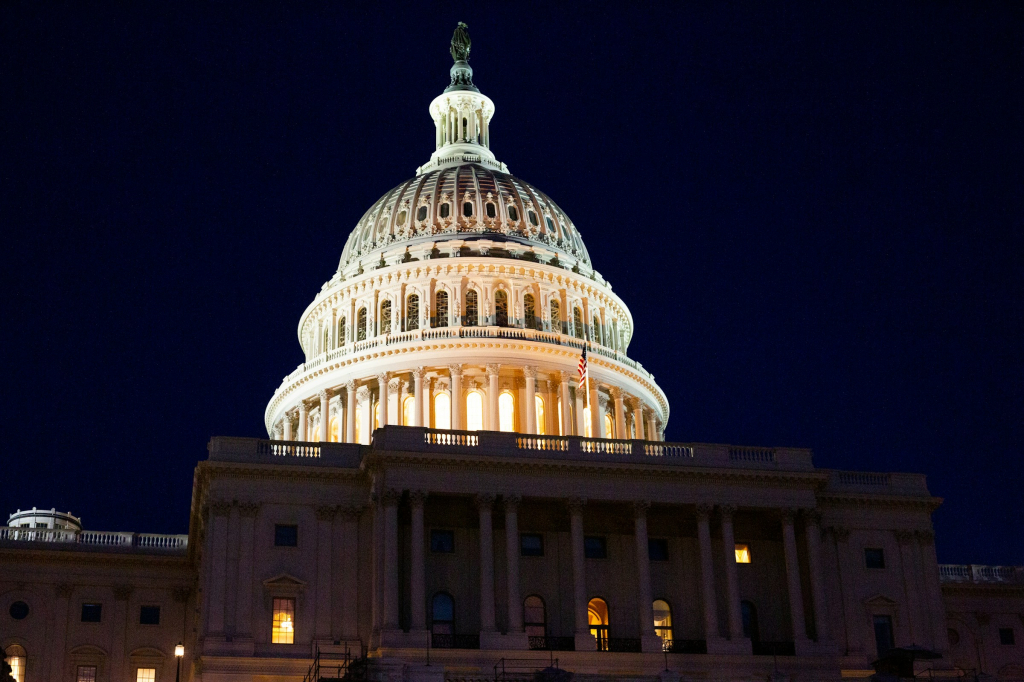
The U.S. Senate has moved to slam the door on any prospect of clemency for Sam Bankman-Fried (SBF), adopting a bipartisan resolution declaring he should “under no circumstances” receive a presidential pardon or commutation—an unusually blunt political rebuke in one of the largest digital-asset fraud cases on record.
The measure, S.Res.772, was adopted on Tuesday ET via ‘unanimous consent,’ a procedure that passes without a roll-call vote only when no senator objects. While the resolution is non-binding and cannot restrict the president’s constitutional clemency power, its symbolism is significant: even lawmakers typically seen as champions of the crypto sector publicly drew a bright line between supporting industry growth and shielding a convicted executive accused of misusing customer funds.
The resolution was introduced jointly by Sen. Cynthia Lummis (R-WY) and Sen. Ruben Gallego (D-AZ), the ranking members from each party on the Senate Banking Committee’s digital assets subcommittee. Lummis, among Capitol Hill’s most prominent advocates for bringing digital assets into a clearer regulatory framework, said at the time of introduction that SBF had already received a full and fair trial. Gallego was more direct, saying, “Keep him locked up.”
In the text, senators argued that SBF’s 25-year sentence reflected the scale and premeditation of the crimes, the extensive financial harm inflicted on victims, and a lack of remorse. Granting clemency, they warned, could undermine ‘rule of law’ and confidence in the U.S. financial system—an especially sensitive issue as Washington accelerates efforts to integrate digital assets into regulated finance through market-structure and stablecoin legislation.
The Senate action comes roughly five weeks after SBF submitted a formal clemency application on June 8 to the U.S. Department of Justice’s Office of the Pardon Attorney, according to reporting citing the DOJ’s public case lookup system. In media appearances, SBF has said he would welcome a pardon from President Trump, answering “of course” when asked directly.
Notably, the request reportedly sought a ‘pardon after completion of sentence’—a form of relief typically tied to restoring civil rights or easing employment and licensing constraints after a sentence is fully served. For inmates seeking early release, the more relevant tool is usually a ‘commutation,’ and DOJ guidance generally points currently incarcerated applicants toward commutation rather than post-sentence pardons. The Senate resolution, however, explicitly opposed both a pardon and a commutation, signaling resistance to any administrative action that would reduce SBF’s criminal liability or time in custody.
President Trump said in January that he had no intention of pardoning SBF. During his second term, Trump has granted clemency to several figures connected to the digital-asset world, including Ross Ulbricht and Binance founder Changpeng Zhao—moves that fueled speculation SBF might view the political environment as more favorable. The Senate’s unanimous posture, alongside Trump’s prior comments, is now widely seen as making clemency even less likely, though the president retains the legal authority to act unilaterally.
SBF was the founder of FTX, once among the world’s largest crypto exchanges, and also controlled affiliated trading firm Alameda Research. Prosecutors said he diverted billions of dollars in customer deposits from FTX to Alameda, where the funds were used for high-risk trading, venture investments, political donations, Bahamas real estate purchases, loan repayments, and other expenditures. Court proceedings described special privileges embedded in FTX’s systems that allegedly allowed Alameda to avoid automatic liquidation mechanisms that applied to ordinary users.
The structure was further stressed by Alameda’s reported reliance on FTT, an exchange-issued token created by FTX, as a major component of its balance sheet—effectively using an affiliated token as collateral while tapping customer capital. When details of Alameda’s fragile finances surfaced in 2022, customers rushed to withdraw funds, exposing a shortfall. FTX filed for bankruptcy protection in November 2022 after it could not meet redemptions.
In November 2023, a federal jury in New York convicted SBF on seven counts including fraud and conspiracy. In March 2024, the court sentenced him to 25 years in prison, imposed three years of supervised release, and ordered forfeiture totaling roughly $11 billion. Gallego’s office has said U.S. customers suffered more than $8 billion in losses tied to the FTX collapse. SBF has continued to maintain his innocence while pursuing both an appeal and clemency; his projected release is in the mid-2040s.
Beyond the fate of one imprisoned founder, senators framed the resolution as a test of credibility for digital-asset policymaking. As lawmakers seek to define guardrails that can support ‘institutional’ adoption and broader participation, they appear determined to avoid the perception that high-profile misconduct can be erased through political favoritism. The message, in effect, is that the industry may be afforded room to mature—but not at the cost of excusing the misuse of customer money.
🔎 Market Interpretation
- Policy signal over legal force: The Senate’s unanimous, bipartisan resolution (S.Res.772) cannot limit presidential clemency powers, but it sharply raises the political cost of any pardon/commutation for Sam Bankman-Fried (SBF), reducing perceived probability of relief.
- Separating “pro-crypto” from “pro-SBF”: With prominent digital-asset policy leaders backing the measure, lawmakers are drawing a clear boundary between supporting industry regulation/innovation and shielding convicted actors—aimed at bolstering legitimacy for upcoming market-structure and stablecoin bills.
- Confidence and institutional adoption focus: The resolution frames clemency as potentially damaging to “rule of law” and trust in U.S. markets, a key narrative as Washington tries to integrate digital assets into regulated finance and attract institutional capital.
- Reputational overhang on exchange tokens and related models: The recap of FTX/Alameda mechanics (exchange-token collateral, preferential risk controls) reinforces skepticism toward affiliated-token balance sheets and opaque exchange–market-maker relationships.
- Trump clemency backdrop recalibrated: Prior digital-asset-related clemencies (e.g., Ulbricht, Zhao) had fueled speculation SBF might hope for similar treatment, but the Senate’s unanimous stance plus Trump’s earlier “no intention” comment materially dampens market expectations.
💡 Strategic Points
- For policymakers/regulators: Use the resolution as a credibility anchor while advancing legislation—emphasize customer asset segregation, conflicts-of-interest controls, disclosures, and enforceable governance standards to prevent “FTX-style” failures.
- For exchanges and custodians: Strengthen proof-of-reserves/segregation attestations, restrict related-party lending, and formalize liquidation and margin rules that apply uniformly—removing “special privileges” that can undermine trust.
- For investors: Reassess counterparty risk frameworks—prioritize venues with transparent custody, audited financials, clear bankruptcy-remote structures, and limited dependence on self-issued tokens for capitalization.
- For token issuers and market makers: Avoid circular collateral structures (issuer token used to back affiliated trading liabilities). Disclose concentration risks, treasury policies, and related-party exposures to reduce “run” vulnerability.
- For legal/PR strategy around high-profile cases: Non-binding political actions can still shape outcomes by influencing DOJ review climate and public scrutiny; expect “rule of law” and victim-harm arguments to dominate any clemency debate.
- For the broader crypto narrative: The Senate message supports a “matured industry” story: regulation and adoption may advance, but high-profile fraud is treated as disqualifying—helpful for distancing the sector from past scandals.
📘 Glossary
- Clemency: Presidential power to grant relief from federal criminal penalties; includes pardons and commutations.
- Pardon: Forgiveness of a federal offense that can restore certain civil rights; often sought after completion of sentence, though it can be granted earlier.
- Commutation: Reduction of a prison sentence (or other penalties) without voiding the conviction; most relevant for inmates seeking earlier release.
- Unanimous consent (Senate): A procedure allowing passage without a roll-call vote when no senator objects; signals broad agreement but does not make a measure enforceable like a statute.
- Non-binding resolution: A congressional statement of position that carries political weight but does not change the law or constrain constitutional powers.
- FTX / Alameda Research: FTX was a major crypto exchange founded by SBF; Alameda was an affiliated trading firm alleged to have received diverted customer funds.
- Exchange-issued token (FTT): A token created by an exchange; when used as collateral within affiliated entities, it can create reflexive, fragile balance sheets.
- Liquidation mechanisms: Automated processes that close positions when collateral falls below thresholds; alleged “exemptions” for insiders can magnify systemic and customer risk.
- Market-structure legislation: Laws defining how crypto assets are classified, traded, and supervised (e.g., venue rules, disclosures, custody standards).
- Stablecoin legislation: Rules governing fiat-pegged tokens, typically addressing reserves, audits, redemptions, and issuer oversight to reduce run risk.



















Comment 0