
 Add as a preferred source on Google
Japan Reclassifies Crypto as Financial Assets, Opening Path to Bitcoin ETFs
Japan’s parliament approved a law reclassifying cryptocurrencies like Bitcoin as financial assets under FIEA, enabling tighter oversight and paving the way for spot ETF development.


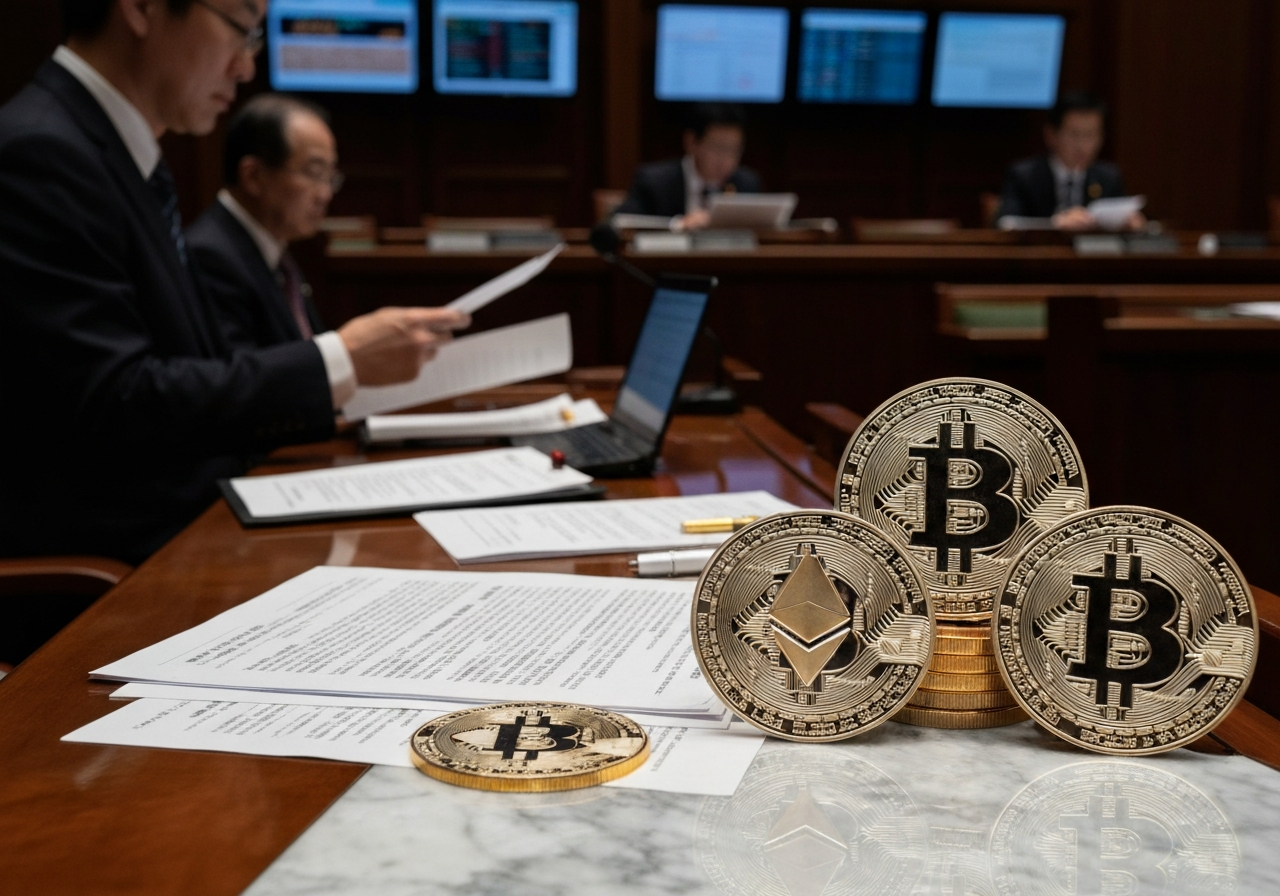
Japan’s parliament has passed a sweeping amendment that reclassifies cryptocurrencies such as Bitcoin (BTC) as 'financial assets', a shift that moves the sector closer to the country’s mainstream capital markets and could reshape everything from market surveillance to the prospects for spot crypto ETFs.
NHK reported that lawmakers approved the bill on Wednesday, July 15, transitioning digital assets out of Japan’s payment-centric framework and into the regulatory architecture that governs stocks, bonds, and investment trusts. Under the change, cryptoassets will no longer be primarily handled under the Payment Services Act, but will instead fall under the Financial Instruments and Exchange Act (FIEA)—the same core statute underpinning traditional securities oversight.
The legislation is expected to take effect within one year, with implementation targeted for Japan’s fiscal 2027, according to NHK. The move follows the Japanese Cabinet’s April approval of the draft, but Wednesday’s vote marked the final legislative endorsement, effectively locking in a new direction for the country’s digital-asset policy.
A single investor-protection standard—and tougher enforcement
By placing crypto under FIEA, Japan is aligning cryptocurrencies with a more standardized investor-protection regime. One immediate consequence is the extension of 'insider trading' restrictions to parts of the crypto market. Parties with access to material non-public information—such as token issuers, exchange operators, and others involved in listing decisions or aware of major technical incidents—would be barred from trading ahead of events like token listings, delistings, or critical system failures.
The amendment also introduces new disclosure expectations for exchanges. Platforms will be required to publish information on token issuers, the underlying blockchain design, and key characteristics such as volatility—requirements modeled on reporting norms familiar to securities brokers. Local media said regulators would gain broader market-monitoring authority as part of the transition, reflecting a policy intent to treat crypto trading venues more like regulated capital-market infrastructure than payment intermediaries.
Penalties are set to rise sharply. For unregistered crypto businesses, the maximum prison term would increase from three years to 10 years, while the maximum fine would climb from 3 million yen to 10 million yen (about $62,000). The tougher sanctions are widely seen as a signal that Japan intends to handle crypto-related misconduct with the same seriousness as conventional securities fraud.
Opening a path to spot Bitcoin ETFs and tax reform
Beyond compliance mechanics, the reclassification carries two market-defining implications. First, it could remove a key structural obstacle to domestically listed spot Bitcoin exchange-traded funds. Because FIEA sets the rules for what regulated funds can hold, bringing cryptocurrencies under its umbrella may make it easier for Japanese asset managers to design and launch a compliant spot Bitcoin ETF—something the prior payment-focused categorization made difficult to reconcile with fund rules.
Second, the bill arrives alongside formal approval of a separate plan to overhaul crypto taxation. Japan has historically taxed crypto capital gains as 'miscellaneous income', pushing the top effective rate as high as 55%, among the heaviest burdens in major markets. Legislators also signed off on a plan to cut that to a flat 20%—matching the treatment of stock capital gains—with the new rate scheduled to apply from 2028 under the country’s 2026 Tax Reform Outline.
Broader Web3 ambitions—and a signal to global regulators
The reforms come as Japan accelerates broader Web3 initiatives and regulators examine whether exchange reserve requirements should look more like the capital buffers expected of securities firms. At the same time, the number of user accounts at domestic exchanges has been rising, and Japan-based crypto companies have been positioning for a wider retail investor base.
For an industry that has long viewed Japan as a cautious but proactive rule-maker, the parliamentary vote marks a decisive pivot toward 'institutional legitimacy'. By explicitly aligning digital assets with capital-market regulation, Japan is not only tightening oversight but also creating a framework that could make regulated crypto investment products and more competitive tax treatment politically and legally easier to sustain—an approach other jurisdictions may feel increasing pressure to match.
Article Summary by TokenPost.ai
🔎 Market Interpretation
Regulatory re-rating: Japan’s reclassification of cryptocurrencies (e.g., BTC) as “financial assets” shifts oversight from a payments lens to a capital-markets lens, signaling greater institutional acceptance and potentially higher compliance costs.
FIEA framework = stronger market integrity: Moving crypto under the Financial Instruments and Exchange Act (FIEA) implies tighter rules around market conduct, surveillance, and disclosure—closer to standards applied to stocks and funds.
ETF probability increases: By bringing crypto within the same statute that governs what regulated funds can hold, the change may reduce a key legal/structural barrier to domestic spot Bitcoin ETFs.
Tax tailwind for participation: Parallel approval of a plan to cut crypto gains tax from up to 55% (miscellaneous income) to a flat 20% (stock-like treatment) could improve after-tax returns and boost retail/institutional activity, though timing is later (targeted from 2028).
Enforcement signal: Sharply higher penalties for unregistered operations (up to 10 years prison; fines up to 10 million yen) indicate regulators plan to treat crypto misconduct more like securities fraud.
💡 Strategic Points
Exchanges should prepare for securities-style obligations: Expect enhanced disclosures on token issuers, blockchain design, and risk/volatility characteristics; build the internal controls and reporting pipelines typical of broker-dealers.
Insider-trading compliance becomes critical: Parties with material non-public information (issuers, exchanges, listing committees, incident-response teams) should implement MNPI policies, trading windows/blackouts, audit trails, and staff training aligned with FIEA-like expectations.
Token listing governance will tighten: Listing/delisting decisions and major technical incidents become higher-risk events; formalize decision logs, disclosure timing, and conflict-of-interest management.
Asset managers: begin ETF readiness work: If regulators allow, product design for a spot BTC ETF will likely require robust custody, valuation, market surveillance coordination, and clear risk disclosures consistent with regulated fund standards.
Market structure impact: Greater monitoring authority and potential reserve/capital-like requirements could favor well-capitalized venues and accelerate consolidation among smaller or non-compliant operators.
Timeline awareness: The legal transition is expected within one year (implementation targeted for fiscal 2027), while tax changes are referenced for 2028; stakeholders should stage compliance and product roadmaps accordingly.
Global signaling: Japan’s pivot may pressure other jurisdictions to harmonize crypto treatment with capital-market rules, especially where ETF demand and investor-protection debates are active.
📘 Glossary
Financial Instruments and Exchange Act (FIEA): Japan’s principal law governing securities, exchanges, and investment products; sets rules for disclosure, market conduct, and regulatory oversight.
Payment Services Act: Japan’s framework historically used for payment-related services; treated crypto more as a payment/settlement instrument than a capital-market asset.
Spot Bitcoin ETF: An exchange-traded fund designed to hold actual Bitcoin (spot) rather than derivatives, offering regulated access through traditional brokerage accounts.
Insider trading: Trading based on material non-public information (MNPI) (e.g., planned listings/delistings, major hacks, critical system failures) before it is publicly disclosed.
Disclosure requirements: Obligations to publish standardized information (issuer details, token mechanics, risk factors) to help investors assess products—common in securities markets.
Miscellaneous income: A Japanese tax category that can impose high marginal rates; historically applied to crypto gains, contributing to top effective rates near 55%.
Capital gains (stock-like) taxation: A flat-rate approach (here referenced as 20%) commonly used for equities; proposed to be applied to crypto gains under Japan’s reform plan.