

 News
News  Coin Information
  About us
  Customer Service


 Add as a preferred source on Google
XRP (XRP) is marking time in a tight range, but the market’s apparent calm is masking a mix of whale accumulation signals, shifting derivatives positioning, and potentially consequential regulatory developments in both Washington and Tokyo.
As of Wednesday, July 16 at 9:00 p.m. UTC, XRP was trading at $1.0966, down 1.37% over the past 24 hours, according to CoinMarketCap. Weekly performance was effectively flat at -0.01%, leaving XRP ranked sixth by market capitalization at roughly $68.5 billion. Technical commentary in recent days has framed price action as a 'range-bound' consolidation, with several analysts highlighting a core band around $1.11–$1.15. Key support is widely cited at $1.07–$1.10, with a break below that zone raising the risk of a move toward $1.00.
Zooming out, the broader trend remains heavy. XRP is down 10.25% over 30 days, 22.67% over 60 days, and 26.06% over 90 days, reflecting persistent medium-term selling pressure. The token is also trading about 70% below its 52-week high of $3.65, underscoring how far the market still is from reclaiming the late-cycle peak.
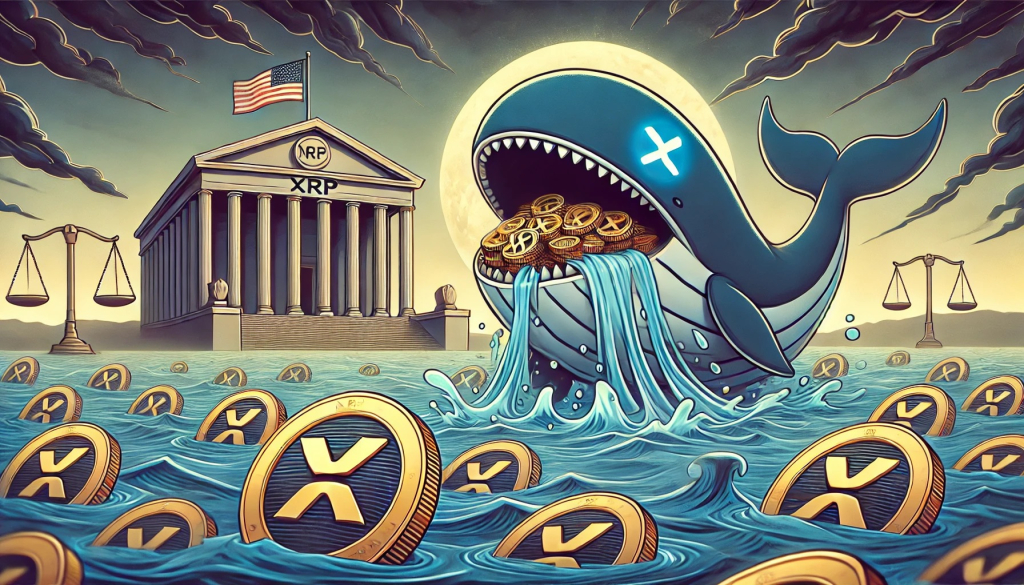
Yet beneath the stagnant spot tape, exchange flows and derivatives metrics are sending more complicated messages. A CoinMarketCap AI update flagged that Binance’s XRP holdings have fallen to roughly 2.61 billion tokens—its lowest level since February 2026. With XRP up around 4% over the same period, the drawdown has been interpreted by some market observers as a sign of large withdrawals to self-custody, a pattern often associated with 'institutional demand' or whale accumulation rather than imminent sell pressure.
CoinGape separately reported that large holders accumulated roughly 70 million XRP over the past week. The purchases coincided with improving U.S. inflation signals, which some desks say helped lift both XRP price action and derivatives activity as traders repositioned around a softer macro backdrop.
Derivatives data, however, is less straightforward. LCX and Nexo pointed to XRP open interest rising to about 2.21 billion XRP, the highest level in roughly 10 days. One interpretation is that open interest rose while spot prices slipped about 0.6%, suggesting incremental short positioning. At the same time, funding rates have reportedly remained positive—an indication that leveraged longs are still paying to hold exposure. Nexo characterized the setup as a market where optimism persists, but with positioning risk building if price fails to regain momentum.
On sentiment, TopTech.News cited Santiment data indicating XRP-related market sentiment has climbed to a five-week high. The divergence—improving sentiment amid weaker price structure—resembles a classic 'buying the fear' dynamic, though such patterns can cut both ways if macro or regulatory headlines shift expectations.
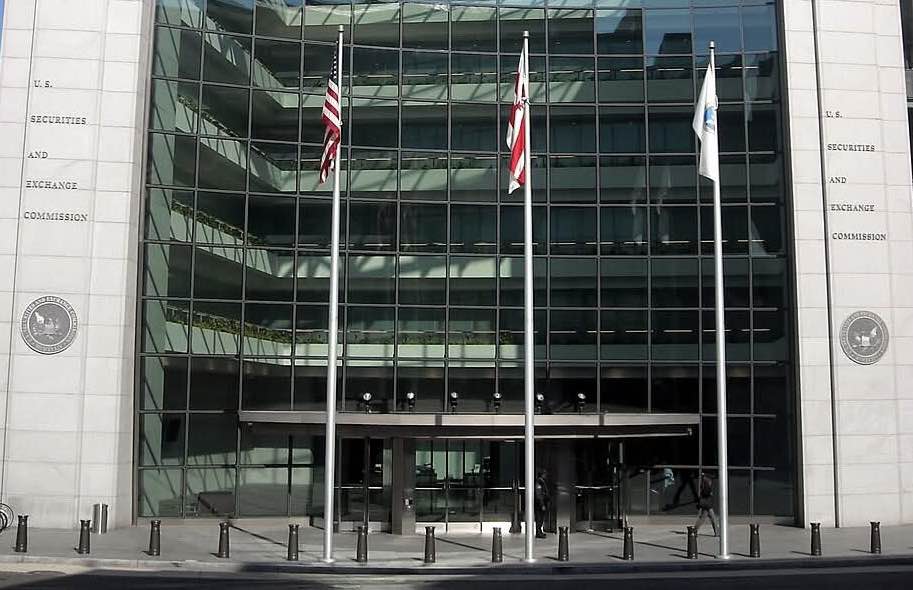
Regulation is now moving back to the center of the XRP narrative. This week has been described by some coverage as a 'Washington big week' for the token, driven by a pair of U.S. political events. On July 16, President Trump and U.S. senators met at the White House to discuss potential conflicts of interest related to Trump-linked crypto assets. On July 17, lawmakers are set to hold a congressional hearing focused on the long-delayed CLARITY framework, including debate over whether assets like XRP should be treated as a 'commodity' or a 'security' under U.S. law—an issue that has defined XRP’s risk profile for years.
Some market analysts argue that the regulatory overhang in the U.S. has already eased compared with prior years, particularly after the long-running legal battles that shaped XRP’s status in the American market. In that view, reduced uncertainty can create a steadier base of domestic institutional participation, even if near-term price direction remains constrained by technical levels and broader crypto liquidity conditions.
Japan, meanwhile, is advancing its own framework in ways that could prove constructive for major crypto assets, including XRP. The country’s House of Councillors has passed legislation that would shift crypto assets from the Payment Services Act regime into the Financial Instruments and Exchange Act framework—effectively treating assets such as Bitcoin (BTC), Ethereum (ETH), and XRP more like conventional financial products. Commentary on the change suggests it could strengthen the case for crypto ETF products in Japan and support clearer taxation rules, including a move toward a standardized 20% capital gains tax rate beginning in 2027.
Institutional infrastructure developments are also adding to the longer-term story. SBI Digital Finance and Doppler Finance have announced a partnership aimed at building institutional-grade XRP financial infrastructure in Japan, including liquidity provisioning, lending and collateral management, and XRP-based tokenized capital market activity. Separately, Ripple has joined the Linux Foundation’s x402 Foundation as a premier member, an initiative focused on integrating XRP and Ripple’s stablecoin RLUSD into an HTTP-based payments standard designed for AI agents—positioning the network for potential future demand tied to autonomous, machine-driven commerce.
On the exchange side, Binance has been running a campaign from July 17 through August 14 to distribute a total of $800,000 worth of XRP each week to RLUSD holders. Some market watchers have described the program as a short-term catalyst for spot demand, though recent commentary suggests the incremental momentum from such incentives may already be fading.
Within the XRP Ledger (XRPL) ecosystem, adoption and protocol progress continue. The XRPL Foundation confirmed that the number of activated accounts has surpassed 8 million—measured as wallets meeting the network’s minimum reserve requirement. On the technology roadmap, the fixCleanup3_2_0 amendment has reportedly secured majority validator support and entered a two-week activation countdown. Recent work has included the release of version 3.2.0 and subsequent security fixes related to core lending functionality.
Looking ahead, XRPL’s roadmap references zero-knowledge proof-based confidential transactions and smart escrow in early 2026, potential community-governed fixed-term lending initiatives later in 2026, longer-dated 'quantum-resistant' security upgrades targeted for 2028, and ongoing efforts to decentralize governance starting in 2026.
For now, XRP is balancing four overlapping narratives—'whale accumulation,' rising open interest, regulatory classification debates, and ecosystem growth—while confined to a narrow trading range. Near-term direction may hinge on outcomes from the CLARITY hearing in the U.S., continued policy shifts in Japan, and whether XRP can defend the $1.07–$1.10 support zone amid still-weak medium-term momentum.










Comment 0