

 News
News  Coin Information
  About us
  Customer Service




Japan’s shift away from ultra-low interest rates is creating new pressure across its financial system. The country’s four largest life insurers—Nippon Life, Dai-ichi Life, Sumitomo Life, and Meiji Yasuda—reported combined unrealized losses of ¥15.13 trillion, or about $96 billion, on Japanese government bonds (JGBs) at the end of June 2026.
The losses, roughly 7% higher than the previous quarter, reflect the sharp rise in Japanese bond yields as the Bank of Japan (BOJ) normalizes monetary policy. Because bond prices fall when yields rise, older JGBs purchased during years of near-zero and negative interest rates have declined significantly in market value.
For insurers, these are primarily paper losses. They typically hold government bonds to maturity to match long-term insurance liabilities, while higher interest rates can also reduce the present value of those liabilities. The greater risk would emerge if rising policy surrenders forced insurers to sell bonds early and realize losses.
The situation complicates the BOJ’s interest rate strategy. Further rate hikes could support the Japanese yen and help control inflation, but they could also push JGB yields higher and deepen bond losses at insurers, banks, and pension funds. Moving too slowly, meanwhile, risks renewed yen weakness and higher imported inflation.
The implications extend beyond Japan. Japanese investors remain major participants in global markets, while Japan holds roughly $1.14 trillion in US Treasury securities. Significant portfolio shifts could therefore affect US bond yields, although there is currently little evidence of large-scale Treasury selling.
Bitcoin investors are also watching Japan closely because higher rates could accelerate an unwind of the yen carry trade. Investors have historically borrowed low-cost yen to finance positions in higher-return assets. Rising Japanese borrowing costs or rapid yen appreciation can make those trades less profitable, potentially forcing leveraged investors to sell stocks, bonds, and cryptocurrencies.
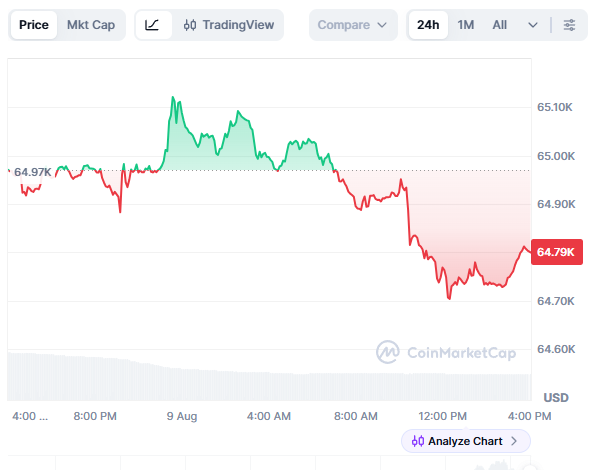
Bitcoin remained above $65,000 following the insurers’ reports, suggesting markets do not currently view the losses as an immediate financial crisis. Still, rising JGB yields, yen movements, insurance surrender rates, and future BOJ rate hikes could become increasingly important indicators for global liquidity and Bitcoin price volatility.

















Comment 0