

 News
News  Coin Information
  About us
  Customer Service


 Add as a preferred source on Google

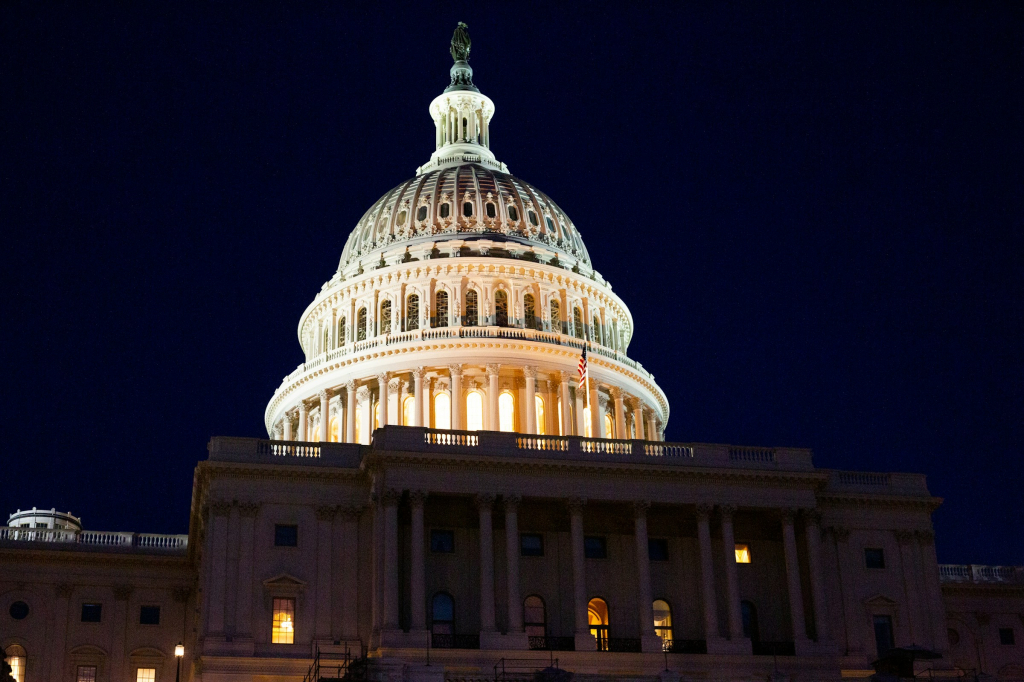
U.S. lawmakers are preparing to advance a long-awaited effort to clarify cryptocurrency oversight, with a key congressional committee expected to begin ‘markup’—the stage where legislators debate and amend bill language—next week. The move is being watched closely by digital asset markets, where regulatory uncertainty has remained a persistent headwind for risk appetite and long-term ‘institutional demand’.
According to a post on June 6 ET from the “Bitcoin Historian” account, citing a Washington, D.C. insider, the bill is expected to garner bipartisan support and could pass the committee process. Markup is widely viewed as a decisive checkpoint before a proposal can proceed toward floor votes, and a successful committee outcome would likely strengthen expectations that U.S. rules for asset classification and market supervision are finally converging on a workable framework.
Even so, the Senate path remains politically delicate. Democratic Senator Kirsten Gillibrand said during the Consensus conference that a broader crypto market structure bill could struggle to pass the Senate unless it includes explicit ‘ethics provisions’ aimed at preventing lawmakers and senior government officials from using inside access to extract private benefits from the crypto industry. Gillibrand said restrictions should apply to members of Congress, senior officials, and the president and vice president.
Her comments come as several Democratic senators have raised concerns about President Trump and his family’s crypto-related ties. The market structure effort had previously stalled over stablecoin-related provisions, though lawmakers have since discussed compromises. Gillibrand indicated she is working with the White House and bipartisan negotiators to incorporate ethics language alongside consumer protection and counter–terrorist financing measures, adding that passage could still be possible before the August recess.
Regulatory momentum is also reshaping product offerings in the U.S. retail trading market. Kraken said it has launched regulated ‘spot crypto leverage’ trading for U.S. individual investors, allowing customers to use existing crypto holdings as collateral to access liquidity and trade with up to 10x leverage without selling their underlying assets. The Block reported that the launch follows parent company Payward’s acquisition of Bitnomial, which helped Kraken secure the relevant licensing.
Kraken argued that U.S. retail traders have historically struggled to access such tools in a compliant framework, pushing some demand toward offshore, non-regulated platforms. The exchange said the acquisition also creates a foundation to expand into regulated perpetual futures and options in the U.S., while supporting its broader ambitions around an eventual public listing and deeper institutional and derivatives growth in the U.K. and Europe.
In crypto governance, World Liberty Fi reported that a proposal to convert 62.23 billion WLFI tokens into a revised lock-up schedule passed by an overwhelming margin. Under the approved plan, the affected supply will remain off the market for at least two years, a structure likely intended to reduce near-term ‘circulating supply’ pressure and improve predictability for market participants.
The proposal outlines that up to 45.2 billion WLFI held by the founding team, advisers, and partners will unlock over three years following a two-year lock-up period, with up to roughly 4.5 billion tokens slated for burning. Around 17.0 billion WLFI attributed to early supporters will unlock over two years after the initial two-year lock-up. The vote ran for seven days with a quorum threshold set at 1.0 billion WLFI.
Macro risk factors also resurfaced, underscoring how geopolitics can spill into crypto through shifts in volatility and liquidity conditions. Reports emerged of a missile attack on a vessel in the Strait of Hormuz, a critical chokepoint for global oil shipments. Any sustained disruption in the region can tighten energy markets and weigh on broader risk sentiment—an environment that often increases short-term correlations between cryptocurrencies and other risk assets.
Separately, market commentators highlighted unusually large oil positioning ahead of a major headline. The Kobeissi Letter said approximately $920 million in crude oil short contracts—around 10,000 futures positions—appeared roughly 70 minutes before Axios reported that the U.S. and Iran were nearing a 14-point agreement aimed at ending the war. The short positions were reportedly established around 3:40 a.m. ET, a typically thin-liquidity window, before the Axios report at about 4:50 a.m. ET. Oil prices fell more than 12% by 7:00 a.m. ET, implying an estimated mark-to-market gain of roughly $125 million for the trade, according to the analysis.
Bloomberg also reported that U.S. petroleum product exports rose to an average of 8.2 million barrels per day last week, reflecting demand from countries seeking to replace fuel supplies disrupted by the Hormuz-related uncertainty. For crypto investors, the episode reinforces that energy shocks can quickly transmit into ‘macro-driven’ swings in major tokens such as Bitcoin (BTC) and Ethereum (ETH), particularly when volatility forces deleveraging across markets.
On-chain flows suggested potential near-term supply overhang for Bitcoin, though exchange inflows do not necessarily equate to immediate selling. Whale Alert reported that 1,469 BTC—worth about $119.6 million—moved from an unidentified wallet to Binance, while another transfer of 1,051 BTC (about $85.5 million) also flowed into Binance. In a separate transaction, 703 BTC (about $57.5 million) was sent from an unknown wallet to Coinbase. Large exchange deposits are often interpreted as coins becoming available for sale, but the transfers alone cannot confirm whether those BTC were ultimately sold or simply reallocated for custody, collateral, or internal treasury purposes.
With Washington signaling progress on clearer rules while exchanges roll out more compliant trading products, the next week’s markup process could become a meaningful catalyst for sentiment. Still, Senate negotiations—particularly around ethics language and stablecoin-related policy—remain a central variable for how quickly the U.S. can translate bipartisan interest into durable crypto regulation.
🔎 Market Interpretation
- U.S. regulatory clarity is moving closer to a decision point: A House committee is expected to begin markup next week, a key step that can signal whether crypto market structure rules (asset classification, oversight, supervision) are heading toward a workable framework.
- Risk sentiment hinges on Senate viability: Despite expected bipartisan momentum in committee, the Senate outlook remains fragile—especially if ethics requirements are not included to address concerns about conflicts of interest among officials.
- Compliance-led product expansion supports U.S. market depth: Kraken’s regulated spot crypto leverage (up to 10x, using crypto as collateral) reflects growing availability of onshore, licensed tools that previously pushed activity offshore.
- Token supply management aims to reduce near-term volatility: World Liberty Fi’s revised WLFI lock-up schedule (multi-year lock, staged unlocks, partial burn) is designed to dampen circulating-supply shocks and improve expectations around emissions.
- Macro shocks can quickly propagate into crypto: Hormuz-related headlines and large oil positioning underscore how geopolitical volatility can tighten liquidity and lift cross-asset correlations, often triggering risk-off deleveraging that hits BTC/ETH.
- Near-term Bitcoin supply overhang signals appear—but are not definitive: Several large BTC deposits to Binance/Coinbase may indicate potential sell-side availability, though they could also reflect custody moves, collateralization, or treasury operations rather than spot selling.
💡 Strategic Points
- Watch the markup process as a sentiment catalyst: Committee success can increase market confidence in regulatory convergence; failure or major dilution can extend the uncertainty discount applied to U.S.-exposed crypto businesses.
- Senate negotiation risk concentrates around “ethics provisions” and stablecoin compromises: Traders should price headline sensitivity; policy add-ons (ethics/consumer protection/CTF) may determine whether the bill clears the Senate before the August recess.
- Track regulated derivatives and leverage as a structural tailwind: Kraken’s launch—enabled by Bitnomial-related licensing—signals a path toward compliant perpetuals/options, potentially pulling liquidity from offshore venues and improving market quality stateside.
- WLFI lock/unlock schedule changes shift tokenomics expectations: A two-year lock followed by multi-year unlocks (plus a burn component) can reduce near-term selling pressure but may introduce future “unlock event” volatility—monitor calendars and on-chain disclosure.
- Use macro hedging awareness during geopolitical energy shocks: Oil volatility and thin-liquidity positioning can trigger cross-market moves; consider liquidity conditions and correlation spikes when sizing leverage in BTC/ETH.
- Interpret exchange inflows probabilistically, not conclusively: Large deposits often precede selling but can also reflect internal transfers; confirm with follow-through signals (order book pressure, funding shifts, realized profit metrics, and subsequent outflows).
📘 Glossary
- Markup: A legislative stage where a congressional committee debates, amends, and rewrites bill text before advancing it toward a full chamber vote.
- Market structure bill: Broad legislation defining how crypto assets are classified and which regulators oversee spot markets, intermediaries, disclosures, and trading rules.
- Ethics provisions: Legal restrictions aimed at reducing conflicts of interest (e.g., limiting trading, ownership, or benefit-seeking by lawmakers and senior officials).
- Institutional demand: Participation by large funds, banks, corporations, or asset managers that often requires predictable regulation, custody standards, and compliant venues.
- Spot crypto leverage: Borrowing against collateral to increase spot market exposure without selling the underlying asset; magnifies gains and losses.
- Perpetual futures (perps): Derivatives without expiry that use funding payments to keep prices anchored to spot markets.
- Options: Contracts granting the right (not obligation) to buy/sell an asset at a set price before a date; used for hedging or leveraged directional bets.
- Circulating supply: Tokens currently available to trade in the market (excluding locked/vested supply), often influencing price pressure dynamics.
- Lock-up / vesting schedule: Rules that restrict token transfers for a period and then release tokens over time to manage supply shocks.
- Token burn: Permanent removal of tokens from supply, typically by sending them to an irrecoverable address.
- Strait of Hormuz: A key global oil-shipping chokepoint; disruptions can spike energy prices and tighten global liquidity.
- Thin liquidity window: A time period with lower trading volume and fewer orders, where large trades can move prices more sharply.
- Exchange inflow: Coins transferred into an exchange wallet; often monitored as a potential precursor to selling or collateral use.
- Deleveraging: Forced or deliberate reduction of leveraged positions, often accelerating sell-offs during volatility spikes.















Comment 0