

 News
News  Coin Information
  About us
  Customer Service


 Add as a preferred source on Google
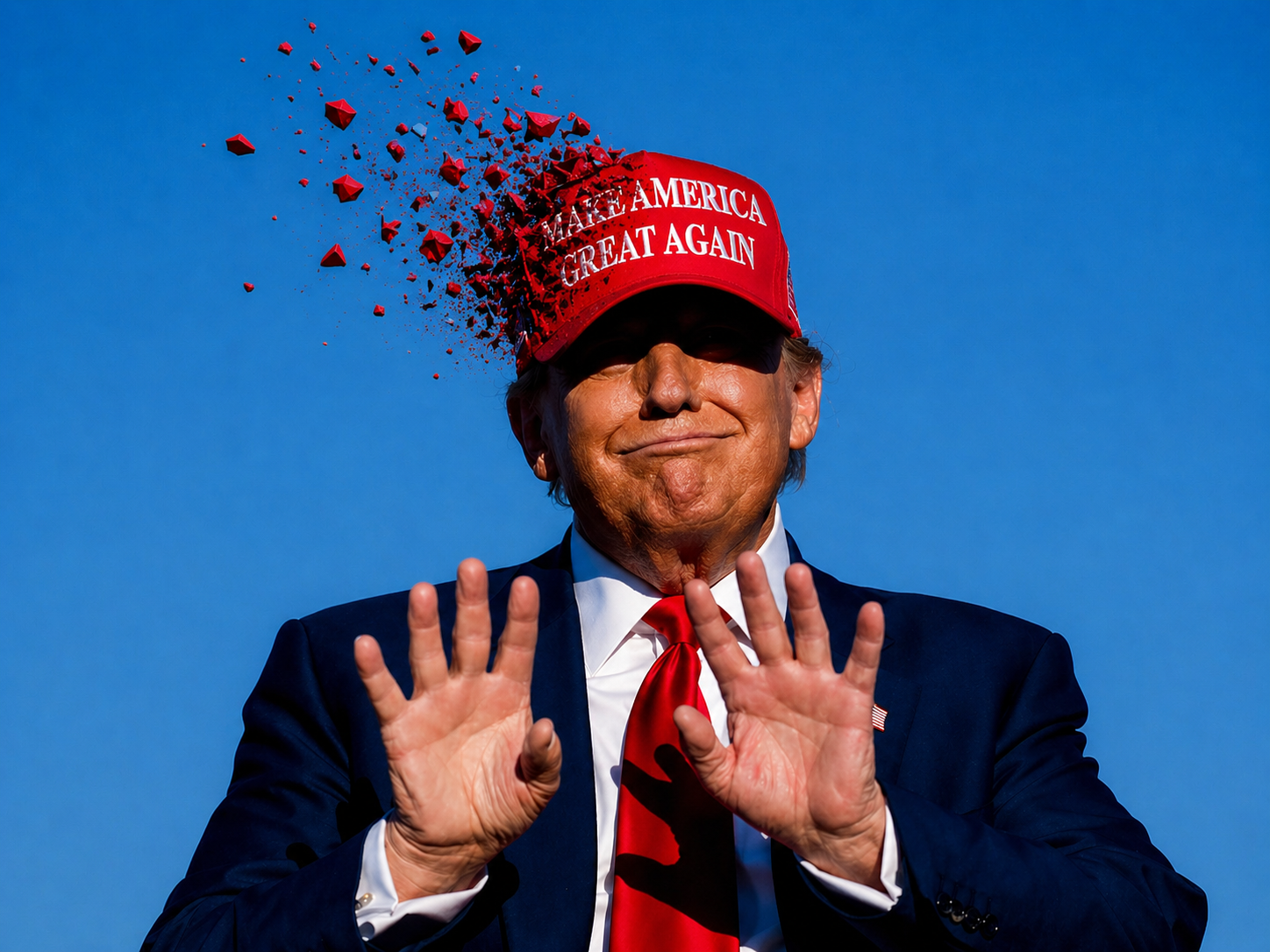
Signs of a deeper rift are emerging inside President Trump’s core ‘MAGA’ coalition after the Iran war escalated into a defining political fault line, with conservative commentator Tucker Carlson—long viewed as one of Trump’s most influential allies—publicly breaking with the White House. The fallout is quickly becoming more than a personal feud, raising fresh questions about cohesion on the American right as foreign policy pressures collide with the movement’s ‘America First’ instincts.
In an interview published on April 25 U.S. Eastern Time (ET) by The Wall Street Journal, Carlson delivered his most direct criticism yet of Trump’s approach to the conflict, framing it as both a strategic error and a symptom of deeper dysfunction in Washington. “I don’t hate Trump,” Carlson said, according to the report. “I just don’t like this war and the direction the government is going,” adding that he felt “betrayed.” He also questioned why the U.S. government, in his view, could not act primarily for its own citizens—an argument that positions foreign intervention as incompatible with populist promises at home.
Carlson identified February 28 ET as the moment he considered the relationship effectively severed, pointing to the period after U.S. and Israeli strikes on Iran widened into a broader confrontation. He said he made multiple trips to the White House and spoke with Trump repeatedly in an attempt to dissuade him from escalating, but ultimately failed. Carlson also recalled receiving a message the night before an airstrike indicating “we’re going,” and said he struggled to believe the operation would actually proceed.
Beyond the tactical critique, Carlson aimed at what he described as the limits of Trump’s leadership against entrenched institutions, arguing the episode showed “the system is stronger” than any one elected figure. According to the interview, Carlson suggested that such dynamics could enable an ‘authoritarian’ mode of governance but undermine the functioning of a ‘liberal democracy’—a remark likely to resonate with both anti-establishment conservatives and critics who say the movement is increasingly pulled in incompatible directions.
He went further, expressing regret about his previous role in shaping public opinion, saying he wanted to apologize for “misleading” people—an unusual moment of self-criticism from a media figure who helped define Trump-era conservative messaging. Carlson has been widely credited with influencing personnel and ideological priorities within Trump’s second administration, including his proximity to Vice President JD Vance, underscoring why the rupture is being read as a meaningful break rather than a routine intra-party dispute.
Trump, for his part, has responded with personal attacks. Earlier this month, he publicly derided Carlson as “low IQ” and “overrated,” escalating the conflict into an open confrontation. The exchange marks a sharp reversal for two figures who, for roughly a decade, served as reinforcing pillars of modern U.S. conservatism—one from the presidency, the other from a media platform that mobilized and disciplined the base.
The Wall Street Journal characterized Carlson as an emerging symbol of an anti-war faction inside the broader MAGA universe, suggesting the relationship has effectively collapsed. Analysts say the episode could widen fractures among Trump’s supporters, particularly between hawkish Republicans and those who view overseas conflict as a drain on domestic priorities. While the immediate dispute centers on Iran, the longer-term implication is a movement grappling with competing definitions of ‘America First’—and a political environment where internal loyalty is increasingly conditional on foreign policy outcomes.
{
"AI Summary Section (HTML)": "
"\"Perceived governance cohesion weakens: public infighting suggests internal constraints on Trump’s agenda, complicating messaging to voters and allies.\""
<Copyright ⓒ TokenPost, unauthorized reproduction and redistribution prohibited>






















Comment 0