

 News
News  Coin Information
  About us
  Customer Service


 Add as a preferred source on Google

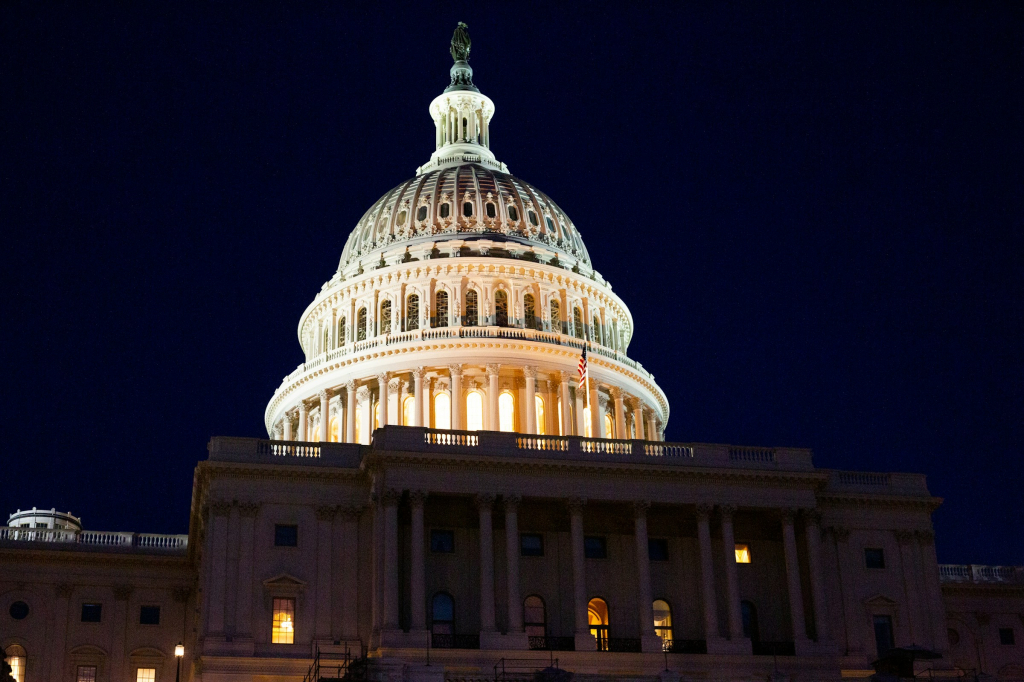
U.S. crypto policy could accelerate into a decisive summer window after Senator Bernie Moreno (R-Ohio) said he intends to move a comprehensive 'market structure' bill through an expedited review next week and deliver it to President Trump by late June, aiming for a signature before July 4. The timeline, if met, would mark one of the clearest legislative pushes yet to define who regulates digital assets and how crypto trading platforms must operate.
Moreno’s comments, reported by Bitcoin Magazine, come as U.S. spot crypto ETFs continue to pull in fresh capital and major Wall Street firms expand retail access—developments that are raising the stakes for Washington to clarify oversight, trading rules, and compliance obligations across the industry.
The proposed 'market structure' framework is broadly expected to tackle long-running questions such as the division of authority between U.S. regulators, standardized trading and custody requirements, and a clearer registration regime for exchanges and brokers. Market participants have argued that inconsistent enforcement and regulatory ambiguity have hindered institutional adoption and pushed activity offshore. A faster legislative track would strengthen expectations that digital assets are moving further into the U.S. financial mainstream, though the bill’s path remains politically and technically complex.
One immediate backdrop is renewed ETF momentum. On May 5 (ET), U.S. spot Bitcoin (BTC) ETFs recorded net inflows of $467 million, extending inflows to four consecutive trading days, according to PANews. BlackRock’s iShares Bitcoin Trust (IBIT) led with $251 million, followed by Fidelity’s Wise Origin Bitcoin Fund (FBTC) at $133 million. Grayscale Bitcoin Trust (GBTC) was the outlier, posting net outflows of about $18.4 million.
Total net assets across spot Bitcoin ETFs stood at roughly $108.98 billion at the time of reporting, with cumulative net inflows reaching about $59.72 billion. The steady bid is being read as a signal of returning 'institutional demand' funneled through regulated wrappers, particularly as allocators rebalance amid shifting macro expectations and a maturing derivatives market around BTC.
Ethereum (ETH) spot ETFs also extended their winning streak. On May 5 (ET), the category saw net inflows of about $97.6 million, its third straight day of inflows. BlackRock’s iShares Ethereum Trust (ETHA) brought in $69.5 million, while Fidelity’s Ethereum Fund (FETH) added $24.2 million, per PANews. Total net assets for spot Ether ETFs were estimated at $14.15 billion, roughly 4.92% of Ethereum’s market capitalization, with cumulative net inflows around $12.18 billion. The sustained inflows are sharpening focus on whether ETH is entering a more durable phase of institutional accumulation.
Traditional finance is simultaneously moving closer to direct on-platform crypto exposure. Citing Cointelegraph, PANews reported that Morgan Stanley ($MS) plans to begin offering spot cryptocurrency trading on its wealth management platform in the second half of 2026, while also expanding access to tokenized assets and crypto ETFs. If implemented, the move would broaden distribution through one of the largest U.S. wealth channels, potentially increasing 'liquidity inflow' from advisory-led portfolios that have largely relied on ETFs to date.
Infrastructure providers are also pivoting toward AI-driven demand for power and compute. Core Scientific ($CORZ) is planning to acquire Bitcoin mining operator Polaris for $421 million to expand its U.S. AI data center footprint, PANews reported, citing The Block. The acquisition would secure a 440-megawatt power supply agreement with Oklahoma Gas & Electric and add a 40-acre powered campus near Core Scientific’s existing facility in Muskogee, Oklahoma. The company said it aims to convert portions of its mining fleet across Texas, Georgia, North Carolina, and Oklahoma into high-density computing sites, targeting 1 gigawatt of leased power at the Muskogee campus. The deal is expected to close in Q3 2026, subject to regulatory approvals.
In South Korea, the Korea Exchange (KRX) signaled a parallel push toward regulated crypto-linked products, formally outlining plans to introduce 'digital asset derivatives' in Busan. According to panewslab.com, KRX Chairman Jeong Eun-bo said at an event marking the 30th anniversary of the Busan derivatives market that the exchange would actively pursue the launch and work to position Busan as a global derivatives hub through initiatives such as international conferences. The comments underscore a growing regional competition to build compliant derivatives venues tied to digital assets.
Still, U.S. legislative momentum may be vulnerable to a key dispute: whether stablecoin issuers or crypto platforms should be allowed to share yield with users. TD Cowen warned that disagreements over a 'stablecoin interest' model could delay progress on the broader market structure package, Odaily reported. Banking groups including the American Bankers Association have formally opposed compromise proposals that would enable crypto platforms to offer interest-like returns on stablecoin balances, arguing the model could disrupt traditional deposit funding. With banks and crypto firms holding sharply conflicting positions, TD Cowen suggested a near-term consensus may be difficult—turning stablecoin economics into a central variable for the bill’s timing.
Enforcement actions continue to shape the market’s risk calculus. U.S. law enforcement authorities seized the domain of BG Wealth Sharing, an alleged $150 million crypto Ponzi scheme, Odaily reported. On-chain investigator ZachXBT said the group attempted to launder more than $92 million between April 27 and May 3, and that collaboration involving Tether, Binance, OKX, and U.S. authorities helped freeze more than $41 million. The operation allegedly began in 2025 and drew retail investors via social media by advertising daily returns of 1.3% to 2.6%. Shortly before shutdown, the group’s CEO, Steven Beard, reportedly demanded an additional 12% payment framed as a tax tied to 'IPO regulatory procedures'—a move investors interpreted as a last attempt to extract funds.
On the stablecoin liquidity front, Circle minted roughly 750 million additional USDC on Solana (SOL) over the past 24 hours, according to Odaily, citing SolanaFloor. The issuance points to expanding stablecoin capacity on Solana, where meme coin trading and on-chain activity have periodically driven spikes in demand for settlement assets.
That dynamic is likely to be tested in South Korea after Upbit, one of the country’s largest exchanges, said it will list dogwifhat (WIF) across KRW, BTC, and USDT markets. PANews reported that trading is set to begin at 4:00 p.m. local time on May 6, which corresponds to 3:00 a.m. ET on May 6 (07:00 UTC). WIF, a Solana-based meme coin, often reacts sharply to new large-venue listings as they can broaden access and deepen order books.
Taken together, the developments highlight a market being pulled simultaneously by policy, platforms, and products: Washington debates the plumbing of regulation, ETFs absorb incremental institutional allocations, banks prepare to widen access, and infrastructure firms chase power for AI compute. Whether the U.S. can meet Moreno’s July 4 signing ambition may hinge less on headline politics than on the hard details—especially who gets to pay yield on stablecoins, and under what rules.



















Comment 0