

 News
News  Coin Information
  About us
  Customer Service


 Add as a preferred source on Google
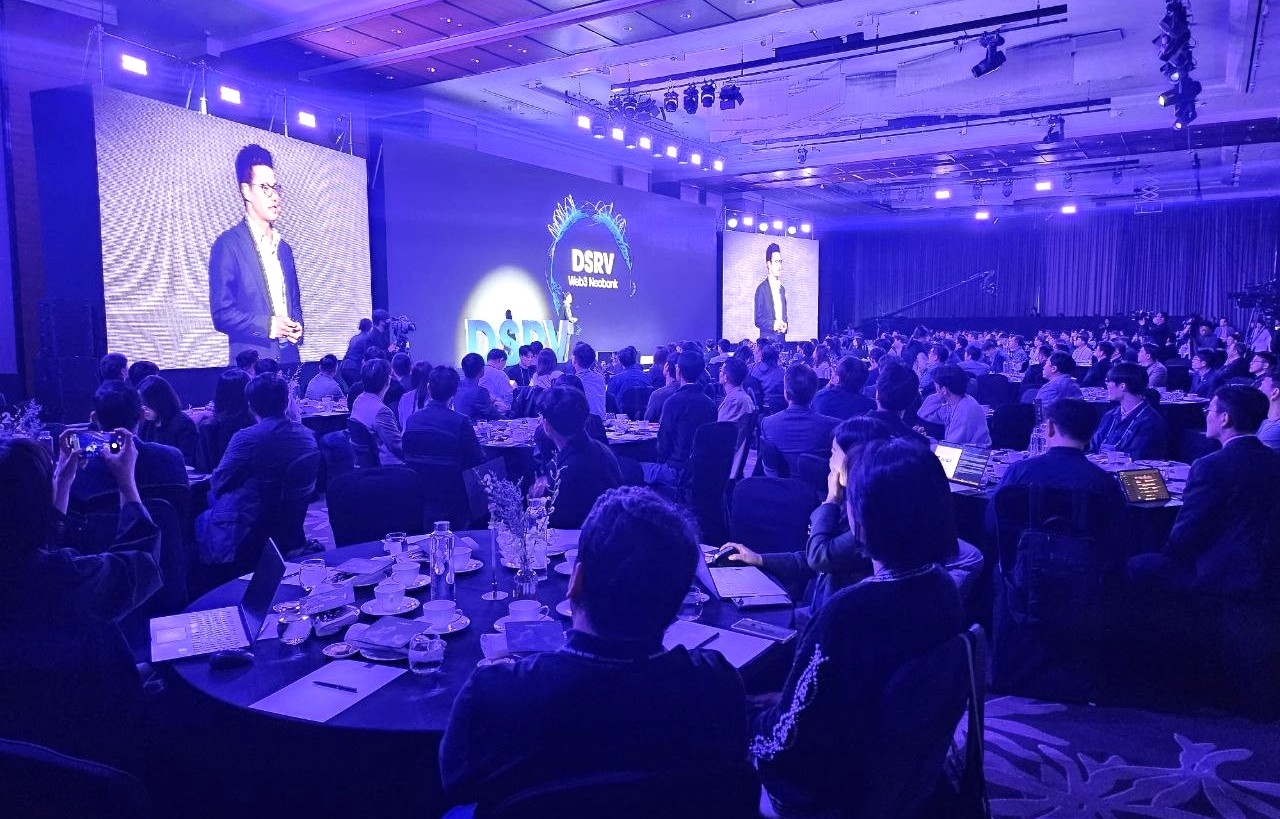
A closed-door blockchain event in Seoul’s Yeouido financial district offered a revealing snapshot of where mainstream finance and onchain innovators are talking past each other—at a moment when global markets are moving quickly toward tokenized assets and faster settlement.
The gathering, held Thursday UTC at a five-star hotel in Yeouido, focused on the idea of a blockchain-based ‘neobank’—a next-generation banking stack designed to compress payment and settlement times from days to seconds and to sharply reduce cross-border remittance costs. Presentations outlined how real-time settlement infrastructure could be built on blockchain rails, arguing that the biggest efficiencies come not from new speculative products but from redesigning the plumbing of money movement itself.
Yet the most memorable moment came not from the stage but from a nearby round table. A senior executive from a major Korean bank, who had listened quietly throughout the session, summed up the incumbents’ prevailing mood only after the final speaker finished. “Honestly, it still feels too difficult,” the executive said, citing technical complexity and regulatory uncertainty—and questioning why a large bank should move now rather than wait.
The comment captured a familiar divide. For traditional financial institutions, the core vocabulary is ‘risk’ and ‘feasibility’: what could break, what regulators might prohibit, and what could expose the firm to compliance or operational failures. That caution has long been a feature, not a bug, of a system built to avoid catastrophic mistakes. But advocates of tokenization argue that the same caution becomes less useful when the underlying architecture of markets is changing—because infrastructure shifts tend to be irreversible once network effects take hold.
One presenter framed the mismatch with a blunt question: if information can move in real time at near-zero cost, “why does money still move slowly and expensively?” The point resonated because it reflects quirks that users accept as normal, even though they stem largely from legacy design rather than technological limits. Messaging apps can deliver texts instantly across borders for free, but sending funds internationally can still take more than a day and consume multiple percentage points in fees. Even in domestic markets, retail investors can buy shares with a tap, yet final ownership and cash settlement often complete on a delayed schedule, with intermediaries—brokers, depositories, and clearing houses—processing the handoff.
Blockchain-based systems, proponents argue, tackle that delay by merging transfer of ownership and payment into a single, synchronized process. If assets are represented as tokens, settlement can occur atomically, reducing the need for multiple middle layers and shrinking both cost and time. In this framing, ‘tokenization’ is less about creating a new risk-on asset class and more about changing the mechanics of how traditional assets—cash-like instruments, securities, and funds—are issued, traded, and settled.
Global signals have strengthened that narrative. BlackRock has been among the most visible names experimenting with tokenized representations of traditional instruments, highlighting how large institutions increasingly view onchain rails as a potential efficiency upgrade. A speaker joining the Yeouido event remotely from New York argued that the U.S. market is moving “fast and seriously” toward onchain finance, not primarily to chase yields but to reshape the ‘cost structure’ of settlement, collateral movement, and back-office reconciliation.
Still, Korea’s large financial institutions remain cautious, especially around compliance, custody, consumer protection, and the unclear boundaries between regulated securities infrastructure and public blockchain networks. Industry executives frequently point to unresolved questions: Which tokens qualify as securities? How should onchain transactions be monitored for AML compliance? Who bears liability if smart-contract logic fails? And how should banks manage operational risk if critical market functions depend on code and networks beyond their control?
What stood out in Yeouido was not that either side was wrong, but that they were operating on different timelines. The builders spoke the language of infrastructure—of intermediaries falling away, of settlement going real time, of the back office becoming software. The bankers heard the language of investment and compliance—of uncertainty, downside scenarios, and the prudence of waiting. Both perspectives can be defensible, yet they do not easily converge.
The dynamic echoes earlier technology inflection points in finance. In the early days of internet banking, many institutions similarly questioned why they should move first, citing security and consumer adoption concerns. In hindsight, some caution was warranted; but once digital distribution became the default, the cost of delay became structural rather than tactical.
The broader implication for Korea’s onchain transition is that the debate will not be settled by profitability projections alone. Infrastructure changes rarely start as a clean ROI story; they accelerate when the market’s operating baseline shifts and laggards find that catching up requires rebuilding systems under pressure. If Korea’s regulated financial sector cannot bridge the gap between ‘risk management’ and ‘infrastructure redesign,’ progress toward tokenized settlement and real-time finance could continue to stall—even as major markets abroad normalize onchain components within mainstream financial workflows.












Comment 0