

 News
News  Coin Information
  About us
  Customer Service


 Add as a preferred source on Google
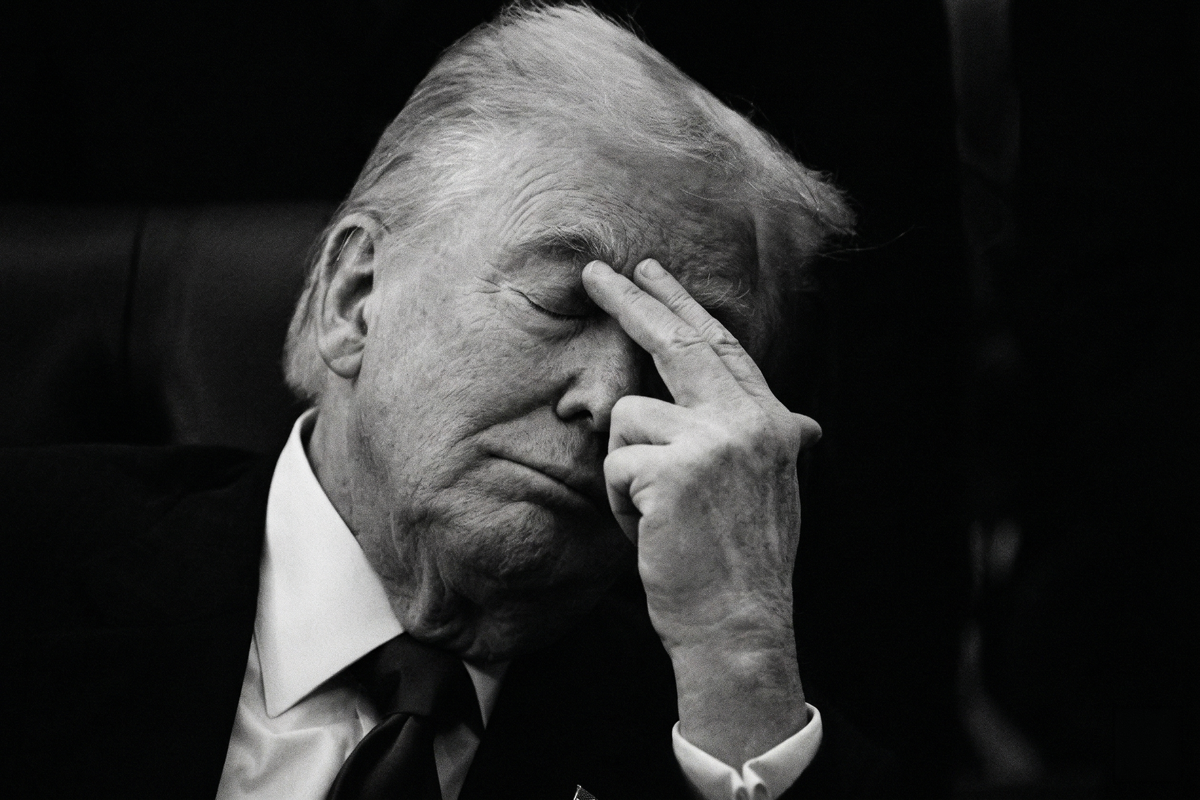
Tokens tied to President Trump are sliding to record lows, intensifying criticism that the projects blur the line between political influence and speculative crypto marketing. The downturn has added fuel to a broader debate over whether ‘access-driven’ token promotions undermine market trust and invite regulatory scrutiny.
According to CoinGecko data, the Trump-promoted meme coin TRUMP has fallen to around $2.80 after printing an all-time low near $2.73 in March 2026. The move marks an estimated 96% drawdown from its peak in the $75 range in January 2025, leaving the token with only a fraction of its prior valuation and placing it among the steepest collapses in the meme-coin segment over the past year.
Pressure is also evident in World Liberty Financial (WLFI), a decentralized finance (DeFi) initiative co-founded by Trump’s sons. The project’s governance token WLFI hit an all-time low of roughly $0.07 over the weekend, down about 75% from its high of $0.31 recorded in September 2025. Governance tokens typically derive value from their role in protocol voting and fee economics, but in WLFI’s case, traders have increasingly questioned whether there is sufficient ‘utility’ and sustainable liquidity to justify earlier pricing.
The drawdowns have triggered unusually blunt criticism from within the crypto industry itself. Tonya Evans, a law professor and board member at Digital Currency Group (DCG), the parent company of Grayscale, compared the episode to past industry controversies and argued that the pattern resembles extractive, hype-driven cycles rather than long-term ecosystem building. In her view, the projects are emblematic of how brand power can be used to “pull value” from markets without clear accountability—language that echoes long-running investor concerns about meme-coin incentives and insider advantage.
Controversy is also building around a TRUMP tokenholder gala scheduled for April 25, 2026, at Mar-a-Lago in Florida. Under the event’s published criteria, attendance is reserved for the top 297 TRUMP holders based on a holding-period-weighted ranking. Critics say that design effectively ties proximity to a sitting president to token accumulation, creating the perception of ‘selling access’—a particularly sensitive issue given the broader U.S. debate over ethics, influence, and financial conflicts.
Democratic senators Elizabeth Warren, Richard Blumenthal, and Adam Schiff have pushed back, sending a letter to TRUMP meme-coin issuer Bill Zanker seeking clarification on the gala’s purpose and how it was organized. The letter, reported by Politico, argues that the promotion appears to use access to President Trump as an incentive to drive token demand. Lawmakers also pointed to the structure of the event—where holding TRUMP is effectively a prerequisite—as raising questions about whether Trump’s family could benefit indirectly through increased token sales or elevated market activity tied to the promotion.
Market participants say the price action reflects more than routine volatility. The twin declines in TRUMP and WLFI highlight structural fragilities that can emerge when political branding meets token economics: initial attention can be intense, but without durable product traction, transparent governance, and deep liquidity, valuation support can evaporate once the news cycle moves on.
While major events such as the April 25 gala can spark short-term speculation, analysts caution that any ‘event-driven’ bounce may prove fleeting in the absence of measurable fundamentals and clearer disclosures. For the broader crypto market, the episode underscores how politically adjacent tokens can amplify reputational risk—and how quickly narratives can shift from viral momentum to questions of credibility and oversight.
🔎 Market Interpretation
- Trump-linked tokens hit new lows: The TRUMP meme coin fell to about $2.80 after an all-time low near $2.73 (March 2026), representing roughly a 96% drawdown from its ~$75 peak (Jan 2025).
- WLFI governance token also slides: WLFI dropped to around $0.07, about 75% down from its ~$0.31 high (Sep 2025), raising doubts about demand outside branding and speculation.
- “Access-driven” token narratives collide with market trust: The declines intensify criticism that political branding plus token promotion can erode confidence and increase perceived regulatory and ethics risk.
- Event catalysts may not repair fundamentals: The upcoming April 25, 2026 Mar-a-Lago gala could spark short-term volatility, but analysts caution any bounce may fade without clearer utility, disclosures, and liquidity.
💡 Strategic Points
- Separate hype from fundamentals: Large drawdowns highlight how tokens tied to personalities can lose support quickly when product traction, governance clarity, and real fee/token sinks are weak.
- Liquidity and structure matter: Thin liquidity can amplify downside; governance tokens need credible value capture (fees, buybacks, emissions policy) and transparent on-chain economics to justify valuation.
- Access incentives create headline risk: Restricting gala attendance to top 297 holders via a holding-period-weighted ranking can be interpreted as pay-to-access, increasing reputational risk and the chance of political/legal scrutiny.
- Regulatory/ethics overhang: Senators Warren, Blumenthal, and Schiff reportedly requested details from issuer Bill Zanker, signaling potential escalation from market skepticism to formal oversight questions.
- Risk management takeaway: Politically adjacent tokens may carry additional non-market risks (ethics, conflicts, investigations) that can trigger abrupt narrative shifts and volatility beyond typical meme-coin cycles.
📘 Glossary
- All-time low (ATL): The lowest price a token has ever reached on record.
- Drawdown: The percentage decline from a peak to a subsequent low (e.g., ~96% from ~$75 to ~$2.8).
- Meme coin: A token driven largely by social attention, branding, and community momentum rather than cash-flow-like fundamentals.
- Governance token: A token that typically grants voting rights over protocol parameters; value often depends on governance power and any associated fee economics.
- DeFi (Decentralized Finance): Blockchain-based financial applications (trading, lending, etc.) operating without traditional intermediaries.
- Utility (token utility): Practical functions that create demand for a token (fees, staking, access to features) beyond speculation.
- Liquidity: How easily an asset can be bought/sold without large price impact; low liquidity can worsen volatility.
- Event-driven trading: Short-term speculation tied to catalysts (announcements, conferences, galas) rather than long-term fundamentals.








Comment 0