

 News
News  Coin Information
  About us
  Customer Service


 Add as a preferred source on Google

The White House is preparing what it called a “major announcement” in the coming weeks on President Trump’s push to establish a ‘strategic Bitcoin reserve,’ a signal that federal policy toward holding digital assets on the government balance sheet could soon become more concrete.
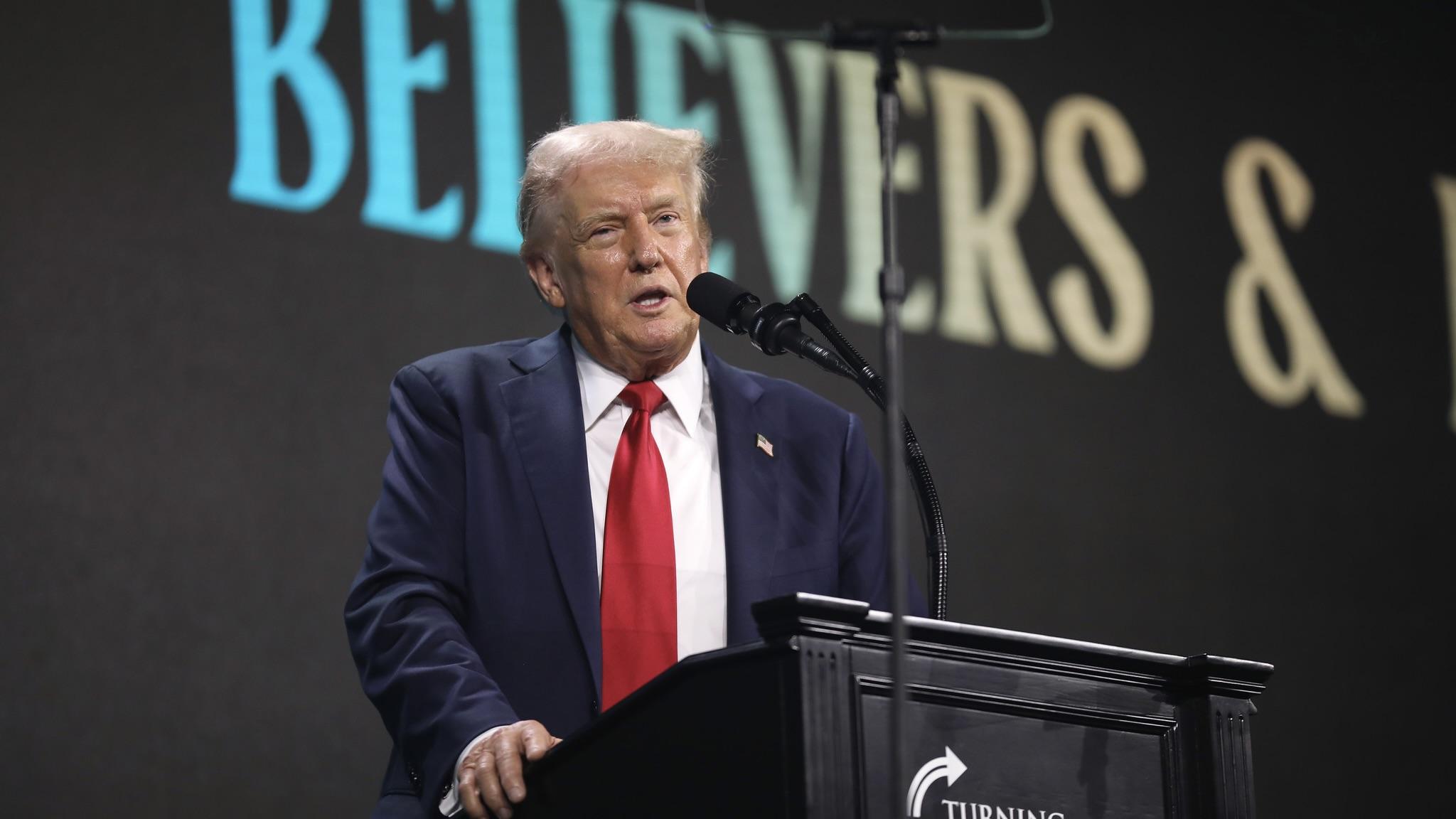
Speaking at the Bitcoin 2026 conference, Patrick Witt, executive director of the White House’s President’s Advisory Council on Digital Assets, said the administration has been evaluating ways to “protect and integrate” digital assets—particularly Bitcoin (BTC)—following President Trump’s executive order signed last year. Witt said details will be shared “within the next few weeks,” without specifying the scope of the planned policy update or whether it will include acquisition targets, custody arrangements, or inter-agency responsibility.
On Capitol Hill, lawmakers are also reviving legislation aimed at making a Bitcoin reserve a permanent feature of U.S. policy. Senator Cynthia Lummis and Representative Nick Begich have reintroduced the BITCOIN Act under a new name—the “American Reserve Asset Modernization Act”—which proposes purchasing 1 million BTC over five years in a ‘budget-neutral’ manner. Begich has separately said he intends to codify President Trump’s executive order into law, a move that would make future reversals more difficult and could formalize how federal agencies treat Bitcoin as a reserve asset.
The developing U.S. policy debate comes as regulators continue to reshape the plumbing of crypto-linked investment products. The U.S. Securities and Exchange Commission (SEC) has opened a public comment period on a proposed NYSE Arca rule change that could influence how certain cryptocurrency ETFs are structured and listed. The proposal would require at least 85% of a commodity trust’s assets to meet existing eligibility standards, while calculating derivatives exposure based on total notional value.
Eligible assets would include Bitcoin (BTC), Ethereum (ETH), Solana (SOL), and XRP (XRP), provided they have listed futures trading for at least six months on a designated market and are held at a meaningful weight within an ETF. The proposal explicitly excludes NFTs and collectibles. One example cited in coverage suggests that a trust holding spot Bitcoin alongside over-the-counter call options tied to Bitcoin ETFs could fall short of the 85% threshold—potentially landing around 71% under the proposed math—highlighting how derivatives usage could constrain product design.
In Washington, the clock is also ticking on broader market-structure legislation. Industry watchers estimate the U.S. Senate has roughly nine to ten weeks of effective floor time to move the ‘Clarity’ bill—legislation intended to define regulatory jurisdiction and rules for crypto market structure—before the August recess. Ji Kim, CEO of the Crypto Council for Innovation, said revisions are expected to advance in May, but acknowledged the Senate’s limited calendar and unresolved disputes, including debate around stablecoin yield and reward mechanisms. The bill must first clear the Senate Banking Committee, underscoring the procedural hurdles still ahead.
Traditional asset managers, meanwhile, continue to deepen their presence in the crypto ETF race. T. Rowe Price filed a third amended registration for an actively managed crypto ETF expected to trade under the ticker ‘TOKN,’ according to Bloomberg ETF analyst Eric Balchunas. The proposed fee is 0.75%. Balchunas said the fund could launch soon and noted that T. Rowe Price would be among the largest active managers to enter the category—another data point suggesting crypto exposure is increasingly being packaged in familiar wrappers for mainstream investors.
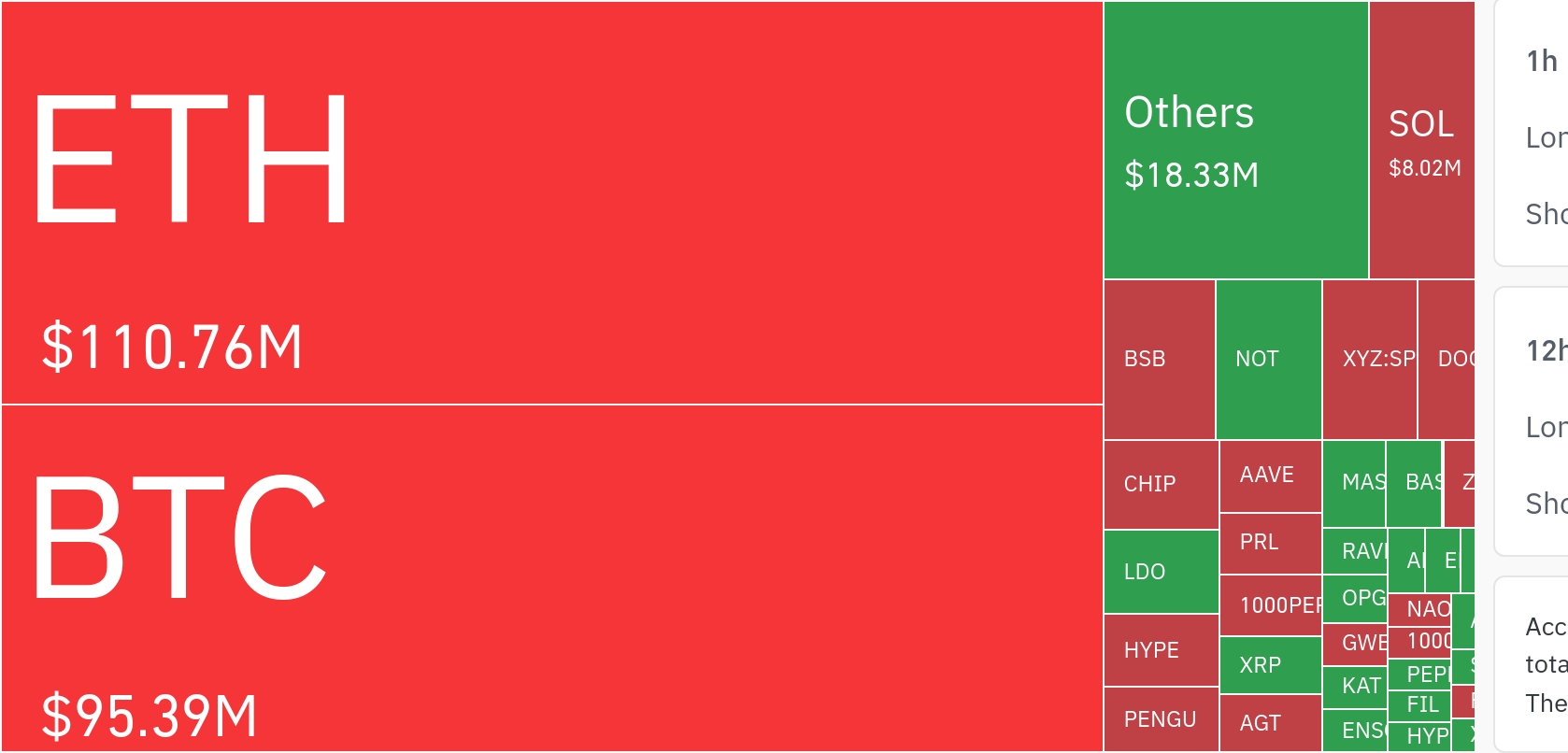
Market signals around Ethereum (ETH) also drew attention. Two wallets linked to Galaxy Digital deposited a combined 45,000 ETH—worth roughly $104 million—into centralized exchanges including Binance, Bybit, and OKX over a 15-hour period, according to on-chain monitoring. Large exchange deposits are often interpreted as potential near-term sell-side supply, even if subsequent trading intent is not always clear.
On the Bitcoin side, U.S. spot Bitcoin ETFs extended their inflow streak to nine consecutive sessions, adding about $14.45 million on April 24, according to SoSoValue data cited in local reporting. Cumulative inflows during the streak reached roughly $2.1 billion, with last week’s total at about $823.7 million. BlackRock’s iShares Bitcoin Trust (IBIT) accounted for a large share of activity, posting weekly inflows of about $983 million.
Still, analysts cautioned that flows may not fully reflect fresh spot demand. CryptoQuant founder Ki Young Ju said the market has been driven largely by futures, with open interest continuing to rise. He argued that, excluding ETF inflows and purchases by Strategy, on-chain “apparent demand” remains negative. Other analysts pointed to short liquidations as a key driver of the recent move: since April 13, shorts liquidations totaled around $2.8 billion versus $1.8 billion in long liquidations. Some also flagged the possibility that a portion of ETF buying reflects ‘basis trades’—buying IBIT while shorting CME Bitcoin futures—an arbitrage-style positioning that is closer to market-neutral than a directional bet.
Derivatives markets have echoed the mixed tone. The 25-delta skew remaining in negative territory suggests traders are paying a premium for downside protection, a sign that hedging demand persists even as prices firm.
Across global markets, institutional adoption narratives continued to broaden. Colombia’s largest pension fund launched a Bitcoin-focused fund, according to a post shared on X by journalist Pete Rizzo, framing the product as an acknowledgment of Bitcoin’s growing role in global markets. In Israel, the Capital Market, Insurance and Savings Authority approved BILS, a shekel-pegged stablecoin issued by local exchange Bits of Gold. The token has completed a two-year pilot on Solana (SOL), with reserves held in segregated accounts in Israel, marking a notable development in regulated, local-currency stablecoin infrastructure.
In Asia, South Korea’s National Tax Service said it will begin collecting overseas crypto asset reports starting next year and will receive transaction information from 56 countries under a new international cooperation framework, according to The Korea Times. The agency said it recovered 33.9 billion won (about $23 million) in unpaid taxes over the past nine months after adopting the system in July 2025, and plans to expand cross-border data exchange to offshore real estate holdings beginning in 2030.
For the crypto industry, the near-term focus is likely to remain on Washington: a White House announcement on a ‘strategic Bitcoin reserve’ could reset expectations around sovereign-level demand narratives, while parallel debates over ETF listing standards and market-structure legislation may shape how capital enters—and hedges—digital assets in the months ahead.
























Comment 0