

 News
News  Coin Information
  About us
  Customer Service


 Add as a preferred source on Google

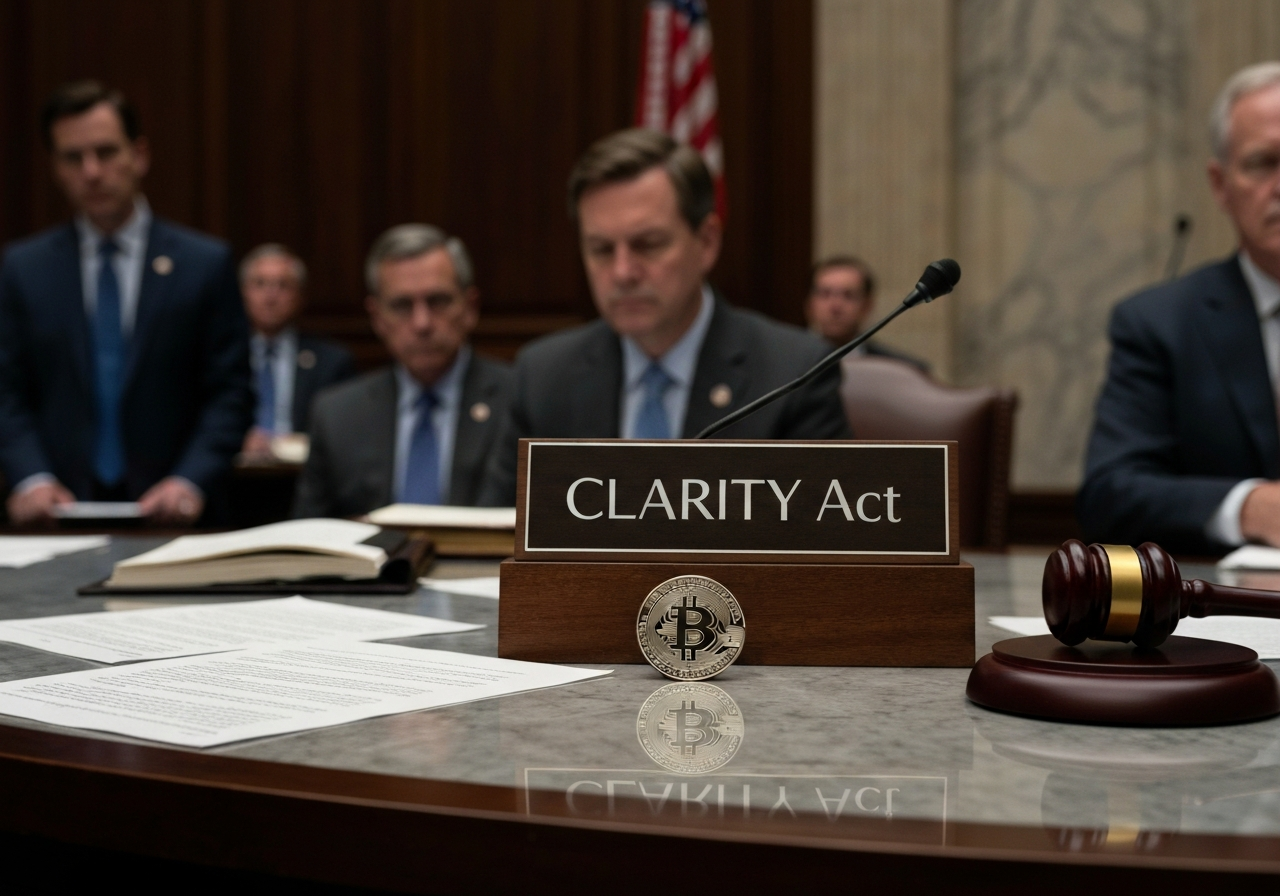
Progress on the U.S. ‘CLARITY Act’ is being treated by markets as just another step in Washington’s long regulatory slog. Singapore’s largest bank, DBS, argues it is something bigger: a ‘structural turning point’ that accelerates stablecoins’ shift from a simple trading tool into ‘productive financial infrastructure’—and a key bridge between the banking system and onchain capital markets.
In a May 14 edition of its Crypto Digest, DBS strategists Chang Wei Liang and Chee Zheng Feng described the Digital Asset Market Clarity Act as a “constructive compromise” that attempts to balance banking stability with digital-asset innovation. Their note landed the same day the U.S. Senate Banking Committee advanced the bill on a 15–9 vote, sending it to the full Senate. All 13 Republicans on the committee supported the measure, joined by Democratic Senators Ruben Gallego and Angela Alsobrooks.
The committee vote marked the bill’s first Senate milestone roughly 10 months after the House passed it 294–134 in July 2025. The next hurdle is steeper: to clear the Senate, supporters must reach the 60-vote threshold typically needed to overcome a filibuster. With 53 Republicans in the chamber, the math implies at least seven Democratic votes would be required if party lines hold.
A line drawn on stablecoin ‘yield’
DBS put particular emphasis on a provision that has become the political and industry flashpoint: stablecoin ‘yield.’ The bill would prohibit interest-like returns paid simply for holding a stablecoin—treating that behavior as too close to deposit-like products—while permitting rewards linked to real usage such as transactions, payments, and certain forms of staking or platform activity.
The compromise language, negotiated for more than four months by Republican Senator Thom Tillis and Democratic Senator Angela Alsobrooks, survived intense bank lobbying, according to DBS. The American Bankers Association and other groups urged lawmakers to reject the approach, with reports of more than 8,000 letters sent to the Senate in opposition. Still, the negotiated framework remained intact.
Coinbase ($COIN) Chief Legal Officer Paul Grewal framed the difference as preserving incentives tied to “actual participation” rather than passive holding. DBS’s assessment is that the design addresses a core banking concern—deposit flight—without stripping crypto platforms of the ability to encourage activity and build payment-based ecosystems.
The stakes are not abstract. DBS noted that U.S. banks fund roughly 80% of lending from customer deposits. By banning passive yield, policymakers effectively protect banks’ funding base. At the same time, allowing usage-based rewards nudges stablecoins from ‘buy-and-hold’ toward ‘buy-and-use,’ reinforcing their potential role as a settlement rail embedded in everyday financial flows.
From cash-equivalent to ‘productive’ asset
DBS argued the longer-term implication is that stablecoins could be treated less like static cash equivalents and more like assets with ‘productive’ use cases—generating revenue opportunities across issuance, custody, and payment and clearing infrastructure. That shift matters to both fintech firms and incumbent financial institutions, because the earnings pool moves from simply minting tokens to owning the rails and services around them.
Regulatory clarity could also entrench existing leaders. Citing DeFiLlama data, DBS said Tether (USDT) holds about 59% of stablecoin market share and USD Coin (USDC) about 24%, for a combined 83%. Sky Dollar accounts for roughly 3%, while other issuers split the remaining 14%.
As regulatory frameworks harden, DBS expects compliance capability and capitalization to become even more decisive—factors that tend to favor incumbents. Circle’s Dante Disparte, the company’s chief strategy officer, nonetheless described the compromise as meaningful progress, calling it a signal that the U.S. has chosen to lead rather than be pulled along in digital-asset policy.
Crypto markets rise alongside institutional inflows
DBS also tied the policy moment to renewed strength in major cryptoassets and steady institutional demand. From late March through early May, Bitcoin (BTC) rose about 18% and Ethereum (ETH) about 8%, broadly comparable to gains in U.S. equities over the period, while gold traded largely flat, according to the report.
Flows supported the price action. DBS estimated roughly $2 billion in net inflows into spot Bitcoin ETFs, while digital-asset treasury companies continued accumulating. Strategy—formerly MicroStrategy—was cited as purchasing an additional ~$4 billion in BTC.
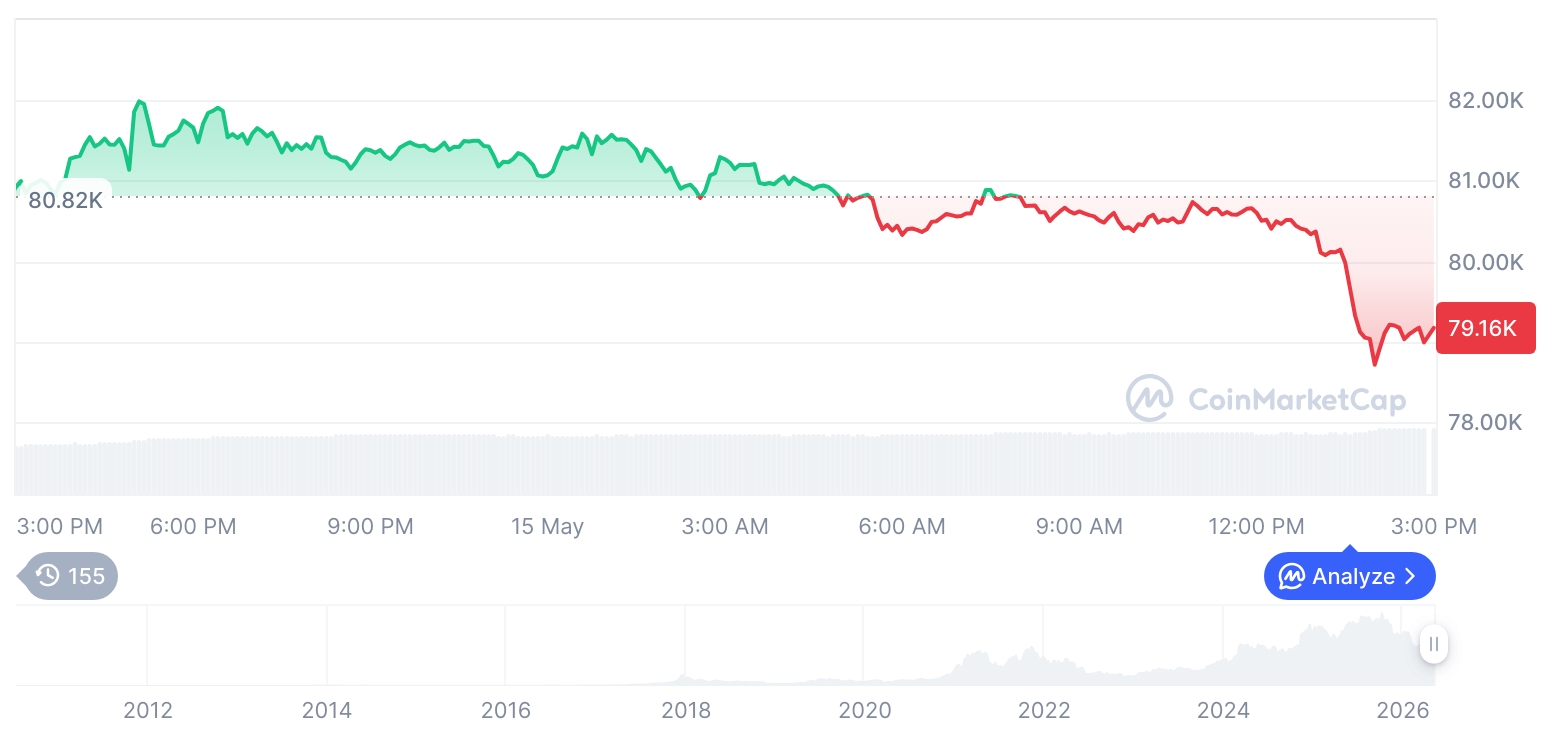
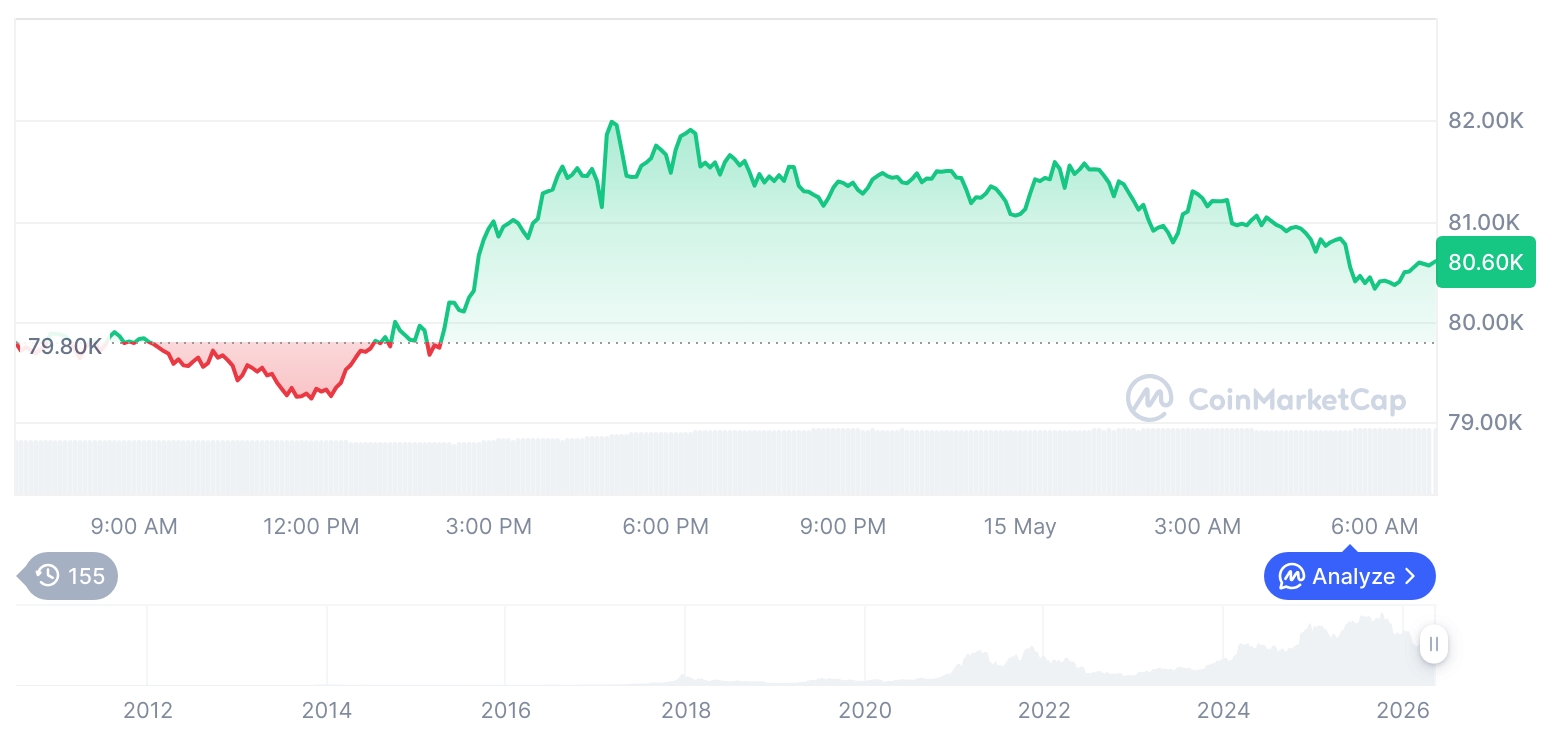
On the Ethereum side, the report pointed to about $356 million of net inflows into Ethereum ETFs and roughly $760 million in ETH purchases by BitMine, for a combined ~$1 billion. DBS noted the purchases represented about 0.4% of Ethereum’s market capitalization as of late March—similar in magnitude to Bitcoin’s ~$6 billion of buying pressure equating to about 0.45% of its market cap. As of May 12, DBS cited BTC at $80,526 and ETH at $2,278.
The deeper signal: ‘financial integration,’ not just regulation
DBS’s central argument is that investors are misreading the signal. The key development is not merely that U.S. regulation is advancing, but that stablecoins are being pulled into the core logic of the financial system. In DBS’s framing, banks are increasingly treating stablecoins not as an external crypto experiment but as part of the future ‘monetary stack’—a base layer for payments, settlement, and programmable finance.
This has direct implications for tokenization, particularly real-world assets (RWA). ‘Programmable assets’ require ‘programmable liquidity,’ and stablecoins are rapidly becoming the settlement layer connecting traditional finance with onchain markets. If the RWA market is to scale, DBS argues, the payment and settlement infrastructure must be legally grounded first—and the CLARITY compromise begins to outline that foundation.
Implications beyond the U.S., including Korea
DBS also highlighted how the U.S. template could influence jurisdictions debating local-currency stablecoins. In Korea, where discussions around a won-pegged stablecoin framework are ongoing, a “ban passive yield but allow usage incentives” model could become an attractive middle ground—addressing commercial banks’ concerns about demand-deposit outflows while preserving fintechs’ ability to build user engagement through payments and related activity.
The bank suggested that, if regulatory clarity emerges, well-capitalized players with strong compliance operations—such as internet banks and large fintech platforms—could find new business lines in issuance, custody, and payment infrastructure. For won-pegged projects, the U.S. model presents both opportunity and constraint: it may legitimize issuance and usage under clear rules, but it also limits business models that rely on passive returns.
DBS concluded that even if final passage remains uncertain—and implementation may not arrive until 2027 at the earliest—the Senate committee vote is an early marker of where the global rulebook is heading. For markets, the bank’s message was blunt: the stablecoin story is shifting from speculative tokens to financial plumbing, and underestimating that integration could mean missing the next phase of crypto’s institutionalization.
🔎 Market Interpretation
- Markets see incremental regulation; DBS sees regime change: DBS frames the U.S. CLARITY Act’s Senate progress as a “structural turning point” that pulls stablecoins into mainstream financial architecture rather than leaving them as a crypto trading instrument.
- Stablecoins shifting from speculation to settlement: The bill’s design encourages “buy-and-use” (payments/transactions) over “buy-and-hold,” reinforcing stablecoins as payment and clearing rails embedded in everyday financial flows.
- Banking-system protection is a central political constraint: By restricting deposit-like stablecoin returns, policymakers aim to reduce the risk of deposit flight, protecting banks that fund ~80% of lending via customer deposits (per DBS).
- Institutional bid supports price resilience: DBS links the regulatory moment with renewed crypto strength and steady inflows—spot BTC ETF inflows (~$2B), corporate/treasury accumulation (Strategy +~$4B BTC), ETH ETFs (~$356M) and BitMine (~$760M ETH).
- Incumbents may be reinforced: As compliance requirements harden, well-capitalized issuers could gain an advantage; current stablecoin concentration (USDT ~59%, USDC ~24%) suggests regulation may entrench leaders.
- Global policy spillover: The U.S. template could influence other jurisdictions (e.g., Korea), offering a compromise that addresses banks’ concerns while allowing fintech-led payment incentives.
💡 Strategic Points
- Key provision to watch: “yield” line-drawing: The bill would ban passive, interest-like returns for merely holding a stablecoin, while allowing usage-based rewards (transactions/payments and certain staking/platform activity). This is the core market-structure pivot highlighted by DBS.
- Business models likely to benefit:
- Payments and merchant acceptance networks that can offer rebates/rewards tied to spend and transaction volume.
- Infrastructure providers (issuance platforms, custody, compliance, AML/KYC tooling, settlement and clearing services) as the “earnings pool” shifts from token minting to owning the rails.
- Institutions bridging TradFi and onchain: banks/fintechs that integrate stablecoin rails into treasury, cross-border settlement, and tokenized asset workflows.
- Potential losers / constraints:
- Passive-yield stablecoin propositions that resemble deposits may be structurally impaired in the U.S. under the proposed rules.
- Smaller, under-capitalized issuers may struggle if compliance and capitalization become decisive competitive moats.
- Legislative path and timing risk: Despite a Senate Banking Committee advance (15–9), final Senate passage likely requires a 60-vote threshold; implementation may not arrive until 2027+, per DBS’s caution.
- Tokenization (RWA) dependency: DBS argues scalable real-world asset tokenization requires legally grounded payment/settlement layers—stablecoins provide “programmable liquidity,” making stablecoin regulation a prerequisite for broader onchain capital markets.
- Cross-market read-through (Korea example): A “ban passive yield, allow usage incentives” framework could be adopted for a won-pegged stablecoin—opening issuance/custody/payment opportunities for well-capitalized internet banks/fintechs while limiting deposit-like return structures.
📘 Glossary
- CLARITY Act (Digital Asset Market Clarity Act): Proposed U.S. legislation aimed at defining clearer rules for digital assets and market structure; currently advancing through the Senate process in the article’s timeline.
- Stablecoin: A token designed to maintain a stable value (typically pegged to a fiat currency like the U.S. dollar) and used for trading, payments, and settlement.
- Passive yield: Interest-like return earned simply for holding a stablecoin (deposit-like behavior). The bill would prohibit this.
- Usage-based rewards: Incentives paid for real activity—payments, transactions, and certain staking/platform participation—permitted under the compromise approach described.
- Deposit flight: Movement of consumer funds out of bank deposits into alternatives (e.g., stablecoins), potentially shrinking banks’ funding base for lending.
- Settlement rail: The infrastructure that finalizes payments/transfers. Stablecoins can serve as a digital settlement layer between traditional systems and onchain markets.
- Onchain capital markets: Financial markets operating via blockchain-based assets and protocols (trading, lending, issuance) with settlement occurring onchain.
- Tokenization / RWA (Real-World Assets): Creating blockchain tokens that represent claims on traditional assets (e.g., bonds, funds, real estate). Scaling RWA needs reliable, regulated settlement liquidity.
- Spot ETF inflows: Net new capital entering exchange-traded funds that hold the underlying asset (e.g., Bitcoin), often used as a proxy for institutional demand.
- Filibuster / 60-vote threshold: U.S. Senate procedure often requiring 60 votes to close debate and advance major legislation.

















Comment 0