

 News
News  Coin Information
  About us
  Customer Service


 Add as a preferred source on Google
Drift Protocol said it is working with partners on a structured recovery plan following a significant crypto asset theft, as markets digested a fresh mix of security, regulatory and macro headlines that helped push Bitcoin (BTC) back above the $70,000 level.
The Solana-based decentralized derivatives venue said it is currently focused on stabilizing conditions and deploying protocol-level protections for affected users and counterparties. While details of the incident and the precise scope of losses were not disclosed in the update, the statement underscored a familiar pattern in DeFi crisis management: rapid containment first, followed by negotiations with ecosystem partners and a longer-tail remediation process.
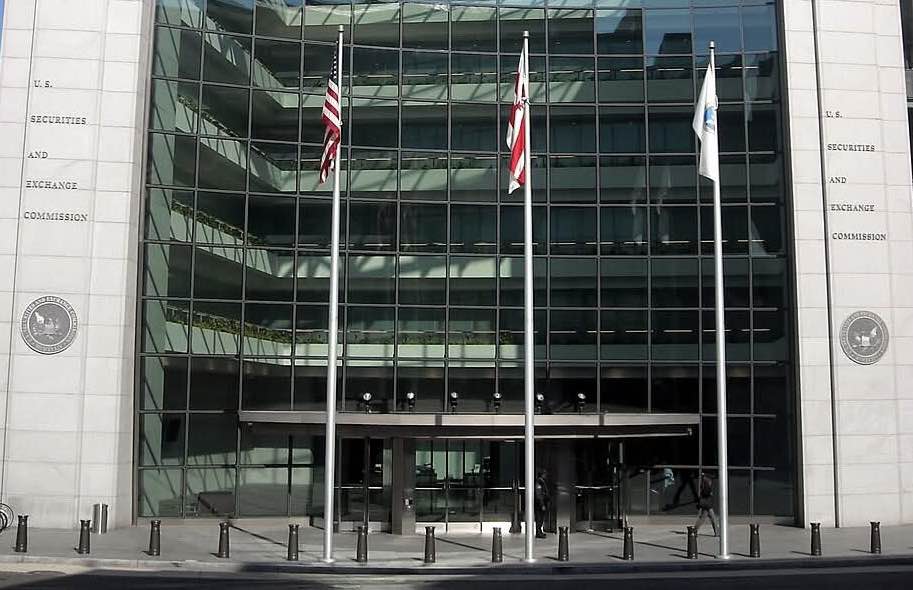
The incident landed as regulators in the U.S. continued to refine their approach to digital assets. The U.S. Securities and Exchange Commission (SEC) acknowledged in a recent assessment that some enforcement actions did not clearly demonstrate measurable investor harm and that there were inconsistencies in how federal securities laws were interpreted across cases. The SEC said that an emphasis on case volume over case quality risked inefficient allocation of enforcement resources—language that market participants interpreted as a signal of growing internal scrutiny over what constitutes effective 'investor protection' in crypto markets.
Separately, stablecoin oversight advanced another step. The Federal Deposit Insurance Corporation (FDIC) has approved a draft framework aimed at establishing supervisory standards for stablecoin issuers, according to reporting by journalist Jesse Hamilton. The move comes as U.S. lawmakers continue negotiating the finer points of the GENIUS Act, a Senate-led stablecoin proposal that has become a focal point for how dollar-pegged tokens should be regulated, backed, and audited. Together, the FDIC’s draft and ongoing congressional talks suggest regulators are converging on a more formalized regime around issuance and reserves—an outcome that could shape stablecoin liquidity across exchanges, DeFi protocols, and payment rails.
In Asia, Circle—the issuer behind USD Coin (USDC)—announced the rollout of a 'stablecoin payout' service for Circle Mint partners in Singapore, according to @WuBlockchain. The service is designed to support compliant cross-border transfers using USDC, reflecting a broader push to embed stablecoins into regulated settlement workflows. The expansion highlights intensifying competition among issuers to capture institutional and enterprise demand for faster, lower-cost international payments while staying within local compliance requirements.
Market infrastructure firms also continued to broaden product offerings. OKX said it has officially launched an onchain OS plugin store featuring 15 plugins in its first wave, including integrations tied to OKX, Uniswap, and Polymarket, alongside community submissions. The exchange said plugin submissions are open to all developers, with onboarding contingent on a dual security process combining AI-driven checks and manual review—an approach aimed at reducing the risk of malicious extensions at a time when browser wallets and third-party plugins remain frequent attack vectors.
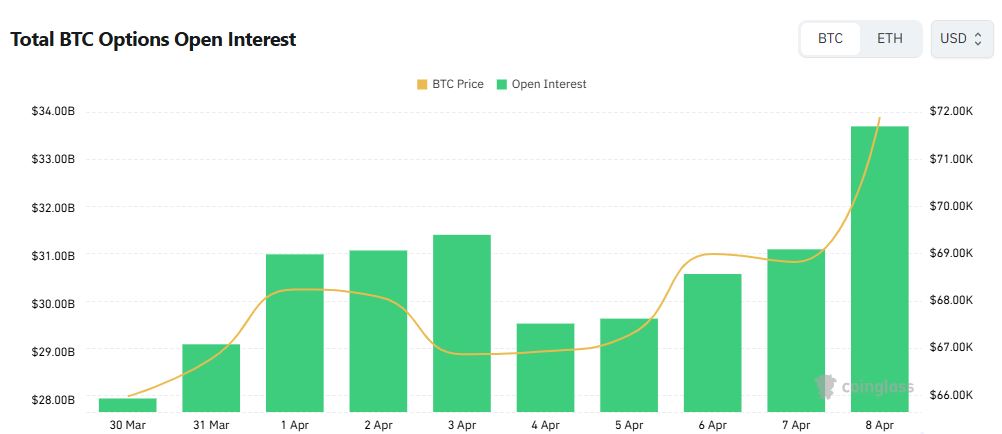
On prices, Bitcoin (BTC) changed hands around $70,225 and was up roughly 0.45% over 24 hours, according to Odaily. PANews also reported a broader rebound following an Iran holiday period, with AI-related tokens leading gains and Bitcoin rising about 4.3% to reclaim the $71,000 area in that window—moves that traders attributed to improved risk sentiment and rotation into higher-beta segments of the market.
Institutional flows drew attention as well. Odaily reported that BlackRock withdrew 2,607 BTC and 28,391 Ether (ETH) from a Coinbase Prime address—worth roughly $177.6 million and $59 million, respectively—transactions that often spark debate over whether coins are being moved into long-term custody, rebalanced across vehicles, or prepared for settlement-related activity. Large withdrawals are not necessarily directional, but they tend to be watched as a proxy for 'institutional positioning' given Coinbase Prime’s role in servicing asset managers.
In geopolitical developments, U.S. and Israeli officials and sources said negotiations between the U.S. and Iran made progress over the past 24 hours, though a near-term agreement remained uncertain ahead of a deadline set by President Trump for 8 p.m. ET, according to the briefing. Crypto markets have increasingly reacted to geopolitical risk through shifts in liquidity and derivatives funding—particularly when energy prices, the dollar, and global risk assets move in tandem.
Meanwhile, the U.S. Justice Department opposed an effort to dismiss charges against Roman Storm, a co-founder of crypto mixing service Tornado Cash, filing a letter objecting to Storm’s reliance on U.S. Supreme Court precedent to argue for dismissal. The case remains one of the industry’s most closely watched legal battles over the line between publishing privacy-preserving software and facilitating illicit finance, with potential implications for developers building decentralized tooling across DeFi.
Taken together, the day’s headlines captured crypto’s current cross-currents: persistent security risks in DeFi, accelerating efforts to formalize stablecoin regulation, and renewed sensitivity to macro and geopolitical catalysts—all against a backdrop of Bitcoin regaining a key psychological price level.
🔎 Market Interpretation
- Risk-on rebound with headline-driven volatility: Bitcoin moved back above the $70,000 psychological level as traders absorbed a dense set of inputs—DeFi security events, U.S. regulatory signals, stablecoin policy progress, and geopolitics.
- DeFi security remains a structural overhang: Drift Protocol’s theft update (stabilization first, then partner negotiations and remediation) reinforced the market’s recurring pattern: containment → assessment → recovery plan, often with limited early disclosure.
- U.S. regulatory tone shows incremental self-scrutiny: The SEC’s acknowledgment that some cases lacked clear investor-harm demonstration was read as a possible shift toward higher evidentiary standards and more consistent legal interpretation—potentially reducing “headline enforcement” uncertainty over time.
- Stablecoin rules are converging toward formal supervision: An FDIC draft framework plus continued GENIUS Act negotiations suggest a maturing U.S. regime focused on issuance standards, reserves, and audits—with downstream effects on exchange/DeFi liquidity and settlement reliability.
- Institutional activity watched but not inherently directional: Large BTC/ETH withdrawals associated with BlackRock from Coinbase Prime can signal custody movements, rebalancing, or settlement preparation; markets watch these as a proxy for institutional positioning despite ambiguous intent.
- Geopolitics increasingly transmits into crypto through macro linkages: U.S.–Iran negotiation updates can influence crypto via energy prices, USD strength, and broad risk appetite—often reflected in derivatives funding and liquidity shifts.
- Privacy/tooling enforcement remains a key legal tail risk: DOJ opposition in the Roman Storm/Tornado Cash case highlights ongoing uncertainty over whether builders of privacy-preserving software face liability akin to facilitating illicit finance.
💡 Strategic Points
- Prioritize counterparty and platform risk controls: For DeFi exposure, emphasize audited venues, conservative collateral settings, real-time monitoring, and clear incident-response communications. Expect partial information early in an incident.
- Watch stablecoin policy as a liquidity driver: More formal U.S. supervisory standards may improve institutional comfort but could also constrain issuers via reserve/audit requirements—impacting on/off-ramps, DeFi TVL composition, and yield dynamics.
- Track “regulated adoption” expansions: Circle’s Singapore USDC payout rails indicate a push for compliant cross-border settlement. This can grow stablecoin transaction demand beyond trading into B2B payments and treasury flows.
- Extension/plugin ecosystems are emerging attack surfaces: OKX’s plugin store and dual (AI + manual) review underlines a broader trend: wallets, browsers, and plugins are frequent vectors. Users should minimize permissions, review contracts, and isolate high-value funds.
- Use BTC key levels as sentiment gauges, not certainties: Reclaiming $70k can improve risk sentiment and rotate flows into higher-beta segments (e.g., AI tokens), but remains vulnerable to rapid reversals from regulatory/geopolitical surprises.
- Institutional flow headlines need context: Treat large custody movements as “attention flags.” Confirm with subsequent filings/flow data (ETF creations/redemptions, exchange balances, on-chain clustering) before inferring bullish/bearish direction.
- Legal outcomes can reshape DeFi tooling: Tornado Cash litigation may influence how developers design privacy features, compliance controls, or geofencing—affecting UX and composability across protocols.
📘 Glossary
- Drift Protocol: A Solana-based decentralized derivatives platform offering leveraged trading via smart contracts.
- DeFi: Decentralized finance—financial services (trading, lending, derivatives) executed via smart contracts rather than traditional intermediaries.
- SEC: U.S. Securities and Exchange Commission; regulates securities markets and brings enforcement actions involving alleged securities-law violations.
- FDIC: Federal Deposit Insurance Corporation; U.S. banking regulator and deposit insurer, increasingly relevant to stablecoin oversight discussions.
- Stablecoin: A crypto token designed to maintain a stable value (often pegged to USD) via reserves and/or mechanisms.
- GENIUS Act: A Senate-led U.S. legislative proposal focused on stablecoin rules (issuer standards, backing, audits, supervision).
- USDC: USD Coin—Circle’s dollar-pegged stablecoin widely used in trading, DeFi, and payments.
- Circle Mint: Circle’s platform for institutional partners to mint/redeem USDC and manage settlement workflows.
- Coinbase Prime: Institutional brokerage/custody platform used by asset managers for execution, custody, and settlement.
- On-chain: Activity recorded directly on a blockchain (transactions, contract interactions) and publicly verifiable.
- Attack vector: A pathway attackers commonly use to compromise users/systems (e.g., malicious plugins, phishing, smart contract exploits).
- Derivatives funding: Periodic payments between long/short traders (often in perpetual futures) that reflect positioning and sentiment.
- Tornado Cash: A crypto “mixer” used to enhance transaction privacy; central to legal debate over privacy software and illicit finance.
















Comment 0