

 News
News  Coin Information
  About us
  Customer Service


 Add as a preferred source on Google

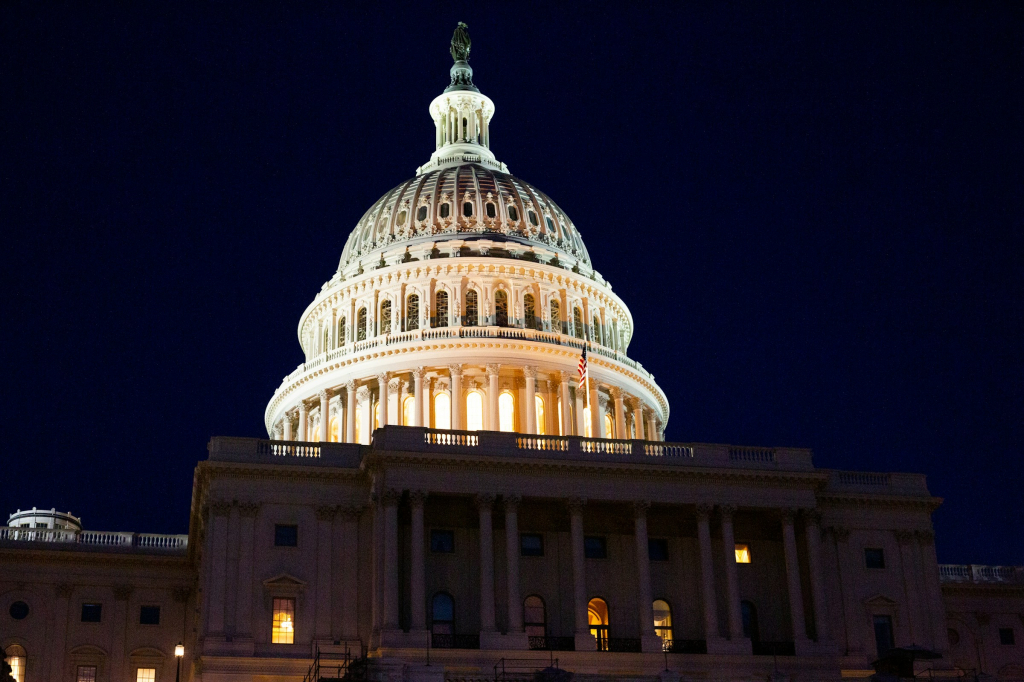
President Trump’s signing of the ‘GENIUS Act’ is more than a regulatory milestone for stablecoins—it is a signal that Washington now treats dollar-pegged tokens as an extension of national power. In a world where money increasingly moves on public blockchains, the U.S. is formalizing the rules of the road for digital dollars, while countries without an internationally usable digital version of their currency risk being pushed to the margins of cross-border crypto finance.
Trump signed the bill at the White House on July 18, 2025 (Thursday ET), establishing the first comprehensive federal framework for stablecoins in the United States. While the details of the legislation will shape compliance obligations for issuers and intermediaries, the broader message is strategic: the U.S. does not view stablecoins merely as a fintech experiment, but as infrastructure—one capable of reinforcing ‘dollar dominance’ in a new settlement layer.
That settlement layer is already large and growing. Tether (USDT) and Circle’s USD Coin (USDC) have become core payment rails of the crypto economy, widely used for trading, remittances, and offshore savings in jurisdictions facing inflation, capital controls, or fragile banking systems. The Korean source article cites industry estimates that stablecoins account for roughly 30% of total on-chain transaction volume and surpassed $4 trillion in annual throughput in 2025, up 83% year over year—an expansion that, in aggregate transaction value, rivals or exceeds the combined networks of Visa ($V) and Mastercard ($MA).
Adoption patterns underscore why policymakers increasingly describe stablecoins in geopolitical terms. In Argentina, dollar stablecoins such as USDT are used as an everyday store of value to escape peso depreciation. In Nigeria, the report notes more than $92 billion in crypto transaction volume over a 12-month period, while across Africa a large majority of active crypto users reportedly hold stablecoins—and overwhelmingly dollar-denominated ones. The result is what some analysts call ‘stablecoin diplomacy’: influence that spreads without treaties or troop deployments, carried instead by code, wallets, and the default unit of account chosen by global users.
At the same time, the competitive landscape is not unipolar. China continues to develop the digital yuan through its e-CNY program, and is gradually expanding its presence in trade settlement corridors linked to the Belt and Road Initiative. The report points to signs of yuan usage in parts of the Middle East and Southeast Asia, and highlights how sanctions pressures have accelerated experimentation with alternative currency routing in certain markets. In this contest, the battleground is not confined to domestic payment systems; it sits in the same regions—Southeast Asia, the Middle East, and Africa—where future trade invoicing norms and digital settlement standards may be set.
For South Korea, that overlap matters because these corridors are central to the country’s export economy and cultural content business. If dollar stablecoins become the default medium for settlement across these regions, Korean firms could find themselves transacting in digital dollars by default—regardless of their underlying commercial exposure to the Korean won.
Domestically, the policy debate has often centered on risk. The report references the cautious stance taken by Shin Hyun-song, a senior official at the Bank for International Settlements and a contender to become the Bank of Korea’s next governor, who has raised concerns common among central bankers: potential circumvention of FX rules, a new channel for capital flight, and erosion of ‘monetary singleness’—the principle that a nation’s currency should remain the unified anchor of domestic payments.
Those concerns are widely shared in global regulatory circles, especially after multiple crypto market crises highlighted the speed of digital bank-run dynamics. Yet the report argues that strict restraint can become an implicit policy choice to cede digital space to offshore dollar stablecoins. It notes that USDT already ranks among the most actively traded crypto assets among Korean users, and that the pathway—converting won into USDT to access global DeFi, buy overseas assets, or move liquidity across venues—exists whether or not a won stablecoin is legalized. In practice, a regulatory vacuum can be filled by the most convenient alternative, and today that alternative is typically a dollar token.
South Korea’s central bank has not been idle. The Bank of Korea’s “Project Hangang” is testing a CBDC-based deposit token model with participation from nine banks, including pilots related to blockchain-based treasury disbursements and digital voucher payments. The initiative reflects an emerging global consensus that wholesale settlement modernization can improve efficiency, resilience, and programmability within supervised financial networks.
However, the report emphasizes a structural limitation: CBDCs tend to be confined to permissioned ecosystems, moving at the pace and scope of regulated domestic banking rails. Stablecoins, by contrast, function as interoperable instruments across exchanges, wallets, and protocols—often reaching users and counterparties in multiple jurisdictions simultaneously. In that sense, CBDCs resemble robust ‘regular forces’ optimized for formal fronts, while stablecoins operate more like agile ‘irregular’ rails that penetrate markets and platforms where central-bank systems do not naturally extend.
Regional peers have increasingly treated these tools as complementary rather than mutually exclusive. Singapore has pursued a dual-track approach—maintaining strict reserve and audit expectations for certain stablecoin models while running separate wholesale CBDC experiments. Japan revised its Payment Services Act in 2023 to allow yen stablecoins under a bank-centered issuance framework, attempting to balance prudential safeguards with room for innovation. The common thread is layered design: CBDCs for core settlement and state-linked use cases, stablecoins for broader programmability and cross-border reach under enforceable standards.
The report proposes a similar two-layer architecture for South Korea. In this framework, the first layer would be Bank of Korea-led wholesale CBDC and deposit-token infrastructure focused on government payments, interbank settlement, and other domains where the central bank maintains uncompromising control as a ‘trust anchor’. The second layer would allow a won-denominated stablecoin—potentially issued through a bank consortium—subject to strict requirements such as 100% reserves, independent monthly audits, and FX reporting obligations, with the aim of creating a ‘digital market route’ for the won in global DeFi, Asian trade settlement, and overseas remittances.
A critical design feature, according to the report, would be technical linkage between the two layers. If stablecoin reserves are required to be held in the form of regulated deposit tokens within the Bank of Korea’s supervised infrastructure, authorities could improve traceability of flows while reducing the risk that stablecoins become an unmonitored conduit around capital-account measures. In that framing, risk mitigation shifts from outright prohibition to system architecture—using compliance-by-design to reconcile innovation with monetary and supervisory objectives.
Ultimately, the question is timing. The report warns that monetary regimes often harden quickly once network effects take hold. If cross-border digital commerce in key growth markets defaults to dollar stablecoins—whether for Korean exporters settling invoices, consumers buying Korean content, or contractors receiving payments in overseas construction hubs—the won may not disappear because it lacks relevance, but because it lacks usable digital rails beyond the harbor of domestic banking. With the U.S. now codifying stablecoin rules at the federal level, the competitive pressure on other economies to define their own layered approach is only set to intensify.















Comment 0