

 News
News  Coin Information
  About us
  Customer Service


 Add as a preferred source on Google
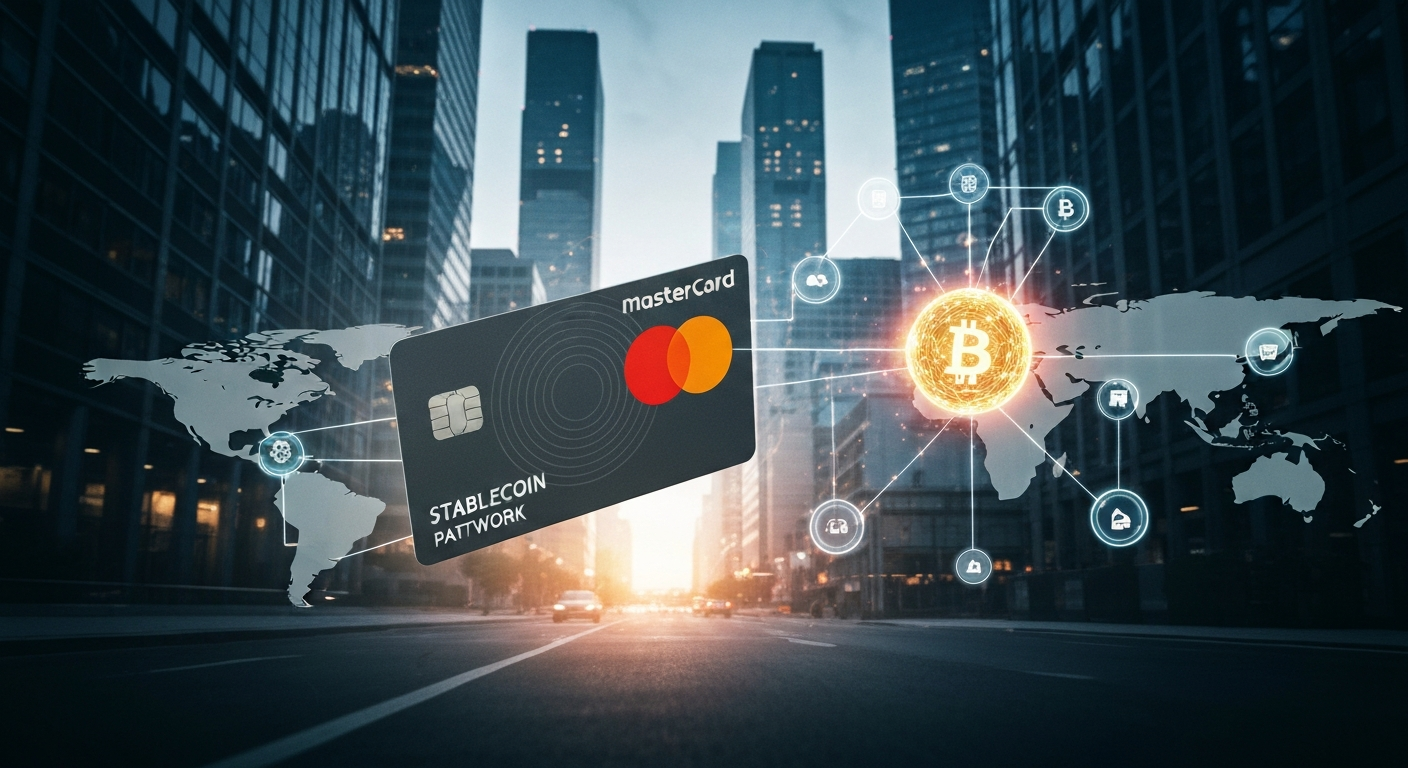
Mastercard ($MA) has agreed to acquire stablecoin payments infrastructure firm BVNK in a deal valued at $1.8 billion, a move that signals stablecoin-based settlement is shifting from pilot programs to ‘core infrastructure’ for global payments. The price—reported at more than double BVNK’s prior valuation—underscores how strategically important regulated rails have become as card networks position for the next phase of cross-border commerce.
The transaction, disclosed Tuesday ET, comes as major payments companies reassess whether the decades-old architecture underpinning international transfers can be meaningfully upgraded—or must be replaced. By opting for a full buyout rather than a partnership or minority stake, Mastercard is effectively betting that regulated stablecoin networks will be central to future payment flows, not an adjacent experiment for fintech early adopters.
Buying ‘time’ and compliance, not just technology
People familiar with the rationale say the primary asset Mastercard is buying is not code but ‘regulatory infrastructure’. BVNK has spent years assembling licenses and compliance capabilities across more than 130 countries, building a stablecoin payments network designed to meet local requirements on money transmission, anti-money laundering controls, and reporting. In payments, executives increasingly describe these capabilities as a product in themselves—difficult to replicate quickly, and often more valuable than incremental technological advantages.
For Mastercard, the calculus is straightforward: assembling comparable licensing coverage country by country could take years, leaving the company exposed as competitors lock in merchant relationships and institutional partners. The acquisition compresses that timeline, giving Mastercard a ready-made framework to expand stablecoin settlement while staying inside regulatory guardrails.
A $190 trillion cross-border market still running on legacy rails
The strategic urgency is tied to the scale—and friction—of cross-border payments. The global market exceeds roughly $190 trillion annually, yet much of it still runs through correspondent banking networks built decades ago. Transfers can pass through multiple intermediary banks, adding fees, delays, and limited transparency around routing and FX spreads. Industry critics often compare the experience to a system that “works,” but feels outdated relative to modern internet-native finance.
Stablecoins—digital assets typically pegged to fiat currencies such as the U.S. dollar—offer a different model: near-instant settlement on digital rails, with fewer intermediaries and potentially lower total costs. Mastercard’s acquisition suggests the company sees stablecoin infrastructure not merely as a feature to bolt onto legacy processes, but as a path toward replacing parts of the existing cross-border stack.
Emerging-market remittances seen as the first major battleground
While stablecoin settlement has gained attention in developed markets, the biggest near-term impact could be in emerging economies where remittance costs remain high. Average fees for transfers into parts of Africa and Southeast Asia are commonly cited in the 6% to 8% range. A $500 transfer from the Gulf to the Philippines, for example, may lose $30 to $40 to fees and spreads—costs that scale into a major economic headwind in a remittance market of roughly $685 billion annually for developing countries.
Stablecoin-based transfers can reduce the number of intermediaries involved in clearing and settlement, potentially bringing total fees closer to 1% to 2% in some corridors, depending on local on/off-ramp costs and compliance requirements. With Mastercard’s merchant acceptance footprint and BVNK’s licensing network, proponents argue the combined platform could make stablecoin settlement usable at consumer scale rather than confined to crypto-native channels—an important step in expanding ‘financial access’ for populations that remain underbanked.
Payments giants accelerate a stablecoin infrastructure race
The BVNK deal also reflects intensifying competition among payments and fintech leaders to secure regulated stablecoin capabilities. Stripe previously agreed to acquire Bridge for $1.1 billion, and Visa ($V) has been reported to be evaluating related strategies. Industry observers expect more acquisitions, partnerships, and licensing pushes over the next 12 to 24 months as companies compete to control the compliance-heavy “plumbing” behind stablecoin settlement.
Notably, the competitive divide is increasingly framed less as ‘traditional finance vs crypto’ and more as regulated networks versus non-regulated alternatives. Unregulated systems can scale quickly but face sustainability constraints as regulators tighten requirements and institutions avoid legal ambiguity. Regulated stablecoin infrastructure, while slower to build, is more likely to win adoption from banks, multinational merchants, and enterprise treasury teams that need predictable compliance outcomes.
By combining BVNK’s regulatory footprint with Mastercard’s global distribution, the acquisition narrows the gap between market demand for faster, cheaper settlement and the institutional mandate for compliance. The broader implication is that stablecoins are moving steadily toward the center of the payments industry—where the key differentiator may be ‘time-to-regulation’ as much as technology.





















Comment 0