

 News
News  Coin Information
  About us
  Customer Service


 Add as a preferred source on Google
Circle Internet Group ($CRCL) shares staged a modest rebound after a sharp sell-off early this week wiped roughly $5 billion from the company’s market capitalization, as investors weighed fresh U.S. regulatory headlines against an intensifying debate over the stablecoin issuer’s valuation and long-term earnings power.
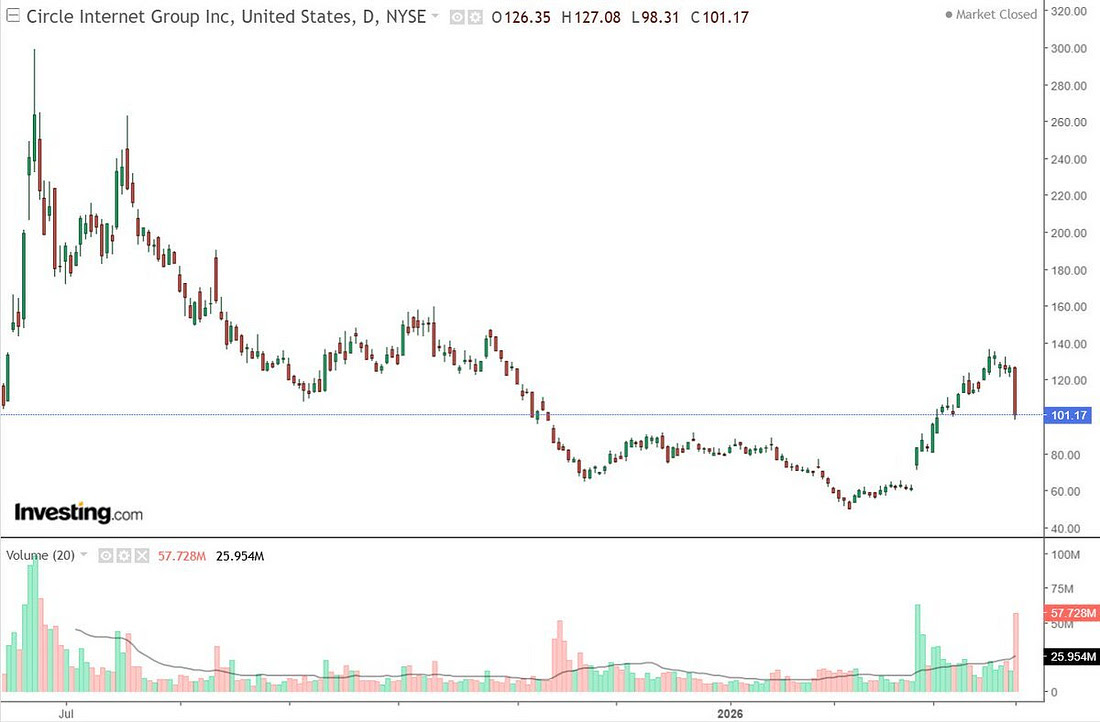
The stock slid about 20% from Monday’s high, falling from $126.64 to an intraday low of $101.17 on March 24 (UTC), before recovering toward the $104 level at the next open. Volatility persisted, however: $CRCL most recently finished at $98.27 after trading between $97.34 and $103.55, leaving it far below its 52-week high of $298.99 and above its 52-week low of $49.90. Trading volume spiked to about 56.4 million shares—roughly four times the 90-day average—signaling forced positioning and heightened uncertainty rather than a routine pullback.
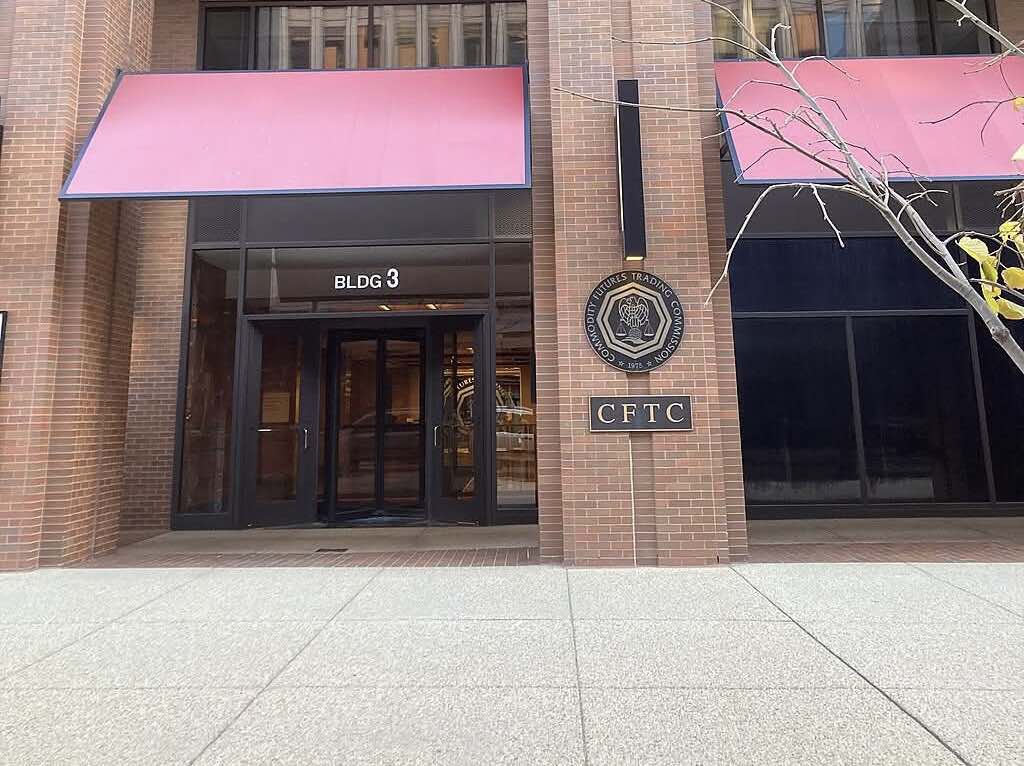
Market participants attributed the abrupt sell-off to a convergence of catalysts, led by provisions in a draft of the CLARITY bill that would restrict 'passive yield' on stablecoins—alongside renewed concerns about centralized control following wallet freezes and a competitive narrative shift sparked by Tether’s reported push toward a full audit by a Big Four accounting firm.
At the center of the regulatory debate is language in the CLARITY draft that would prohibit paying interest simply for holding a stablecoin. Investors interpreted the provision as a direct challenge to distribution-led incentives, including yield programs tied to USD Coin (USDC) that have been promoted by exchanges and fintech platforms. The draft, as described by market observers, draws a distinction between prohibited 'passive yield' and permitted 'activity-based incentives'—a nuance that could prove decisive for how stablecoin issuers and intermediaries structure customer rewards.
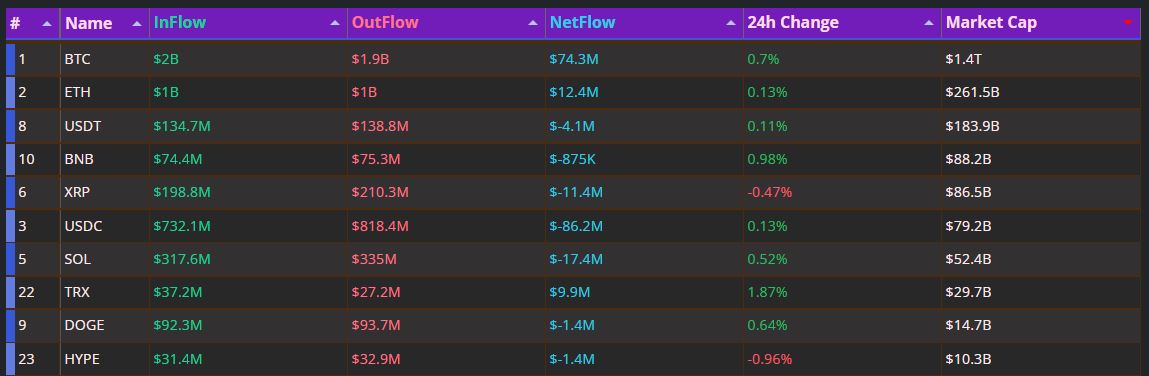
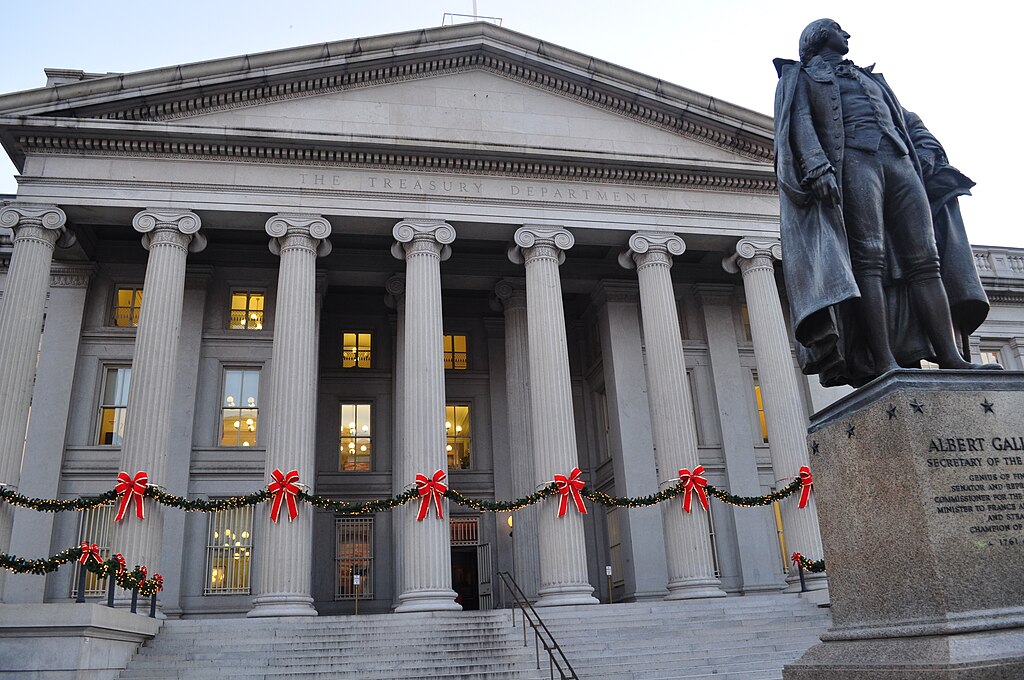
Circle’s core economics are built primarily on interest income generated from investing USDC reserves into U.S. Treasuries and similar instruments. The company posted about $711 million in Treasury-related income in the fourth quarter of 2025, up roughly 60% year over year, fueled in part by a 97% surge in USDC supply over the same period. While the proposed restriction would not necessarily bar issuers from earning reserve income, it could constrain how that income is shared downstream with consumers via partner programs—potentially compressing distribution incentives and near-term growth spending, even if Circle’s reserve model remains legally intact.
Some analysts argued the sell-off reflected an 'oversold' reaction to regulatory uncertainty, suggesting the market may be pricing in a harsher outcome than the draft ultimately delivers. Options activity has been mixed, underscoring a split in sentiment between those viewing the move as a valuation reset and those treating it as a temporary dislocation that could reverse if legislative fears fade.
Separately, Circle’s recent wallet-freezing actions added to investor unease around 'centralization risk'—a recurring concern for fiat-backed stablecoins whose issuers can comply with court orders or enforcement actions. Circle reportedly froze 16 business hot wallets on March 23 and 24 (UTC) tied to U.S. civil litigation, and some venues experienced temporary operational disruption as a result. For critics, the episode reinforced the idea that stablecoin rails remain subject to issuer-level controls; for supporters, it highlighted compliance features that may be necessary for broader institutional adoption.
Competitive dynamics also shifted after reports that Tether (USDT) is pursuing a formal audit through one of the Big Four firms. Tether has long faced scrutiny over transparency and reserve reporting; a credible, top-tier audit could strengthen its standing with institutions and policymakers, potentially narrowing one of Circle’s perceived advantages in regulatory alignment and disclosure. Any credibility upgrade for USDT could raise pressure on Circle in market share battles—even as USDC positions itself as the compliance-forward incumbent in U.S.-centric distribution channels.
Despite the turmoil, several longer-horizon forecasts remain constructive. Bitwise CIO Matt Hougan projected Circle could reach a $75 billion valuation by 2030, roughly doubling from current levels, based on a scenario where the stablecoin market expands to about $1.9 trillion and USDC captures a 25% share. Hougan argued that even if competition and regulation cut Circle’s margin roughly in half to about 0.8%, expanding utility—particularly stablecoins’ growing role in payments and collateral—could sustain meaningful earnings growth, shifting the narrative from yield-driven adoption to usage-driven demand.
Wall Street has echoed elements of that view. Citi has named $CRCL a top pick and suggested substantial upside, while flagging several near-term catalysts: an expected Senate markup of the CLARITY bill in early April 2026 (ET), the anticipated timeline for Tether’s audit process in the second quarter of 2026, and Circle’s forthcoming quarterly results. Investors are likely to scrutinize those earnings for evidence that Circle can pivot toward 'activity-based' partner incentives and expand beyond reserve-income reliance through payments infrastructure and institutional services.
For now, Circle’s outlook hinges on how lawmakers define and enforce 'passive yield' restrictions, and whether the market concludes that the rule targets distributor rewards rather than the issuer’s reserve investment engine. With USDC supply growth still a key tailwind and regulatory and competitive risks intensifying in parallel, $CRCL appears set to trade as a referendum on the future shape of U.S. stablecoin policy—and on whether scale, compliance, and utility can outweigh the sector’s mounting political and execution challenges.















Comment 0