

 News
News  Coin Information
  About us
  Customer Service


 Add as a preferred source on Google
Solana (SOL) is positioning itself as a key settlement layer for the next wave of automated commerce after the Solana Foundation said on-chain payments executed by ‘AI agents’ have surpassed 15 million transactions—an early signal that machine-to-machine activity may soon rival, and potentially eclipse, human-driven crypto usage.
The milestone comes as the foundation claims Solana now processes roughly 65% of all AI-agent payment activity across blockchains, underscoring how high-throughput, low-fee networks are becoming the preferred rails for automated execution. Speaking about the trajectory of agentic finance, Vibhu Norby, the Solana Foundation’s chief product officer, said he expects “99.99% of on-chain transactions” to be initiated within two years by agents, bots, or LLM-based wallets—software that can interpret prompts, make decisions, and sign transactions with minimal human intervention.
At the same time, the Solana Foundation has moved to translate that narrative into enterprise adoption, announcing the official launch of an ‘enterprise Solana developer platform’ that packages APIs for payments, tokenized assets, and compliance tooling. The foundation said major payments firms—including Mastercard, Worldpay, and Western Union—are participating as early adopters and are integrating stablecoin payment capabilities.
The push marks a deliberate expansion beyond Solana’s crypto-native base toward traditional financial institutions looking for programmable settlement infrastructure. For enterprises, the appeal is straightforward: Solana’s transaction finality and comparatively low fees can support use cases ranging from cross-border settlement to consumer payouts and merchant flows—areas where stablecoins are increasingly being tested as a bridge between digital and fiat payment systems.
Market participants also interpreted the announcement as a signal of rising institutional confidence. The report said ‘whale’ investors increased spot buying following the platform news, while analysts pointed to accelerating corporate adoption as evidence that Solana’s real-world utilization is moving beyond speculation and toward repeatable business activity.
Still, greater institutional relevance tends to intensify scrutiny of network resilience and governance—areas Solana has historically been challenged on. Addressing those concerns, the foundation also announced an overhaul to its validator delegation program, set to take effect on May 1, 2026. The updated requirements include mandates aimed at ensuring ‘fair transaction ordering,’ prohibiting transaction censorship, enforcing tighter block-timing standards, and limiting concentration risks tied to autonomous system numbers (ASNs) and data-center dependencies.
The changes are designed to reduce infrastructure centralization and strengthen decentralization by discouraging validators from clustering around a small set of providers. Observers say the updated rules could improve network robustness and censorship resistance—two attributes closely watched by institutions evaluating public blockchains for regulated payments and tokenized asset flows.
The ‘fair ordering’ requirement also speaks to an industry-wide issue: MEV, or maximum extractable value, where transaction ordering can be manipulated to extract profit at the expense of ordinary users. By tightening expectations around ordering and block production, the foundation is signaling an intent to harden Solana’s execution environment against practices that can undermine user trust and market integrity.
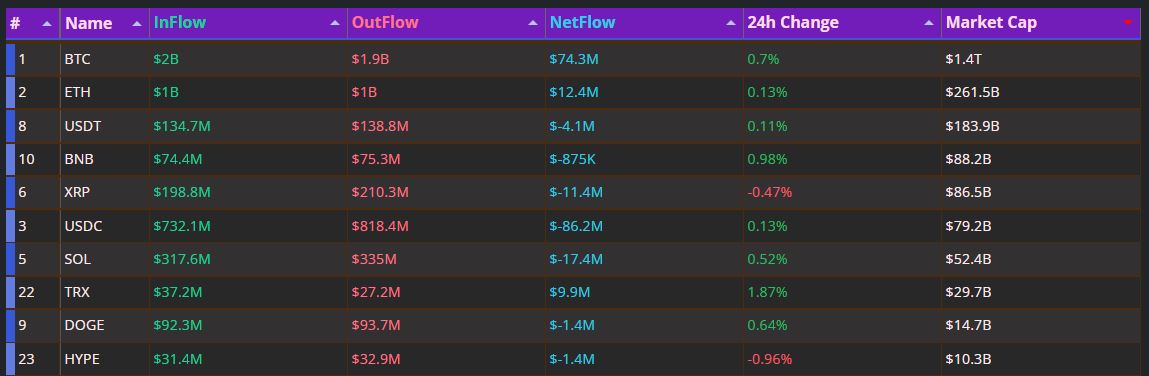
In the market, Solana was last reported at around $88.73, down 3.93% over 24 hours, with roughly $3.65 billion in daily trading volume. Despite the short-term pullback, SOL was up 15.19% over the past 30 days, indicating that broader momentum has remained constructive. Solana’s market capitalization was estimated at approximately $50.78 billion, ranking it seventh among cryptocurrencies, with a market share near 2.12%. The circulating supply stood at about 572.26 million SOL, with no fixed maximum supply due to its inflationary model.
Technicians cited $110 as a key resistance level that could come into play if risk appetite returns. Some longer-range forecasts have floated scenarios as high as $450 by 2026, hinging on aggressive growth in real-world asset tokenization and corporate treasury usage—though such projections remain highly sensitive to macro conditions, regulatory developments, and the pace of enterprise integration.
As Solana’s ecosystem expands, so do security risks. The report flagged a newly identified piece of malware dubbed ‘GlassWorm,’ described as a remote-access trojan that leverages Solana-related transaction activity to target developers and their crypto wallets. Security specialists urged developers to avoid untrusted code repositories and unknown software sources, and to adopt standard protections such as hardware wallets, multisignature controls, and regular security audits.
Taken together, the rise in AI-agent payments, the launch of an enterprise API stack, and the validator program revamp illustrate a network attempting to mature into ‘business-grade’ infrastructure while addressing decentralization and security concerns in parallel. Participation from global payments brands like Mastercard and Worldpay adds credibility to the thesis that stablecoin settlement and automated transaction execution could become enduring, non-speculative drivers of blockchain usage—provided the underlying network can maintain reliability, openness, and strong security practices at scale.














Comment 0