

 News
News  Coin Information
  About us
  Customer Service


 Add as a preferred source on Google
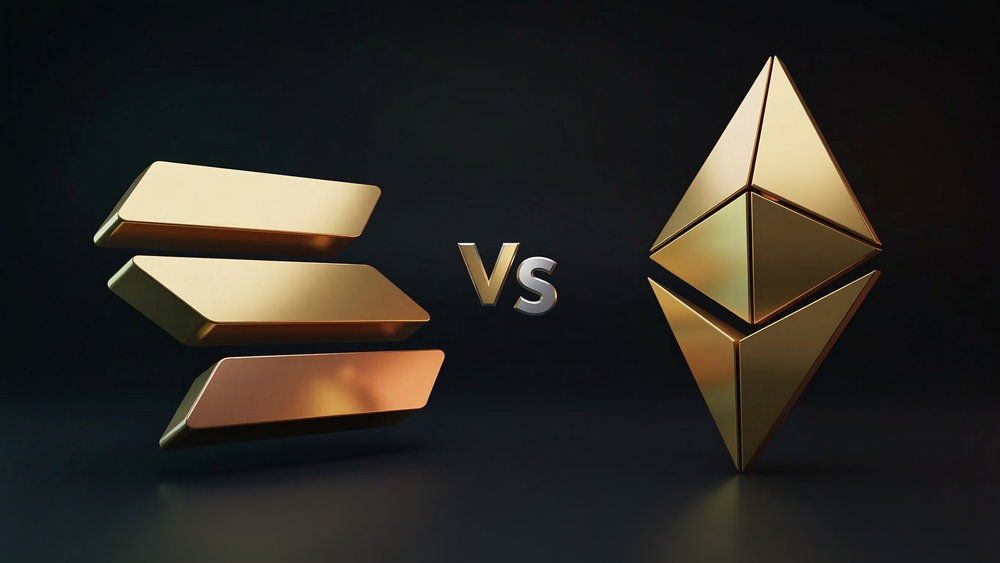
Ethereum (ETH) continues to out-earn Solana (SOL) on network fees despite an extended period of ultra-low per-transaction costs, underscoring a widening split in how the two leading smart contract blockchains monetize activity. As of Wednesday ET, Ethereum posted roughly $8.07 million in 24-hour fees versus Solana’s $5.03 million—about a 60% gap that analysts increasingly read as a proxy for where high-value settlement is taking place, not which chain processes the most transactions.
The divergence is more pronounced over longer windows. Over the past seven days, Ethereum generated about $63.68 million in fees compared with Solana’s $35.83 million. Over 30 days, Ethereum collected approximately $327.16 million—around 67% more than Solana’s $196.01 million. Market observers say the 30-day figure matters most because it filters out one-off spikes and better reflects structural demand for block space and settlement services.
A key takeaway from the latest data is what appears, at first glance, to be a paradox: Ethereum’s total fee revenue has remained resilient even as average transaction fees have, at times, approached near-zero levels. The pattern does not necessarily indicate that Ethereum has become “free,” but rather that fee formation is shifting toward aggregated value flows—especially those routed via layer-2 networks and institutional-grade activity—where the economic weight concentrates at the settlement layer. In this model, revenue is less about ‘profit per individual transaction’ and more about ‘total value being finalized’ on the network and its scaling stack.
Industry participants point to stablecoins and real-world assets (RWA) as the core catalyst behind Ethereum’s revenue durability. Circle’s (Circle) roadmap for Arc L1 and its broader USDC expansion strategy are being interpreted as more than an infrastructure upgrade; they are viewed as a bid to reshape where onchain financial activity—payments, treasury and balance-sheet operations, and FX settlement—ultimately clears. Those activities generate swap, lending, and settlement fees that, in aggregate, accrue to the networks where finality and composability are most trusted.
Ethereum and its layer-2 ecosystem remain central venues for issuing and settling tokenized financial products tied to RWAs. Market examples frequently cited include tokenized Treasury exposure and yield-bearing stable assets such as USYC, which tend to cluster where institutional liquidity and established DeFi plumbing are deepest. The implication is that ‘transaction quality’—large, compliant, balance-sheet-relevant flows—can sustain material fee generation even when retail-facing base fees compress.
Solana, by contrast, is executing a ‘high-volume’ playbook. With average fees commonly cited in the $0.001 to $0.017 range, Solana has optimized for gaming, high-frequency trading, and meme-coin speculation—categories that can explode in activity when marginal costs are negligible. The network is routinely described as absorbing hundreds of millions of transactions weekly, but the trade-off is structural: ‘revenue per transaction’ is low, meaning Solana must process vastly more activity to match Ethereum’s fee totals. Over the last 30 days, Solana’s fee revenue remained about 40% below Ethereum’s, reinforcing the view that it has captured user scale faster than it has captured high-margin financial settlement.
Notably, both networks have shown signs of stabilizing fee dynamics compared with prior cycles. Recent daily fee change rates around -0.52% for Ethereum and -0.4% for Solana point to lower volatility than the boom-and-bust patterns associated with earlier DeFi and NFT-driven periods. Some analysts interpret this as evidence that onchain revenue is gradually becoming less dependent on purely speculative bursts and more tied to repeatable financial use cases.
The expanding RWA segment may sharpen the role differentiation further. Tokenized bonds, commodities, and asset-backed instruments typically attract larger, longer-duration capital that moves infrequently—but in size—often producing higher total fees when it does rebalance or settle. Ethereum is widely viewed as better positioned for these ‘low-frequency, high-value’ flows, while Solana’s strengths are clearest in ‘high-frequency, low-value’ activity such as micropayments and real-time trading.
Solana’s roadmap could widen the performance gap on throughput and responsiveness if upgrades such as Alpenglow (aimed at ultra-fast finality) and Firedancer (a high-performance client) deliver as expected. Even so, the network’s core monetization question remains whether fee revenue can scale proportionally with transaction growth, or whether the economic structure continues to cap upside without a greater share of institutional settlement and RWA-driven activity.
Heading into the close of the first quarter of 2026, the fee “race” is increasingly being framed as two distinct business models rather than a single leaderboard. Ethereum is defending its position as a ‘financial layer’ that captures higher-value settlement, while Solana is consolidating a ‘traffic layer’ advantage that maximizes usability and transaction count. The current ~60% fee gap is therefore being treated less as a transient metric and more as a signal of where capital prefers to reside and clear.
Two catalysts will likely determine whether that gap narrows. First is how Circle’s Arc initiative and the next phase of stablecoin expansion redistribute ‘settlement revenue’ across base layers and layer-2 ecosystems. Second is whether Solana can absorb more RWA issuance and institutional flows to escape a persistently low-margin fee structure. For now, the market’s takeaway is blunt: the chain that “wins” is not necessarily the one that processes the most transactions—it is the one that settles the most expensive ones.
🔎 Market Interpretation
- Fees signal “where value settles,” not raw traffic: Ethereum continues to generate materially higher total fees than Solana despite periods of near-zero average transaction fees, implying higher-value settlement and block-space demand on Ethereum’s stack.
- Current fee spread remains meaningful across timeframes: ETH leads SOL by roughly ~60% over 24 hours ($8.07M vs $5.03M), by a similar magnitude over 7 days ($63.68M vs $35.83M), and by ~67% over 30 days ($327.16M vs $196.01M). The 30-day view is treated as the most structurally informative.
- “Low fees” on Ethereum don’t equal “low revenue”: The apparent paradox is explained by aggregation—economic weight concentrates at the settlement layer (often via L2 batching and institutional flows), so total fees can stay resilient even when per-tx fees compress.
- Stablecoins + RWA are the durability engine: Expansion around USDC and Circle’s Arc L1 roadmap is interpreted as a push to anchor payments, treasury operations, and FX settlement where composability and finality are most trusted—supporting fee generation through swaps, lending, and settlement activity.
- Two business models are emerging: Ethereum is framed as a “financial layer” (low-frequency, high-value settlement) and Solana as a “traffic layer” (high-frequency, low-value activity). The “winner” is increasingly defined by the costliness of settled transactions, not transaction count.
- Fee volatility is moderating: Recent daily fee change rates (ETH ~-0.52%, SOL ~-0.4%) suggest a shift away from boom-bust speculation cycles toward more repeatable financial use cases.
💡 Strategic Points
- Investors/analysts: Use rolling 30-day fee totals as a proxy for structural demand and monetization strength; short-term spikes can mislead when “meme/airdrop/NFT bursts” fade.
- Ethereum thesis reinforcement: Growth in stablecoin settlement, RWA issuance (e.g., tokenized Treasuries, yield-bearing stable assets like USYC), and institutional liquidity pipelines can sustain fee revenue even with low base fees.
- Solana monetization challenge: With typical fees cited at $0.001–$0.017, SOL needs outsized throughput to match ETH’s fee totals; closing the gap likely requires capturing more institutional settlement and RWA-driven flows, not just more transactions.
- Playbook differentiation:
- ETH: Prioritize trust, composability, and settlement assurances for large, compliant flows (treasury ops, collateral movement, RWA rebalancing).
- SOL: Leverage ultra-low fees for consumer-scale apps (gaming, real-time trading, micropayments), while building pathways to higher-value activity.
- Catalyst #1 — Circle/USDC distribution: Where Arc + USDC expansion routes payments/treasury settlement could shift fee capture between L1s and L2s; watch for where final settlement concentrates.
- Catalyst #2 — Solana upgrades: If Alpenglow (faster finality) and Firedancer (high-performance client) deliver, SOL may widen the UX/throughput edge—yet the key question remains whether revenue scales with usage without changing the fee/value mix.
- Practical monitoring set: Track (1) stablecoin supply and transfer volume by chain, (2) RWA TVL/issuance venues, (3) L2 batch/settlement patterns, and (4) fee composition by app category (DEX, lending, payments, NFT/meme).
📘 Glossary
- Network fees: Payments users make to have transactions processed/confirmed; often reflect demand for block space and settlement.
- Per-transaction fee: The average cost of a single transaction; can fall even while total fees rise if usage/value aggregates elsewhere.
- Total fee revenue: Sum of all fees collected over a period (24h/7d/30d); used as a monetization proxy.
- Settlement layer: The base chain (and its verified finality) where value is ultimately finalized, even if activity originates on L2s or app-specific layers.
- Layer-2 (L2): Scaling networks that execute transactions off the main chain and post compressed proofs/data back to the base layer, often concentrating final fee capture at settlement.
- Stablecoins: Crypto tokens pegged to fiat (e.g., USD) used for payments, trading, and treasury operations; major driver of onchain economic activity.
- RWA (Real-World Assets): Tokenized representations of offchain assets (Treasuries, bonds, commodities) that tend to be larger and compliance-sensitive.
- Composability: Ability for onchain apps/protocols to interoperate seamlessly, enabling complex financial workflows.
- Finality: Assurance that a transaction is irreversible after confirmation—critical for institutional settlement.
- Throughput: How many transactions a network can process per unit time; often central to “traffic layer” strategies.
- Firedancer: A high-performance Solana validator client under development aimed at improving performance and resilience.
- Alpenglow: A proposed Solana upgrade focused on achieving ultra-fast finality and improved responsiveness.
















Comment 0