

 News
News  Coin Information
  About us
  Customer Service


 Add as a preferred source on Google

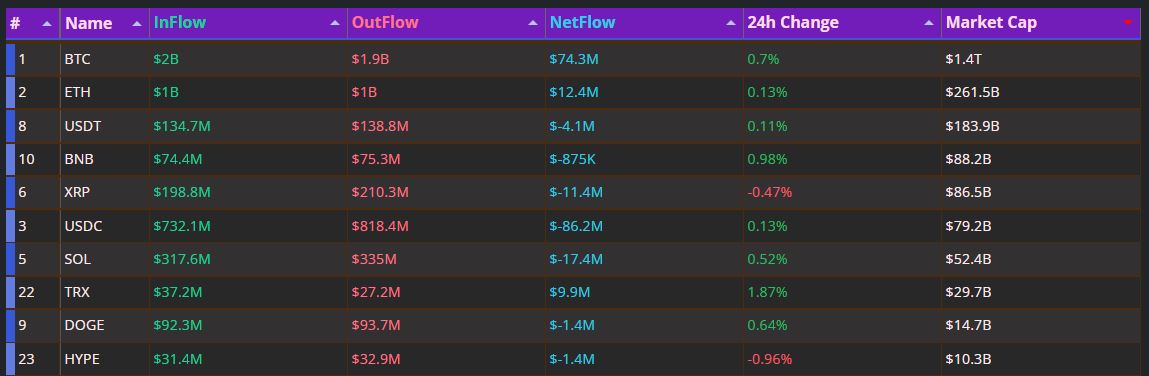
U.S. mortgage finance giant Fannie Mae is moving to recognize Bitcoin (BTC) as acceptable collateral in home-lending decisions, a step that could deepen the connection between crypto wealth and one of the largest traditional finance markets. The development comes as U.S. spot Bitcoin ETFs continue to attract inflows while spot Ether funds extend a multi-day stretch of outflows, underscoring diverging institutional sentiment across major digital assets.
The policy shift was first flagged by journalist Pete Rizzo, who reported that Fannie Mae will allow Bitcoin to be treated as collateral in the mortgage process for the first time. While details of implementation and eligibility were not fully disclosed, market participants view the change as potentially consequential: if Bitcoin can be recognized as part of a borrower’s collateral profile, it may reduce the need for crypto holders to liquidate assets to qualify for financing, while simultaneously raising new questions about custody, volatility management, and underwriting standards.
Fannie Mae’s influence in the U.S. housing ecosystem is hard to overstate. As a cornerstone of the mortgage market, changes to its frameworks can ripple through lenders, servicers, and securitization pipelines. For crypto markets, the key implication is narrative and structural: Bitcoin’s perceived transition from speculative instrument to financially recognized 'collateral asset'—a status historically reserved for more conventional stores of value.
At the same time, ETF flow data showed U.S. spot Bitcoin ETFs recorded a net inflow of $7.81 million on March 25 ET, led by Fidelity’s Fidelity Wise Origin Bitcoin Fund (FBTC). The category’s total net asset value stood at roughly $91.63 billion, highlighting the scale of demand that has built since spot products launched. Even relatively modest daily inflows are closely watched as a gauge of 'institutional demand' and liquidity conditions in crypto, particularly during periods of macro uncertainty.
U.S. spot Ethereum (ETH) ETFs, by contrast, posted their sixth consecutive trading day of net outflows. On March 25 ET, the group saw $8.51 million in withdrawals. While the figure is small relative to the broader market, persistent outflows can reinforce a cautious tone among professional allocators—especially when paired with elevated options activity in Bitcoin and shifting macro headlines.
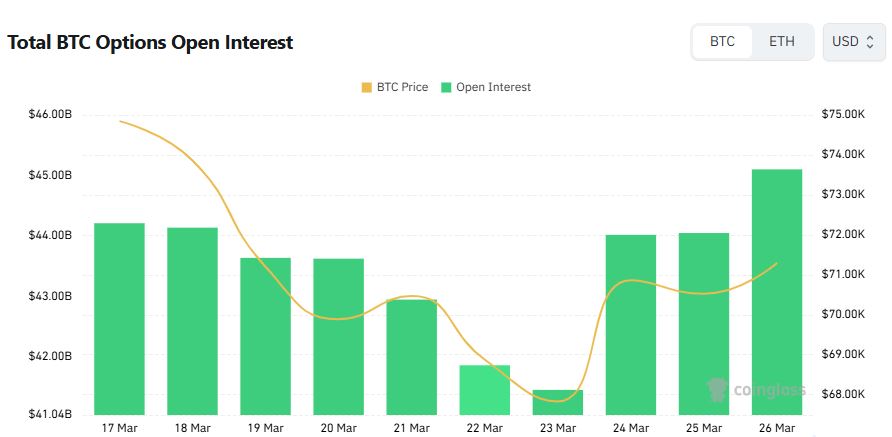
Derivatives positioning appeared to reflect that tension. Options analytics platform Greeks.live reported a surge in Bitcoin call option turnover to around $850 million, suggesting traders have been paying up for upside exposure amid heightened volatility. Market observers attributed the move to a blend of Middle East geopolitical stress and sensitivity to U.S. equity-market swings, which often serve as a proxy for global risk appetite.
In parallel, crypto-native infrastructure continued to attract venture backing. According to The Block, DeFi trading platform DeFi.app raised $4 million in a financing round led by Mechanism Capital, with participation from DCF Capital Partners, former Coinbase CTO Balaji Srinivasan, Comfy Capital, and the George Bull Group. The round highlights ongoing investor interest in tools that simplify access to decentralized finance, even as regulatory and macro crosswinds remain prominent.
Regulatory developments in Washington also remained in focus. U.S. lawmakers introduced the 'PREDICT Act,' a bill aimed at banning presidents and senior public officials from trading prediction markets, citing concerns about conflicts of interest and misuse of non-public information. The proposal arrives as prediction markets increasingly intersect with politics, macro forecasting, and crypto rails—an overlap that has prompted renewed scrutiny of governance and compliance standards.
Separately, Senator Cynthia Lummis said efforts are accelerating to advance legislation on Bitcoin and broader crypto market structure. Lummis has repeatedly argued that clearer rules are needed to support the U.S. financial system’s evolution, and her renewed push comes as policymakers debate how to balance innovation with consumer protection and systemic risk controls.
Outside crypto, energy and shipping risks added to the backdrop. Iran is reportedly exploring tolls on transit through the Strait of Hormuz, a move framed as a revenue measure that could nonetheless affect global shipping and energy prices. Meanwhile, Ukraine has expanded strikes targeting Russia’s Ust-Luga oil export port, fueling concerns about supply disruptions and fostering a risk-sensitive environment across global markets.
Taken together, the day’s developments point to a market increasingly shaped by two forces: the steady integration of crypto assets into mainstream financial plumbing—now reaching into mortgage finance—and a macro environment where geopolitics, regulation, and liquidity signals from ETFs and derivatives can quickly shift sentiment. For Bitcoin, recognition as mortgage collateral would represent another step toward broader financial legitimacy; for the wider market, uneven ETF flows and elevated options activity suggest investors remain selective about where they take risk.



















Comment 0