

 News
News  Coin Information
  About us
  Customer Service


 Add as a preferred source on Google

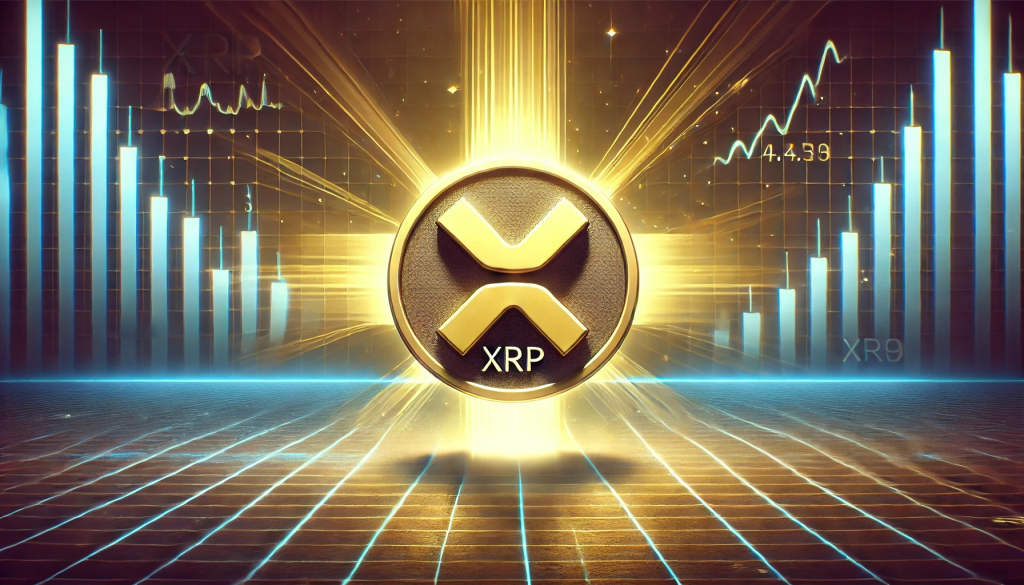
XRP (XRP) is fighting to hold the psychologically and technically important $1 level, with traders treating the area as a near-term inflection point that could decide whether the token stabilizes or slides into a deeper drawdown.
As of Saturday, June 27, 2026 ET (June 28 UTC), XRP changed hands around $1.047, hovering near its 52-week lows. Despite retaining a market capitalization of roughly $65.1 billion—keeping it among the top six cryptoassets by size—XRP is down close to 20% year-to-date, weighing on sentiment across both spot and derivatives markets.
Market activity has cooled sharply. Data cited from CoinMarketCap shows XRP’s 24-hour trading volume at about $1.08 billion, down nearly 40% from the prior day. Price action remains biased to the downside: XRP fell about 1.1% over the last 24 hours, roughly 8.3% over seven days, and more than 24% over the past 60 days, underscoring a persistent, grinding decline through the first half of 2026.
Intraday trading has been tight but tense. Bybit reported a daily low near $1.042 and a high around $1.074—an unusually narrow range for a major token—yet the compression reflects a market locked in a tug-of-war around $1. Bybit attributed much of the immediate pressure to ‘panic-driven’ positioning and ‘forced liquidations,’ a pattern typical of stress periods when derivatives unwinds spill into spot selling.
In crypto media and trader commentary, the narrative has largely converged on a single question: does the $1 floor hold? Coinpedia highlighted a modest rebound of roughly 3% following a retest of $1, framing the move as a test of a pivotal support zone. U.Today outlined three potential paths after the level is probed—bullish, neutral, and bearish—mirroring the market’s split between calls for a relief bounce and fears of a breakdown that could accelerate liquidation cascades.
Some on-chain-style positioning data is being used to argue that $1 is more than a round-number psychological marker. Bybit’s published ‘XRP UTXO RPD’ metric indicates that approximately 1.16 billion XRP previously changed hands below $1, suggesting a meaningful pocket of historical accumulation that technicians interpret as structural support. Meanwhile, betting activity on Robinhood ($HOOD) prediction markets has reportedly priced in a relatively high probability that XRP closes above about $1.04 on June 28, implying that at least part of the crowd expects the level to remain intact in the immediate term.
Beyond price, proponents point to ongoing development and institutionalization around the XRP Ledger (XRPL). Binance has recently emphasized multiple areas it sees as key pillars for XRPL’s trajectory, including the regulation-oriented dollar-pegged stablecoin RLUSD, ‘real-world asset’ (RWA) tokenization, money market fund integrations, automated market maker (AMM) functionality, and payment rails aimed at institutional settlement. XRPL is designed for fast, low-fee transfers—often cited as settling in a few seconds—and includes a built-in decentralized exchange (DEX), features that supporters say position it as a finance-focused public blockchain for stablecoins, tokenized assets, and DeFi use cases.
Institutional access has also become a central talking point. The report cited spot XRP ETF channels in some markets recording more than $1 billion in net inflows, as regulatory clarity improved after XRP was reclassified by certain authorities as a ‘digital commodity.’ While the breadth and durability of those flows remain debated, the shift has been framed as reducing legal overhang and widening the addressable investor base.
Longer-term forecasts remain wide and contentious. Standard Chartered’s Geoffrey Kendrick has floated a 2030 target of $28 under a thesis that Ripple’s enterprise payments business continues to scale. Bitwise has modeled a broad range for 2030 outcomes, with scenario analysis spanning from a low near $0.13 to a high above $29. Yahoo Finance, taking a more tempered view that still factors in ETF demand and payments adoption, has argued that $8–$12 is the “most realistic” 2030 band given supply dynamics and the token’s current price weakness.
For now, the market’s focus is more immediate. XRP may be carrying structural tailwinds tied to legal positioning and ETF infrastructure, but short-term direction is being dictated by whether buyers can defend $1 and whether liquidation pressure in derivatives begins to ease. Until that deleveraging cycle cools and spot demand reasserts itself, the $1 line is likely to remain the center of gravity for XRP pricing.
🔎 Market Interpretation
- $1 is the key battleground: XRP is hovering near $1.047, and the market is treating the $1 handle as both psychological support and a technical pivot that can define near-term trend direction.
- Downtrend remains dominant: XRP is near 52-week lows and is ~20% down YTD, with additional pressure shown by -8.3% (7D) and -24% (60D), signaling a sustained first-half 2026 drawdown rather than a one-off dip.
- Liquidity/interest cooling: 24-hour volume is reported around $1.08B (-40% day-over-day), suggesting weaker participation as price tests support—often a sign of uncertainty and risk aversion.
- Derivatives stress is influencing spot: The tight intraday range (~$1.042–$1.074) combined with reports of forced liquidations points to deleveraging dynamics; liquidation-driven selling can create abrupt breakdowns if support fails.
- Support arguments cite “positioning history”: Bybit’s metric suggests ~1.16B XRP previously transacted below $1, which traders interpret as a potential accumulation zone and a reason bids may cluster near $1.
- Short-term crowd expectations lean slightly defensive: Robinhood prediction-market odds reportedly imply a relatively high probability of XRP closing above ~$1.04 on June 28, indicating the crowd expects near-term holding action rather than immediate collapse.
💡 Strategic Points
- Primary decision level: The market is essentially trading a binary—hold $1 → stabilization/relief bounce vs. break $1 → liquidation cascades and deeper drawdown risk.
- Watch for “deleveraging completion” signals: Easing liquidation headlines, improving funding/positioning tone, and steadier spot buying would support a base-building narrative; continued forced selling keeps downside skew intact.
- Volume confirmation matters: A durable rebound typically requires rising volume on up days; continued volume contraction while price hovers at support can precede either a quiet bottom or a sudden breakdown.
- Medium-term tailwinds are largely structural, not immediate: Discussion centers on XRPL expansion (RLUSD, RWA tokenization, AMM/DEX features, institutional payment rails) and reported ETF inflows—these can improve long-run demand optics but may not offset near-term technical damage.
- ETF and reclassification narrative: The article frames improved regulatory clarity (reclassification in some jurisdictions as a “digital commodity”) and reported ETF inflows (over $1B in some channels) as reducing legal overhang and widening investor access—key for longer-horizon positioning.
- Forecast dispersion highlights uncertainty: 2030 projections range from very bearish (sub-$1 scenarios) to very bullish (high-$20s), implying that outcomes depend heavily on adoption, market structure, and supply/demand dynamics—reinforcing the need to separate trade timeframe from investment thesis.
📘 Glossary
- Psychological support: A round-number price level (like $1) where traders tend to place buy orders or reassess risk, often increasing the level’s market impact.
- Technical support: A price zone where demand historically appeared and may re-emerge; if it breaks, selling can accelerate.
- Forced liquidation: Automatic closing of leveraged positions when margin requirements are breached, frequently causing rapid sell pressure during drawdowns.
- Deleveraging: A market process where traders reduce leverage or positions are liquidated, often increasing volatility and tightening liquidity.
- Spot market: Buying/selling the underlying asset (XRP) for immediate settlement, contrasted with derivatives.
- Derivatives: Contracts (perpetuals, futures, options) whose value references XRP; can amplify moves via leverage and liquidations.
- UTXO RPD (as cited): A Bybit-reported positioning/transaction-history style metric used to estimate where prior XRP changed hands; interpreted by some traders as mapping potential support/resistance.
- XRPL (XRP Ledger): The blockchain network associated with XRP, designed for fast, low-fee transfers and featuring a built-in DEX.
- RLUSD: A regulation-oriented, dollar-pegged stablecoin initiative referenced as part of XRPL’s ecosystem growth narrative.
- RWA tokenization: Creating blockchain-based representations of “real-world assets” (e.g., funds, treasuries), enabling on-chain issuance and trading.
- AMM (Automated Market Maker): A decentralized trading mechanism using liquidity pools and pricing formulas rather than an order-book-only model.
- Spot ETF (XRP ETF): An exchange-traded fund that holds XRP directly (in jurisdictions where approved), potentially expanding access for traditional investors.
- Digital commodity (classification): A regulatory label implying treatment closer to commodity-like assets in certain frameworks, often viewed as reducing legal uncertainty.















Comment 0