

 News
News  Coin Information
  About us
  Customer Service


 Add as a preferred source on Google

Geopolitical risk in the Middle East and a series of crypto market developments—from a rare valuation discount at Strategy to intensifying exchange competition in Europe—shaped sentiment across digital assets heading into the end of June.
Iran’s Islamic Revolutionary Guard Corps (IRGC) warned it could take “harsher measures” against vessels transiting the Strait of Hormuz, according to local reporting cited by Odaily. The Strait of Hormuz is a critical chokepoint for global oil flows, and any escalation tends to ripple through energy prices and broader ‘risk appetite’—often spilling into crypto markets via volatility in macro-sensitive assets.
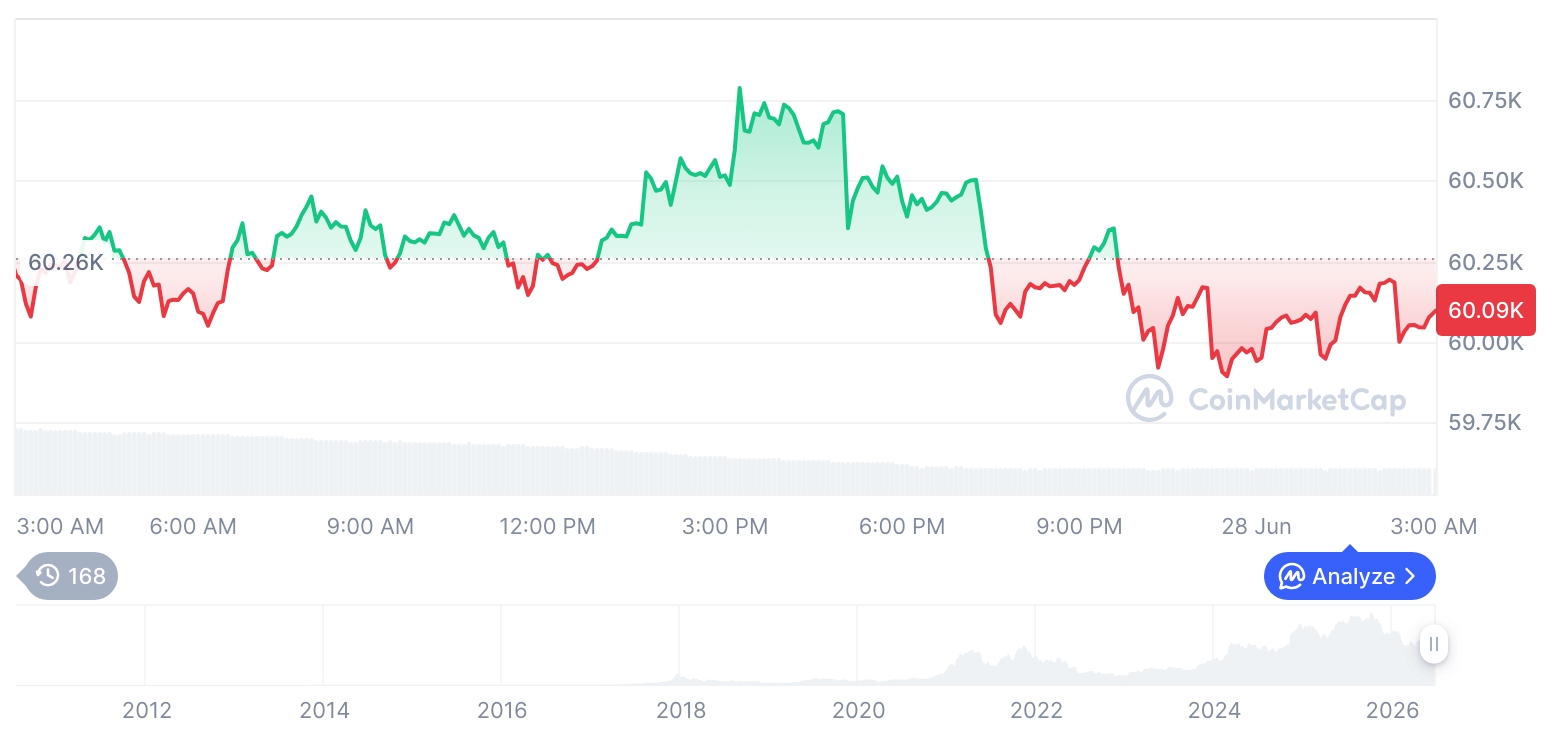
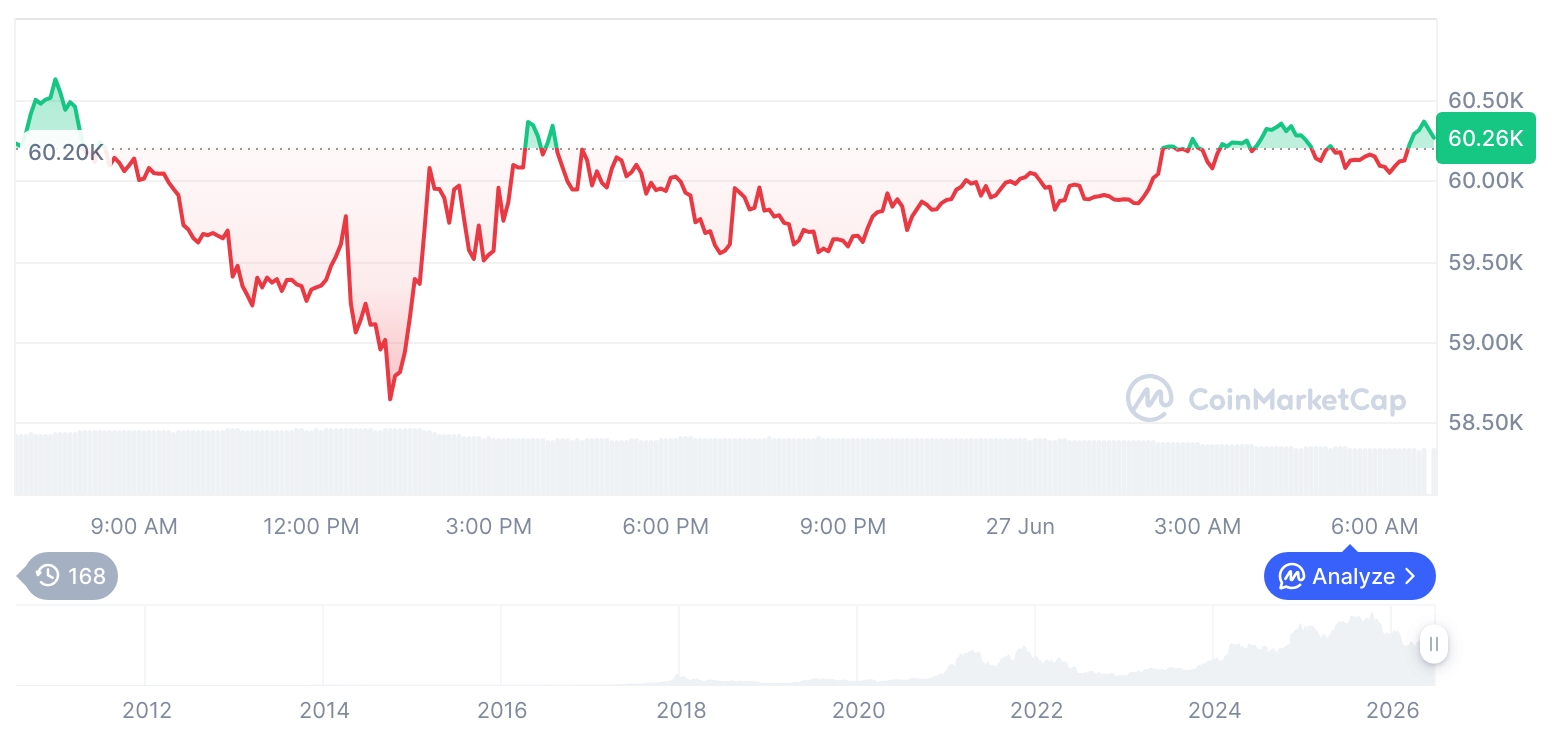
In equities and corporate crypto holdings, Strategy’s market capitalization fell below the value of its Bitcoin (BTC) treasury, pushing its corporate ‘mNAV’ (multiple of net asset value) under 1 for the first time, Odaily reported. Data cited in the report put Strategy’s shares near $82, implying a market cap of roughly $50.4 billion, versus an estimated BTC holding value of about $51.1 billion based on a BTC price near $60,000.
The shift matters because Strategy has historically traded at a premium to its underlying BTC, enabling it to raise capital—often via equity issuance—and buy more Bitcoin. With mNAV below 1, analysts warn that fresh share offerings could become more dilutive for existing shareholders, potentially tightening one of the company’s key financing levers. Some market observers compared the dynamic to a closed-end fund trading at a discount, akin to the historical pattern seen in Grayscale’s Bitcoin trust. Others noted Strategy still has multiple funding sources—debt markets, equity tools, and cash flow from its software business—giving it flexibility during periods of market stress.
Broader corporate adoption of Bitcoin continues to expand. A Fidelity Digital Assets report cited by Crypto Briefing said that, as of the end of 2025, 49 publicly listed companies held at least 1,000 BTC—up from 22 a year earlier. The same report estimated those firms collectively control close to 5% of total BTC supply. By early June 2026, the number of public companies holding BTC on their balance sheets had risen to roughly 170–199, with combined holdings of about 1.265 million BTC—around 6% of total supply—underscoring how ‘treasury allocation’ has moved from a niche practice to a widening corporate trend.
In Europe, the battle for market share intensified as Coinbase ($COIN) and OKX moved to attract users following Binance’s partial suspension of some services in the European Union, according to Wu Blockchain. Binance was unable to secure a Markets in Crypto-Assets (MiCA) license before a July 1 deadline, prompting the service changes; the exchange said it expects to obtain authorization in the coming months. Coinbase is offering up to 5% in transfer incentives for users in markets including Germany, France, and Italy, while OKX is marketing up to an 8% deposit bonus and new-user benefits for eligible European Economic Area customers. Erald Ghoos, OKX’s Europe lead, said sign-ups hit record levels ahead of the MiCA transition timeline.
Institutional and high-net-worth activity remained in focus. Ark Invest, led by Cathie Wood, disclosed purchases totaling about $25.54 million on June 26, including roughly $10.19 million worth of Coinbase shares (68,366 shares), alongside stakes in SpaceX, Circle, Bullish, and Robinhood, according to filings cited by PANews. The buys were interpreted as a renewed expression of Ark’s long-term conviction in crypto-linked infrastructure and platforms.
On-chain tracking also pointed to continued accumulation. SharpLink Gaming was linked to purchases totaling 39,196 Ethereum (ETH) over the past three days, including an additional 29,196 ETH worth about $46.7 million, Odaily reported citing Onchain Lens. The total outlay was estimated at roughly $62.43 million.
Meanwhile, Arkham monitoring data indicated Morgan Stanley added 143.312 BTC via its spot Bitcoin ETF position labeled MSBT, bringing its reported total to 4,784 BTC—valued near $293 million. While ETF flows can be noisy day to day, the steady expansion of holdings is widely viewed as a signal of ongoing ‘institutional demand’ expressed through regulated spot vehicles.
In tokenized commodities, Tether said it is integrating its tokenized gold product, Tether Gold (XAUT), with crypto lending platform Ledn, with plans to roll out gold-backed loans by the end of 2026, according to Odaily. The service would allow XAUT holders to borrow against tokenized gold without selling the underlying asset. Ledn said XAUT support will be added alongside its existing Bitcoin and Tether (USDT) offerings. Tether CEO Paolo Ardoino said demand is rising for solutions that combine long-term holding with financial flexibility as digital assets become more important in the global economy.
Network reliability also drew attention after Base—a major Ethereum Layer 2—reported two block production halts on its mainnet: 116 minutes on June 25 and 20 minutes on June 26 (UTC). Base attributed the incident to a bug in the sequencer’s block-building logic. After a transaction execution failure, a prior journal state was not properly cleared, triggering gas accounting errors in subsequent transactions and producing invalid state-transition blocks that ultimately stopped block production. Base said a patch resolved the issue and that on-chain assets and user funds were not impacted. The team added it will strengthen protocol fuzzing and stress tests, monitoring and operational procedures, and introduce improved recovery mechanisms.
Finally, a sharp selloff in Memecore ecosystem token M erased roughly $3 billion in market capitalization in a single day, CoinDesk reported. The project had not issued an official explanation for the plunge at the time of reporting, fueling community frustration. On-chain investigator ZachXBT previously argued that M’s elevated valuation may have been inflated by internal funding, noting concentrated spot trading on a limited set of exchanges and market attention driven in part by launchpad volume and incentive-based promotion. Market participants warned that tokens with heavy insider concentration and constrained liquidity channels can face outsized downside when real spot demand fails to absorb a wave of selling.
Taken together, the day’s headlines highlighted how crypto prices increasingly sit at the intersection of macro shocks, corporate balance-sheet strategies, regulatory competition, and fast-moving on-chain dynamics—forces that can amplify volatility even in the absence of a single dominant catalyst.
🔎 Market Interpretation
- Macro risk spillover: IRGC rhetoric around the Strait of Hormuz revived oil-supply concerns, a classic trigger for broader risk-off positioning that can transmit to crypto via higher cross-asset volatility and reduced risk appetite.
- Strategy discount is a sentiment tell: Strategy’s market cap slipping below the implied value of its BTC treasury (mNAV < 1) signals investors are assigning less value to its Bitcoin-levered corporate structure than to the underlying asset—often a late-cycle or stress indicator for “BTC proxy” equities.
- Corporate BTC adoption remains a structural bid: Growth in public companies holding meaningful BTC (1,000+ BTC cohort and broader 170–199 holders by mid-2026) reinforces that treasury allocation is evolving from fringe behavior into a persistent balance-sheet trend that may dampen long-term supply pressure.
- EU exchange competition accelerates into MiCA: Binance service changes tied to MiCA licensing timelines created a near-term customer migration window, prompting aggressive incentives from Coinbase and OKX—suggesting user acquisition costs may rise while compliant venues consolidate share.
- Institutional exposure broadens through regulated rails: Ark’s equity buys (Coinbase and other crypto-adjacent names) alongside Morgan Stanley’s incremental spot BTC ETF exposure highlight that large players are expressing crypto conviction via public market infrastructure and ETFs rather than direct token purchases alone.
- On-chain accumulation vs. infrastructure risk: Reported ETH accumulation (SharpLink) contrasted with Base L2 halts, underscoring the dual narrative of capital inflows alongside operational reliability as a key adoption constraint.
- Speculative tail risk persists: The Memecore (M) collapse illustrates liquidity fragility and insider/concentration risk—where valuations can unravel quickly when promotional demand fades and limited venues can’t absorb sell pressure.
💡 Strategic Points
- Watch mNAV as a financing throttle: If Strategy’s mNAV stays below 1, equity issuance becomes more dilutive, potentially slowing BTC accumulation financed by share sales; monitor management’s pivot toward debt, hybrid instruments, or software cash flow as alternative funding.
- Macro hedging lens: Heightened Middle East risk can increase correlation with macro-sensitive assets (equities, oil, FX). Consider tighter risk controls around event windows that move energy prices and rates expectations.
- MiCA-driven rotation opportunity: In Europe, incentives (transfer bonuses/deposit bonuses) may cause temporary volume and liquidity shifts. Traders should reassess venue risk, fee structures, and stablecoin/fiat rails availability as exchanges adapt post-deadline.
- Institutional signals—separate flow from narrative: ETF position additions (e.g., Morgan Stanley) can support the “institutional demand” story, but daily ETF flows are noisy; focus on multi-week trend changes and custody/authorized participant activity.
- Tokenized collateral theme: Tether Gold (XAUT) integration with Ledn points to growing demand for borrowing against non-BTC collateral. Track terms (LTV, liquidation mechanics, custody) because they will determine whether tokenized commodities become meaningful DeFi/CeFi collateral.
- L2 operational due diligence: Base’s sequencer bug and halts reinforce the need to factor downtime risk into yield strategies and time-sensitive execution; users and funds were reported safe, but reliability affects MEV, liquidation risk, and bridge behavior.
- Speculative token risk framework: For memecoin/ecosystem tokens, prioritize checks on holder concentration, exchange breadth, organic spot demand, and incentive-driven volume. Thin liquidity + concentrated ownership = asymmetric downside.
📘 Glossary
- Strait of Hormuz: A vital maritime chokepoint for global oil shipments; disruptions can move energy prices and global markets.
- Risk appetite (risk-on/risk-off): Investor willingness to hold volatile assets; tends to drop during geopolitical or macro shocks.
- Strategy (formerly MicroStrategy): A public company known for holding large Bitcoin reserves and using capital markets to expand its BTC position.
- mNAV (multiple of net asset value): Ratio of a company’s market capitalization to the value of its net assets (here, primarily BTC holdings). mNAV < 1 implies the market values the company below its underlying asset value.
- Dilution: Reduction in existing shareholders’ ownership percentage when new shares are issued, often to raise capital.
- Closed-end fund discount: When a fund’s market price trades below the value of its underlying holdings (NAV), as historically seen with GBTC at times.
- MiCA: The EU’s Markets in Crypto-Assets regulatory framework establishing licensing and compliance requirements for crypto service providers.
- Spot Bitcoin ETF: A regulated fund that holds Bitcoin directly; investors gain BTC price exposure via traditional brokerage accounts.
- XAUT (Tether Gold): A token representing ownership of physical gold, designed to track gold value on-chain.
- Gold-backed loans: Borrowing using gold (here, tokenized gold) as collateral instead of selling the asset.
- Ethereum Layer 2 (L2): Scaling networks that process transactions off Ethereum mainnet while inheriting some security properties; Base is a prominent L2.
- Sequencer: The component in many L2s that orders and submits batches of transactions; failures can halt block production.
- Holder/insider concentration: A large portion of token supply controlled by few wallets, increasing dump and manipulation risk.
- Liquidity channels: The exchanges/venues where a token trades; limited venues can amplify volatility during heavy selling.





















Comment 0