

 News
News  Coin Information
  About us
  Customer Service


 Add as a preferred source on Google

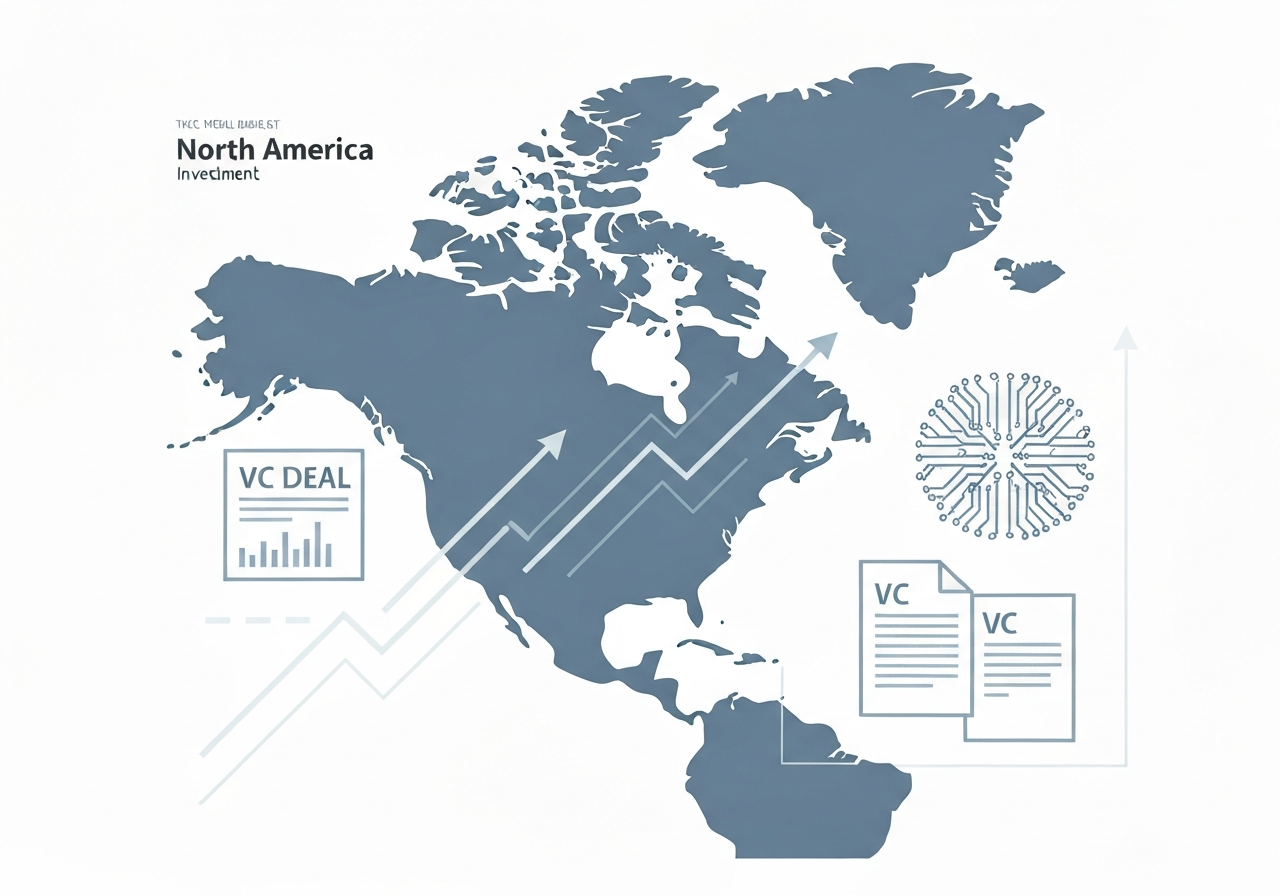
U.S. venture capital investment continued to tilt heavily toward ‘AI startups’ in the second quarter, underscoring how the market’s risk appetite remains intact—but increasingly concentrated in a small set of mega-funds and a handful of blockbuster rounds.
Crunchbase data for Q2 shows that while AI enthusiasm appears broad across the startup ecosystem, the largest checks and the most influential lead roles were dominated by established firms with deep reserves. The pattern highlights a bifurcated market: wide experimentation at the earliest stages, and decisive capital clustering around a few perceived winners at the late stage.
Big firms dominated deal volume beyond seed
In post-seed rounds, General Catalyst was the most active investor by number of deals, executing 39 transactions during the quarter. Y Combinator followed with 34, and Andreessen Horowitz recorded 28. More than two-thirds of the investments made by these top firms were directed toward AI-focused startups, according to the dataset.
Y Combinator’s position near the top is consistent with its model: companies that enter its accelerator pipeline often receive follow-on funding, giving the firm an ongoing role that extends beyond early discovery and into capital formation for subsequent rounds.
Lead investor activity reshuffled the rankings
When the focus narrows to ‘lead’ or co-lead investments—where firms typically set key terms and help shape valuation dynamics—the leaderboard changes. Andreessen Horowitz ranked first with 17 lead or co-lead rounds. Khosla Ventures and General Catalyst tied for second, each logging 13 lead or co-lead deals.
In total, at least 12 investment firms led or co-led six or more U.S. venture rounds in Q2, suggesting that deal activity remained elevated and that multiple firms were willing to take price-setting roles rather than simply participate as followers.
Capital deployed was skewed by a single mega-round
Deal count, however, did not equate to capital deployed. By dollars invested, rankings were effectively shaped by investors tied to Anthropic’s massive financing. The AI company raised $50 billion in a Series H round in May, with 10 firms participating as co-leads.
Alongside that round, Google was reported to have committed an additional $10 billion, while Amazon led a $5 billion tranche—underscoring how strategic backers are using multi-billion-dollar commitments to secure exposure to frontier AI development.
The size of the Anthropic financing also illustrates a broader Q2 dynamic: super-sized rounds became a defining feature of the quarter. Crunchbase data indicates that 23 investors led or co-led deals of $2 billion or more during the period—reinforcing the notion that the market is writing fewer, larger checks into companies that investors view as de-risked relative to the broader startup field.
Seed investment stayed hot, led by Y Combinator
At the earliest stages, funding remained active as well. Y Combinator invested in at least 225 seed, pre-seed, and convertible-note rounds in Q2, maintaining a wide lead. Antler and LvlUp Ventures followed behind, pointing to continued capital formation for newly founded startups and a resilient U.S. startup ‘pipeline’ even as late-stage dollars concentrate around AI incumbents.
This creates a two-track structure: late-stage venture capital is increasingly centered on ‘conviction trades’ in large AI platforms, while early-stage investing continues to fund a broad set of experiments that may or may not align with today’s dominant AI narratives.
What to watch in Q3
Overall, the quarter’s combination of high deal activity, large financings, and sustained seed deployment suggests the U.S. venture market has not entered a clear slowdown. AI remained the organizing theme of the quarter, but the next set of constraints may come from outside the startup ecosystem: interest-rate expectations, valuation sensitivity, and whether capital continues to concentrate in a small number of frontier AI companies.
For now, Q2 data indicates venture investing in the U.S. is still moving at a fast clip—albeit with capital increasingly flowing to fewer destinations.
🔎 Market Interpretation
- AI remains the primary magnet for U.S. venture capital in Q2: Investor risk appetite appears intact, but funding is increasingly concentrated in AI-focused companies—especially at later stages.
- Bifurcated market structure: The data reflects a two-track ecosystem—broad experimentation at seed and pre-seed, versus decisive capital clustering around a small set of late-stage “winners.”
- Deal activity stayed elevated, but influence differs by role: Firms that do many deals are not always the same firms that most frequently lead rounds and set terms.
- Dollar totals were distorted by mega-rounds: Capital deployed rankings were heavily shaped by Anthropic’s reported $50B Series H, reinforcing that Q2 was defined by fewer, much larger checks.
- Strategic capital is tightening around frontier AI: Reported multi-billion-dollar commitments (e.g., Google and Amazon) signal that large tech/strategic backers are pursuing exposure and positioning in frontier model development.
💡 Strategic Points
- Differentiate “most active” vs “most influential” investors:
- Activity beyond seed was led by General Catalyst (39), followed by Y Combinator (34) and Andreessen Horowitz (28).
- Lead/co-lead influence shifted to Andreessen Horowitz (17), with Khosla Ventures and General Catalyst tied at 13 each.
- Expect “barbell” portfolio construction to persist: Investors may continue pairing high-volume seed bets with select late-stage conviction trades in platform-scale AI companies.
- Mega-round participation is becoming a competitive advantage: Access to super-sized rounds appears limited to firms with deep reserves and strong relationships, potentially widening the gap between mega-funds and smaller managers.
- Watch valuation-setting power: Lead/co-lead behavior signals who is willing to take pricing risk; this may affect market-wide valuation benchmarks if sentiment shifts.
- Q3 key variables sit outside startup fundamentals: The article flags macro and market mechanics—interest-rate expectations, valuation sensitivity, and whether capital continues to concentrate in a few frontier AI firms—as potential constraints.
- Implication for founders:
- Early-stage: Funding remains available, but differentiation and credible AI positioning can improve odds.
- Late-stage: Outcomes may depend on demonstrating “de-risked” scale traits (revenue/usage, defensibility, strategic partnerships) to compete for concentrated capital.
📘 Glossary
- AI startups: Companies primarily building products or infrastructure around artificial intelligence, including model development, tooling, and AI-native applications.
- Seed / Pre-seed: Earliest venture rounds used to validate an idea and build an initial product/team; typically smaller checks with higher uncertainty.
- Convertible note: A financing instrument that starts as debt and later converts into equity, often used in early-stage fundraising to delay pricing/valuation decisions.
- Post-seed: Funding stages after seed (e.g., Series A and beyond) where companies are expected to show traction and clearer scaling plans.
- Lead investor / Co-lead: The firm(s) that anchor a round, often negotiating key terms, guiding valuation, and signaling quality to other investors.
- Mega-round / Super-sized round: Exceptionally large financings (here, deals of $2B+ are cited) that can dominate quarterly funding totals.
- Frontier AI: Cutting-edge, large-scale AI models and platforms at the performance boundary of current capabilities, typically requiring massive compute and capital.
- Conviction trade: A concentrated investment decision where an investor allocates significant capital to a small number of high-confidence bets.
- Bifurcated market: A market split into two distinct behaviors—in this case, broad early-stage experimentation and concentrated late-stage capital allocation.




















Comment 0