

 News
News  Coin Information
  About us
  Customer Service


 Add as a preferred source on Google
BitMine Immersion Technologies ($BMNR) is drawing renewed attention on Wall Street as it deepens an Ethereum (ETH) treasury-led business model and positions itself as a key ‘institutional’ infrastructure provider for the Ethereum ecosystem—an evolution that could reshape how public markets gain exposure to onchain yields and governance-adjacent services.
Shares of the NYSE-listed company recently traded around $14.36, down more than 90% from a 52-week high near $161 after a steep drawdown that began following last year’s peak. Despite the correction, market participants continue to focus on BitMine’s unusually large ETH balance and its effort to build a scalable framework around ‘staking yield’, institutional participation, and ecosystem coordination.
At the center of that push is BitMine’s role in the newly launched nonprofit ‘Ethereum Institutional’, where the company is acting as an anchor backer and governance participant. The organization is designed to accelerate institutional adoption of Ethereum through education, standards, and market outreach—areas that traditional finance has increasingly demanded as it explores onchain settlement and tokenized assets.
BitMine joined the initiative alongside SharpLink ($SBET) and Ethereum co-founder Joe Lubin. According to the project’s stated direction, BitMine is expected to contribute to staking infrastructure, protocol innovation efforts, and the design of treasury and yield strategies suitable for institutions. BitMine Chair Thomas Lee has taken a board seat, alongside SharpLink CEO Joseph Chalom and Ethereum Institutional Executive Director David Walsh, underscoring the group’s aim to shape ‘institution-grade’ norms for onchain finance.
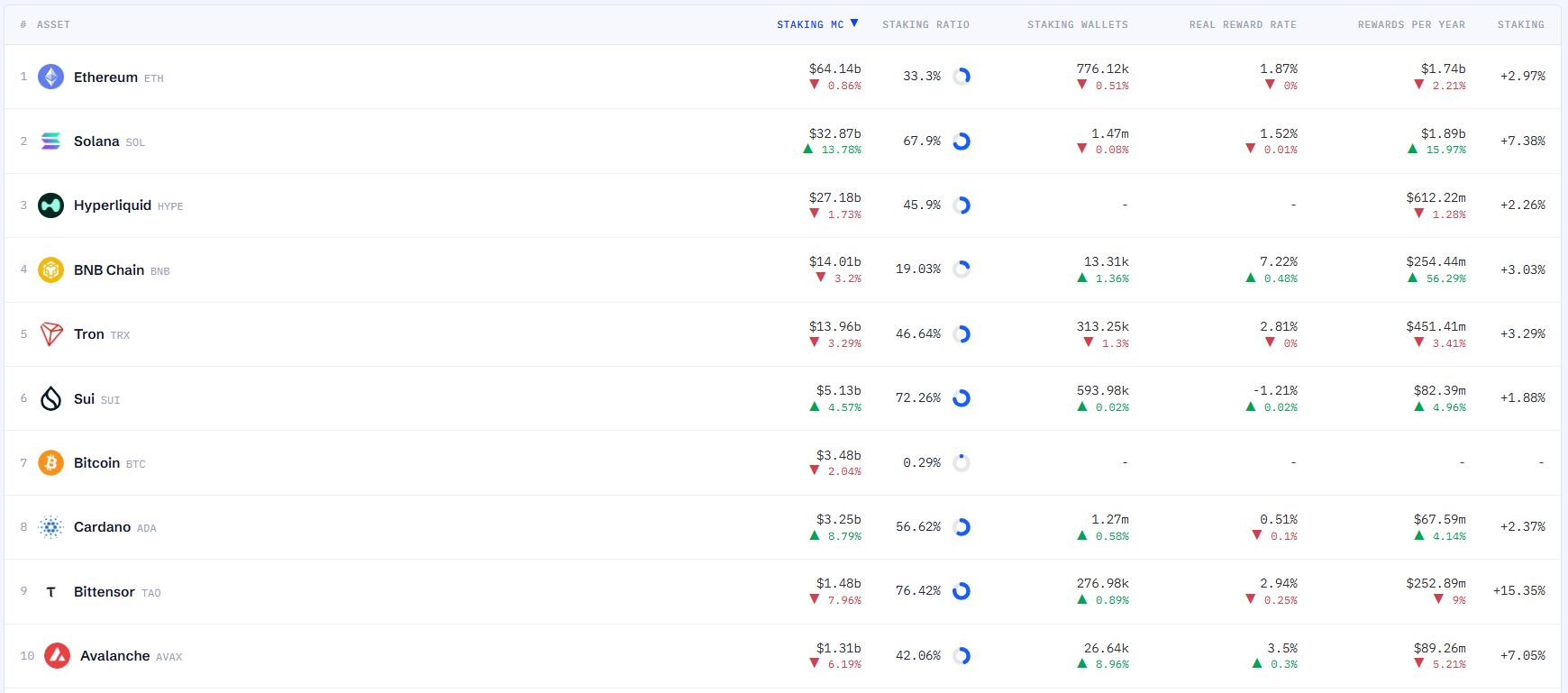
BitMine’s treasury footprint is what makes the story exceptional. The company says it holds roughly 5.7 million ETH, with about 4.8 million ETH staked—an allocation it estimates generates around $200 million in annual staking revenue. At current prices, the firm’s ETH position is valued above $9 billion, giving it one of the largest ETH treasuries associated with a publicly traded company. BitMine has also indicated plans to acquire an additional 500,000 ETH as part of a longer-term ambition to reach 5% of Ethereum’s total supply.
Investors are increasingly viewing these moves as more than a passive bet on ETH appreciation. The company’s approach signals a shift toward a hybrid model: holding a strategic reserve while monetizing ‘native yield’ through staking and building services that sit close to governance and institutional onboarding. With a market capitalization cited near $8.06 billion in the source material, BitMine is being framed as one of the fastest-growing Ethereum treasury-focused equities, even as its share price remains under pressure.
From a technical perspective, analysts tracking the stock have highlighted the $12–$15 range as a key support zone after the prolonged downtrend. A sustained move above $25 is widely described as a potential inflection point that could mark a transition from a bearish structure to a more durable recovery trend. Longer-dated projections in the report suggest a possible $60–$120 trading band by 2030, contingent on broader Ethereum adoption and BitMine’s ability to execute at scale.
BitMine is also seeking to widen its footprint beyond staking. The company has pursued investment exposure to AI and digital identity themes through a transaction involving Eightco Holdings, with participation from notable crypto-native and industry investors including Pantera Capital and Payward (parent company of Kraken). The expansion into areas such as digital identity—referencing projects like Worldcoin—signals an attempt to position BitMine as an ‘adjacent infrastructure’ and strategic investment platform rather than a single-line crypto operator.
Ethereum Institutional, meanwhile, has outlined five priority areas: expanding institutional education and participation; providing institutional intelligence; marketing ETH and the broader ecosystem; establishing standards and best practices; and hosting institutional events. BitMine is expected to contribute capital, infrastructure support, and board-level leadership, with an emphasis on deepening ties to major banks and asset managers, promoting standardization for onchain finance, and coordinating ecosystem messaging.
Ultimately, BMNR’s trajectory appears closely linked to Ethereum’s price cycle and the pace of institutional adoption. Market watchers expect near-term consolidation around the current support zone, while a breakout above $25 could strengthen the case for a re-rating in a subsequent ETH upcycle. Longer term, the company’s ability to expand its ETH treasury, maintain competitive ‘staking yield’ operations, and cement a role in institutional standards-setting may determine whether its equity can recover into higher valuation bands—without relying solely on token price appreciation.



















Comment 0