

 News
News  Coin Information
  About us
  Customer Service


 Add as a preferred source on Google
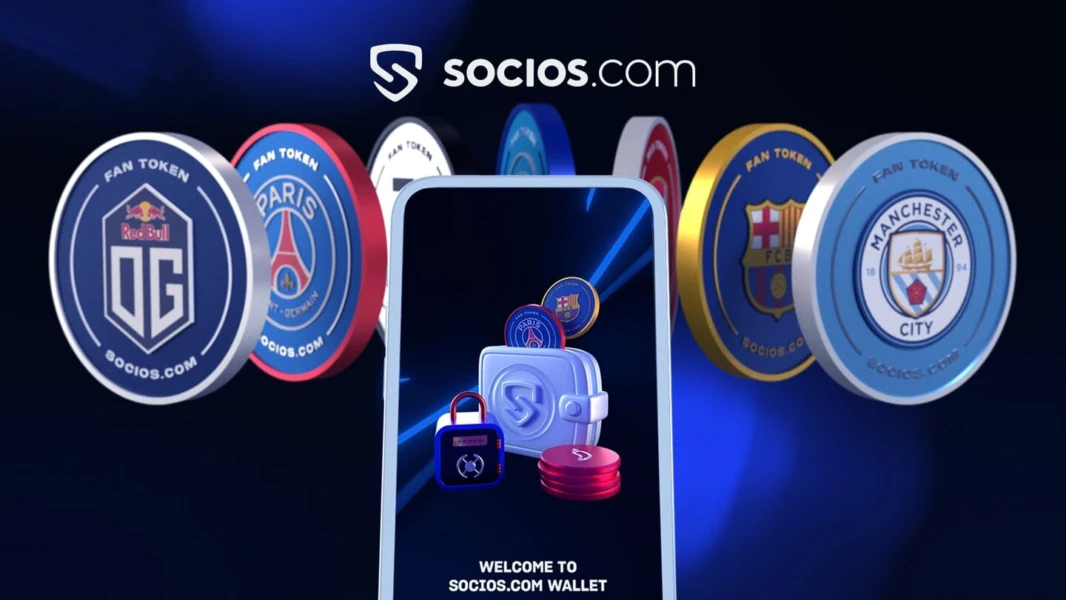
Socios.com has publicly proposed structuring FIFA’s planned $4.2 billion fundraising through a ‘tokenised equity’ model, arguing that the investment opportunity should be opened to fans and individual investors rather than being reserved for institutional capital.
Alexandre Dreyfus, founder and CEO of Socios.com, said on X that the company is willing to design a tokenised equity framework for FIFA Forward Enterprise (FFE)—the vehicle tied to FIFA’s financing plans—so that retail participants worldwide could potentially access the same economic exposure and terms as large institutions. Socios.com said it would provide the required technical infrastructure “at cost,” framing the initiative as a non-binding, open offer while FIFA considers next steps.
Crucially, Socios.com stressed that it is not seeking to replace institutional investors with “fan capital.” Instead, it is challenging the premise that only institutions should be allowed into the deal. “FIFA has no capital problem,” Dreyfus wrote, adding that raising $4 billion in the sports industry is among the easier tasks. The bigger question, he argued, is whether ownership should remain concentrated among those who already hold most investable assets.
The company’s pitch taps into a long-running tension in global sports finance: football’s commercial value is built on billions of supporters, yet the financial upside is typically captured through private equity, sponsorships, broadcast rights, and other structures that rarely include fans as owners. Socios.com noted that traditional private placements often come with high minimum checks—frequently in the hundreds of thousands of dollars—alongside accredited investor rules and cross-border settlement frictions that can effectively exclude smaller investors. In its view, the constraint is less about demand and more about the limitations of existing financial rails.
Socios.com argues that tokenised securities could, in principle, preserve the same shareholder rights and disclosure obligations as conventional equity while enabling fractional issuance and more efficient cross-border distribution. Under this approach, the equity is not a separate “crypto-native” asset divorced from securities law, but a blockchain-based representation of a regulated instrument. The company pointed to Europe, where tokenised shares can be treated as securities under prevailing financial services rules, and to the U.S., where custody and investor-protection requirements can be applied within the existing federal securities framework.
Even so, Socios.com acknowledged that execution would be heavily dependent on jurisdictional complexity. Any offering marketed across borders would still need to comply with local securities laws, investor eligibility requirements, selling restrictions, and anti-money laundering controls—factors likely to determine where and how broadly retail participation could be permitted.
Alongside the FIFA proposal, Socios.com teased plans to launch ‘Socios Equity Tokens™,’ which it described as a regulated security product designed to issue company equity in token form. The firm said it intends to work with established transfer agents and securities issuance platforms, placing the product under supervisory regimes across multiple jurisdictions.
Dreyfus also framed fan-distributed ownership as a potential governance and reputational advantage for FIFA. In his view, stakes concentrated among a small number of private funds can become an easy political target, while ownership dispersed across supporters aligned with FIFA’s 211 member associations could form a broader base of legitimacy and resilience. He referenced FIFA President Gianni Infantino’s long-standing message that football “belongs to the fans,” arguing that tokenised equity could provide a mechanism to operationalize that idea.
Socios.com stopped short of endorsing or opposing the creation of FFE itself, emphasizing that the decision ultimately rests with FIFA’s member associations. The platform, operated by the Chiliz Group, said it works with more than 80 sports organizations across football, basketball, motorsports, esports, and combat sports, and claims to have generated more than $700 million in revenue for sports rights holders to date.
Market observers are likely to watch whether FIFA engages with the proposal, not only because of the headline fundraising amount, but also because a tokenised equity structure—if implemented within regulatory guardrails—would test how far mainstream sports institutions are willing to go in blending capital markets with blockchain-based issuance and distribution.
🔎 Market Interpretation
- Proposal in context: Socios.com is urging FIFA to consider a tokenised equity route for its planned ~$4.2B fundraising via FIFA Forward Enterprise (FFE), positioning blockchain rails as a way to broaden access beyond institutions.
- Core debate: The story frames a long-standing mismatch in sports finance—fans create much of football’s commercial value, but most economic upside is captured by private capital structures that exclude retail investors.
- Not “fans vs. funds”: Socios.com explicitly says it is not trying to displace institutional capital; it challenges the assumption that institutions should be the only participants in the deal.
- Infrastructure claim: Socios.com offers to provide the technical stack “at cost,” implying the bottleneck is less capital availability and more distribution and settlement constraints in traditional markets.
- Regulatory reality check: The article underscores that cross-border retail participation would still be gated by local securities laws, eligibility rules, selling restrictions, custody standards, and AML controls—likely narrowing where true retail access is feasible.
- Market signal: If FIFA engaged, it would be a high-profile test of whether major sports bodies will adopt compliant tokenised securities for primary issuance and global distribution.
💡 Strategic Points
- Structure design goal: Create a tokenised equity framework for FFE where retail investors could potentially receive the same economic exposure and terms as institutions (subject to jurisdictional constraints).
- Fractionalization advantage: Tokenisation could reduce minimum investment sizes and enable fractional ownership—addressing the “hundreds of thousands of dollars” minimum checks typical of private placements.
- Operational efficiency thesis: Blockchain-based issuance and transfer could streamline cross-border settlement and distribution compared with legacy financial rails—while still mapping to regulated shareholder rights and disclosures.
- Compliance-first positioning: Socios emphasizes tokenised equity as a representation of regulated securities, not a separate crypto-native asset outside securities frameworks (citing EU treatment and U.S. custody/investor-protection requirements).
- Governance/reputation angle for FIFA: Dispersed ownership among supporters could reduce political exposure versus concentrated stakes held by a small set of private funds, and align with the message that football “belongs to the fans.”
- Execution dependencies: Any workable rollout would likely require a jurisdiction-by-jurisdiction offering strategy, robust KYC/AML, transfer restrictions, qualified custodian arrangements, and coordination with transfer agents.
- Product roadmap implication: The teased “Socios Equity Tokens™” suggests Socios is building a broader regulated tokenised securities capability, partnering with established issuance platforms and transfer agents under multiple supervisory regimes.
📘 Glossary
- Tokenised equity: Equity ownership represented on a blockchain as digital tokens that correspond to a regulated security, intended to preserve legal shareholder rights while enabling fractional transfer and more efficient distribution.
- FFE (FIFA Forward Enterprise): The vehicle referenced as being tied to FIFA’s financing/fundraising plans.
- Retail investors: Individual (non-institutional) investors; often face access limits in private offerings due to minimum investment sizes and eligibility rules.
- Institutional investors: Large professional capital allocators such as private equity funds, asset managers, sovereign funds, and insurers.
- Private placement: A capital raise offered to a limited set of investors (often accredited/qualified), typically with high minimum tickets and transfer restrictions.
- Accredited/qualified investor rules: Regulatory standards that restrict participation in certain offerings to investors meeting income/net worth or sophistication thresholds.
- Shareholder rights & disclosures: Legal entitlements (e.g., economic rights, voting where applicable) and required information reporting tied to regulated securities.
- Custody: Safekeeping of securities/tokens by regulated providers; a key compliance requirement in many jurisdictions.
- KYC/AML: “Know Your Customer” and Anti-Money Laundering controls used to verify identity, assess risk, and prevent illicit finance.
- Transfer agent: A regulated entity that maintains records of security holders, processes transfers, and supports issuance and corporate actions.





















Comment 0