

 News
News  Coin Information
  About us
  Customer Service


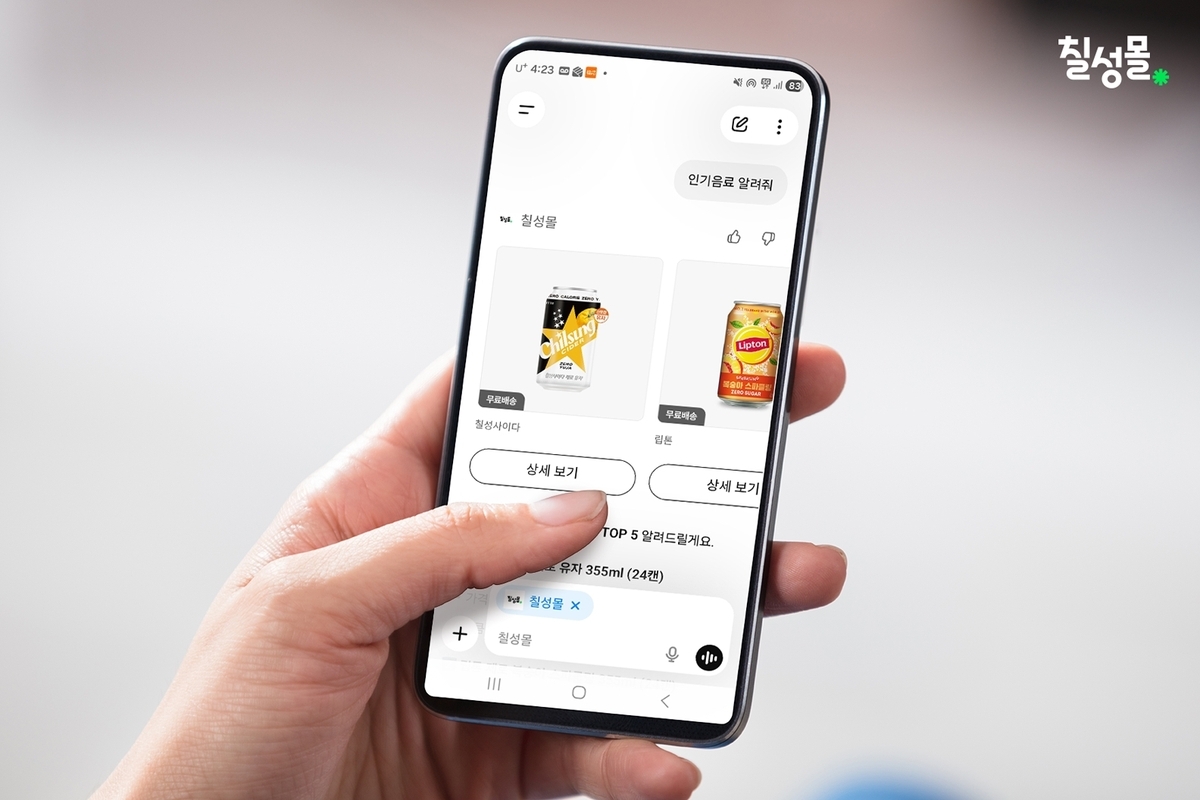
Lotte Chilsung Beverage is betting that the next battleground in retail won’t be a search bar, but an AI chat window. The company said it will launch a dedicated app for its official online store, Chilsung Mall, inside OpenAI’s ChatGPT on May 13, positioning conversational AI as a direct pathway from product discovery to checkout.
The initiative uses ChatGPT’s “Apps” feature, allowing users to access Chilsung Mall without leaving the chatbot interface. After finding and connecting to Chilsung Mall through ChatGPT’s menu, shoppers can summon the service by typing ‘@Chilsung Mall’ in the conversation or tapping the plus-shaped button to load the app. From there, users can ask questions in natural language to pull up product details, promotional campaigns, and discount benefits in real time, with selected items linking directly to a shopping cart or purchase page.
What sets the rollout apart from traditional e-commerce is the shift from keyword-driven browsing to intent-based dialogue. Instead of searching a catalog by typing an exact product name, customers can ask everyday questions such as “Recommend popular drinks” or “Which items are available for subscription,” with the AI acting as a guide that narrows options and surfaces relevant offers. The model is designed to keep the customer in a single flow—from recommendations through to the final steps before payment—reducing the friction that often causes shoppers to abandon purchases.
For retailers, the conversational layer is more than a convenience feature. As online stores expand their product lines, AI-mediated navigation can make large catalogs easier to explore while creating new “entry points” to owned channels—an especially valuable advantage as brands try to reduce reliance on third-party marketplaces and paid search. A chat-based interface can also support more granular personalization, where recommendations are shaped by context, preferences, and follow-up questions rather than one-off searches.
Lotte Chilsung Beverage framed the launch as a move to improve accessibility across digital environments and said it plans to expand AI-driven personalized services. The company’s timing also reflects an accelerating push in the food and beverage sector to turn generative AI from a customer-service tool into a revenue channel. Last month, Lotte Wellfood similarly released a dedicated app inside ChatGPT that connects to its own direct-to-consumer shopping service, signaling an emerging playbook across the group.
The broader implication is a potential rebalancing of competitive priorities in online retail. If consumers become comfortable selecting and buying products within conversational platforms—without opening a separate shopping app or website—retailers may place less emphasis on traditional search visibility and more on ‘conversational recommendations’ and ‘personalized prompting’ that can influence purchasing decisions in real time. Over time, that could intensify competition around AI-driven merchandising, promotional targeting, and the quality of in-chat purchase experiences, reshaping how brands win attention and conversion in digital commerce.
🔎 Market Interpretation
- Chat-first commerce is emerging as a new discovery channel: Lotte Chilsung Beverage is positioning conversational AI as a primary route from product discovery to cart, signaling a shift away from search-bar-led shopping.
- Owned-channel advantage against platforms and paid search: By bringing Chilsung Mall into ChatGPT, the brand creates new entry points to its direct-to-consumer store, potentially reducing dependence on third-party marketplaces and search ads.
- Lower-friction journeys may improve conversion: Keeping users inside a single chat flow—from intent capture to product selection and checkout links—targets common abandonment points in traditional e-commerce funnels.
- Competitive focus may move to “conversational shelf space”: If consumers adopt in-chat purchasing, brands may compete more on recommendation quality and prompt-driven merchandising than on SEO and keyword rankings.
- Sector-wide acceleration: The move follows similar in-ChatGPT commerce apps (e.g., Lotte Wellfood), suggesting a group-level playbook and broader food & beverage adoption of generative AI for revenue, not just support.
💡 Strategic Points
- Intent-based dialogue beats keyword matching for broad catalogs: Natural-language requests (e.g., “popular drinks,” “subscription options”) can surface relevant products faster than exact-name searches, improving discovery for long-tail items.
- Design for end-to-end flow: The strongest value comes from minimizing context switching—recommendations, promotions, and product details should lead directly to cart/purchase pages.
- Merchandising becomes dynamic and contextual: Promotions and discounts can be presented in real time based on user needs, follow-up questions, and preferences, enabling more granular targeting than static category pages.
- New optimization surface: conversational recommendations: Retail teams may need “AI merchandising” playbooks—how products are described, bundled, and promoted for chat-based retrieval and ranking.
- Data and measurement implications: Success metrics may shift toward conversation-to-cart rates, drop-off points within chat flows, and promotion effectiveness in dialogue contexts.
- Brand safety and accuracy are critical: To avoid mis-selling, retailers should ensure up-to-date pricing, stock, subscription terms, and promotion rules are reliably reflected in chat responses.
📘 Glossary
- ChatGPT “Apps” feature: A capability that lets users access external services within ChatGPT’s interface, enabling actions like browsing products and opening purchase links without leaving the chat.
- Conversational commerce: Buying and selling through chat-based interactions where discovery, recommendations, and purchase steps happen via dialogue.
- Keyword-driven browsing: Traditional e-commerce navigation where users search using exact terms and filter through results pages.
- Intent-based dialogue: A shopping approach where the system interprets the shopper’s goal from natural language (needs, constraints, context) rather than matching exact keywords.
- Owned channel (DTC): A brand-controlled sales channel (e.g., its official online store) that reduces reliance on marketplaces or intermediaries.
- Personalized prompting: Tailoring suggestions and next-step questions in real time to guide users toward relevant products and offers.
- In-chat purchase experience: The end-to-end shopping journey occurring primarily within a conversational interface, with links or embedded steps leading to checkout.










Comment 0