

 News
News  Coin Information
  About us
  Customer Service


 Add as a preferred source on Google
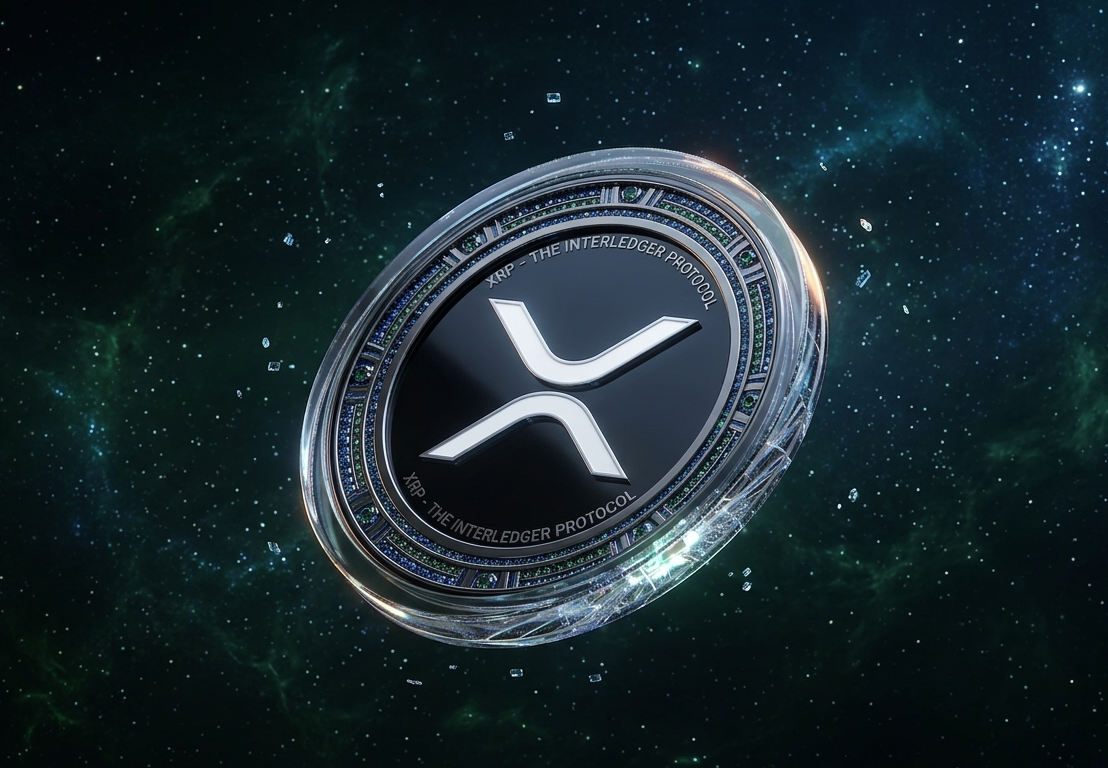
Ripple’s XRP Ledger (XRPL) is increasingly positioning itself as a core piece of infrastructure for the fast-growing market in tokenized real-world assets (RWAs), after a recent redemption of Ondo Finance’s tokenized U.S. Treasury fund used the network to validate ownership and execute token burns—an operational milestone that underscores blockchain’s push into institutional finance.
The development comes as XRP (XRP) traded around $1.45 on Monday U.S. Eastern Time, reflecting a period of choppy price action even as activity around XRPL’s tokenization capabilities gains visibility among large financial players.
According to the report, Ondo Finance’s tokenized Treasury product ‘OUSG’ processed a recent redemption through XRPL, where the ledger handled key back-end functions such as verifying the holder’s claim and performing the burn mechanism used to retire tokens upon redemption. Ripple participated in the workflow alongside JPMorgan Chase ($JPM) and Mastercard ($MA), in what was framed as a proof point for cross-border tokenized settlement rails.
Notably, XRP itself was not used as the settlement asset in the transaction. Still, market participants see the episode as strategically important: it highlights XRPL’s utility as a blockchain layer for institutional-grade token operations, even when the native token is not directly integrated into the payment leg. For investors tracking the tokenization theme, that distinction matters—many near-term enterprise deployments prioritize compliant issuance, transfer restrictions, and auditable lifecycle management over using a public token as an intermediary currency.
XRPL’s tokenized asset footprint has expanded sharply. Market data cited in the report indicates that the value of tokenized assets on XRPL has surged roughly 2,200% over the past year. While the absolute base level is not detailed, the growth rate suggests a shift away from purely speculative usage toward higher-frequency financial primitives tied to fund shares and other RWA representations.
The timing aligns with a broader institutional trend: asset managers and banks are accelerating pilots around tokenized Treasuries, private credit, real estate exposure, and fund units, seeking improved settlement speed, programmable compliance, and round-the-clock liquidity. Against that backdrop, XRPL’s role in a redemption-and-burn flow offers a tangible example of “plumbing” that traditional firms care about—ownership verification, controlled supply adjustments, and deterministic execution.
In the spot market, XRP continued to trade within a well-watched technical range. CoinMarketCap data quoted in the report put XRP at $1.4484 as of Monday morning U.S. Eastern Time, down 0.25% over 24 hours, with a modest one-hour decline of 0.49%. Despite near-term softness, performance remained positive over longer windows, with gains of 3.07% over seven days and 8.81% over 30 days, suggesting bullish positioning has not fully unwound.
Traders pointed to $1.42 as a key support level and $1.54 as the next major resistance. A decisive move above $1.54 is widely viewed as a trigger for directional momentum, while repeated failures at that area have reinforced a sideways-to-volatile structure.
By market capitalization, XRP remained the fourth-largest cryptocurrency, with a circulating market cap of about $89.5 billion and an estimated market share near 3.33%, the report said. Fully diluted valuation was cited at roughly $144.8 billion. Trading activity appeared to cool, with 24-hour volume around $2.48 billion—down 32.86% day over day—while decentralized exchange volume was comparatively small at approximately $5.06 million, implying most liquidity remains concentrated on centralized venues.
Analysts also highlighted a competitive and rotation-driven altcoin environment. As major tokens such as Solana (SOL) and Chainlink (LINK) test their own resistance levels, cross-asset flows can amplify short-term volatility in XRP, particularly around breakout zones where leverage and momentum strategies tend to cluster.
Separately, the report noted that continued discussions around a potential “U.S. Strategic Crypto Reserve” have kept attention on assets considered compatible with ISO 20022, a global financial messaging standard increasingly adopted across payment systems. XRP is frequently cited by market participants in that context, though concrete policy outcomes remain uncertain and timelines unclear.
Looking ahead, traders and institutions are likely to focus less on one-off demonstrations and more on repeatable throughput: additional tokenization partnerships, Ripple’s roadmap disclosures, and any material changes in the U.S. regulatory environment—including developments involving the Securities and Exchange Commission—could shape the next leg of sentiment around XRP and XRPL’s role in the tokenized asset stack.
🔎 Market Interpretation
- XRPL strengthens institutional “plumbing” narrative: Ondo Finance’s OUSG redemption used XRPL to verify ownership and burn redeemed tokens, underscoring the ledger’s role as back-end infrastructure for token lifecycle management in real-world assets (RWAs).
- Utility highlighted even without XRP as settlement: XRP was not the settlement asset, signaling that near-term enterprise adoption may prioritize compliant issuance, transfer controls, and auditability over using a native token as an intermediary currency.
- Tokenization footprint expanding rapidly: Reported tokenized-asset value on XRPL rose about 2,200% year-over-year, implying accelerating experimentation and deployment of RWA rails beyond speculative crypto activity.
- Price action remains range-bound: XRP traded near $1.45 with mixed short-term performance (slightly down on the day) but positive 7D and 30D trends, suggesting bullish positioning has softened but not fully reversed.
- Liquidity and flow dynamics: 24h volume fell ~33%, DEX volume remained small versus CEXs, and rotation among major altcoins (e.g., SOL, LINK) may amplify volatility around key technical levels.
💡 Strategic Points
- What the Ondo redemption demonstrates: A concrete institutional workflow—claim validation → redemption → burn (supply retirement)—showing how tokenized funds can be administered with deterministic on-chain steps.
- Why the “XRP not used” detail matters: Market impact for the token may be indirect in the near term; the strategic value accrues to XRPL adoption and ecosystem credibility, which could later translate into broader network usage and sentiment support.
- Institutional adoption catalyst: Participation alongside firms like JPMorgan and Mastercard is positioned as a proof point for cross-border tokenized settlement rails, validating XRPL’s suitability for enterprise operational requirements.
- Key technical levels to watch: Traders flag $1.42 as support and $1.54 as major resistance; a sustained break above $1.54 is viewed as a potential momentum trigger, while repeated rejection keeps a sideways/volatile structure intact.
- Macro/policy watch items: Speculation around a potential U.S. Strategic Crypto Reserve and “ISO 20022 compatibility” narratives may influence attention, but concrete policy timelines remain uncertain.
- Next validation step: Markets will likely price repeatable throughput over one-off demos—new tokenization partnerships, Ripple roadmap updates, and U.S. regulatory developments (including SEC-related signals) are highlighted as potential sentiment drivers.
📘 Glossary
- XRPL (XRP Ledger): A blockchain network associated with Ripple, used here as infrastructure to manage tokenized asset operations such as verification and burning.
- XRP: The native token commonly traded on exchanges; noted in the article as not used in the specific redemption settlement leg.
- RWA (Real-World Asset) tokenization: Representing traditional assets (e.g., Treasuries, fund units, real estate exposure) as on-chain tokens to enable programmable compliance and faster settlement.
- OUSG: Ondo Finance’s tokenized U.S. Treasury fund product referenced in the redemption workflow.
- Redemption: Converting tokenized fund shares back into the underlying asset/cash equivalent, reducing outstanding token supply accordingly.
- Burn (token burn): Permanently retiring tokens from circulation, commonly used after redemptions to keep on-chain supply aligned with real-world outstanding claims.
- Settlement rails: The operational pathways and systems used to finalize transfers of value/ownership; in tokenization, this includes on-chain verification and transfer logic.
- ISO 20022: A global standard for financial messaging adopted across payment systems; some market narratives link certain crypto assets to potential interoperability with modern financial infrastructure.
- Support/Resistance: Technical analysis levels where buying (support) or selling (resistance) pressure is expected to cluster, influencing short-term price behavior.
- Fully Diluted Valuation (FDV): Market capitalization calculated as if the maximum token supply were circulating.













Comment 0