

 News
News  Coin Information
  About us
  Customer Service



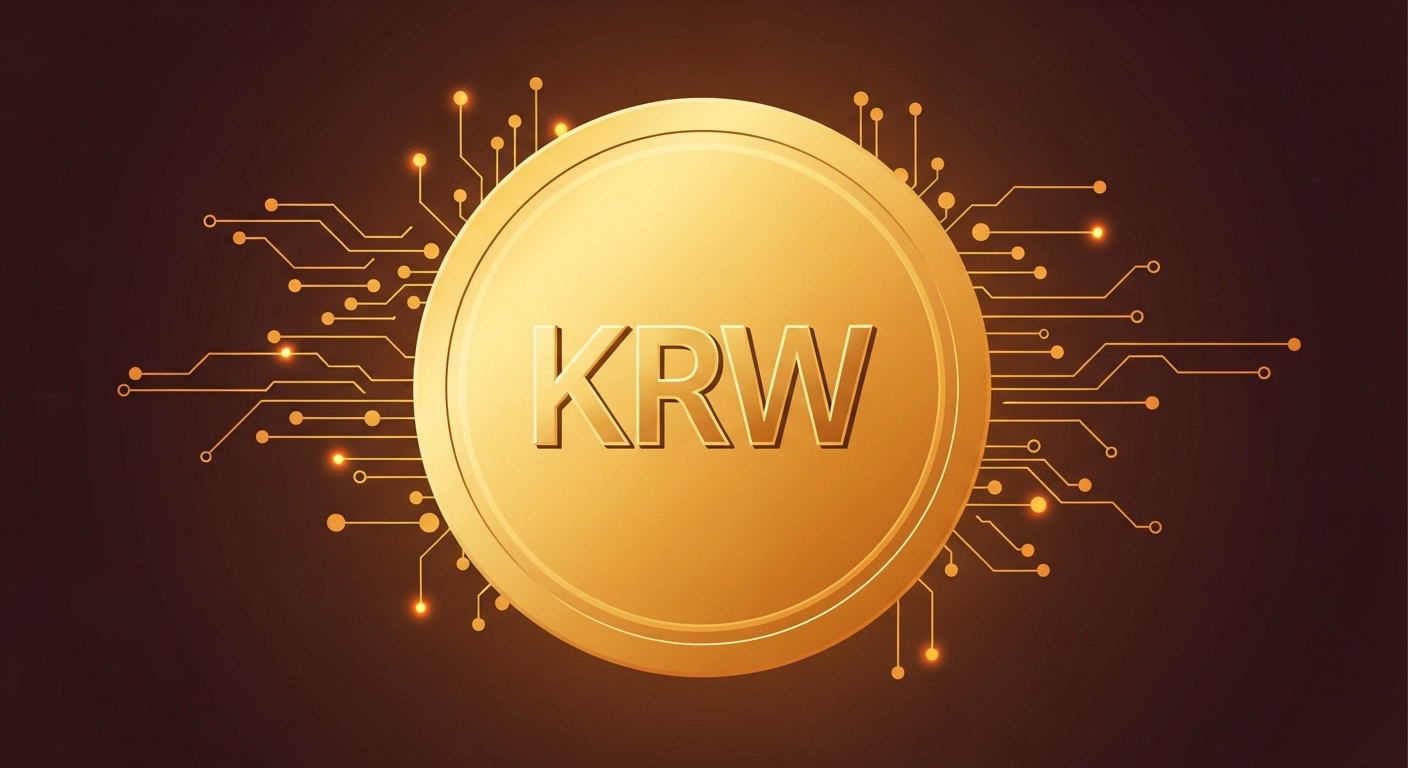
Hashed Open Finance is building a new blockchain designed specifically for a Korean won stablecoin, arguing that the next phase of the internet economy—particularly an AI-driven one—cannot function without 'digital currency' embedded into everyday infrastructure.
In an interview conducted this week, Hashed Open Finance CEO Hojin Kim laid out the rationale behind the firm’s forthcoming Layer 1 mainnet, Maroo, positioning it as an attempt to bridge the gap between the theoretical promise of onchain finance and the practical requirements of real-world payments, compliance, and national financial resilience.
Kim, a developer by training who studied computer science and mathematics at KAIST before working as a consultant at BCG, now oversees Hashed’s fintech initiatives while simultaneously running Hashed Open Finance and its R&D arm, Shard Lab. He described a clear division of labor: Shard Lab focuses on foundational research such as 'account abstraction'—technology that makes crypto wallets behave more like consumer fintech apps—alongside global partnerships, while Hashed Open Finance works on deploying those capabilities within Korea’s regulated financial environment.
His starting premise is that stablecoins, despite their rapid growth, remain a small slice of the broader financial system. “Even USD stablecoins are only about 1% of M2,” Kim said, arguing that the industry’s headline expansion has not translated into meaningful penetration of everyday finance.
Kim attributed that gap to three structural barriers: 'privacy', 'compliance', and 'governance'. On privacy, he argued public blockchains can be a non-starter for businesses whose transaction patterns and costs constitute trade secrets. On compliance, he said bringing 'regulated DeFi' into production requires onchain systems to accommodate existing legal frameworks rather than assume a clean-slate regime. On governance, he framed financial infrastructure as a matter of national sovereignty and security—warning that domestic payments should not be exposed to outages or disruptions originating in external networks.
Those constraints, he said, motivated Maroo’s design. Rather than deploying a won stablecoin on existing Layer 1 chains such as Ethereum (ETH) or Solana (SOL), Hashed Open Finance is developing its own L1 tailored to won-denominated settlement, while still aiming to preserve the core attributes associated with public blockchains: openness, open-source development, and interoperability.
Kim pushed back on the idea that a private blockchain would be the obvious solution. His concern, he said, is that Korea could become a disconnected 'Galápagos' ecosystem if it opts for closed networks that fail to interoperate with global crypto rails. The challenge, in his view, is finding a workable midpoint—maintaining the benefits of a public network while mitigating the frictions that have kept institutions from moving meaningful activity onchain.
A key feature of Maroo is its decision to avoid introducing a separate network token. Instead, the won stablecoin itself would be the network’s 'native' unit—including payment of gas fees. Kim framed this not just as a user experience decision, but as an economic architecture choice. If a stablecoin is needed to pay for compute and data execution, he argued, then increased network usage naturally translates into increased stablecoin demand. He also cast the absence of a speculative secondary token as a fairness issue, suggesting that a public digital infrastructure should distribute benefits broadly across won-economy participants rather than concentrate them among token holders.
Kim placed the won stablecoin thesis in both a near-term and long-term context. In the short run, he pointed to Korea’s unusually active retail crypto market, where Bitcoin (BTC) trading volumes can at times rank among the highest globally. But his bigger bet is on the rise of an 'agent economy'—a future in which humans and AI agents transact side-by-side, requiring programmable, digital-native money.
“You cannot build digital economy without digital currency,” Kim said, describing stablecoins as likely to become an 'agent currency' used by autonomous software agents as naturally as by people. He connected that argument to Korea’s broader ambitions in AI, suggesting that as more large language models and AI-driven applications come to market, the ability to integrate payments—especially stablecoin payments—will become strategically important.
To make the idea tangible, Kim described an example in which a user instructs an AI agent to automatically purchase an airline ticket to Tokyo when the price drops below a certain threshold. The problem is not just detecting the price, he argued, but safely delegating payment authority: an agent must be authenticated, constrained to a user’s intent, and able to execute transactions without being given broad access to bank accounts or unrestricted spending power. That shift—from human-initiated payments to agent-initiated payments—would require rethinking core financial plumbing, he said, which is why Maroo is being positioned as 'AI-native' infrastructure.
Kim also addressed whether Maroo’s affiliation with Hashed—a venture capital firm—could make the project exclusionary. He argued the opposite: because Hashed benefits from overall ecosystem growth, it has an incentive to help create a successful template that others can follow rather than build a closed, proprietary garden. He said the network is intended to work with a wide range of players, from banks and fintech firms to card companies and non-financial corporates exploring blockchain-based settlement and programmable payments.
On policy, Kim suggested Korea’s debate has been overly centered on regulation at the expense of experimentation. While acknowledging that legal clarity matters, he argued that building working systems can itself accelerate regulatory discussions—pointing to how global stablecoin issuers such as Circle and Tether helped catalyze institutional and policy attention by proving demand and feasibility.
As for timeline, Kim said Maroo’s first testnet is already complete and that internal testing is underway with some live services. He added that the project is in an iteration phase incorporating feedback from various market participants, and that the company plans to open the testnet and developer toolkit to a broader group between late April and May 2026, in U.S. Eastern Time.
Kim closed with a message aimed at builders and market participants enduring a subdued cycle, arguing that periods of disruption tend to create opportunities. Even if market sentiment fluctuates, he said, the convergence of AI and blockchain is bringing structural change that will continue to unfold—and developers who keep building through volatility are most likely to shape what comes next.
🔎 Market Interpretation
- Thesis: Hashed Open Finance argues Korea’s next-stage digital economy—especially one led by AI agents—needs a KRW stablecoin as embedded, always-on financial infrastructure rather than a standalone crypto product.
- Problem framing: Stablecoins have grown fast but still represent limited penetration in real-world finance (CEO notes USD stablecoins are ~1% of M2), implying the bottleneck is institutional readiness, not awareness.
- Barrier diagnosis: Three adoption blockers—privacy (public transaction visibility), compliance (regulated production requirements), and governance/sovereignty (national payment resilience)—are positioned as the main reasons existing public L1s aren’t sufficient for KRW settlement.
- Network strategy: Building a dedicated L1 (Maroo) is presented as a middle path between fully public chains (too exposed for some institutions) and closed private chains (risking a Korea-only “Galápagos” that can’t interoperate).
- Token design as market signal: Maroo plans no separate gas token; the KRW stablecoin pays fees. This ties network usage directly to stablecoin demand and reduces speculation-driven distributional concerns.
- AI “agent economy” framing: The project ties payments to autonomous agents, suggesting the next demand wave comes from machine-initiated micro/conditional transactions, not only human retail crypto trading.
- Policy stance: The CEO argues Korea’s discussion is too regulation-heavy and should be paired with experimentation; working systems can accelerate regulatory clarity (citing Circle/Tether as proof-by-execution catalysts).
- Timeline: Testnet completed; internal testing with live services; broader testnet + developer toolkit targeted late April–May 2026 (ET).
💡 Strategic Points
- Design for regulated adoption: If targeting banks/fintech/card networks, build primitives that support permissioning, auditability, and rule enforcement while keeping interoperability with global crypto rails.
- Privacy as a go-to-market requirement: Enterprise payment flows reveal sensitive commercial data; credible privacy-preserving transaction patterns (e.g., selective disclosure) can be more decisive than throughput narratives.
- Governance as infrastructure risk management: Positioning domestic settlement on external networks is framed as an operational and geopolitical risk; Maroo markets “national resilience” as a feature, not a constraint.
- Economic alignment via “stablecoin-as-gas”: Using the KRW stablecoin for fees can:
- remove the two-asset UX problem (no need to buy a separate token),
- make demand drivers more transparent (usage → fee payments → stablecoin demand),
- reduce speculative token-holder influence over public infrastructure narratives.
- Avoiding the “private chain trap”: The strategy emphasizes not becoming isolated; interoperability and open-source posture are pitched as essential to attract developers and cross-border liquidity/rails.
- AI-native payments focus: The airline-ticket example highlights a concrete product gap: safe delegation (an agent can pay, but only within user-approved constraints). This makes account abstraction and programmable authorization central rather than optional.
- Builder opportunity: In a subdued market cycle, the project frames a “build through volatility” approach—targeting structural trends (AI + programmable money) rather than short-term token momentum.
- Partner map: Stated intent to work broadly—banks, fintechs, card companies, and corporates—suggests a distribution strategy anchored in existing payment stakeholders rather than crypto-native communities alone.
📘 Glossary
- Stablecoin: A token designed to track a fiat currency’s value (here, the Korean won), enabling onchain settlement with reduced price volatility.
- M2: A broad measure of money supply (cash, checking deposits, and easily convertible near money). Used to contextualize stablecoin scale versus traditional money.
- Layer 1 (L1): A base blockchain network (e.g., Ethereum, Solana). Maroo is a proposed new L1 tailored to KRW settlement needs.
- Gas fees: Fees paid to process transactions/compute on a blockchain. Maroo proposes paying gas in the KRW stablecoin rather than a separate token.
- Network token: A native asset (often speculative) used for fees and incentives on many chains. Maroo’s design intentionally avoids a separate network token.
- Interoperability: The ability for a blockchain/system to connect with other networks, assets, and applications—important to avoid ecosystem isolation.
- Account abstraction: Wallet technology that makes accounts programmable (e.g., spending limits, social recovery, session keys), improving UX and enabling controlled delegation to apps/agents.
- Regulated DeFi: Onchain financial activity designed to comply with real-world laws (KYC/AML, reporting, consumer protection), rather than assuming a regulation-free environment.
- Agent economy / AI agents: A model where autonomous software can search, decide, and transact (e.g., purchasing tickets) under user-defined rules, requiring programmable payments and permissions.
- “Galápagos” ecosystem: A metaphor for a uniquely isolated domestic system that evolves separately and becomes incompatible with global standards and liquidity.














Comment 0