

 News
News  Coin Information
  About us
  Customer Service


 Add as a preferred source on Google

The escalating U.S.-Iran conflict is increasingly being framed not as a campaign aimed solely at military objectives, but as a catalyst reshaping the global order—particularly around the dollar, energy supply chains, and the fast-growing role of stablecoins in cross-border payments.
President Trump’s administration has publicly emphasized familiar security goals such as dismantling Iran’s nuclear capabilities, degrading missile capacity, reducing naval power, and disrupting financing linked to terrorism. Yet as the confrontation drags on, the more consequential story for markets is emerging elsewhere: the war’s knock-on effects are accelerating a structural realignment across three pillars of the global economy—finance, energy, and manufacturing.
At the center of that shift is the dollar system, which is being challenged and reinforced at the same time. Iranian-linked actors, according to the column’s argument, have explored pushing more trade settlement in non-dollar rails—particularly by demanding yuan-denominated payments and stablecoin-based transfers tied to activity around the Strait of Hormuz. On paper, that reads as another attempt at ‘de-dollarization.’ In practice, markets have tended to punish volatility, not reward it, and the search for settlement reliability has increasingly converged on ‘dollar-pegged stability’ rather than alternatives.
That dynamic has helped lift the strategic relevance of dollar-based stablecoins—digital tokens typically designed to track the U.S. dollar 1:1 and often backed by cash and short-dated U.S. government debt. As payment uncertainty rises, demand for stable, easily transferable digital dollars tends to increase. The column argues the outcome is paradoxical: a surge in stablecoin usage can strengthen, rather than weaken, dollar dominance because major issuers commonly hold U.S. Treasuries as reserves. In that model, growing stablecoin circulation translates into incremental structural demand for U.S. government debt, effectively turning a payments shock into support for American fiscal funding conditions.
Policy urgency in Washington has also been pulled into the story. As stablecoins become more systemically important, U.S. lawmakers have stronger incentives to formalize oversight rules that lock in dollar-linked standards and increase the attractiveness of regulated issuers. The argument is that the ‘monetary order’ can shift before any ceasefire—through legal architecture, reserve composition, and payment behavior rather than through battlefield outcomes.
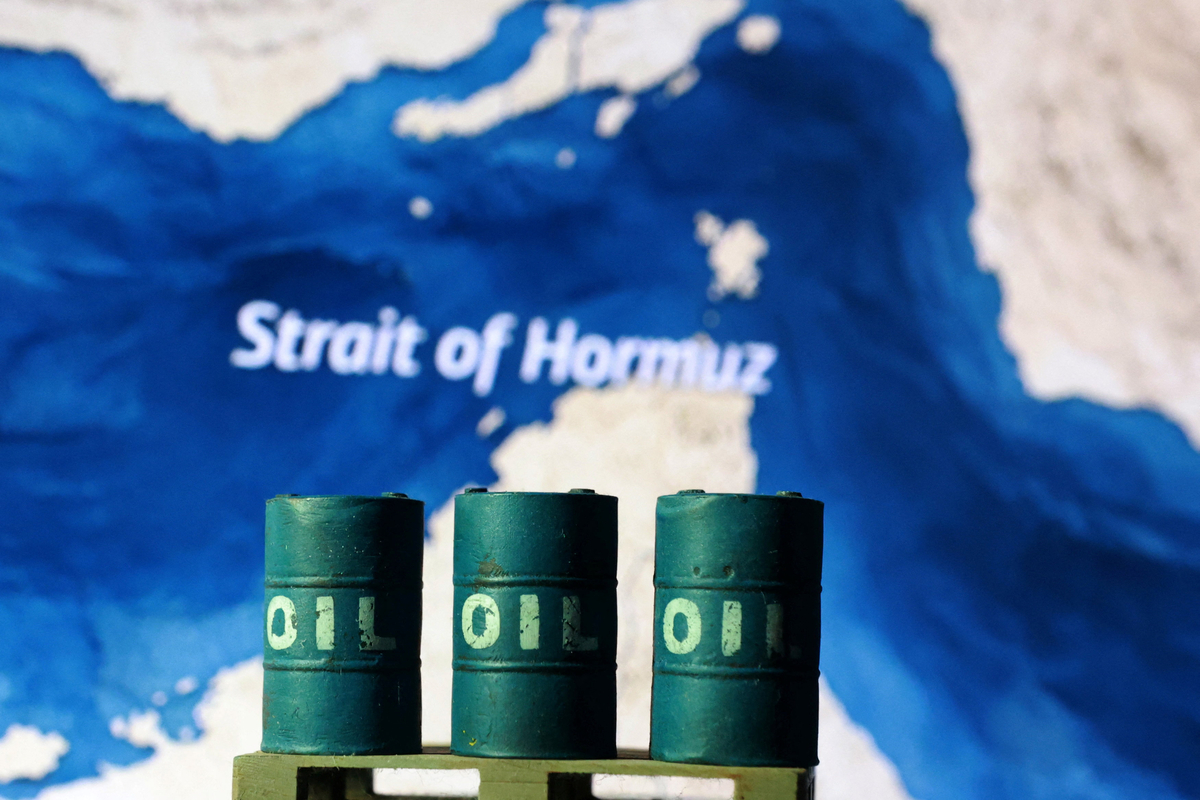
Energy markets are experiencing a parallel realignment. With the Strait of Hormuz repeatedly at the center of security risk, traders have repriced the vulnerability of Middle East supply routes, prompting importers to seek alternative sources perceived as more reliable. In that context, the United States—already one of the world’s largest oil producers—gains leverage not simply as a producer, but as a ‘stable supplier’ positioned to fill gaps when geopolitical risk chokes traditional channels. The larger the perceived risk around Hormuz, the stronger the pull toward U.S.-linked supply, shipping, and contract structures, reinforcing a rebalancing of energy flows around reliability rather than proximity.
Manufacturing is also being swept into the conflict’s second-order effects. The column highlights how early wartime logistics tend to expose shortages in munitions and critical components, underscoring the fragility of internationally dispersed supply chains. It further points to the vulnerability of inputs such as helium—used in certain semiconductor manufacturing processes—where disruptions tied to regional chokepoints can ripple across high-tech production. When supply chains become less predictable, costs rise, lead times lengthen, and political pressure grows to prioritize ‘safe production bases.’ That environment provides additional justification for U.S. onshoring and industrial policy efforts designed to reduce dependence on overseas bottlenecks.
From this perspective, the conflict’s longer-term “dividend” for the United States is not limited to battlefield positioning. A prolonged period of instability can expand defense-sector demand, lift energy export dynamics, strengthen the case for domestic manufacturing capacity, and accelerate the dollar’s evolution into a more digital form through stablecoin rails. The column’s core claim is that war is often perceived as pure cost, while its structural effects can resemble an investment in rebuilding the rules of commerce—especially for the power able to set legal standards and supply alternatives.
The vulnerability, it argues, is most acute for countries whose economic model concentrates risk in precisely these areas. South Korea is cited as exposed on three fronts: high dependence on Hormuz-linked energy flows, manufacturing supply chains tied to overseas nodes, and deep reliance on dollar-based settlement systems. Against that backdrop, the lack of robust won-based stablecoin infrastructure and digital settlement capacity is framed as a strategic gap. If dollar stablecoins consolidate as a de facto global digital reserve medium for trade and transfers, Korea could find itself absorbed into that system with limited bargaining leverage, rather than shaping the rails on which it operates.
The broader implication is that while fighting may be geographically distant, the redesign of payment networks, energy sourcing, and industrial logistics is already underway. In that sense, the Iran conflict is being portrayed less as a conventional military confrontation and more as a real-time stress test—and reconfiguration—of the global system.
🔎 Market Interpretation
{
"macro_thesis": [
{
"point": "The U.S.-Iran conflict is framed as a systemic catalyst, accelerating shifts in finance, energy, and manufacturing rather than remaining a purely military story.",
"market_read": "Markets increasingly price second-order effects: payment reliability, shipping risk premia, and supply-chain security."
},
{
"point": "De-dollarization attempts (e.g., yuan settlement) may rise rhetorically, but volatility pushes participants toward instruments that maximize settlement certainty.",
"market_read": "In stress regimes, demand clusters around ‘dollar-pegged stability’ rather than alternative currency rails."
},
{
"point": "Dollar-pegged stablecoins can reinforce USD dominance because major issuers often hold U.S. Treasuries as reserves.",
"market_read": "Higher stablecoin circulation can translate into incremental structural demand for U.S. government debt—supportive of U.S. funding conditions."
},
{
"point": "Energy risk centered on the Strait of Hormuz increases the premium on ‘reliable supply,’ benefiting U.S.-linked supply, shipping, and contract structures.",
"market_read": "Energy flows may rebalance toward politically and logistically stable suppliers even at higher cost."
},
{
"point": "Manufacturing constraints (munitions, critical components, helium for semiconductors) highlight fragility in dispersed supply chains.",
"market_read": "Higher lead times and disruption risk strengthen the policy bid for onshoring and ‘safe production bases.’"
},
{
"point": "Countries heavily exposed to USD settlement, Hormuz energy routes, and globalized manufacturing nodes face compounded vulnerability.",
"market_read": "South Korea is cited as a key example—especially due to limited won-based stablecoin and digital settlement infrastructure."
}
],
"what_to_watch": [
"Stablecoin regulation momentum in Washington (standards, reserve requirements, issuer oversight).",
"Treasury holdings by stablecoin issuers as a proxy for structural USD demand.",
"Hormuz security developments and insurance/shipping cost spikes feeding into energy benchmarks.",
"Evidence of contract repricing toward ‘reliability’ (long-term offtake, destination flexibility, U.S.-linked supply agreements).",
"Industrial policy signals related to onshoring, strategic materials, and semiconductor input security (e.g., helium)."
]
}
💡 Strategic Points
{
"for_investors": [
{
"theme": "Digital dollar infrastructure as a conflict hedge",
"insight": "In periods of geopolitical stress, stablecoins can gain transactional share because they deliver fast, portable dollar settlement when banking rails are frictional."
},
{
"theme": "Stablecoin-Treasury linkage",
"insight": "If stablecoin adoption rises, reserve composition (cash + short-dated Treasuries) can mechanically increase demand for U.S. government paper, tightening the feedback loop between crypto payments and sovereign funding."
},
{
"theme": "Energy reliability premium",
"insight": "Expect sustained focus on suppliers perceived as secure; the U.S. may gain leverage as a ‘stable supplier’ during Hormuz-related disruptions."
},
{
"theme": "Supply-chain reshoring tailwinds",
"insight": "Disruptions in critical inputs and defense logistics can justify accelerated onshoring and redundant capacity buildout, benefiting domestic industrial ecosystems."
}
],
"for_policy_and_industry": [
{
"action": "Codify stablecoin oversight to lock in dollar-linked standards",
"why_it_matters": "Regulatory clarity can channel flows to compliant issuers and strengthen the U.S. position in global digital settlement before conflicts resolve militarily."
},
{
"action": "Reduce chokepoint dependency in energy and essential inputs",
"why_it_matters": "Diversifying supply routes and suppliers mitigates Hormuz-linked risk and semiconductor/industrial bottlenecks (e.g., helium)."
},
{
"action": "Build domestic and allied ‘safe production bases’",
"why_it_matters": "Shortages and long lead times increase the strategic value of localized capacity and allied redundancy in critical manufacturing."
},
{
"action": "For highly exposed economies (e.g., South Korea): develop local-currency digital settlement capability",
"why_it_matters": "Without won-based stablecoin infrastructure, Korea risks becoming a price-taker in a dollar-stablecoin-led settlement order, reducing bargaining power over rails and standards."
}
],
"risk_scenarios": [
{
"scenario": "Escalation around Hormuz",
"impact": "Higher energy/shipping insurance costs; increased demand for alternative supply; stronger case for U.S. supply leverage."
},
{
"scenario": "Regulatory divergence on stablecoins",
"impact": "Fragmented standards could concentrate flows into jurisdictions with clear rules, potentially accelerating a U.S.-centric stablecoin regime."
},
{
"scenario": "Supply-chain shock in critical inputs",
"impact": "Semiconductor/defense production disruption; political push for stockpiles and onshoring; cost inflation in high-tech manufacturing."
}
]
}
📘 Glossary
{
"terms": [
{
"term": "De-dollarization",
"definition": "Efforts to reduce reliance on the U.S. dollar in trade settlement, reserves, or financial infrastructure."
},
{
"term": "Dollar system",
"definition": "The global network of USD-denominated trade, financing, payments, and reserves that underpins international commerce."
},
{
"term": "Stablecoin (USD-pegged)",
"definition": "A digital token designed to track the U.S. dollar 1:1, typically backed by cash and/or short-dated U.S. government debt."
},
{
"term": "Settlement rails",
"definition": "The operational pathways for completing payments (banks, messaging networks, or blockchain-based transfers)."
},
{
"term": "Reserve composition",
"definition": "The assets held to back liabilities (e.g., stablecoin tokens), often including cash, Treasury bills, and other liquid instruments."
},
{
"term": "U.S. Treasuries",
"definition": "Debt securities issued by the U.S. government; commonly used as reserves due to liquidity and perceived safety."
},
{
"term": "Strait of Hormuz",
"definition": "A critical maritime chokepoint for global oil flows; security disruptions can quickly affect energy prices and shipping costs."
},
{
"term": "Reliability premium",
"definition": "An added cost or preference in contracts and sourcing paid for suppliers/routes perceived as more secure and predictable."
},
{
"term": "Onshoring",
"definition": "Shifting production and supply chains back to the domestic economy to reduce geopolitical and logistics risk."
},
{
"term": "Chokepoint risk",
"definition": "The vulnerability created when key trade or supply routes depend on narrow geographical corridors or scarce suppliers."
},
{
"term": "Helium (semiconductor input)",
"definition": "A critical gas used in certain semiconductor processes; supply disruptions can ripple through high-tech manufacturing."
}
]
}


















Comment 0