

 News
News  Coin Information
  About us
  Customer Service


 Add as a preferred source on Google
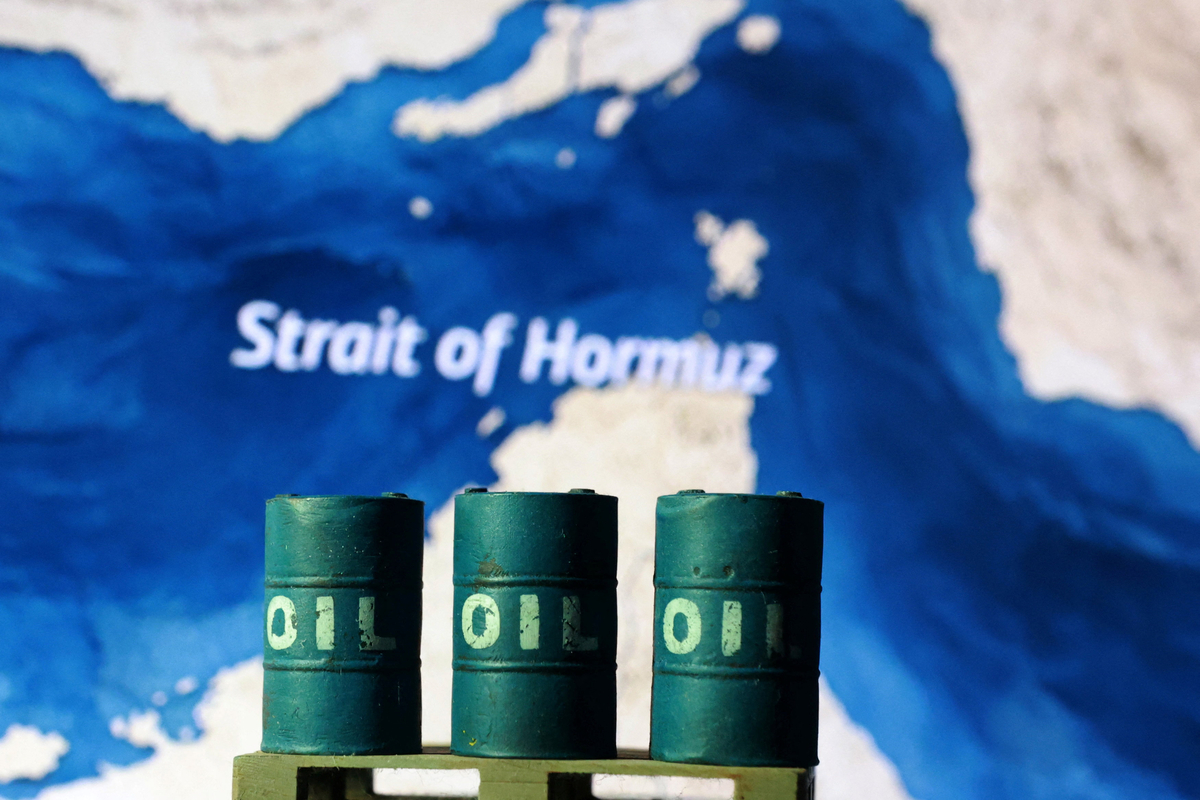
Iran is moving to formalize a ‘maritime tollgate’ system in the Strait of Hormuz—one of the world’s most critical oil chokepoints—seeking to charge ships for passage and potentially accept payment in yuan or ‘stablecoins’, according to Bloomberg. The plan is raising fresh concerns across energy and shipping markets about higher transit costs and a new mechanism for sanctions evasion.
Bloomberg reported that Iranian authorities have drafted a management framework covering vessels transiting the strait, with related rules having already cleared Iran’s parliament’s national security committee. Even before full institutionalization, industry and government sources said the Islamic Revolutionary Guard Corps (IRGC) is effectively operating a collection regime in practice.
Under the described system, ships seeking passage would submit extensive documentation through brokers linked to the IRGC, including ownership structures, cargo manifests, destinations, crew information, and Automatic Identification System (AIS) data. Iranian authorities would then screen vessels for connections to countries Tehran deems hostile—reportedly including the United States and Israel—before determining whether and under what conditions they may pass.
Iran is also said to be introducing a tiered framework that ranks countries from levels 1 through 5, applying different transit conditions accordingly. Shipping tied to friendly nations would receive more favorable terms, while vessels linked to adversarial countries could face restrictions, punitive conditions, or heightened risk during transits.
For oil tankers, toll negotiations reportedly begin at around $1 per barrel. With a Very Large Crude Carrier (VLCC) typically carrying roughly 2 million barrels, the charge could reach as much as $2 million per voyage—an additional cost that could tighten ‘spot availability’ and ripple through freight rates and crude benchmarks, particularly if applied inconsistently or expanded to more vessel categories.
The proposed payment options are drawing particular scrutiny. Bloomberg said Iran is considering accepting settlement in yuan or ‘stablecoins’ rather than U.S. dollars, with some cash payments also reportedly possible. Market participants view these options as designed to reduce exposure to U.S.-led financial restrictions and to facilitate cross-border settlement outside traditional correspondent banking rails.
Once payment is made, the IRGC would provide a transit code and routing instructions, directing ships along prescribed coastal corridors. Patrol boats are also reported to play a direct enforcement role, reinforcing the perception that the toll structure could be backed by operational control, not merely administrative guidance.
Bloomberg, citing maritime and government sources, said IRGC-linked entities have already collected fees from some vessels. The report added that friendly countries may be offered preferential treatment, while ships associated with hostile states could face intimidation or threats, injecting additional political risk into one of the world’s most heavily trafficked waterways.
The Strait of Hormuz carries roughly 20% of global seaborne oil and liquefied natural gas flows, making any change to transit conditions an immediate source of volatility for energy markets. Analysts said the initiative could function as a de facto toll regime that raises costs and increases uncertainty for shippers and cargo owners, even if its legal status remains contested.
At the same time, observers note that a formal toll system could collide with the principle of free passage through international straits, leaving open questions about enforceability, international response, and whether the framework ultimately becomes codified policy. For now, the prospect of a ‘stablecoin’-enabled tollgate at Hormuz underscores how geopolitics, shipping security, and alternative payment networks are increasingly intersecting in global commodity trade.












Comment 0