

 News
News  Coin Information
  About us
  Customer Service


 Add as a preferred source on Google
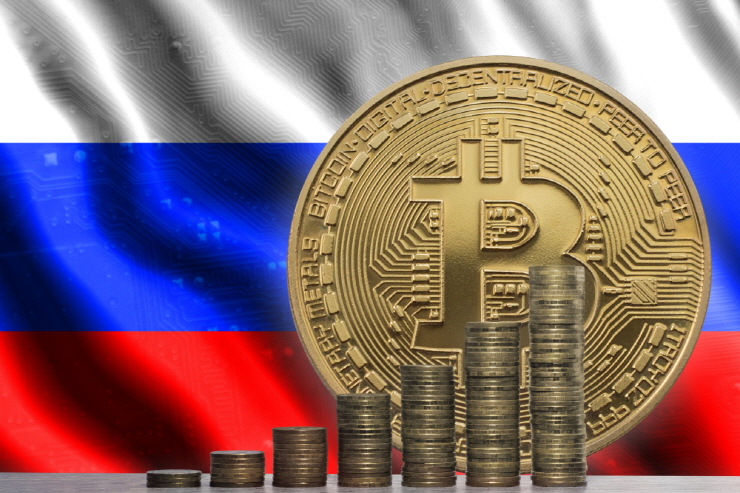
Sberbank, Russia’s largest bank, is moving to build a regulated cryptocurrency trading and custody backbone by the end of the year, a step that underscores how quickly Moscow is pulling digital assets into the perimeter of the traditional financial system.
According to CoinDesk, Sberbank plans to have a cryptocurrency trading infrastructure and a ‘digital depository’ in place by Dec. 1. The initiative arrives ahead of a new regulatory regime for crypto trading, custody, and settlement that is set to take effect on Sept. 1, with mandatory use of licensed intermediaries scheduled to become enforceable from July 2027.
Interfax reported that Sberbank’s planned digital depository will record customers’ ownership rights to cryptocurrencies. In practice, much of the transaction processing is expected to occur ‘off-chain’—outside the underlying blockchain network—reflecting a model closer to traditional securities infrastructure, where ownership records and transfers are handled within supervised systems. To support customer requests for deposits, withdrawals, and transfers, Sberbank also expects to operate ‘hot wallets’, which keep assets accessible for operational needs.
The bank’s timeline follows the Federation Council’s approval of a bill governing crypto transactions conducted via licensed brokers, exchanges, asset managers, and depositories. The broader direction is clear: Russian authorities are seeking to keep trading rails and custody functions inside a supervisory framework, tightening control over market access while still permitting measured exposure as an investment product.
Under the proposed rules, cryptocurrencies eligible for trading on public exchanges must satisfy the Bank of Russia’s liquidity standards. Those thresholds include an average market capitalization of at least 5 trillion rubles and an average daily trading volume of at least 1 trillion rubles over the past two years—roughly $64 billion and $12.8 billion, respectively, based on the figures cited in the report. ‘Qualified investors’ would be permitted access to a wider range of tokens, reinforcing the regulator’s preference for segmentation by sophistication and risk tolerance.
Even as the investment channel opens incrementally, the use of crypto for payments inside Russia remains prohibited. This split approach—allow limited investment and financial product exposure while blocking payment utility—has been a defining feature of Russia’s crypto policy, aimed at minimizing monetary and capital-control risks while still acknowledging market demand and the sector’s relevance to financial innovation.
Sberbank has already been testing the waters. The bank began offering Bitcoin (BTC)-linked structured notes to qualified investors last year, and in December it completed a pilot for BTC-collateralized lending with the mining firm Intelion Data. The new buildout is widely viewed as an attempt to scale those experiments into a more standardized, institution-grade service offering.
Russia’s regulatory path has been gradual but persistent. A 2024 law legalized mining and introduced an experimental framework for crypto-based cross-border settlement. In 2025, the central bank broadened access for qualified investors to crypto-linked financial products, and later floated the idea of allowing retail investors limited direct purchases after testing—while capping annual exposure per intermediary at 300,000 rubles.
Taken together, Sberbank’s infrastructure push signals a maturing domestic market structure: wider availability of crypto exposure, but through tightly controlled channels and with strict eligibility rules. For global observers, it is another indication that major jurisdictions are increasingly opting to integrate digital assets via regulated intermediaries rather than leaving activity to offshore platforms or informal venues.
🔎 Market Interpretation
- Sberbank is institutionalizing crypto in Russia: By targeting a Dec. 1 launch for trading infrastructure and a “digital depository,” Russia’s largest bank is positioning itself to become a core, regulated gateway for crypto exposure.
- Regulation-first rollout: The buildout is timed ahead of a new regime starting Sept. 1, signaling that market activity will increasingly migrate from informal/offshore channels to supervised domestic rails.
- “Securities-style” crypto market structure: Expected off-chain processing and custody ledgers mirror traditional capital markets, emphasizing compliance, surveillance, and controlled settlement over permissionless on-chain settlement.
- Access will be narrow and segmented: High liquidity thresholds for exchange-listed tokens and broader access reserved for “qualified investors” suggest a limited token universe and reduced retail participation in the near term.
- Policy remains split—investing allowed, payments banned: Russia continues to permit measured investment exposure while prohibiting domestic crypto payments to mitigate monetary and capital-control risks.
💡 Strategic Points
- Watch the compliance stack: Sberbank’s depository model implies stronger KYC/AML, recordkeeping, and supervisory visibility—potentially setting standards other Russian institutions must follow.
- Expect a short list of exchange-eligible assets: Bank of Russia liquidity requirements (avg. market cap ≥ 5T rubles; daily volume ≥ 1T rubles over 2 years) may effectively concentrate public access into top-tier assets, limiting mid-cap token listings.
- Qualified-investor products will likely expand first: Given Sberbank’s prior BTC-linked structured notes and BTC-collateralized lending pilot, near-term growth may center on structured products, custody, and brokered access rather than open retail spot trading.
- Infrastructure implies custody competition: A bank-run “digital depository” could compete with or absorb roles of emerging licensed crypto custodians, pulling custody into the traditional banking perimeter.
- Off-chain settlement increases operational efficiency but adds trust concentration: Faster reconciliation and controlled transfers come at the cost of increased counterparty/ledger risk versus on-chain self-custody—important for institutional risk frameworks.
- Timeline matters for intermediaries: Mandatory use of licensed intermediaries is slated to be enforceable from July 2027, giving the market a runway to shift client assets and workflows into compliant venues.
- Policy trajectory is gradual normalization: 2024 mining legalization and cross-border settlement experiments, 2025 expansion of qualified access, and proposed capped retail exposure all point to phased integration rather than full liberalization.
📘 Glossary
- Digital depository: A supervised system that records ownership rights and transfers of assets (here, cryptocurrencies), similar to how securities are held in custody and tracked in traditional markets.
- Custody: Safekeeping of client assets by an intermediary (bank/custodian), including secure key management, access controls, and operational processes for transfers.
- Off-chain processing: Transaction handling and ownership updates conducted outside a blockchain, typically within an institution’s internal ledger, later reflected through net settlement or controlled transfers.
- Hot wallet: A crypto wallet connected to the internet used for day-to-day operations (deposits/withdrawals), generally higher risk than offline storage.
- Licensed intermediary: An approved broker, exchange, asset manager, or depository permitted by regulators to provide crypto trading/custody/settlement services.
- Qualified investor: A higher-eligibility investor category (often based on wealth/experience) allowed to access higher-risk or more complex instruments and a broader token set.
- Liquidity standards: Minimum thresholds (e.g., market cap and trading volume) imposed to ensure assets are sufficiently tradable and to reduce manipulation and execution risk.
- Structured note: A financial product whose payoff is linked to an underlying asset (e.g., BTC) and may include features like principal protection, caps, or leveraged exposure.
- Cross-border settlement (experimental framework): A regulated sandbox-like mechanism allowing limited use of crypto rails for international trade settlement under defined rules.






















Comment 0