

 News
News  Coin Information
  About us
  Customer Service


 Add as a preferred source on Google

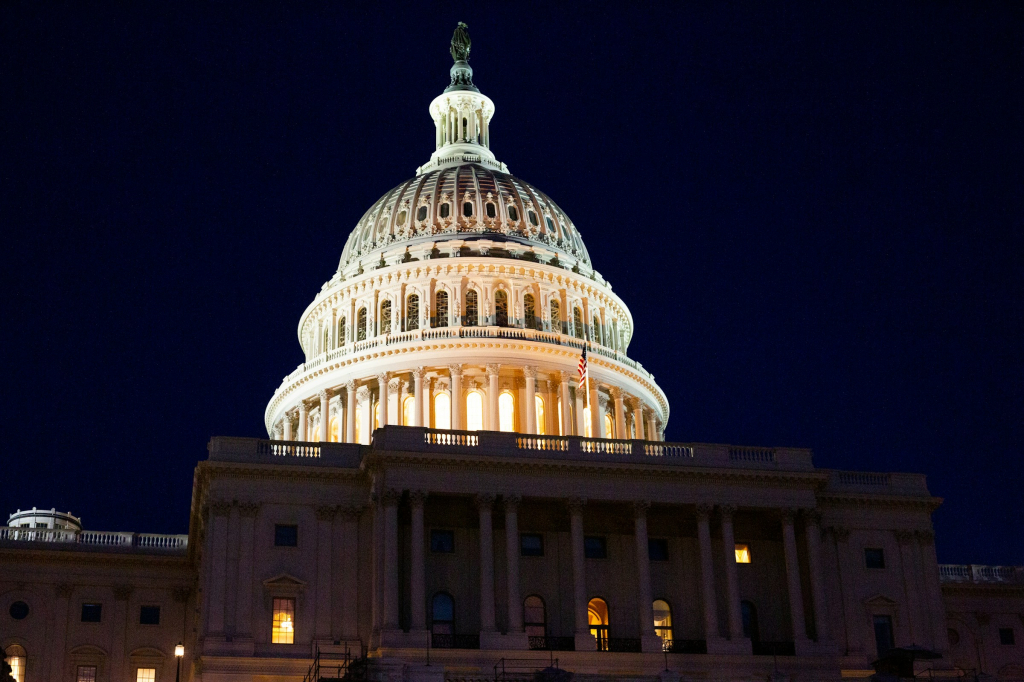
The Trump administration signaled growing confidence that a long-awaited U.S. ‘Bitcoin and crypto market clarity’ bill could be finalized by July 4, a timeline that—if met—would mark one of the most consequential steps yet toward a coherent federal framework for digital assets.
According to reporting cited by journalist Pete Rizzo, a White House official said the administration is “making big progress every day” and remains optimistic about meeting the holiday target. The comments arrive as Washington debates how to define regulatory jurisdiction, market structure rules, and disclosure standards for crypto firms—issues the industry argues have fueled years of inconsistent enforcement and legal uncertainty.
Markets are closely tracking the effort because passage would likely reduce ‘regulatory overhang’ and clarify compliance expectations for exchanges, issuers, and intermediaries. While the bill’s final language and congressional path remain fluid, even incremental momentum has tended to improve sentiment across risk assets, particularly when paired with signs of institutional participation.
One such signal came from U.S. spot Bitcoin (BTC) exchange-traded funds. Data from SoSoValue showed a net inflow of $85.85 million on Thursday, June 12 (U.S. Eastern Time). BlackRock’s iShares Bitcoin Trust (IBIT) led the day with $57.69 million in net inflows, bringing its cumulative net inflows to $62.11 billion. Fidelity’s Wise Origin Bitcoin Fund (FBTC) added $18.00 million, lifting its cumulative net inflows to $10.45 billion.
Total net assets across spot Bitcoin ETFs stood at $79.65 billion, equivalent to roughly 6.26% of Bitcoin’s total market capitalization, with cumulative net inflows totaling $53.63 billion. The steady inflows underscore continued ‘institutional demand’ even as macro conditions and policy uncertainty still shape short-term volatility.
Corporate adoption headlines also resurfaced after a disclosure tied to SpaceX indicated the company holds 18,712 BTC. Using a reference price of roughly $63,000 per coin, the stake would be valued at about $1.18 billion. The figure would place SpaceX among the larger publicly known corporate Bitcoin holders globally, alongside Tesla ($TSLA), which has been reported to hold 11,509 BTC—bringing the combined holdings associated with Elon Musk’s companies to 30,221 BTC. Industry trackers estimate SpaceX’s average acquisition price near $35,000 per coin.
In security and compliance news, blockchain security firm Quantstamp said an investigation into a June 8 incident involving Humanity Protocol’s H token found tactics and certificate-signing patterns that appeared similar to those attributed to North Korea-linked hacking activity. Quantstamp’s report said an attacker used phishing to gain remote access to an executive’s device, copied wallet data and private keys, then upgraded an Ethereum-based contract to move approximately 141.18 million H tokens. Investigators also alleged the attacker seized proxy admin control on BNB Smart Chain and minted additional H tokens. Humanity Protocol commissioned and released the findings, according to the report.
Legal developments in the U.S. added another point of focus for the sector’s reputation overhaul. A federal appeals court upheld Sam Bankman-Fried’s 2023 fraud conviction, rejecting arguments that the platform was sufficiently collateralized and that customers had been fully made whole. Bankman-Fried is serving a 25-year sentence for conspiracy and fraud tied to the collapse of FTX. He previously sought a presidential pardon, but President Trump said in January there were no plans to pardon the FTX founder.
Regulators elsewhere continued to refine their approach. In Brazil, the Chamber of Deputies’ finance and taxation committee approved a bill allowing authorities to freeze crypto balances belonging to suspects under investigation for cyber fraud, while also increasing prison terms for cybercrime convictions from 4–8 years to 6–10 years. The proposal would enable judges to order freezes across exchange accounts and bank accounts, restrict payment system access, and immobilize physical assets, subject to further review by the constitution and justice committee.
Zimbabwe also moved toward formal oversight, introducing a registration regime for crypto businesses with an annual fee of $500. Finance Minister Mthuli Ncube said entities involved in buying, selling, transferring, or custodying crypto must register yearly with the Financial Intelligence Unit under the central bank, with unregistered operations deemed illegal. The policy is Zimbabwe’s first dedicated framework for a market that has expanded amid chronic inflation and recurring currency reforms, even after the country restricted financial institutions’ direct involvement with crypto in 2018.
On the product side, Coinbase ($COIN) was reported to be rolling out functionality that allows AI agents to spend, earn, and transact in Bitcoin—an effort that could broaden ‘onchain automation’ and integrate crypto payments more directly into autonomous software workflows. The development follows a wider exchange push to build infrastructure for automated settlement and programmable financial activity.
Flows into Ethereum (ETH) spot ETFs, however, continued to diverge from Bitcoin. SoSoValue data showed a net outflow of $4.95 million on June 12 (ET), extending a streak to four consecutive sessions of outflows. The largest daily withdrawal was from BlackRock’s iShares Ethereum Trust (ETHA) at $4.53 million, with Fidelity’s Ethereum Fund (FETH) seeing a $0.42 million outflow. Total net assets for spot Ethereum ETFs were $9.16 billion, representing about 4.56% of Ethereum’s market capitalization, while cumulative net inflows stood at $11.19 billion.
Wrapping the day’s market tone, Standard Chartered argued Bitcoin’s recent bear-market low was likely set around $59,000, with the bank characterizing the cycle as turning constructive. The call adds to a growing chorus of institutional views that the market may be transitioning from consolidation to a more sustained recovery—an outlook that could be reinforced if U.S. lawmakers deliver the promised ‘regulatory clarity’ by early July.
🔎 Market Interpretation
- U.S. policy catalyst in focus: The Trump administration signaled rising confidence that a U.S. “Bitcoin and crypto market clarity” bill could be finalized by July 4, a timeline markets view as potentially decisive for defining jurisdiction, market-structure rules, and disclosure standards.
- Regulatory overhang vs. sentiment: Investors are tracking the bill because clearer rules could reduce enforcement uncertainty and improve risk appetite across crypto and related risk assets, even before final text is set.
- Bitcoin ETF demand remains supportive: U.S. spot BTC ETFs posted +$85.85M net inflows (June 12 ET), led by IBIT +$57.69M and FBTC +$18.00M. Total BTC ETF net assets: $79.65B (~6.26% of BTC market cap), with cumulative net inflows $53.63B—signaling sustained institutional participation.
- Ethereum ETF flows lag: Spot ETH ETFs recorded -$4.95M net outflows (June 12 ET), the 4th consecutive outflow day; total net assets $9.16B (~4.56% of ETH market cap). This divergence suggests comparatively weaker near-term institutional bid for ETH versus BTC.
- Corporate holdings bolster “store-of-value” narrative: Disclosures tied to SpaceX indicate 18,712 BTC (~$1.18B at ~$63k/BTC). Combined Musk-linked holdings (SpaceX + Tesla’s reported 11,509 BTC) total 30,221 BTC, reinforcing the corporate-treasury angle.
- Security and reputational headwinds persist: Quantstamp linked the Humanity Protocol incident (phishing → key compromise → contract upgrade and token movement/minting) to patterns resembling North Korea-linked activity; separately, a U.S. appeals court upheld Sam Bankman-Fried’s conviction, keeping fraud narratives in the spotlight.
- Global rulemaking tightens: Brazil advanced a bill enabling authorities to freeze crypto balances tied to cyber-fraud suspects and increase sentences; Zimbabwe introduced a mandatory annual registration for crypto businesses ($500 fee) under its FIU—showing worldwide movement toward formal oversight.
- Cycle framing turns constructive: Standard Chartered suggested BTC likely set a bear-market low near $59,000, with the cycle “turning constructive”—a view that could strengthen if U.S. regulatory clarity lands by early July.
💡 Strategic Points
- Watch the July 4 legislative window as a volatility trigger: Headlines on jurisdiction (SEC vs. CFTC), exchange/issuer obligations, and disclosures may move markets quickly; “progress” updates can lift sentiment even before passage.
- Positioning cue from ETF flow divergence: Persistent BTC ETF inflows alongside ETH ETF outflows may shape relative performance and hedging decisions (BTC strength vs. ETH lag) until catalysts change (e.g., staking clarity, L2/DeFi policy signals).
- Use institutional flow + policy as a two-factor lens: The article’s setup implies a supportive backdrop when (1) BTC ETF inflows remain steady and (2) U.S. policy risk compresses—either factor weakening could raise drawdown risk.
- Corporate-treasury disclosures can reprice “scarcity premium” narratives: Large holder confirmations (e.g., SpaceX, Tesla) may influence long-term allocation views, but also highlight concentration and disclosure asymmetry risks.
- Security diligence remains non-negotiable: The Humanity Protocol case underscores that phishing and admin-key compromise can lead to contract upgrades, proxy admin takeovers, and token minting—investors should demand clear key management, upgrade controls, and incident disclosures.
- Compliance readiness for global expansion: Brazil’s freezing powers and Zimbabwe’s registration requirement highlight the need for jurisdiction-specific operational playbooks (KYC/AML, asset-freeze processes, reporting, and licensing).
- Onchain automation as an adoption vector: Coinbase enabling AI agents to transact in BTC points to programmable payment rails; firms should assess guardrails (spend limits, transaction policies, audit logs) before deploying autonomous agents.
- Reputation cycle management: The upheld SBF conviction is a reminder that enforcement outcomes can shape public and policymaker attitudes; credible governance and transparency may become competitive advantages as regulation crystalizes.
📘 Glossary
- Regulatory clarity: A defined legal framework specifying which agencies regulate crypto, what rules apply to tokens/markets, and what disclosures firms must provide.
- Regulatory overhang: Market discount caused by uncertainty about future enforcement actions, compliance costs, or legal classifications.
- Spot Bitcoin/Ethereum ETF: An exchange-traded fund designed to track the price of BTC/ETH by holding the underlying asset (or closely related holdings), enabling access via traditional brokerage accounts.
- Net inflow/outflow (ETF): The daily net value of new shares created (inflow) or redeemed (outflow), a proxy for aggregate demand or selling pressure.
- Market capitalization: Total value of a network’s circulating supply (price × circulating coins/tokens).
- Institutional demand: Participation from large professional entities (asset managers, banks, corporates) often visible via ETFs, custody flows, and treasury disclosures.
- Phishing: Social-engineering attacks that trick users into revealing credentials or granting access, often a precursor to wallet/key compromise.
- Private key: A secret cryptographic credential that controls spending from a crypto wallet; if stolen, attackers can transfer assets.
- Smart contract upgrade / proxy admin control: Mechanisms allowing contract logic to be changed; if admin privileges are compromised, attackers can redirect funds or mint/move tokens.
- BNB Smart Chain (BSC): An EVM-compatible blockchain ecosystem where tokens and smart contracts can be deployed similarly to Ethereum.
- Onchain automation: Automated actions (payments, swaps, settlements) executed via blockchain transactions—here extended to AI agents acting programmatically.






















Comment 0