

 News
News  Coin Information
  About us
  Customer Service


 Add as a preferred source on Google
Solana (SOL) is slipping into a short-term pullback even as its 'onchain activity' and institutional partnerships continue to expand, underscoring a growing disconnect between token price performance and network fundamentals. Traders are now watching the $68–$70 area as a key line of defense after SOL extended its monthly decline amid a broader risk-off tone in crypto markets.
As of Tuesday ET, Solana was trading at $69.56, down 2.61% over the past 24 hours, with a market capitalization of roughly $40.3 billion. Losses have compounded over longer windows, with SOL down 5.72% over seven days and 18.82% over the past month, placing the token among major altcoins struggling to regain upward momentum during the current volatility regime.
Technicians tracking recent price action say SOL has been carving a 'rising wedge' between roughly $60 and $72—a pattern commonly interpreted as a weakening uptrend that can precede a breakdown. After rebounding from a low near $60 in early June, SOL traded sideways to modestly higher before renewed selling pressure emerged alongside softness across the broader crypto complex.
Market positioning from large holders has added another layer of uncertainty. On one side, a whale opened leveraged long exposure across Solana and Ethereum (ETH) totaling about $24.34 million, including roughly $16.5 million in SOL longs. With SOL dipping toward $68.9, that position was reported to be sitting on more than $600,000 in unrealized losses—highlighting how quickly leverage can amplify drawdowns near key support zones.
On the other side of the tape, a separate whale took what observers described as an “extremely bearish” stance, opening a 20x leveraged short on 554,680 SOL—about $38.15 million at prevailing prices. As SOL slid to around the $69 level—roughly a 7.76% drop from the referenced entry range—the move ranked among the steepest declines across major altcoins, tilting near-term flow in favor of short sellers.
Analysts broadly frame the immediate battlefield at $68–$70. A decisive break below that band could expose SOL to a retest of $60 and potentially the $55 area, where buyers previously stepped in. Conversely, a recovery above the first notable resistance at $76.65 could reopen a path toward a supply-heavy zone around $85–$88, with a higher, more consequential ceiling near $97.69.
While price charts have softened, Solana’s network data points in the opposite direction. Onchain spot activity has been accelerating, led by decentralized exchange usage. Over the 30 days ending June 23, Solana DEX volume rose 39.36% to about $1.66 billion in daily turnover. That figure represents roughly 27.61% of the estimated $6.02 billion in total onchain DEX volume across major networks, reinforcing Solana’s role as a growing hub for high-frequency spot trading.
Total value locked (TVL) across Solana DeFi protocols stands near $4.74 billion, providing collateral and liquidity depth that supports elevated DEX activity. Even more notable to some market observers is the surge in stablecoin liquidity—often treated as a proxy for transactional demand and trading readiness. The total supply of U.S. dollar-pegged stablecoins circulating on Solana is estimated at about $15.18 billion.
Within that mix, Tether (USDT) supply on Solana increased 20.16% over the past month, rising from about $2.38 billion to $2.86 billion. Separately, onchain monitoring flagged that Circle (USDC issuer) minted an additional 250 million USDC on Solana. The combination suggests continued 'liquidity inflow' that could support payments, settlement, and trading activity—even if token price remains under pressure in the near term.
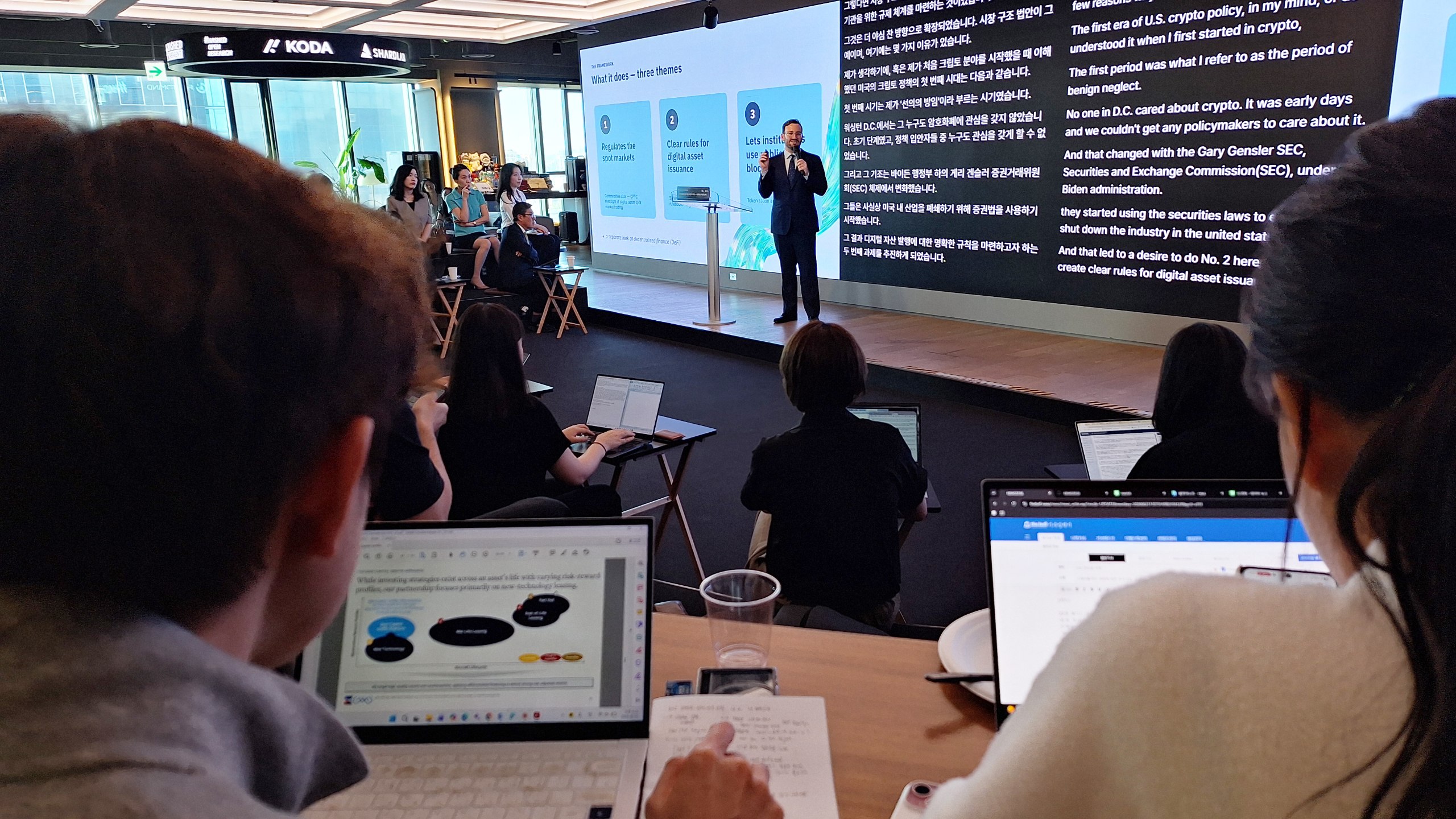
Institutional engagement has also widened, with a string of partnership announcements emphasizing payments, remittances, and tokenized financial products. In South Korea, Toss Bank—one of the country’s largest internet-only banks—signed an MOU with the Solana Foundation in Seoul, described as the first direct one-to-one strategic partnership between a Korean internet bank and the foundation. The collaboration will explore testing Solana-based rails for cross-border payments and remittances, including potential stablecoin usage within a regulated banking environment.
Payments infrastructure provider KG Inicis, which processes more than 25 trillion won annually, has likewise outlined plans to introduce Solana-based stablecoin payments. KG Financial signed a strategic MOU with the Solana Foundation aimed at combining the firm’s merchant network and payments stack with Solana’s high-throughput settlement environment to expand real-world, onchain payment acceptance.
Beyond Asia, Solana is also pushing deeper into tokenized finance and infrastructure partnerships. Allfunds, a fund distribution platform connecting more than 3,300 asset managers and overseeing about €1.8 trillion, said it will expand tokenized funds onto Solana—an endorsement that strengthens the network’s positioning in 'RWA' (real-world asset) tokenization and regulated investment products. Meanwhile, global remittance firm MoneyGram joined the Solana Developer Platform as an infrastructure partner and is now operating as an active Solana validator, a move that signals deeper operational commitment to the network’s security and uptime.
Industry watchers argue these developments collectively point to a clearer roadmap: Solana is leaning into high-throughput, low-cost payment infrastructure; stablecoin-based remittances and merchant settlement; tokenized funds and institution-facing asset management tooling; and continued support for retail-driven DeFi, DEX activity, and memecoin speculation. Secondary research citing data providers such as Kaiko and reporting from CoinDesk has similarly noted that Solana’s throughput advantages continue to attract speculative flows and spot trading volume, which in turn reinforce DEX market share gains.
Still, traders caution that positive ecosystem headlines have not yet translated into sustained price appreciation. For now, SOL remains pinned between whale-driven leveraged bets and a hesitant macro backdrop for risk assets, with stiff resistance in the mid-$70s and a fragile support shelf just below $70. The next decisive move, many say, will likely hinge on whether that $68–$70 band holds—and whether ongoing stablecoin growth and institutional adoption can eventually shift market conviction from network usage to token valuation.
🔎 Market Interpretation
- Price vs. fundamentals divergence: SOL is in a short-term pullback (near $69.56) despite accelerating onchain activity and expanding institutional partnerships—highlighting a gap between network usage and token valuation in the current risk-off environment.
- Key technical structure: Price action is described as a rising wedge (~$60–$72), often associated with a weakening uptrend and potential breakdown risk if supports fail.
- Critical support “battlefield”: Traders are focused on $68–$70. A clean break could trigger a move back toward $60 and possibly $55, where prior demand appeared.
- Overhead resistance levels: Reclaiming $76.65 is framed as the first confirmation step; above that, attention shifts to $85–$88 (supply zone) and a higher cap near $97.69.
- Leverage intensifies volatility: Conflicting whale bets add instability—one whale holds ~$16.5M in SOL leveraged longs with reported unrealized losses as SOL nears support, while another opened an “extremely bearish” 20x short on 554,680 SOL (~$38.15M), reinforcing near-term short pressure.
- Onchain liquidity backdrop: Stablecoin supply on Solana is estimated at $15.18B, suggesting robust transactional readiness even while SOL spot price weakens.
💡 Strategic Points
- Support-first risk management: The $68–$70 zone is the immediate decision point; failure increases probability of a deeper retracement to $60 and $55. Position sizing and leverage discipline are emphasized by whale P&L swings near support.
- Use network metrics as a confirmation layer: Onchain strength may not immediately reprice SOL, but it can inform medium-term conviction if price stabilizes. Key cited indicators:
- DEX volume momentum: Solana DEX volume up 39.36% over 30 days to ~$1.66B daily, representing ~27.61% of ~$6.02B multi-chain DEX volume.
- DeFi depth: Solana TVL near $4.74B, supporting liquidity and trading activity.
- Stablecoin inflows: USDT supply on Solana up 20.16% (to ~$2.86B), plus an additional 250M USDC minted on Solana—signals of settlement and trading demand.
- Institutional adoption theme (payments + RWA): Partnerships point to a roadmap beyond DeFi speculation:
- Banking/remittances: Toss Bank MOU with Solana Foundation to explore cross-border payments/remittances and stablecoin rails in a regulated context.
- Merchant payments: KG Inicis/KG Financial plans for Solana-based stablecoin payments leveraging large merchant processing scale.
- Tokenized funds (RWA): Allfunds expanding tokenized funds onto Solana, strengthening positioning in regulated tokenized investment products.
- Infrastructure/security commitment: MoneyGram joining as an infrastructure partner and operating as a validator, implying operational buy-in to network uptime/security.
- What could shift sentiment: A sustained bid likely requires price validation (holding support and reclaiming mid-$70s) alongside continued stablecoin growth and institutional payment/RWA traction—turning “usage” into “valuation.”
📘 Glossary
- Onchain activity: Observable blockchain usage (trading, transfers, smart contract interactions) recorded directly on the network.
- Rising wedge: A chart pattern where price makes higher highs and higher lows in a narrowing range; often interpreted as weakening upward momentum and potential bearish breakdown.
- Support / Resistance: Price zones where buying (support) or selling (resistance) historically intensifies, influencing reversals or breakouts.
- Whale: A large holder/trader whose transactions can meaningfully influence market liquidity and short-term price moves.
- Leveraged long/short: A position using borrowed capital to amplify exposure; long benefits from price increases, short benefits from price declines. Leverage magnifies both gains and losses.
- 20x leverage: Exposure is multiplied by 20; a relatively small adverse move can trigger rapid losses or liquidation.
- DEX volume: Trading volume on decentralized exchanges; used as a proxy for organic onchain trading demand and liquidity.
- TVL (Total Value Locked): Total assets deposited in DeFi protocols (collateral/liquidity), often used to gauge ecosystem depth.
- Stablecoins (USDT/USDC): Dollar-pegged tokens used for trading, settlement, payments, and remittances; rising supply on a chain can indicate increasing transactional and liquidity demand.
- RWA (Real-World Assets): Tokenized representations of traditional financial assets (e.g., funds, bonds) on a blockchain.
- Validator: A network participant that helps secure the blockchain by verifying transactions and producing blocks.
- Risk-off tone: Market condition where investors reduce exposure to volatile assets, pressuring crypto and other high-beta instruments.











Comment 0