

 News
News  Coin Information
  About us
  Customer Service


A Washington state court has granted a preliminary injunction request that would bar Kalshi from offering sports-related 'event contracts' in the state, escalating a nationwide legal fight over whether prediction markets fall under federal commodities oversight or state gambling laws.
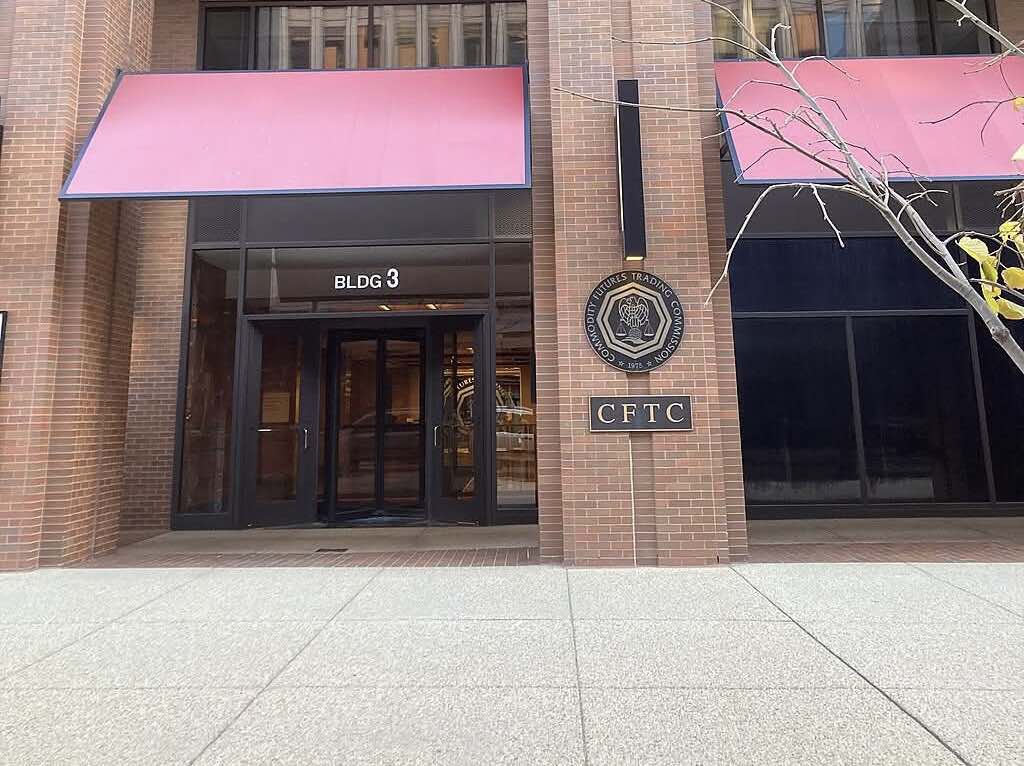
According to court filings reported on July 21, Judge John McHale of the King County Superior Court in Washington ruled in favor of the state’s bid for a preliminary injunction against Kalshi, a U.S. prediction market platform regulated at the federal level by the Commodity Futures Trading Commission (CFTC). The judge found that Kalshi’s sports event contracts amount to illegal gambling under Washington law.
In his written decision, McHale said Kalshi “offers illegal gambling activity to Washington consumers and induces Washington consumers to place bets on the platform.” He added that if Kalshi’s online gambling activity continues in Washington, the public interest at stake and the potential harm to consumers outweigh the damage Kalshi would suffer if restricted.
The court emphasized the ruling is not immediately operative. McHale allowed both sides to submit additional materials through August 3, and said the preliminary injunction would not take effect until at least August 5. He also signaled an interest in giving the parties room to negotiate, stating the court would facilitate discussions and expressing hope that Kalshi could share insights from other states on how Washington might “effectively protect” residents.
At the center of the dispute is a jurisdictional question with significant implications for the fast-growing prediction market sector: whether Kalshi’s sports contracts are governed exclusively by the federal Commodity Exchange Act (CEA) or whether states can apply their own gambling statutes. Washington argues the contracts violate state gambling laws. Kalshi contends the CEA preempts state enforcement and that states lack authority to regulate prediction markets.
McHale rejected Kalshi’s preemption argument in Monday’s filing, stating that the CEA does not override Washington state law in this context. A Kalshi spokesperson criticized the decision, telling The Block that “states do not have jurisdiction to regulate prediction markets,” and argued that multiple courts—including the U.S. Court of Appeals for the Third Circuit—have made that point clear. The spokesperson added that it was “disappointing” to see Washington continue what they characterized as wasteful spending of taxpayer funds.
The Washington ruling adds to a growing list of setbacks for Kalshi as state regulators test the boundaries of their authority against federally regulated event-contract platforms. Last month, a Michigan judge issued a temporary restraining order preventing Kalshi from offering sports-related event contracts in that state. Earlier this month, a New York judge declined Kalshi’s request to block state gambling-law enforcement actions.
Sports and gaming attorney Daniel Wallach told The Block that McHale’s approach aligns with the prevailing judicial trend in comparable disputes. Wallach said courts have issued 23 decisions in prediction-market cases on whether to grant temporary restraining orders or preliminary injunctions, and that states have prevailed in 19 of those matters—suggesting momentum is “sharply” shifting toward state governments. He noted Kalshi has already been barred from offering sports event contracts in Nevada and Michigan, and argued Washington is likely to be added to that list.
Wallach also suggested the issue may ultimately require U.S. Supreme Court resolution within the next several years. If more states succeed in obtaining injunctions, he said, Kalshi’s operational map for sports-related contracts could look significantly different within six months compared with earlier this year, when the company had not yet faced any prohibitions on offering those products.
Meanwhile, the broader federal-state clash is increasingly drawing in the CFTC itself. In April, the CFTC sued New York, seeking to block state enforcement actions against CFTC-registered exchanges and asking for a declaratory judgment that federal law grants the CFTC exclusive authority over event contracts. The posture of that lawsuit could influence how courts weigh state police powers against federally regulated derivatives-like products as prediction markets continue to expand.
Despite the legal headwinds, Kalshi remains the world’s largest prediction market platform by trading volume, outpacing rival Polymarket. According to The Block’s data dashboard, Kalshi posted roughly $33 billion in monthly trading volume in June, compared with approximately $13.95 billion in combined volume across Polymarket and other U.S. platforms—underscoring why regulators and courts are now moving quickly to define the sector’s legal perimeter.
🔎 Market Interpretation
- Washington moves to restrict Kalshi sports contracts: A state court granted Washington’s request for a preliminary injunction, finding Kalshi’s sports-related event contracts likely constitute illegal gambling under state law. The order is not yet operative and could take effect no earlier than Aug. 5 (after further submissions through Aug. 3).
- Key risk is regulatory fragmentation: The decision reinforces a growing pattern where state gambling statutes are being applied to federally CFTC-regulated prediction-market products, creating a patchwork that can shrink addressable markets state-by-state.
- Preemption argument weakened in state forums: The judge rejected Kalshi’s claim that the Commodity Exchange Act (CEA) preempts Washington’s enforcement—signaling courts may treat sports event contracts as closer to wagering than federally exclusive derivatives in this context.
- Momentum appears to favor states: A cited tally (23 rulings on TRO/preliminary injunction requests; states winning 19) indicates near-term judicial sentiment is trending toward state police powers over gambling-like offerings.
- National implications for volumes and growth: Kalshi’s scale (about $33B June monthly volume vs. ~$13.95B for Polymarket + other U.S. platforms combined) makes legal outcomes materially relevant to market structure, liquidity concentration, and competitor positioning.
💡 Strategic Points
- Timeline matters for users and counterparties: Participation and exposure in Washington may remain available until the injunction becomes effective; then access could be curtailed unless stayed or altered. Market participants should monitor Aug. 3 filings and any Aug. 5+ enforcement trigger.
- Expect continued state-by-state actions: With similar outcomes in Michigan (TRO) and an unfavorable result for Kalshi in New York (judge declined to block enforcement), additional states may test enforcement—raising compliance, geofencing, and product-design costs.
- Core legal question: CFTC exclusivity vs. state gambling laws: The dispute turns on whether sports event contracts are primarily derivatives/event contracts under federal oversight or gambling subject to state regulation. Courts’ characterization of “sports” as inherently wagering-like may be decisive.
- Negotiation door left open: The judge signaled interest in facilitating discussions and invited Kalshi to share how other states protect residents—hinting at potential settlement concepts (e.g., product limits, consumer safeguards, disclosures, or state-aligned controls), though no terms were set.
- Supreme Court path is plausible: If outcomes diverge across jurisdictions or federal litigation changes the landscape, the issue could mature into a U.S. Supreme Court question within a few years—especially if federal/state authority conflicts sharpen.
- CFTC’s parallel litigation could reshape precedent: The CFTC’s April suit against New York seeking a declaration of exclusive federal authority may influence how courts balance state police powers against federally regulated exchanges; this case is a key watchpoint for sector-wide legal perimeter setting.
- Business impact: potential contraction of sports product footprint: Analysts expect Kalshi’s accessible map for sports contracts could change rapidly if more injunctions succeed, which may shift liquidity to permitted jurisdictions or to alternative products/verticals.
📘 Glossary
- Preliminary injunction: A court order issued early in a case to temporarily restrict conduct while the litigation proceeds, typically requiring a showing of likely success on the merits and balancing of harms/public interest.
- Temporary restraining order (TRO): An emergency, short-term order that can immediately restrict conduct until a more formal hearing on a preliminary injunction.
- Event contracts: Contracts whose payoff depends on the outcome of a specified event (e.g., an election result or sports outcome). Often compared to binaries; legal treatment depends on structure and jurisdiction.
- Prediction market: A marketplace where participants trade contracts tied to real-world outcomes, producing implied probabilities and enabling hedging/speculation.
- CFTC (Commodity Futures Trading Commission): U.S. federal regulator overseeing derivatives markets (futures, swaps, and certain event contracts) and CFTC-registered exchanges.
- CEA (Commodity Exchange Act): The federal statute governing U.S. commodities and derivatives markets; central to arguments about federal authority and potential preemption of state rules.
- Federal preemption: A legal doctrine where federal law can override or displace state law in certain areas, depending on congressional intent and the regulatory scheme.
- State police powers: States’ inherent authority to regulate for public health, safety, and welfare—often the basis for gambling and consumer protection enforcement.
- Geofencing: Technical controls used by platforms to restrict access based on user location to comply with state-by-state legal requirements.
- Trading volume: The total notional amount traded over a period; used as a proxy for liquidity and market activity (not necessarily revenue).

















Comment 0