

 News
News  Coin Information
  About us
  Customer Service



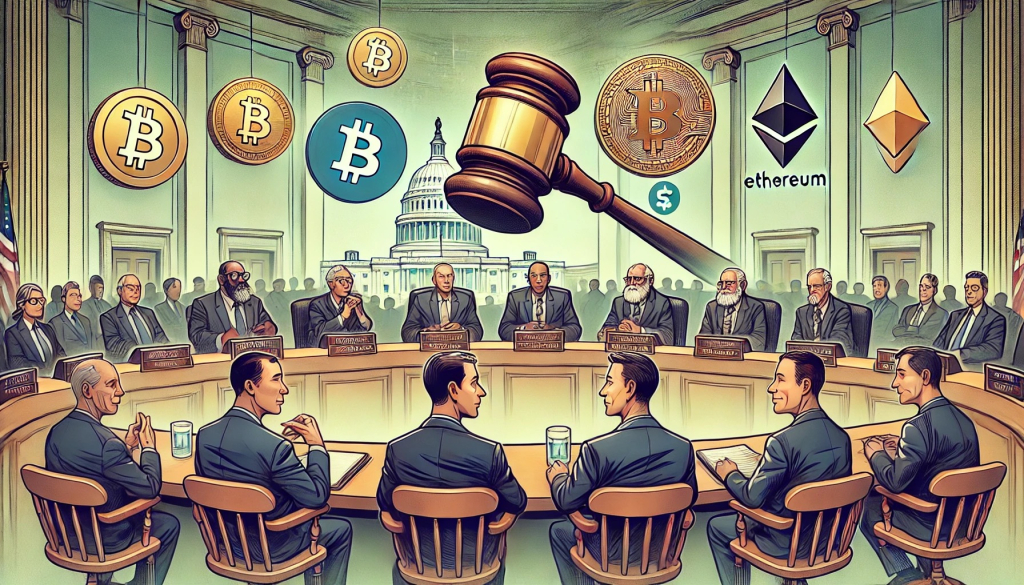
The U.S. House Financial Services Committee is holding a special hearing on the proposed 'CLARITY Act', putting America’s evolving digital asset rulebook back in the spotlight as lawmakers weigh how to define oversight, jurisdiction, and market structure for crypto.
The session, titled “Building the Future of Finance: The CLARITY Act,” is taking place in Washington and is focused on the architecture of a U.S. regulatory framework for digital assets, the bill’s key provisions, and the likely direction of follow-on legislation. Market participants are watching closely, viewing the testimony and lawmakers’ questions as a critical signal for how quickly the sector could move toward broader 'institutionalization'—and what compliance expectations may look like for exchanges, token issuers, and intermediaries.
Comments from members of Congress and industry witnesses are expected to shape near-term expectations around regulatory clarity, particularly on where responsibilities may sit between federal agencies and how different categories of tokens could be treated under U.S. law. Even without immediate votes, the hearing is seen as an important marker for momentum in crypto legislation, with policy signals often feeding directly into risk sentiment and capital flows across the market.
In parallel with the policy discussion, real-time market indicators have remained in focus, with prices of major cryptocurrencies such as Bitcoin (BTC), Ethereum (ETH), Solana (SOL), and XRP (XRP) commonly used as a proxy for the market’s reaction to regulatory developments. Broader macro data—including the USD-KRW exchange rate, the U.S. Dollar Index (DXY), and WTI crude—also provide context, underscoring how crypto policy headlines increasingly intersect with global liquidity and risk appetite.
As the hearing proceeds, investors and industry executives are expected to parse not only the bill’s specific language, but also the political tone around advancing digital asset rules in Congress. The outcome may influence how quickly the U.S. can move toward a more predictable compliance environment—an issue widely viewed as pivotal to market maturity, capital formation, and the competitiveness of U.S.-based crypto businesses.
🔎 Market Interpretation
- Regulation as a near-term catalyst: The House Financial Services Committee hearing on the proposed “CLARITY Act” is being treated by markets as a high-signal event, even without an immediate vote, because it can shift expectations about the timing and shape of U.S. crypto regulation.
- Price action as a sentiment proxy: Traders and investors often read moves in BTC, ETH, SOL, and XRP as real-time indicators of how the market is interpreting policy tone, perceived enforcement risk, and the likelihood of clearer rules.
- Institutionalization hinge: Testimony and questioning may indicate how quickly the sector could move toward broader institutional participation—especially if the hearing suggests a more predictable compliance framework for exchanges, issuers, and intermediaries.
- Jurisdictional clarity is the core risk premium: Any guidance on how oversight responsibilities may be split across U.S. federal agencies could reduce uncertainty that currently weighs on listings, market structure, and product rollouts.
- Macro cross-currents matter: The article highlights that crypto policy headlines increasingly interact with broader risk appetite and liquidity conditions, tracked via DXY, USD-KRW, and WTI crude as contextual indicators.
💡 Strategic Points
- Watch for definitional language: The biggest market impact is likely to come from how the bill and lawmakers discuss “digital asset” categories (e.g., what qualifies as a security-like vs. commodity-like token), which can affect exchange listing standards and issuer obligations.
- Map compliance scenarios for key actors:
- Exchanges: Potential changes to registration pathways, custody/segregation expectations, surveillance, and disclosure obligations.
- Token issuers: Possible disclosure baselines, distribution constraints, and rules around secondary market trading.
- Intermediaries: Clearer requirements for brokers, dealers, custodians, and service providers depending on how market structure is defined.
- Signal extraction from the hearing: Investors may focus less on prepared statements and more on questioning patterns—bipartisan alignment, points of contention, and references to follow-on legislation (a clue to legislative momentum and timelines).
- Risk management around “headline volatility”: Because policy signals can feed directly into risk sentiment and capital flows, market participants may adjust exposure, hedges, and liquidity buffers around major hearing moments.
- Competitive positioning for U.S. firms: The direction of the CLARITY Act could influence whether U.S.-based businesses gain a clearer operating environment, impacting capital formation, product development, and global competitiveness.
📘 Glossary
- CLARITY Act: A proposed U.S. legislative effort aimed at clarifying digital asset oversight, jurisdiction, and market structure rules.
- Market structure: The regulatory and operational framework that defines how assets are issued, traded, custodied, and supervised (including roles for exchanges, brokers, and custodians).
- Regulatory clarity: Clear, predictable rules on what is permitted, who regulates what, and what compliance steps are required—often reducing uncertainty-driven risk premiums.
- Jurisdiction: Which government agency (or agencies) has authority over specific activities or assets, a key issue when tokens may resemble both securities and commodities.
- Institutionalization: Increased participation by regulated financial institutions (banks, asset managers, funds) typically enabled by clearer rules, robust market infrastructure, and manageable compliance burdens.
- Risk sentiment: The market’s collective willingness to take risk, which can shift rapidly based on policy headlines and macro conditions.
- DXY (U.S. Dollar Index): A measure of the U.S. dollar’s strength versus a basket of major currencies; often used as a proxy for global liquidity and risk conditions.
- USD-KRW: The exchange rate between the U.S. dollar and South Korean won; sometimes monitored as part of broader Asia-linked liquidity and risk indicators.
- WTI crude: A benchmark oil price used as a macro indicator that can influence inflation expectations and broader risk markets.



















Comment 0