

 News
News  Coin Information
  About us
  Customer Service


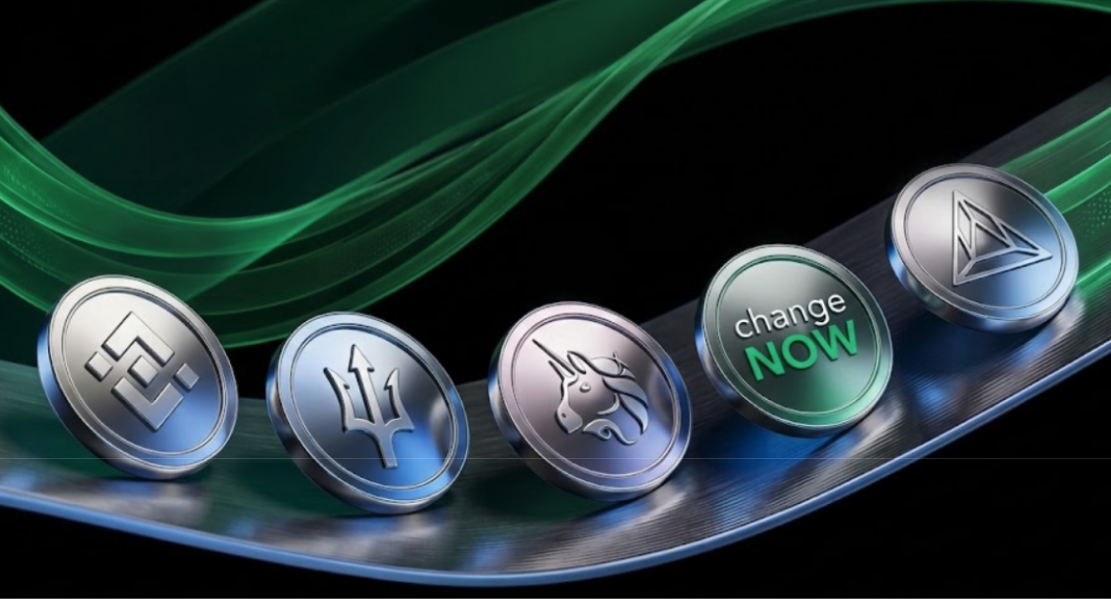
Tokenized 'real-world assets' (RWA) have moved decisively from theory to market reality in 2026, as on-chain issuance and secondary trading expand beyond crypto-native circles and into mainstream finance. With the RWA on-chain market now widely estimated to exceed $20 billion, the launch of tokenized Treasury and cash-management products by incumbents such as BlackRock and Fidelity has helped legitimize the sector—while intensifying competition among the venues where these tokens are issued, exchanged, and held.
Yet the ecosystem remains fragmented. Some RWA tokens trade primarily on regulated centralized exchanges, others are accessible only through DeFi protocols, and a growing number sit in the gray zone between traditional compliance requirements and permissionless on-chain liquidity. That split makes 'platform selection' more consequential than in many other parts of crypto, where assets are typically interchangeable across venues.
What RWA tokens are—and why they’ve gained traction
RWA tokens represent claims on off-chain assets—such as real estate, government bonds, commodities, equities, or private credit—packaged into blockchain-based tokens that can be transferred and, in some cases, used as collateral. Proponents argue tokenization can improve 'liquidity' by enabling 24/7 markets for traditionally illiquid instruments, unlock 'fractional ownership' for high-priced assets, broaden 'global access' by reducing geographic friction, and increase 'transparency' through on-chain settlement and auditable ownership records.
Market participants point to outsized performance in leading RWA-linked tokens over the past 18 months, alongside rising institutional product launches, as key drivers of the sector’s momentum. Frequently cited names in the RWA orbit include Ondo Finance (ONDO), Chainlink (LINK), Maple Finance (SYRUP), Centrifuge (CFG), and PAX Gold (PAXG), a tokenized gold product.
Five platforms investors are using to access RWA in 2026
As capital flows into tokenized Treasuries, on-chain private credit, and commodity-backed tokens, investors are increasingly differentiating platforms by three attributes: 'accessibility' (who can use it and where), 'asset breadth' (how many RWA tokens and products are available), and 'compliance posture' (how closely the venue aligns with regulatory expectations).
1) Binance — liquidity-heavy centralized access
Binance, the world’s largest crypto exchange by trading volume, has been expanding its RWA-related rails in 2026, combining deep spot market liquidity with infrastructure designed to serve larger, more sophisticated participants. Beyond retail trading, the exchange has promoted institutional settlement and collateral workflows intended to let clients tap Binance liquidity while maintaining collateral arrangements outside the core exchange environment.
Support for tokenized yield products tied to traditional instruments—especially government-bond-linked structures—has broadened, reflecting the market’s appetite for on-chain yield that is less correlated with typical crypto risk. For large traders, the main advantage remains 'order-book depth' and generally competitive fees, which can matter when building or unwinding sizeable RWA exposure.
The trade-off, as with centralized venues generally, is that users cede 'self-custody' and may face jurisdiction-based restrictions. For investors prioritizing control of keys, this factor can be decisive.
2) Kraken — compliance-forward trading, strong European fit
Kraken has continued to position itself as a security- and transparency-led exchange, aided by its publication of 'Proof of Reserves' disclosures and a long-standing focus on operational controls. In 2026, the platform has supported spot trading in notable RWA-adjacent assets including Polymesh (POLYX) and Ondo Finance (ONDO), alongside tokenized fixed-income offerings developed in cooperation with licensed issuers in certain jurisdictions.
For larger orders, Kraken’s OTC desk is frequently cited as a practical route for building exposure with reduced market impact—an important consideration given that liquidity in many RWA tokens can still be thinner than in majors like Bitcoin (BTC) or Ethereum (ETH). The exchange’s product and compliance stack has also been viewed as particularly compatible with European market expectations, which can matter for investors operating under stricter suitability and reporting requirements.
3) Uniswap v4 — permissionless, multi-chain DeFi liquidity
On the decentralized side, Uniswap v4 has emerged as a key venue for RWA token liquidity, bolstered by broader multi-chain deployments in 2026. Trading activity for tokens such as Centrifuge (CFG) and Ondo Finance (ONDO)—as well as other yield-bearing tokenized products—has been especially active on networks like Arbitrum and Base, where users can often find competitive liquidity conditions relative to smaller DEXs.
Uniswap’s defining feature is 'permissionless access': no centralized entity can freeze accounts, selectively delist tokens, or impose discretionary restrictions at the protocol level. Advanced users can also structure 'concentrated liquidity' positions to earn fees, effectively acting as market makers for specific RWA pairs.
However, the benefits come with operational complexity. Users must manage Web3 wallets, understand gas and execution mechanics, and assume full responsibility for custody—raising the barrier for newcomers and increasing the cost of mistakes.
4) ChangeNOW — fast, non-custodial swaps across chains
ChangeNOW has gained traction among crypto-native users seeking rapid exposure to RWA tokens without the onboarding friction of traditional exchanges. The service supports swaps across a large catalog—reported at more than 1,500 assets—and broad chain coverage spanning over 110 networks, including Ethereum, BNB Chain, Solana, Polygon, Avalanche, Optimism, zkSync, and Linea.
Its appeal is centered on 'simplicity': users can swap directly to their own wallet addresses without creating an account, while the platform operates on a non-custodial model in which it does not hold user funds. The option to select a 'fixed rate' is marketed as a way to limit execution uncertainty during volatile periods, while the platform points to a high percentage of swaps settling within tight slippage bounds and typically completing quickly.
For active users, paid tiers such as ChangeNOW Pro add features aimed at administration and reporting—such as transaction history exports—reflecting the growing operational demands of managing multi-asset, multi-chain portfolios. Availability via web, mobile apps, and a Telegram bot has also made it a common choice for users who prioritize convenience over advanced DeFi tooling.
5) Ondo Finance — a specialized RWA protocol for tokenized Treasuries
Ondo Finance (ONDO) stands out not as an exchange, but as an RWA-focused protocol built to bring institutional-grade financial products—particularly U.S. government-bond exposure—on-chain. Its flagship products, including USDY (a yield-bearing structure backed by short-dated U.S. Treasuries) and OUSG (a tokenized Treasury fund product), have become widely used sources of on-chain yield in DeFi as investors look for returns linked to traditional cash and bond markets rather than purely crypto-native lending cycles.
Market observers highlight Ondo’s attempt to balance 'regulatory alignment' with the composability and transparency that DeFi users expect. That hybrid positioning has helped keep Ondo at the center of the tokenized Treasury narrative, while the ONDO token has remained a bellwether for sentiment around RWA governance and growth expectations.
How investors are choosing between venues
In practice, platform choice is increasingly driven by user profile and constraints rather than simply headline yields. Institutions and high-net-worth traders seeking scale often gravitate to centralized exchanges with deep liquidity and OTC execution. Investors who prioritize compliance—particularly those operating under European frameworks—tend to favor exchanges with stronger regulatory signaling and tailored market structure.
By contrast, DeFi-native participants looking for broader token access or long-tail opportunities often prefer permissionless venues like Uniswap, accepting the trade-offs of self-custody and on-chain execution risk. Users focused on speed and minimal onboarding commonly choose non-custodial swap services that provide broad cross-chain coverage. And those specifically pursuing Treasury- and bond-linked on-chain yield products may opt to interact directly with specialized RWA protocols where issuance and redemption mechanics are central to the product design.
Broader implications
The RWA boom in 2026 is being shaped by three converging forces: accelerating institutional participation, incremental regulatory clarification across key jurisdictions, and maturing on-chain infrastructure that can support more sophisticated collateral, settlement, and reporting workflows. As a result, tokenization is no longer confined to experimental pilots—it is increasingly a competitive layer in global capital markets.
For the market, the next phase is likely to hinge on whether liquidity can consolidate around a smaller set of standards and venues, and whether compliance and investor-protection expectations can be met without undermining the efficiency that makes on-chain finance attractive. In the near term, the fragmentation of access remains a defining feature—making venue choice, operational security, and a clear understanding of custody and fee structures critical for anyone navigating the tokenized asset landscape.
🔎 Market Interpretation
{"market_size_and_stage":"RWA tokenization in 2026 has shifted from pilot projects to scaled market activity, with on-chain issuance and secondary trading expanding into mainstream finance; the sector is widely estimated at $20B+.","institutional_validation":"Products from incumbents (e.g., BlackRock, Fidelity) have legitimized tokenized Treasuries and cash-management offerings, accelerating adoption while increasing competition among issuance, trading, and custody venues.","fragmented_market_structure":"RWA access remains split across regulated CEXs, DeFi protocols, and gray-zone venues, making platform choice more consequential than for most crypto assets where venue interchangeability is higher.","demand_driver":"Investors are drawn to on-chain yield linked to traditional rates (Treasuries/cash products) and to perceived benefits such as 24/7 markets, transparency, and fractional access.","core_tension":"The next phase depends on whether liquidity and standards consolidate—and whether compliance and investor protection can be met without sacrificing on-chain efficiency."}
💡 Strategic Points
{"how_to_choose_a_venue":"Investors increasingly compare platforms using three filters: accessibility (who/where can participate), asset breadth (catalog depth), and compliance posture (alignment with regulatory expectations).","platform_playbook":[{"platform":"Binance (CEX)","best_for":"High-liquidity execution and large position management","edge":"Order-book depth, competitive fees, institutional settlement/collateral workflows","tradeoffs":"Custody ceded to the exchange; jurisdiction-based restrictions possible"},{"platform":"Kraken (CEX)","best_for":"Compliance-forward participants, especially in Europe","edge":"Proof of Reserves signaling, strong controls, OTC desk to reduce market impact in thinner RWA liquidity","tradeoffs":"Token availability depends on jurisdiction and listings; still centralized custody"},{"platform":"Uniswap v4 (DEX)","best_for":"DeFi-native users seeking permissionless access and long-tail liquidity","edge":"Multi-chain liquidity (e.g., Arbitrum/Base), censorship resistance, ability to provide concentrated liquidity to earn fees","tradeoffs":"Higher operational complexity (wallets, gas, execution), full self-custody responsibility and on-chain risk"},{"platform":"ChangeNOW (non-custodial swap)","best_for":"Fast cross-chain swaps with minimal onboarding","edge":"Non-custodial swaps to user wallets, broad asset/network coverage, fixed-rate option to manage execution uncertainty","tradeoffs":"Not an order-book venue; pricing/spreads depend on routing and market conditions; limited advanced DeFi tooling"},{"platform":"Ondo Finance (specialized RWA protocol)","best_for":"Direct exposure to tokenized Treasury/cash-style yields","edge":"Purpose-built issuance and redemption mechanics for products like USDY and OUSG; attempts to balance regulatory alignment with DeFi composability","tradeoffs":"Product-specific risks (structure, issuer/custodian dependencies) and eligibility constraints may apply"}],"risk_and_operations_checklist":["Custody model: self-custody (DEX/non-custodial) vs platform custody (CEX).","Liquidity profile: ability to enter/exit without slippage; consider OTC for large orders when markets are thin.","Compliance fit: jurisdictional access, reporting needs, and whether the venue’s posture matches investor constraints.","Fee stack: trading fees + gas + spreads + redemption/issuance costs (especially for yield-bearing Treasury products).","Execution and security: wallet hygiene, smart-contract risk, and operational error risk for on-chain venues.","Standardization watch: monitor which token standards/venues become liquidity hubs as consolidation may change best execution."]}
📘 Glossary
{"RWA_(Real-World_Assets)":"Off-chain financial or physical assets (e.g., Treasuries, real estate, commodities, credit) represented on-chain.","Tokenization":"Creating blockchain-based tokens that represent claims on an underlying asset or its cash flows.","Tokenized_Treasuries":"On-chain products backed by U.S. government bonds, often used to access traditional-rate-linked yield.","Secondary_trading":"Buying/selling already-issued tokens on exchanges or DEXs, rather than minting/redeeming with the issuer.","Liquidity":"How easily an asset can be traded without materially moving price; deeper liquidity usually means lower slippage.","Fractional_ownership":"Dividing high-value assets into smaller token units so more investors can participate.","Transparency_(on-chain)":"Auditability of transfers and balances via blockchain records (does not always equal full transparency of off-chain reserves).","Self-custody":"User controls private keys and assets directly; reduces platform risk but increases user responsibility.","CEX":"Centralized exchange; typically offers order books, high liquidity, and fiat rails but requires trusting the platform for custody/compliance.","DEX":"Decentralized exchange; smart-contract-based trading with permissionless access and user custody.","Permissionless_access":"No central party decides who can trade at the protocol level; participation is typically wallet-based.","Concentrated_liquidity":"AMM feature allowing liquidity providers to allocate capital to specific price ranges to improve efficiency and earn fees.","OTC_(Over-the-Counter)":"Brokered execution off the public order book, commonly used to reduce market impact for large trades.","Proof_of_Reserves":"Exchange disclosure method intended to show customer liabilities are backed by on-chain or verifiable reserves (scope varies).
","Compliance_posture":"How closely a venue aligns with regulatory expectations (KYC/AML, disclosures, restrictions, reporting)."}








Comment 0