

 News
News  Coin Information
  About us
  Customer Service


Crypto Telegram communities are leaning hard into ‘signal-chasing’ as market sentiment sinks to ‘Extreme Fear’, with trading channels drawing outsized attention by posting rapid-fire altcoin targets, leverage-based profit screenshots, and oversold technical setups. The trend highlights how retail activity often pivots from long-horizon narratives to short-term execution when volatility rises and confidence fades.
According to TokenPost’s KOL Index—built on DataMaxiPlus community analytics that track highly engaged Telegram content—users circulated market briefings showing the Fear & Greed Index at 12/100 (‘Extreme Fear’) alongside broad price moves in major tokens. Against that backdrop, the most consumed content was not macro debate but a steady stream of “short-term trade signals in a fear regime,” with channels positioning themselves as reliable guides through selloffs.
The highest-visibility posts were checklist-style “target hit” updates for multiple altcoins, presented as proof of performance. Trading channel Bitcoin Bullets® published consecutive updates across Zcash (ZEC), Aave (AAVE), Ethena (ENA), Immutable (IMX), Sei (SEI), and Ondo (ONDO), frequently highlighting returns calculated on a 5x leverage basis—figures such as 29%, 49%, and 24% featured prominently in the messaging. In the case of ZEC and AAVE, the channel emphasized a series of incremental target levels—framed as a sequence of confirmations—rather than a single call.
Alongside the “results” posts, promotional language encouraging paid membership was repeatedly embedded in the threads, using phrases such as ‘VIP member’ and ‘Never miss a signal’ paired with bot links. Observers noted that this format—signal distribution, rapid outcome updates, then funneling to premium access—was itself becoming a recognizable pattern within the community feed.
At the same time, technical analysis posts warning of downside pressure spread widely, often citing momentum and mean-reversion indicators. Multiple messages referenced price trading near the lower Bollinger Band, negative MACD momentum, and low RSI readings to argue that selling pressure remained dominant—even if a rebound was still possible. Solana (SOL) was frequently discussed around a single “make-or-break” support level near 82.23, while Filecoin (FIL) was framed around support near 0.8465 amid an RSI reading in the mid-20s. Aave (AAVE) also surfaced in oversold discussions, with some posts pointing to a deeply depressed RSI near the low-20s and highlighting 104.35 as a key level to watch.
Rather than calling outright bottoms, many of these analyses adopted a conditional risk narrative: upside remains possible if support holds, but a break could trigger ‘accelerated downside’ as stop-loss cascades and thin liquidity amplify moves. That tone—cautious, level-driven, and focused on near-term triggers—appeared to resonate in a fearful market environment.
Ondo (ONDO) stood out as a case study of “signal-to-outcome” content engineered for immediacy. Posts outlined a structured format including a signal ID, an entry zone around 0.2619–0.2636, targets ranging from 0.2706 up to 0.3096, and a stop-loss near 0.2510. Shortly after, the channel published an update claiming the first target at 0.2706 had been reached, reinforcing a narrative of ‘execution’ with slogans such as “While others guess, we execute.” Engagement clustered around these tightly sequenced posts where the call and the claimed result appeared close together in time.
Notably, some channels also attempted to bolster credibility by publishing losses alongside wins. One widely shared “transparency report” described an Aptos (APT) long position hitting stop-loss, reporting a -16% loss on a 3x leverage basis. Messages accompanying the post leaned on trust-building language—“transparency creates trust” and “proper risk management”—suggesting that selective loss disclosure is being used as a reputational tool, not only as education.
Beyond pure trading calls, practical “schedule” information continued to circulate. Posts discussed potential listings and airdrops tied to BASED, including mentions of Coinbase spot and Bybit, Binance Alpha references, and speculation about an OKX listing. Binance Alpha airdrop timelines were also shared for BASED and R2 Protocol. Yet the feed also reflected fatigue with task-based reward cycles, with comments suggesting short-lived hype and declining payoff from “exchange mining” style metas.
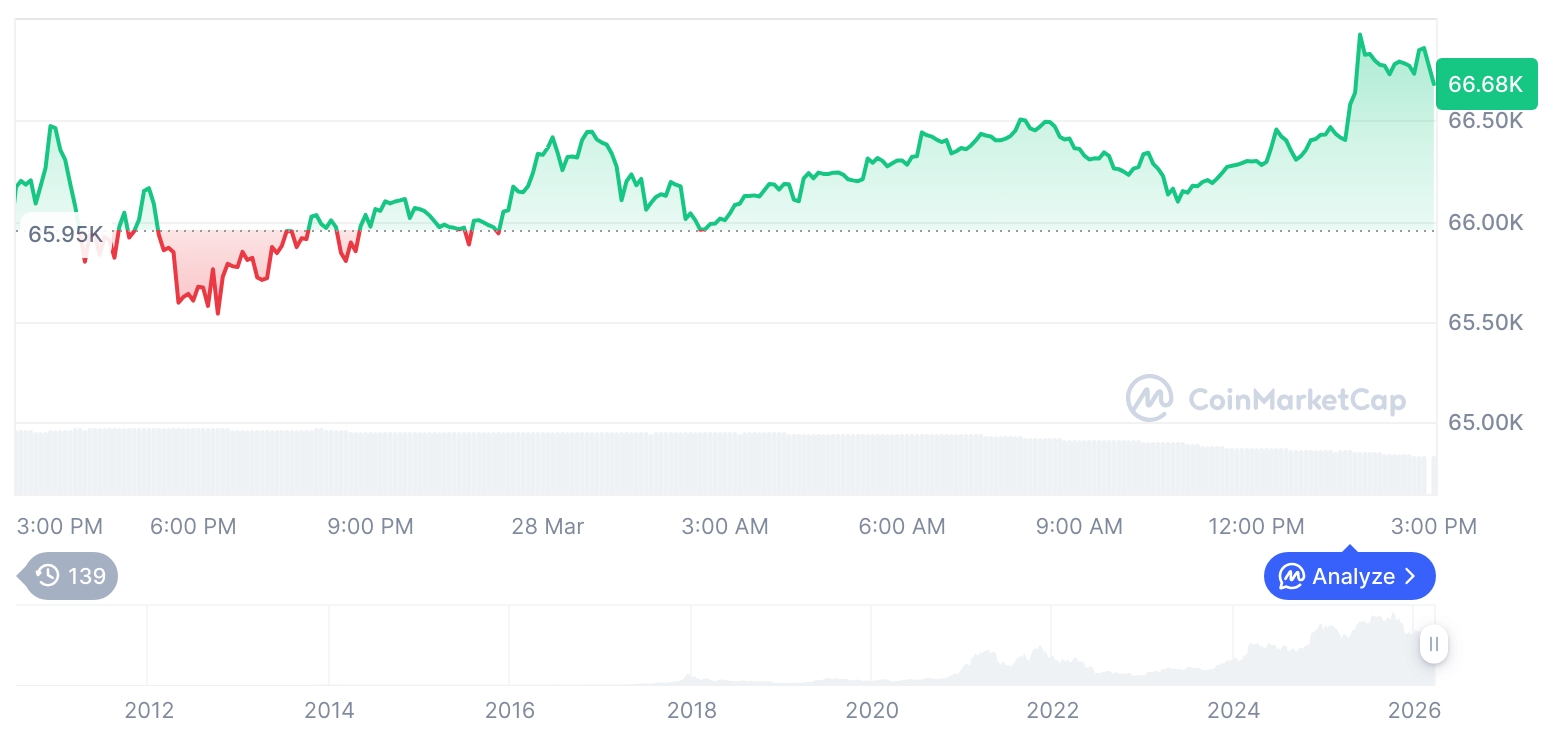
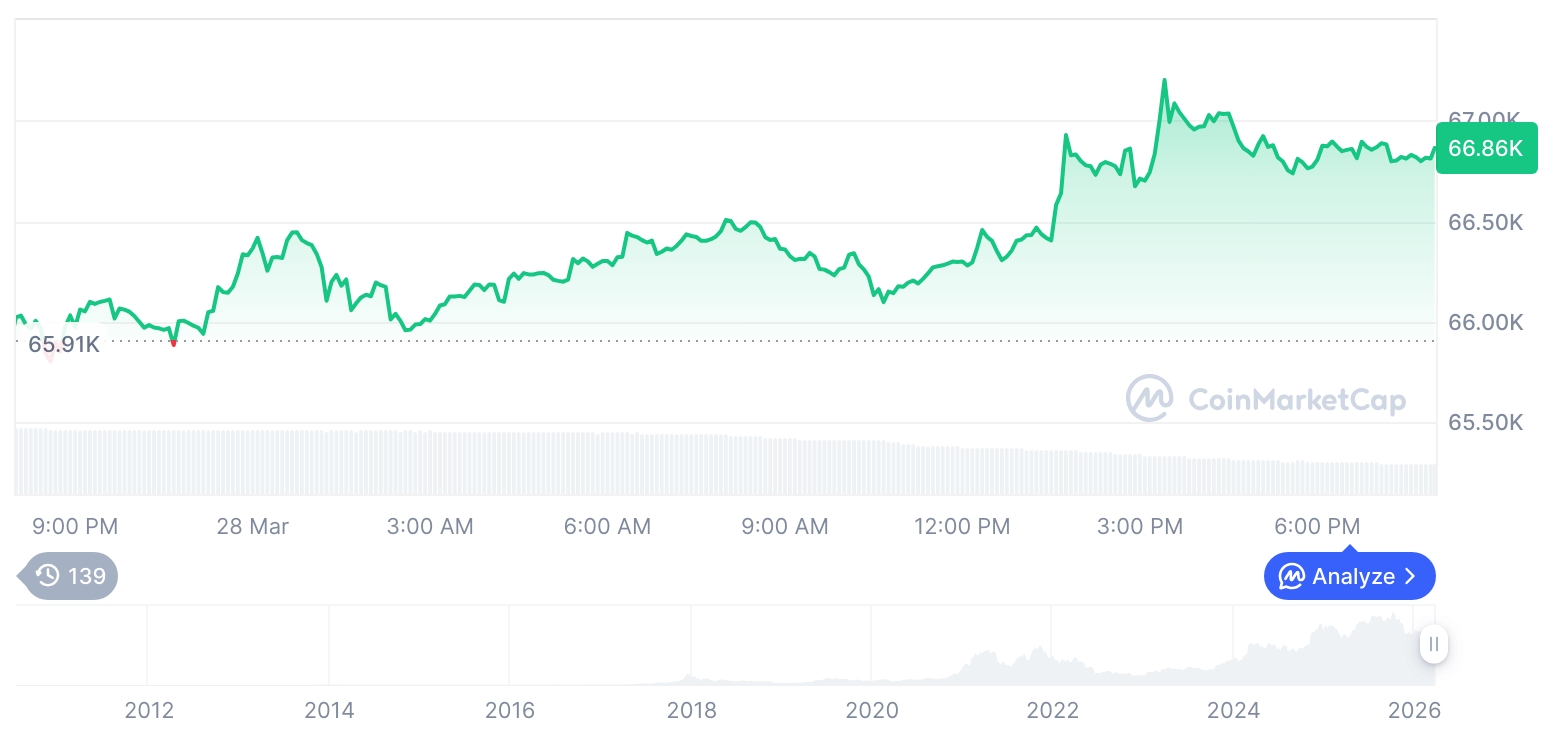
Geopolitical and macro headlines also appeared in the mix, including posts referencing remarks by President Trump and updates tied to Iran-related ceasefire or strike timing, as well as commentary on heavy selling pressure in Asian emerging-market equities. Even so, the dominant throughline in market briefs remained bearish: total crypto market capitalization was cited around $2.37 trillion, Bitcoin (BTC) dominance near 55.9%, and the ‘Extreme Fear’ reading repeated across summaries—signals that, at least inside Telegram trading circles, the prevailing mindset continues to be a fear-driven search for short-term opportunities rather than conviction-driven positioning.
Overall, the day’s top community themes converged around four pillars: multi-asset altcoin signals and “target hit” proof posts, oversold technical warnings using RSI and MACD, rapid ONDO-style signal-to-update sequences that emphasize execution, and a parallel stream of airdrop and listing-related utility information. The KOL Index content is based on Telegram messages collected through DataMaxiPlus community analysis tools.
🔎 Market Interpretation
- Fear-driven pivot to short-term trading: With the Fear & Greed Index cited at 12/100 ("Extreme Fear"), Telegram retail attention shifted away from macro narratives toward fast execution—rapid altcoin targets, leverage-framed returns, and immediate “target hit” updates.
- Performance theater as a growth engine: High-engagement posts emphasized frequent wins (often on 5x leverage) and checklist-style confirmations, positioning channels as “reliable guides” during selloffs while boosting perceived consistency.
- Bearish bias with conditional bounce framing: Technical posts broadly argued selling pressure remained dominant (lower Bollinger Band proximity, negative MACD, low RSI), but presented upside as conditional on support holding rather than calling bottoms.
- Liquidity and stop dynamics matter more in panic regimes: Messaging highlighted “accelerated downside” risk if levels break, implying stop-loss cascades and thin liquidity can amplify moves—matching the market’s fragile sentiment.
- Utility content persists, but with diminishing enthusiasm: Airdrop/listing timelines (e.g., BASED, R2 Protocol; Coinbase/Bybit speculation; Binance Alpha mentions) remained part of the feed, yet comments suggested fatigue with task-based reward metas and shorter-lived hype.
💡 Strategic Points
- Separate signal quality from marketing: Repeated “VIP member / Never miss a signal” funnels and bot links indicate a monetization loop. Treat rapid win-posting as selective outcome visibility unless full trade logs (entries, exits, invalidations) are provided.
- Leverage-adjusted claims can distort true risk: Screenshots quoting 24%–49% on 5x imply much smaller underlying moves; in extreme fear, leverage magnifies both returns and liquidation risk. Compare results to spot/1x performance and require drawdown metrics.
- Use level-based plans (not predictions): The most resonant content was level-driven: e.g., SOL ~82.23 as “make-or-break,” FIL ~0.8465 with RSI mid-20s, AAVE ~104.35 with RSI low-20s. If trading, define entry, invalidation, and position sizing around such levels.
- Interpret oversold indicators cautiously: Low RSI / lower Bollinger Band can signal exhaustion, but can also persist in downtrends. Combine with confirmation triggers (support holds, momentum shift, volume reaction) before assuming mean reversion.
- Watch the ‘signal → outcome’ timing effect: ONDO-style posts (signal ID, entry zone, targets, stop) followed quickly by “target hit” updates can create an immediacy bias. Evaluate whether targets are routinely hit, how often stops occur, and whether partial fills/slippage are disclosed.
- Transparency posts may be reputational tools: Publishing an APT stop-loss (-16% on 3x) can build trust, but verify that losses are reported consistently, not only when strategically convenient.
- Context overlay remains bearish: Briefs cited total crypto market cap ~$2.37T and BTC dominance ~55.9%, reinforcing a defensive posture where capital concentrates and altcoin signals become shorter horizon and more tactical.
📘 Glossary
- Fear & Greed Index: A sentiment gauge (0–100). Low values (e.g., 12) indicate “Extreme Fear,” often associated with risk-off behavior and higher volatility.
- KOL Index: TokenPost’s indicator of influential/most-engaged community content, built from DataMaxiPlus Telegram engagement analytics.
- Trade signal: A suggested setup (entry, targets, stop-loss). Quality depends on consistency, execution assumptions, and risk controls.
- Leverage (e.g., 3x, 5x): Borrowed exposure that amplifies gains and losses; increases liquidation risk during sharp moves.
- RSI (Relative Strength Index): Momentum oscillator (0–100). Readings near/below ~30 are often called “oversold,” but can persist in strong downtrends.
- MACD (Moving Average Convergence Divergence): Trend/momentum indicator; “negative momentum” generally implies bearish pressure.
- Bollinger Bands: Volatility bands around a moving average; trading near the lower band can indicate strong selling or potential mean-reversion setups.
- Support level: A price zone where demand is expected. Breaks can trigger stop-losses and faster declines.
- Stop-loss: A predefined exit to cap losses. In fast markets, clustered stops can cause cascades.
- Signal-to-outcome content: Posts that pair a trade call with near-immediate “target hit” reporting to reinforce perceived execution and credibility.
- Airdrop / listing catalyst: Token distribution or exchange listing rumors/timelines that can drive short-term attention and volatility.














Comment 0