

 News
News  Coin Information
  About us
  Customer Service


 Add as a preferred source on Google
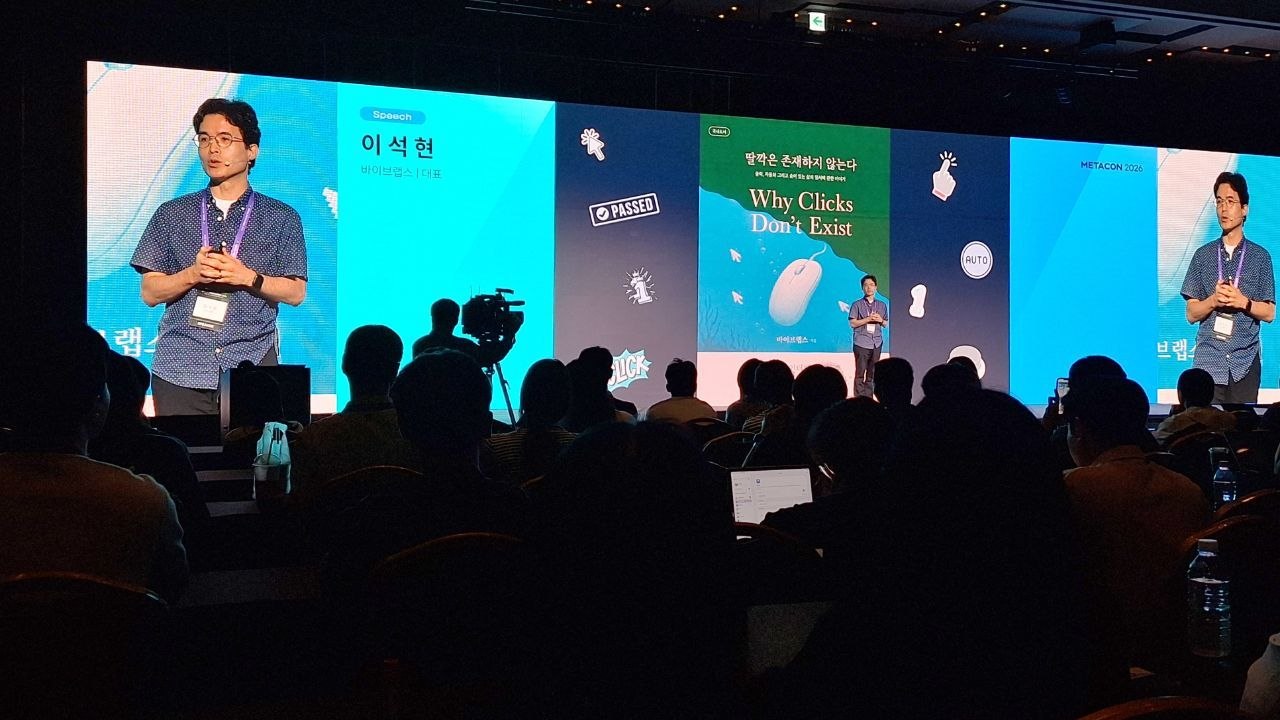
At Seoul Meta Week 2026, a clear message cut through the hype around generative AI: the real winners of the AI era will be ‘builders’—people who can translate lived experience and domain knowledge into usable systems—rather than those simply chasing the newest tools.
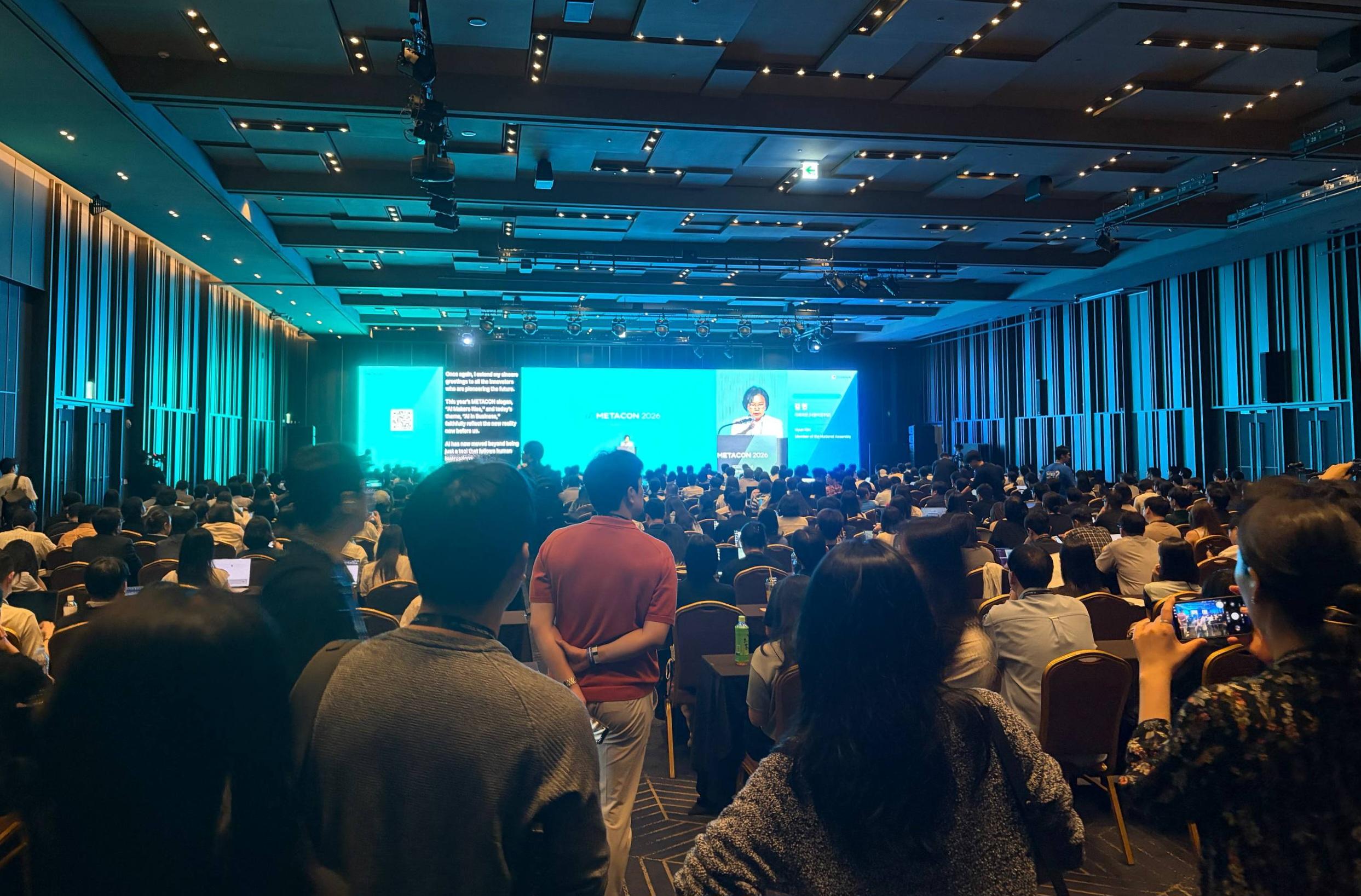
On the event’s second day in Seoul on Friday (July 3, 2026 KST; Thursday ET), developers, company executives, and creators packed the venue to discuss how AI is reshaping day-to-day work. Seats filled well before the sessions began, reflecting growing urgency across industries to move beyond experimentation and into practical deployment.
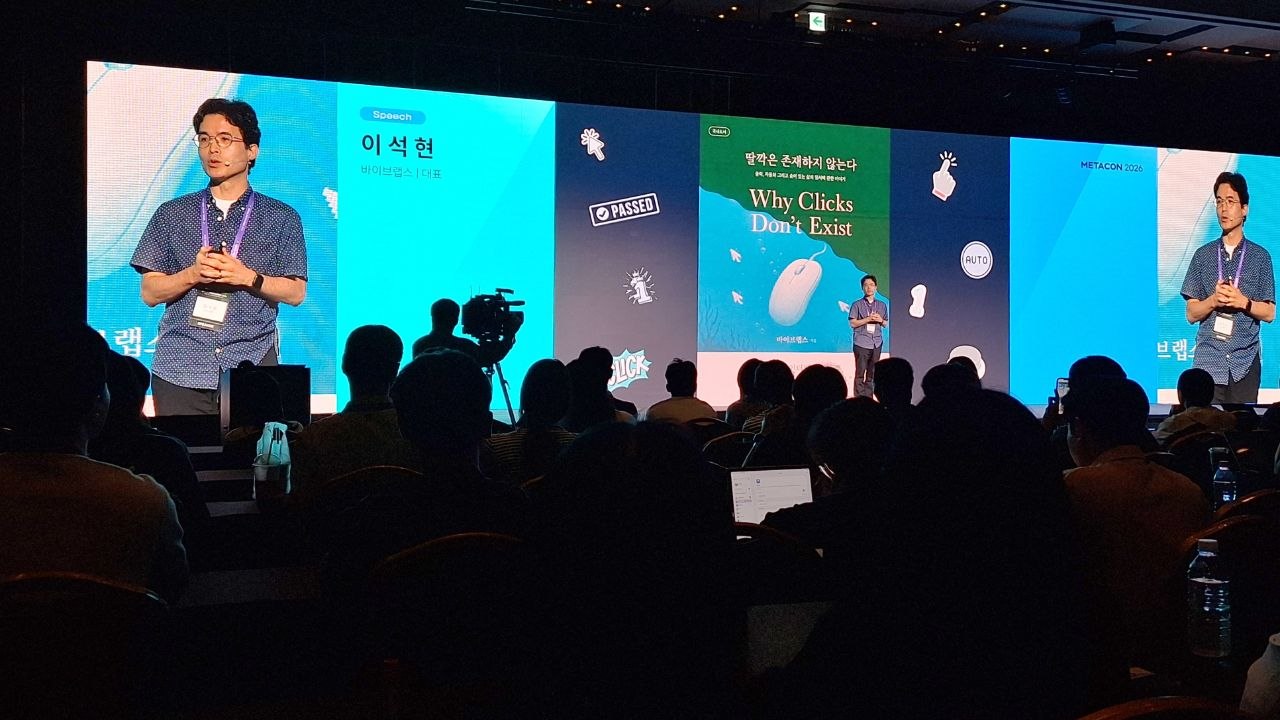
Lee Seok-hyeon, CEO of Vibe Labs, delivered one of the day’s most discussed talks, titled “The era of builders: what humans should do and what AI should handle.” His central argument was that generative AI is lowering the barriers to building products so dramatically that creation is no longer confined to professional developers. The competitive edge, he said, is shifting toward those who can identify problems worth solving and articulate them clearly enough for AI systems to execute.
Lee opened with the viral concept of ‘vibe coding’—the notion that a single prompt can produce a complete service with a simple “click.” That expectation, he warned, does not match reality. In practice, he described AI not as a magical substitute for work but as a collaborative tool that requires continuous refinement of intent, iterative corrections, and careful validation across each step of the build process.
“People keep asking whether Claude Code is better or Codex is better,” Lee said, framing the question as a proxy for a deeper concern: whether non-engineers can truly build working products themselves. In his view, the more important capability is not mastery of a specific model or language, but ‘problem-finding’—the ability to see operational friction, define constraints, and provide context that makes a solution feasible.
That theme resonated with the audience, many of whom were less interested in a parade of new AI tools than in practical ways to automate workflows and prototype services inside their organizations. “What matters isn’t which AI you use, but what problem you’re trying to solve,” Lee said, adding that a modern ‘builder’ is not necessarily someone who knows the most code, but someone who can explain their experience and problem statements in a way AI can understand and act on.
He contrasted earlier product development norms with emerging “AI-assisted” pipelines. Where an idea once required recruiting engineers and spending months through planning, design, development, testing, and deployment, Lee argued that many of those stages are increasingly accessible through structured conversations with AI—especially for domain experts who understand the underlying business logic. “The era in which domain experts build services directly has arrived,” he said.
Rather than pushing attendees toward immediate startup ambitions, Lee advocated beginning with small, high-impact automations: customer support triage, content draft generation, video creation workflows, and the elimination of repetitive tasks. The value of AI, he suggested, becomes clearest when applied to specific, painful bottlenecks inside everyday operations—an approach that many participants appeared to view as a more realistic entry point than pursuing grand, end-to-end reinventions.
Lee also emphasized that effective AI use depends heavily on communication skills. “The people who use AI best are the ones who write and speak well,” he said. “AI doesn’t read minds; it understands explanations.” In other words, the advantage goes to those who can make goals concrete, express logic step-by-step, and define acceptable outputs—skills that are increasingly becoming core workplace competencies as AI shifts from novelty to infrastructure.
Another key point was the industry’s movement from ‘prompt’ contests toward ‘loop’-based workflows. Instead of a one-shot command, users increasingly set direction while AI iteratively generates outputs, evaluates results, and revises its work until quality improves. “Humans provide the direction and AI handles execution,” Lee said, describing a future in which AI works in the background while people shift toward higher-level planning, critique, and ideation.
Beyond product thinking, Lee offered a blunt assessment of adoption constraints: the biggest barrier is often cost, not capability. Token-based pricing can become unpredictable as usage scales, he noted, making model selection, workload design, and architectural discipline critical. He cited a consulting case in which a company was paying nearly 2 million won per month in cloud operating expenses after outsourcing development, but lowered costs sharply by redesigning the system’s structure. “The point isn’t expensive infrastructure,” he said. “It’s diagnosing the problem accurately.”
Lee predicted that outsourcing markets themselves could be reshaped as AI enables domain specialists to build prototypes and even production systems without traditional development teams. The implication, he argued, is not that AI “replaces developers,” but that it reduces barriers to creation and expands who gets to build—changing how organizations allocate technical labor and how software services are commissioned and maintained.
Even after the talk ended, discussions continued around practical AI deployment, workflow automation, and the realities of ‘vibe coding.’ The tone on the floor was less about tool demos and more about implementation: how to integrate AI into real processes, how to measure outcomes, and how to control costs and quality in repeatable ways.
Perhaps the most strategic takeaway from the session was the emphasis on ‘data’ over ‘tools.’ Models will change—today’s leaders may not be tomorrow’s. But organizational competitiveness is increasingly tied to whether a company can preserve, structure, and connect its knowledge so that any AI system can leverage it. Internal prompts, working drafts, and AI-assisted outputs are not just disposable artifacts; they can become durable knowledge assets if systematically captured and linked to verified datasets and operating procedures.
At Seoul Meta Week 2026, the emerging consensus was not that the AI era belongs to whoever adopts the newest model first. The advantage appears to be shifting toward ‘builders’ who can turn experience into structured data, connect it to AI workflows, and repeatedly generate new value—regardless of which tool happens to dominate the market next.
🔎 Market Interpretation
- Shift from “tool-first” to “problem-first” adoption: Seoul Meta Week 2026 highlights that competitive advantage is moving away from chasing the newest model (Claude Code vs. Codex) and toward identifying high-value operational problems and expressing them clearly for AI execution.
- “Builders” expand beyond engineers: Generative AI lowers build barriers, enabling domain experts to prototype—and increasingly deploy—services through structured AI-assisted workflows, changing who can create software inside organizations.
- From prompt hype to iterative production loops: The market is maturing from single-shot prompting (“vibe coding”) toward loop-based workflows where humans steer and critique while AI iterates, validates, and refines outputs.
- Cost becomes the binding constraint: As AI usage scales, token-based pricing and cloud architecture choices drive ROI; disciplined workload design and system structure can reduce operating expense more than switching models.
- Data becomes the durable moat: Models will rotate, but organizations that capture internal knowledge (prompts, drafts, validated outputs) and connect it to verified datasets and SOPs gain repeatable leverage across any future model.
💡 Strategic Points
- Start with “small, painful” automations: Prioritize narrow, high-impact workflows (customer support triage, repetitive admin tasks, content drafting, video production steps) to prove value and build internal momentum.
- Invest in problem-finding, not tool mastery: Build capability in diagnosing friction, defining constraints, and specifying success criteria; these inputs make AI outputs usable and reduce rework.
- Operationalize loop-based workflows: Replace one-off prompts with repeatable pipelines: define intent → generate → evaluate against criteria → revise → validate → log outcomes. Assign humans to direction/QA and AI to execution.
- Make communication a core AI skill: Strengthen writing/speaking practices (clear goals, step-by-step logic, acceptable outputs, edge cases) to improve reliability across teams—especially for non-engineers.
- Control costs with architecture discipline: Track token spend by task, cap context size, reuse templates, cache outputs, and redesign system structure before scaling. Treat cost predictability as part of product quality.
- Turn AI artifacts into knowledge assets: Systematically store prompts, decision logs, validated drafts, and evaluation rubrics; link them to datasets and procedures so future teams/models can reuse and improve them.
- Re-think outsourcing and team allocation: Use AI to let domain teams deliver prototypes internally, then involve engineers selectively for hard parts (security, reliability, integrations), reducing commissioning cycles and iteration time.
📘 Glossary
- Builder: A person who translates real-world domain experience into structured requirements and workflows that AI (and software) can execute—often without being a traditional developer.
- Domain expert: Someone with deep knowledge of a specific business area (support, operations, marketing, compliance) who can define rules, constraints, and success metrics for automation.
- Vibe coding: The viral idea that a single prompt can generate a complete service “with one click.” The talk argues real delivery still requires iteration, correction, and validation.
- Prompt (one-shot prompting): A single instruction sent to an AI model to generate an output; useful for drafts but fragile for production work without checks and iteration.
- Loop-based workflow: An iterative process where AI generates, evaluates, and revises outputs under human direction until they meet defined quality criteria.
- Problem-finding: The skill of identifying meaningful operational friction, defining constraints, and providing context so solutions are feasible and measurable.
- Token-based pricing: AI usage billing based on the amount of text processed/generated (tokens). Costs can become unpredictable at scale without careful design.
- AI-assisted pipeline: A product/work process where planning, drafting, testing, and refinement are partially performed through structured interaction with AI tools.
- Knowledge asset: Reusable organizational artifacts—validated prompts, drafts, rubrics, datasets, and SOP links—that improve future AI performance and consistency.

















Comment 0