

 News
News  Coin Information
  About us
  Customer Service


 Add as a preferred source on Google
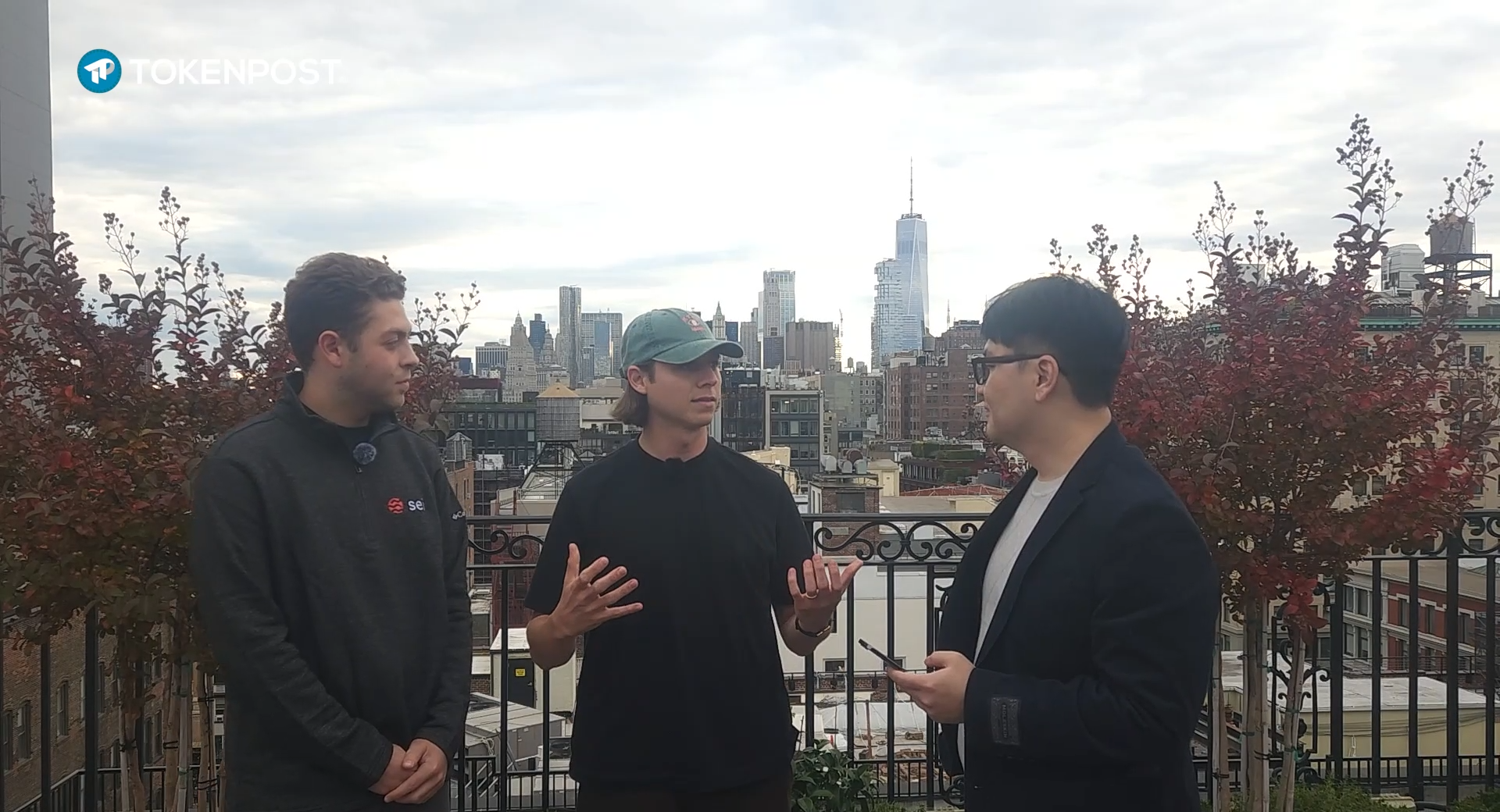
Sei Network is branding itself as more than another high-throughput blockchain, pitching a bid to rebuild parts of Wall Street as programmable, onchain infrastructure—without forcing developers to abandon Ethereum tools. In an interview conducted at Sei’s New York headquarters, executives from the Sei Development Foundation said the project’s next phase will be defined by real-world use cases such as trading, payments, and tokenized real-world assets (RWA), alongside a tighter incubation model aimed at attracting top-tier founders.
Jack Lipstone, Business Development Director at the Sei Development Foundation, and Cody Garrison, Incubation Director, framed Sei’s long-term thesis around what they call an ‘Endless Frontier’—the idea that performance improvements continuously expand the design space for new financial applications. “Innovation doesn’t have a finish line,” they said, arguing that infrastructure breakthroughs are now enabling products historically constrained by latency, settlement friction, or cost.
That positioning matters in a market where “fast” is no longer a differentiator on its own. Multiple L1s and L2s now advertise sub-second finality and low fees, but few have successfully paired performance with deep developer tooling and a credible path to institutional adoption. Sei’s leadership argues it is trying to compete on all three fronts: speed, reliability, and ecosystem maturity.
From performance chain to ‘full EVM’ financial stack
Sei’s early identity was tied to high-performance trading, but the team now emphasizes that it operates as a ‘fully EVM’ chain—an important clarification in a landscape where developer mindshare is heavily concentrated around Ethereum Virtual Machine compatibility. According to the foundation, Sei’s mainnet has been operating stably for roughly two years, a milestone they say strengthens confidence through a de facto ‘Lindy effect’—the idea that longevity can signal durability.
They also highlighted broad compatibility with familiar Ethereum tooling, including MetaMask, Etherscan-style explorers, and major RPC providers. The pitch is straightforward: developers can deploy EVM applications with minimal rewrites while benefiting from materially faster execution and settlement.
Sei additionally sought to address a common critique of ultra-fast chains: that performance sometimes comes at the expense of operational resilience. The foundation’s view is that speed is now “table stakes,” and that the next competitive frontier is blending low latency with a production-grade environment that institutions and consumer applications can rely on.
Tokenized funds and the start of an ‘onchain Wall Street’ narrative
The most explicit expression of Sei’s “decentralize Wall Street” theme is its growing focus on RWAs. The foundation said tokenized fund products have begun appearing in the ecosystem via platforms such as Kyo and Securitize, with global asset managers—named by the executives as Apollo, Hamilton Lane, Brevid, and Howard—tokenizing funds on Sei.
While tokenization is not new, the claim from Sei’s executives is that high-performance settlement and an EVM-native environment can make these assets more composable—usable as building blocks for lending, borrowing, and yield-bearing, collateralized stablecoin structures. In other words, tokenized funds are not positioned as isolated products; they are meant to become base collateral for a broader DeFi stack.
That vision aligns with a wider industry push: multiple chains and financial infrastructure firms are racing to prove that onchain rails can support institutional-grade issuance and secondary market activity. Sei’s bet is that lowering latency and fees can unlock more active forms of onchain finance than what has been practical on higher-cost, slower settlement platforms.
Sei’s architecture: settlement layer plus a high-speed trading execution engine
Sei describes its stack as a multi-layer financial system. At the base is what the team calls a ‘global settlement layer’—Sei EVM L1—aimed at compressing traditional securities settlement timelines. Where traditional markets can settle T+1, Sei argues that blockchain settlement can occur in milliseconds, enabling faster capital reuse and reduced counterparty exposure in theory.
On top of that, Sei is developing an execution layer called ‘Monaco,’ described as a central limit order book (CLOB)-based trading protocol designed to create shared liquidity onchain. The foundation’s pitch is that apps can be built above that shared liquidity layer—akin to a “Robinhood-style” front end—forming a full-stack system from settlement to execution to consumer interface.
The model is a direct challenge to the fragmented liquidity typically seen in DeFi, where isolated pools and app-specific venues can make price discovery less efficient. A shared order-book layer, if adopted, could concentrate liquidity and improve execution quality—but it also raises questions about adoption incentives and whether liquidity providers will prefer Monaco over established venues elsewhere.
Payments, ‘agentic’ wallets, and ultra-low transaction costs
Beyond trading, Sei is increasingly highlighting payments as a priority use case. The foundation said that on Sei, sending 10,000 transfers can cost less than $0.07 in fees—an aggressive figure intended to support high-frequency, low-value transactions that are impractical on more expensive networks.
They also pointed to the rise of AI-driven software agents—autonomous programs that may hold wallets, pay for services, and execute financial actions—as a future driver of onchain activity. In that ‘agentic economy,’ the team argues that networks with ultra-fast finality and extremely low fees could become default settlement backbones, particularly in a multi-chain environment where applications may choose the cheapest and fastest rail for settlement even if users never see it.
Positioning between Ethereum and Solana
Sei’s leadership framed the network as occupying the intersection of Ethereum’s composability and Solana’s throughput. Ethereum, they argued, pioneered the modern DeFi design space and asset composability, while Solana demonstrated that consumer-grade performance is achievable at scale. Sei’s pitch is that EVM developers can “bring existing code” and experience performance closer to Solana-like execution, with bridging providing liquidity mobility across ecosystems.
While these comparisons are common in the L1 competition playbook, Sei’s emphasis on a ‘full EVM’ environment is aimed at reducing migration friction—arguably the highest barrier to ecosystem growth. Execution speed alone is rarely enough; the network must also win distribution through tooling, liquidity, and differentiated applications.
Incubation strategy and Monaco performance targets
Sei Labs is leading incubation efforts, while the foundation focuses on partnerships and network-building, according to the executives. The team described its incubation approach as “applied learning,” working closely with builders—particularly those with high-frequency trading and low-latency systems experience—to explore new application design patterns enabled by faster execution.
They said Monaco began with execution latency around 200 milliseconds, but through optimization and partial redesigns, backend benchmarks have fallen into the 50–100 microsecond range. The team expects spot trading functionality to launch this year, with perpetual futures (“perps”) targeted for the first quarter of next year.
Sei also emphasized a hands-on culture centered in New York, where teams collaborate directly on tokenomics, partnerships, and go-to-market planning—an approach intended to tighten feedback loops and accelerate iteration compared with more distributed, grant-only programs.
Stablecoins, custody, and institutional rails
On stablecoins and institutional infrastructure, the foundation underscored the launch of native USD Coin (USDC) on Sei, noting that Circle has joined as an investor and that USDC’s share within the Sei ecosystem is rising. Stablecoins, they argued, will remain the key unit of account for tokenized finance, serving as settlement currency for payments, trading, and RWA-backed protocols.
They also pointed to efforts to strengthen ‘institutional trust’ infrastructure, including custody support from Crypto.com, as well as growing interest from traditional finance participants exploring onchain issuance and management strategies. The executives referenced activity ranging from asset managers running onchain strategies to applications tied to exchange-traded fund structures, positioning it as evidence that the ecosystem is moving beyond crypto-native experimentation.
Roadmap: abstracting the chain away
Looking ahead to 2026, Sei’s goal is to mature into a ‘global settlement layer’ that can support a meaningful portion of traditional finance flows moving onchain. The executives cited annual traditional finance volumes of roughly $30 trillion as a long-term addressable market, arguing that even partial migration would be transformative for onchain settlement networks.
In practical terms, they said success will be measured by abstraction: users should eventually be unaware they are using Sei at all, enjoying a familiar, Web2-like experience while the chain operates in the background. They also noted early examples of consumer-facing applications emerging on Sei, including a social protocol called ‘Overheard,’ as signals of broader experimentation beyond finance.
Finally, the foundation sought to dispel what it described as a persistent misconception: that Sei remains primarily a Cosmos-based trading chain. While it originated with Cosmos roots, the team says it has since shifted decisively toward EVM scaling, citing its v2 EVM rollout and the community’s decision to sunset Cosmos Wasm support. The executives also referenced ‘Sei Giga’ as a performance milestone, claiming throughput surpassing 200 TPS as part of an ongoing push toward “Wall Street-grade” financial infrastructure.
For Sei, the near-term test will be whether high-speed execution, EVM familiarity, and a tokenization-led institutional narrative can converge into durable usage. If Monaco can attract liquidity and RWAs can become productive onchain collateral, Sei could carve out a differentiated role in the increasingly crowded race to define the next generation of settlement rails.
🔎 Market Interpretation
- Sei is repositioning from “fast chain” to financial infrastructure: The narrative shifts toward rebuilding parts of Wall Street onchain (trading, payments, RWAs) while keeping full EVM compatibility to reduce developer migration friction.
- Speed is commoditized; reliability + tooling + institutions are the differentiators: With many L1/L2s claiming low fees and quick finality, Sei’s pitch is a three-part moat—performance, production stability ("Lindy effect" after ~2 years mainnet), and ecosystem maturity (wallets, explorers, RPC).
- RWAs are framed as composable collateral, not standalone products: Tokenized funds via platforms like Kyo and Securitize, and mentions of asset managers (Apollo, Hamilton Lane, etc.), are positioned as primitives for lending/borrowing, yield, and stablecoin structures.
- Order-book liquidity aggregation is a direct DeFi market structure bet: The Monaco CLOB execution layer aims to reduce fragmented liquidity and improve execution quality—success depends on whether it can pull liquidity from established venues.
- Payments + “agentic wallets” expand the TAM beyond traders: Ultra-low fee claims (10,000 transfers < $0.07) are presented as enabling high-frequency microtransactions and AI-agent settlement flows in a multi-chain world.
- Sei positions itself between Ethereum and Solana: “Ethereum-like composability/tooling” plus “Solana-like performance” is the core competitive framing, with bridging expected to help liquidity mobility.
💡 Strategic Points
- Go-to-market focus: institutional rails + consumer abstraction
- Near term: prove institutional readiness via RWAs, custody, stablecoins, and credible trading venues.
- Long term (2026): win by hiding the chain—Web2-like UX where Sei becomes invisible settlement plumbing.
- “Full EVM” as the adoption wedge
- Compatibility with MetaMask, Etherscan-style explorers, and major RPCs lowers switching costs and targets Ethereum developer mindshare.
- Strategic implication: success hinges less on raw TPS marketing and more on app distribution, liquidity, and trusted integrations.
- RWA composability thesis depends on stable settlement currency
- Native USDC availability and Circle’s involvement are used to support an “institution-grade unit of account” for payments, trading, and RWA protocols.
- Monaco product milestones create a clear execution roadmap
- Latency improvement narrative: from ~200ms to backend benchmarks of 50–100 microseconds (benchmarks ≠ end-to-end user latency).
- Planned rollouts: spot trading this year; perps targeted for Q1 next year.
- Key risk: liquidity incentives, market-maker participation, and whether shared CLOB liquidity beats AMM + isolated venues.
- Incubation model aims to manufacture differentiation
- Hands-on New York–based collaboration (tokenomics, partnerships, GTM) is designed to tighten feedback loops versus passive grants.
- Target builder profile: teams with HFT/low-latency experience to exploit “new design space” enabled by faster execution.
- Messaging clean-up: move away from “Cosmos trading chain” label
- Claims: v2 EVM rollout, sunset of Cosmos Wasm support, and “Sei Giga” performance push (~200+ TPS cited) to reinforce an EVM-scaling identity.
📘 Glossary
- EVM (Ethereum Virtual Machine): Standard execution environment for Ethereum-compatible smart contracts; enables reusing Solidity contracts and common tooling.
- L1 / L2: Layer-1 is the base blockchain; Layer-2 is a scaling system that settles to an L1.
- Finality: Point at which transactions are considered irreversible under normal network assumptions.
- RWA (Real-World Assets): Offchain financial assets (e.g., funds, treasuries, credit) represented onchain as tokens.
- Tokenized fund: A fund whose shares/claims are issued as onchain tokens, enabling programmable transfer, settlement, and integration with DeFi.
- Composability: Ability for smart contracts/assets to be combined like “lego blocks” across applications (e.g., tokenized funds used as lending collateral).
- Stablecoin (USDC): Crypto token designed to track fiat value; USDC is a dollar-pegged stablecoin commonly used for settlement.
- RPC (Remote Procedure Call): Infrastructure endpoint that lets wallets and apps read blockchain data and submit transactions.
- CLOB (Central Limit Order Book): Trading model using bids/asks at specific prices; common in traditional exchanges and some onchain venues.
- Execution layer vs settlement layer: Execution is where trades/actions are matched/processed; settlement is where final ownership and balances update.
- T+1 settlement: Traditional market convention where trades settle one business day after execution.
- Lindy effect: Heuristic suggesting that the longer a system has survived, the longer it is likely to persist.
- Perps (Perpetual futures): Derivatives that track an asset price without an expiry date, typically using funding rates.
- Agentic wallets / AI agents: Software agents that can autonomously hold keys, pay for services, and execute transactions based on rules or goals.
- Liquidity fragmentation: Liquidity spread across many separate pools/venues, often worsening execution and price discovery.
- Custody: Secure holding of digital assets by a specialized provider, often required for institutional participation.









Comment 0