

 News
News  Coin Information
  About us
  Customer Service


 Add as a preferred source on Google
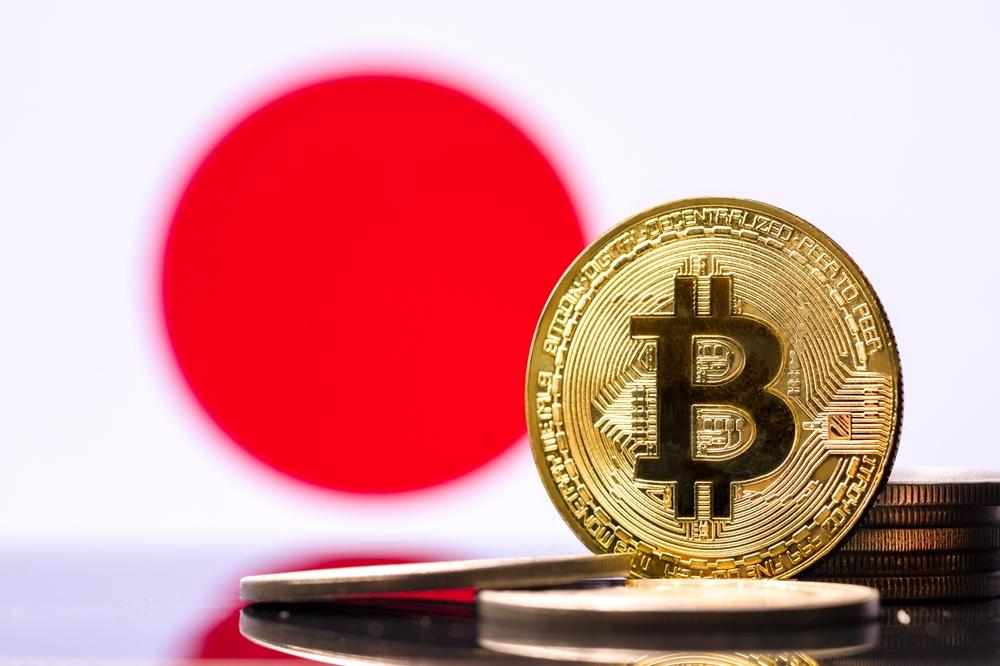
Japan may be moving closer to approving its first spot Bitcoin exchange-traded fund, a shift that could open a major new channel of 'institutional demand' in one of Asia’s largest capital markets.
According to a July 23 report by U.Today, Japan’s financial authorities are preparing a broad overhaul of crypto investment rules, a process that could pave the way for a regulated Bitcoin ETF launch by fiscal year 2028. The regulatory work is expected to follow recent legal changes that move oversight of spot crypto assets from the Payment Services Act to the Financial Instruments and Exchange Act—an adjustment that would place crypto products within a framework more closely resembling that used for traditional securities such as stocks and bonds.
The prospective shift matters because Japan has historically maintained strict guardrails around crypto-related investment products, limiting the types of vehicles available to mainstream investors. Reclassifying crypto under securities-style regulation could make it easier for asset managers to structure ETFs and for financial institutions to distribute them under clear compliance standards.
U.Today reported that Japanese legislator Satsuki Katayama has recently indicated the government is pushing toward legalizing crypto ETFs, citing the momentum of similar products overseas. The success of spot Bitcoin ETFs in other major jurisdictions has intensified competition among financial centers, and Japan appears increasingly reluctant to remain on the sidelines as global 'liquidity inflow' concentrates in regulated wrappers.
Several large asset managers in Japan are said to be exploring potential Bitcoin ETF launches. Market projections cited in the report suggest as much as ¥3 trillion could flow into the segment by fiscal year 2028, underscoring the scale of pent-up demand if Japan provides an approved, exchange-traded route to Bitcoin exposure.
Investor behavior is also evolving. Some Japanese institutions are increasingly treating crypto as a diversification tool rather than a purely speculative trade. Aiyu Kiguchi, an executive responsible for investment management at a corporate pension fund in Okayama, said one reason the fund invested in a crypto fund run by an overseas hedge fund was the relatively low correlation between crypto assets and the U.S. dollar. The pension fund manages about ¥21.5 billion for roughly 1,200 small and mid-sized companies, and allocated an initial 1% of its portfolio to crypto-related investments as part of a broader diversification strategy.
Major domestic financial firms are positioning early for an eventual ETF market. SBI Holdings has proposed crypto ETF products, including structures designed to provide exposure to both Bitcoin (BTC) and XRP (XRP). SBI has also outlined ambitions to expand assets under management to approximately ¥5 trillion within three years, reflecting expectations that regulated products could accelerate mainstream adoption.
If Japan ultimately approves its first spot Bitcoin ETF, it would likely mark a pivotal moment for the country’s crypto industry—signaling regulatory normalization, broadening access for retail and institutional investors, and potentially drawing fresh capital into the market through familiar, exchange-traded instruments.
🔎 Market Interpretation
- Japan is signaling a pivot toward regulated Bitcoin access: A potential spot Bitcoin ETF approval path by fiscal year 2028 would create a mainstream, exchange-traded channel for BTC exposure in one of Asia’s largest markets.
- Regulatory “re-bucketing” is the key catalyst: Moving oversight from the Payment Services Act to the Financial Instruments and Exchange Act would align crypto investment products with securities-style rules, typically a prerequisite for ETF structures.
- ETF competition is increasingly global: Momentum from spot Bitcoin ETFs overseas is pressuring Japan not to lose liquidity and investor participation to other financial centers offering regulated wrappers.
- Demand outlook is meaningful if approval happens: Market projections cited suggest potential inflows up to ¥3 trillion by FY2028, indicating sizable “pent-up” institutional and retail demand for compliant products.
- Institutional posture is maturing: The pension fund example (initial 1% allocation) reflects a shift from speculative framing to portfolio diversification logic (e.g., correlation considerations).
💡 Strategic Points
- Watch the legal/agency transition timeline: Progress on implementing the Financial Instruments and Exchange Act framework is a leading indicator for whether ETF approval by FY2028 is realistic.
- Distribution readiness may matter as much as approval: Securities-like compliance standards could enable banks/brokers to distribute crypto ETFs more confidently, potentially accelerating adoption beyond crypto-native venues.
- Product design could expand beyond single-asset BTC: SBI’s mention of BTC and XRP exposure implies Japanese issuers may pursue differentiated lineups (multi-asset, thematic, or risk-managed variants) alongside a flagship BTC ETF.
- Institutional allocation trend to monitor: Early small allocations (e.g., 1%) can be directionally important; broad adoption often starts with low single-digit weights before scaling if governance and volatility controls mature.
- Potential second-order effects: If ETFs arrive, likely outcomes include improved market access, higher legitimacy for treasury/pension discussions, and greater local market infrastructure investment (custody, compliance, reporting).
- Key risks/constraints: Approval timing uncertainty, possible strict eligibility rules (custody, valuation, disclosures), and volatility-related suitability requirements could temper near-term inflows.
📘 Glossary
- Spot Bitcoin ETF: An exchange-traded fund that aims to track the price of Bitcoin by holding actual BTC (or equivalent spot exposure), rather than using futures contracts.
- Institutional demand: Buying interest from professional investors (pension funds, insurers, asset managers, corporations) typically governed by mandates, risk controls, and compliance rules.
- Payment Services Act (Japan): A legal framework historically used for regulating payments and certain crypto-related activities; generally not designed as a securities-product rulebook.
- Financial Instruments and Exchange Act (FIEA): Japan’s core securities regulation framework covering instruments like stocks, bonds, and investment funds; shifting crypto under FIEA implies tighter investor protections and product governance.
- Regulated wrapper: A compliant investment vehicle (e.g., ETF) that packages an asset into a familiar structure with standardized disclosures, custody, and trading on regulated exchanges.
- Liquidity inflow: New capital entering a market or product category, often increasing trading depth and participation.
- Correlation (in portfolio context): A measure of how two assets move relative to one another; lower correlation can improve diversification by reducing overall portfolio volatility.
- AUM (Assets Under Management): The total market value of assets a firm manages for clients; used as a scale indicator for asset managers and product platforms.



















Comment 0