

 News
News  Coin Information
  About us
  Customer Service


 Add as a preferred source on Google

U.S. Treasury Secretary Scott Bessent said lawmakers are in the final stretch of negotiations on the ‘Clarity Act,’ a sweeping crypto market-structure bill that could reshape how digital assets are regulated in the United States, and urged Congress to pass it before the upcoming recess.
According to Cointelegraph, Bessent told legislators that discussions have entered a last-stage coordination phase. The proposed legislation is designed to clarify oversight boundaries and the broader regulatory framework for crypto markets—an issue that has weighed on U.S. innovation and capital allocation amid years of jurisdictional disputes and enforcement-led rulemaking. Market participants are watching closely for signs that the bill could reduce ‘regulatory uncertainty’ that has kept some institutional activity cautious and pushed certain products offshore.
In Canada, Coinbase is pursuing a plan to build an integrated trading venue that combines cryptoassets, tokenized equities, and prediction markets, highlighting the exchange’s push toward multi-asset, always-on financial rails. PANews, citing Bitcoin Magazine, reported on Tuesday ET that Coinbase Canada managing director Eric Richmond outlined the initiative, arguing that blockchain-based infrastructure can enable 24/7 trading and ease the time and access constraints common in traditional banking and stock markets. Coinbase said it is working with Canadian regulators as it develops the offering, after expanding related services tied to prediction markets and equities in the U.S.
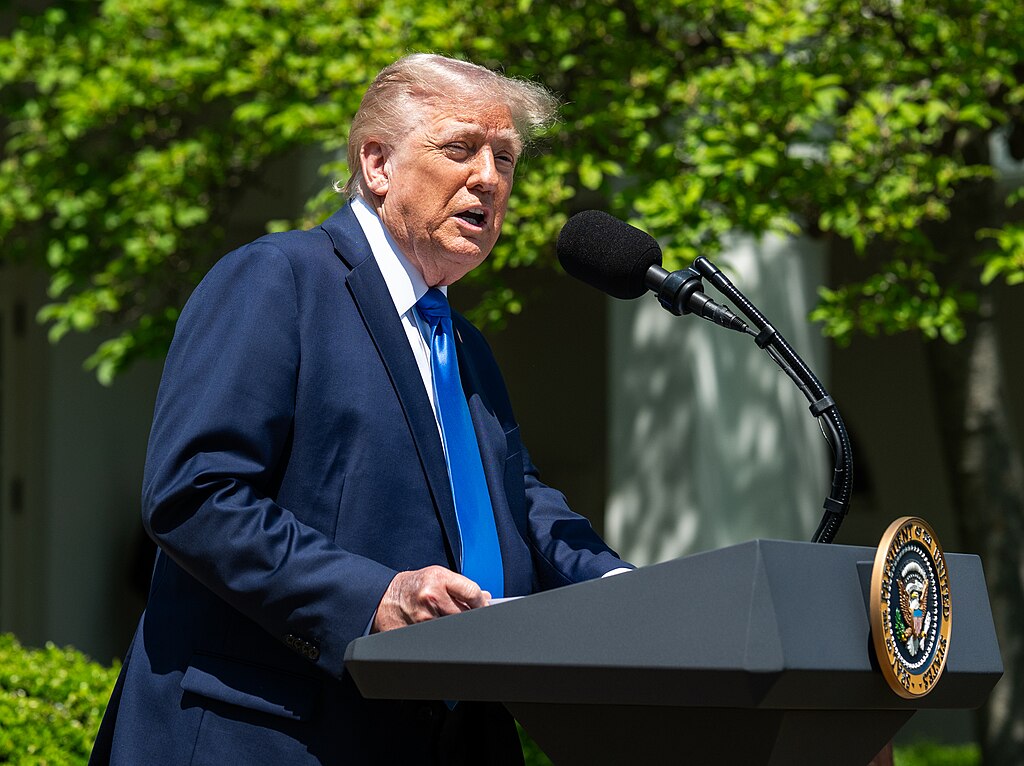
In a separate development with major implications for crypto compliance, President Trump fully waived a $100 million fine against HDR Global Trading, the parent company of BitMEX, Bloomberg reported. The company had been facing the penalty for alleged anti-money-laundering violations. Trump had previously signed pardons on March 27, 2025, for the firm and four former executives, including co-founder Arthur Hayes, according to the report. Bloomberg said internal discussions about corporate clemency began in early 2025, with historical precedents—including examples tied to the British monarchy—circulating in White House deliberations. BitMEX had listed trading products linked to a Trump memecoin in January 2025, the report added. Bloomberg estimated the total value of fines waived via corporate pardons during Trump’s second term at roughly $200 million.
U.S. law enforcement also highlighted the growing scale of crypto-enabled fraud. The U.S. Attorney’s Office for the District of Columbia said it worked with the U.S. Secret Service to freeze more than $25 million in cryptocurrency tied to an international scam network. Authorities filed five civil forfeiture complaints on Monday ET, alleging the funds were proceeds from schemes such as fake crypto investment platforms and online romance scams targeting victims in the U.S. and Canada. Investigators said the network attempted to obscure flows by routing funds across multiple wallet addresses and using mixing techniques. The action was described as part of the ‘Fraud Center Strike Force’ launched in 2025, which has recovered more than $800 million in assets to date, with further investigations ongoing in cooperation with international partners.
Security risks remained a focal point across the market. AI shopping agent developer ORO said it lost roughly $630,000 in crypto in an attack it believes may be linked to the North Korea-associated group ‘Sapphire Sleet.’ PANews, citing Protos, reported that attackers used a compromised Telegram account to send an ORO employee a fake Microsoft Teams link, prompting installation of a malicious browser extension. After roughly a month of data exfiltration, the attacker allegedly stole 147,000 Alpha tokens on July 13. ORO said a lack of hardware-wallet support within the Bittensor ecosystem led it to temporarily store owner keys in a software wallet, acknowledging internal security controls were not followed. The company said it is working with exchanges, investigators, and ecosystem partners to trace the stolen assets, while stating its subnet remains operational and that other wallets, user data, and validator signing keys were not impacted.
Elsewhere, security monitoring firm TenArmorAlert flagged suspicious activity affecting BNB Smart Chain (BSC) projects GemJoin and 42DAO, with estimated losses around $900,000, according to PANews. Details on the exploit path and whether additional losses occurred were not immediately confirmed.
On-chain flows suggested heightened liquidity positioning. Whale Alert reported Monday ET that 191,337,360 USDC—worth about $191.38 million—moved from Aave to an unidentified whale wallet. Large stablecoin transfers can be interpreted as potential ‘liquidity inflow’ signals depending on whether funds later move to exchanges or are deployed into on-chain trading and lending. Whale Alert also tracked a transfer of 2,663 Bitcoin (BTC), valued at about $176.74 million, from OKX to an unidentified wallet—an exchange outflow that can sometimes point to custody-related moves or reduced immediate sell-side pressure, though intent cannot be confirmed from transfer data alone.
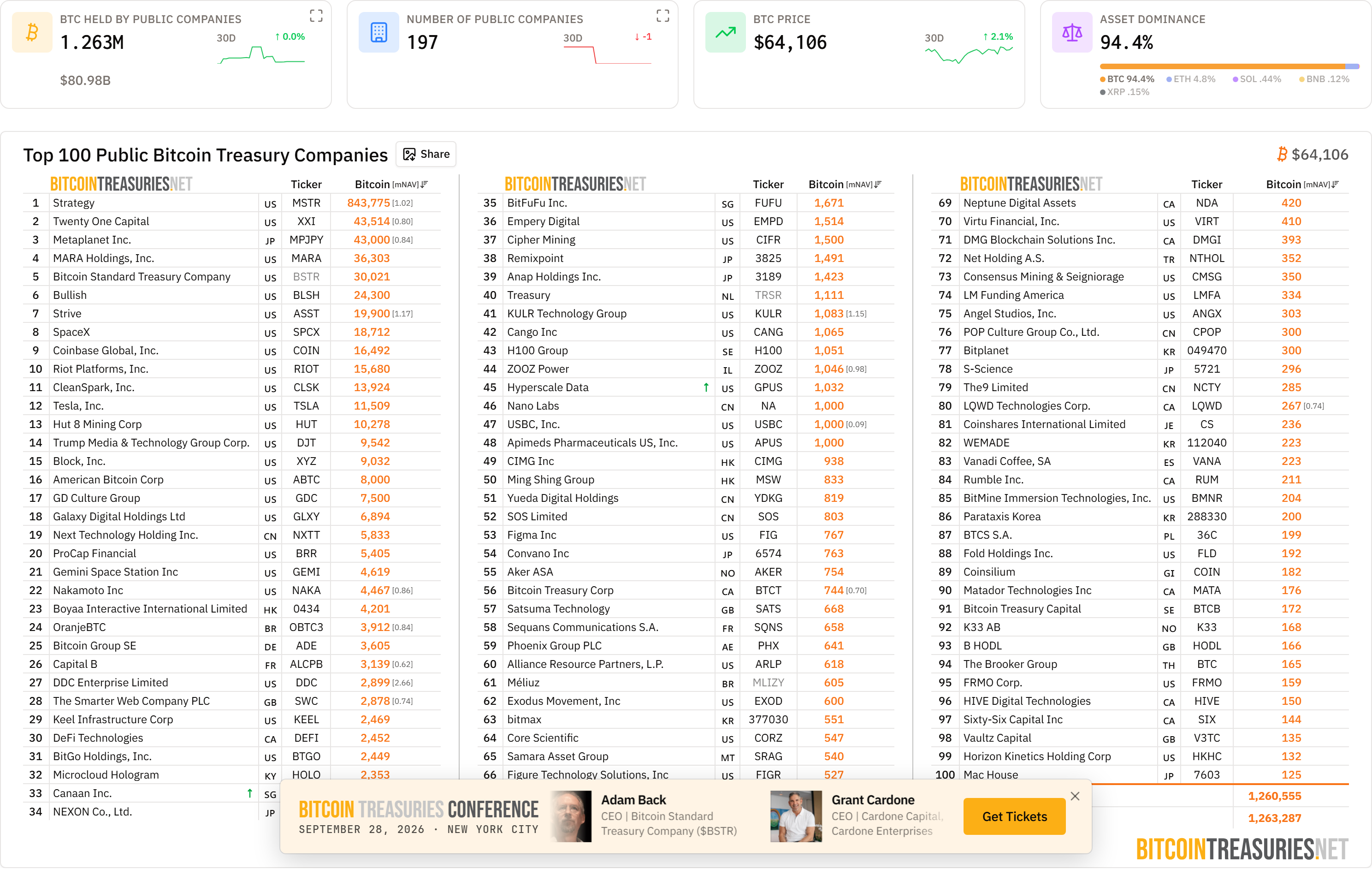
Institutional allocation signals also remained in focus. Data cited by Odaily from Arkham indicated Morgan Stanley added about 115 BTC last week through spot Bitcoin ETF exposure, bringing its total holdings to 5,876 BTC with an estimated value above $389 million. Growing institutional ETF positions continue to be viewed as a proxy for steady, long-horizon demand in Bitcoin markets.
Meanwhile, index provider S&P Dow Jones Indices and Pantera Capital launched the ‘S&P Pantera Digital Asset Index’ aimed at institutional investors, The Defiant reported. The index applies fundamental screening and excludes Bitcoin and memecoins, focusing instead on tokens and companies that generate real-world usage and revenue. The initial basket contains 18 constituents, including Hyperliquid, Solana (SOL), and Aave (AAVE). Inclusion criteria reportedly require multiple quarters of positive protocol revenue, with on-chain data provider Artemis validating revenue metrics. Pantera said it is in discussions with asset managers about potential products—such as an ETF—linked to the index, though no tracking product has been launched so far.
Together, the developments underscore a market increasingly shaped by the intersection of ‘regulatory clarity,’ expanding product design across jurisdictions, and persistent operational and security risks—factors likely to influence liquidity conditions and institutional engagement through the rest of the year.




















Comment 0