

 News
News  Coin Information
  About us
  Customer Service


 Add as a preferred source on Google

Momentum behind a sweeping U.S. bill aimed at clarifying Bitcoin (BTC) and broader crypto regulation is showing fresh signs of strain in the Senate, as Democratic opposition tied to President Trump’s alleged conflicts of interest threatens to make the 60-vote threshold harder to reach—adding another layer of uncertainty to market sentiment already pressured by rising-rate expectations and geopolitical risk.
Charles Schwab ($SCHW) warned that securing the supermajority needed to advance the so-called ‘Bitcoin and Cryptocurrency Clarity Act’ has become more difficult, according to local reports. Senate Democrats are said to be resisting the bill’s progress unless it includes ethics provisions they argue are necessary to properly police President Trump’s crypto-related business interests. Without explicit guardrails, Democrats contend, the legislation could create a regulatory framework while leaving unresolved questions about enforcement and potential self-dealing at the highest level of government.
The measure is widely viewed by the industry as a cornerstone effort to formalize the U.S. crypto market structure—potentially defining agency jurisdiction, setting compliance expectations for trading venues and intermediaries, and reducing legal ambiguity that has long weighed on institutional participation. Any delay or increased difficulty in meeting procedural vote hurdles could, in the near term, chill ‘regulatory clarity’ expectations that have helped support risk appetite during prior legislative pushes.
Macro conditions are also turning less supportive. Beth Hammack, President of the Federal Reserve Bank of Cleveland, said the U.S. central bank may need to raise interest rates to contain elevated inflation, according to a separate report. Interest-rate futures traders are currently pricing roughly a 15% chance of a rate hike at the Federal Reserve’s July meeting and around a 65% chance of a hike in September. For crypto markets, the prospect of tighter financial conditions typically acts as a headwind by reducing ‘liquidity’ and increasing the appeal of yield-bearing, lower-volatility assets.
Meanwhile, geopolitical tensions in the Middle East remain a source of tail risk. U.S. Energy Secretary Chris Wright said U.S. military operations against Iran would continue until President Trump’s objectives are met, describing goals that include preventing Iran from obtaining nuclear weapons and reducing its capacity to threaten neighboring countries and global commerce. Iranian media, citing a statement from senior military commander Ali Abdolrahimi, reported that Iran warned of a “destructive counterstrike” in response to any hostile U.S. actions. Historically, escalation risk has tended to lift energy prices and volatility, complicating the inflation outlook and, by extension, the policy path that matters for crypto valuations.
On the digital-asset network front, Cardano (ADA) activated protocol version 11 via the ‘Van Rossum’ hard fork, according to the blockchain-focused outlet Wu Blockchain. The upgrade is notable as the first Cardano hard fork approved solely through on-chain governance procedures, a milestone for the network’s decentralization narrative. The update introduces additional Plutus functionality and cost-model improvements intended to lower smart-contract execution costs and lay groundwork for the next development phase referred to as ‘Dijkstra’.
Security remained a central theme after Consensys disclosed that a North Korean hacker infiltrated the MetaMask team through outsourced staffing. Consensys Chief Legal Officer Matt Corva said the individual joined via a long-term staffing vendor under the name “Tyler Knapp,” allegedly bypassing direct hiring identity checks. The contractor worked for about a month and participated in development tied to MetaMask’s fiat on- and off-ramp functionality. Consensys said it detected anomalies in IP and behavior patterns through security monitoring, immediately revoked access, and paused the relevant product release. Corva added that no confirmed data exfiltration or loss of funds has been identified so far.
In market positioning, Strategy’s executive chairman Michael Saylor reposted information related to a Bitcoin tracker, prompting renewed speculation about a potential update to the firm’s holdings. Market watchers note that Strategy has previously shared similar posts shortly before disclosing changes in its Bitcoin treasury, making the timing and intent a frequent focal point for traders.
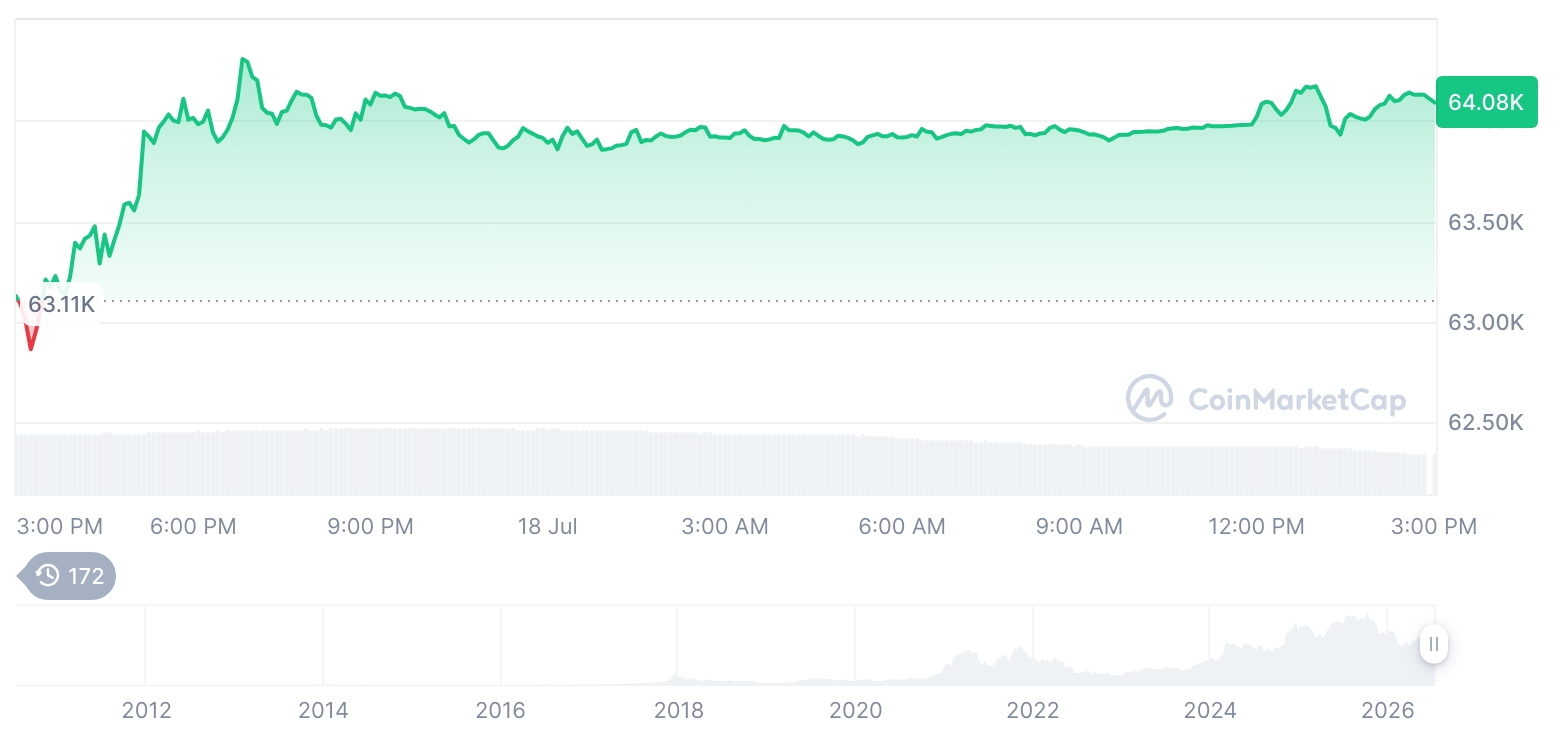
On-chain analytics firm CryptoQuant pointed to evidence of a developing support zone for Bitcoin between $59,000 and $70,000. Analyst “Darkfost” said roughly 50% of total BTC supply has changed hands above $59,000, with the share potentially higher when excluding coins believed to be permanently lost. The analyst described the turnover as largely driven by short-term holders and characterized current behavior as a mix of ‘panic selling’ alongside persistent buying. Still, he cautioned that even if multiple indicators suggest extreme pessimism or oversold conditions, a definitive market bottom has not been confirmed. He also noted that a major apparent transaction peak near $84,500 should be excluded from behavioral analysis because it reflected an internal Coinbase transfer rather than organic marketplace activity.
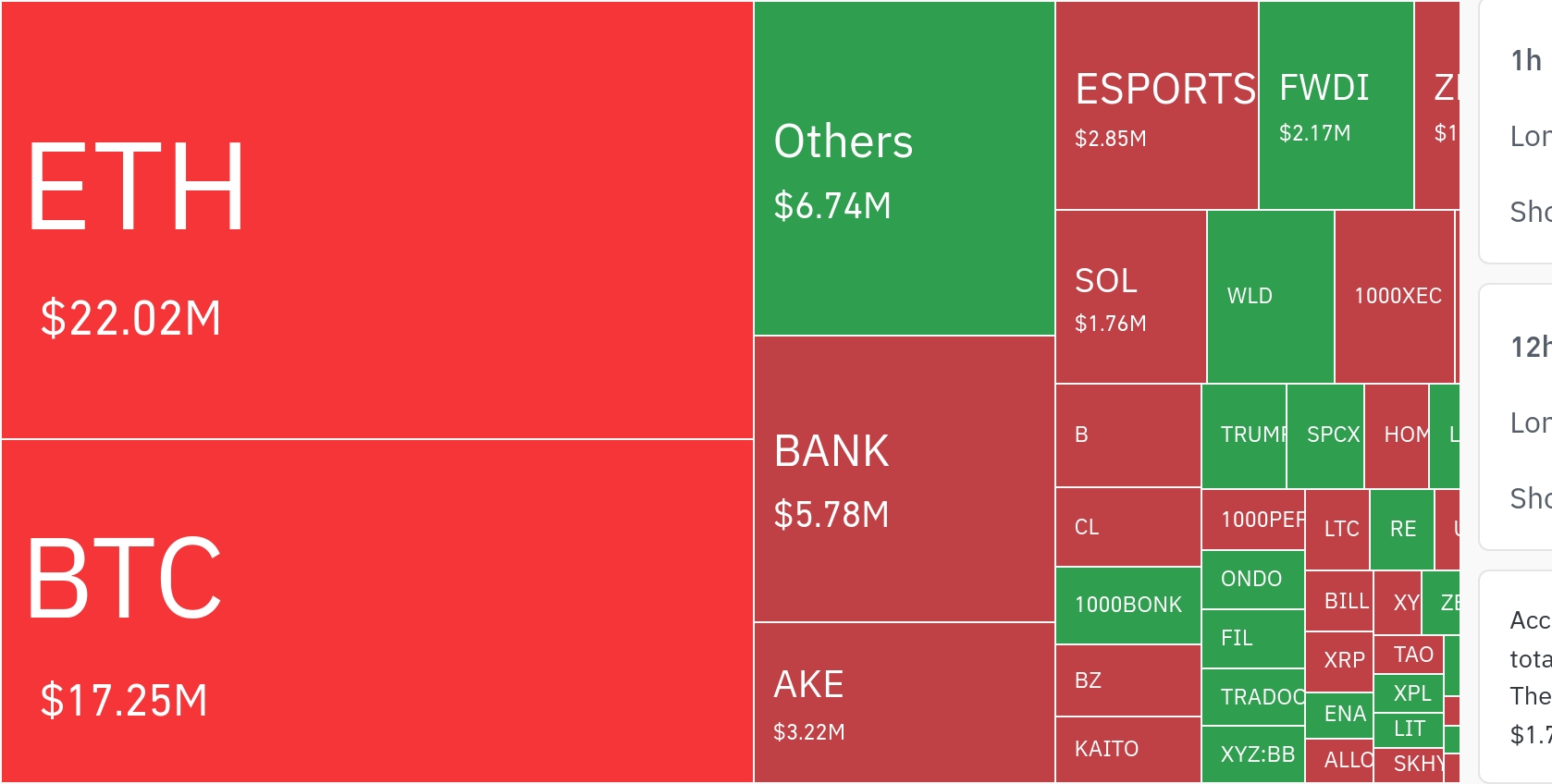
Derivatives data also suggested aggressive risk-taking by large players. Lookonchain tracking, cited by local media, reported that a whale address increased its Bitcoin long exposure to 1,660 BTC, a position valued at roughly $107.36 million, with an estimated liquidation level around $63,123.
Separately, Whale Alert flagged a transfer of 191,203,909 USDC—worth about $191.25 million—from Aave to an unidentified whale wallet on Ethereum (ETH). While large stablecoin moves can hint at upcoming shifts in ‘liquidity deployment,’ the absence of confirmed exchange inflows or outflows makes it difficult to infer directional intent from the transfer alone.
Concerns about mining concentration also resurfaced as data showed four pools controlling more than 70% of Bitcoin’s network hash rate as of June 23, 2026. Foundry Digital led with roughly 31%, followed by AntPool at 18%, ViaBTC at 13%, and F2Pool at 10%. Foundry Digital—backed by Digital Currency Group—primarily serves large institutions and publicly listed mining companies. Research outlet The Block’s earlier 2026 estimate of Bitcoin’s ‘Nakamoto coefficient’ at 3 underscores the implication: only three pools could account for a majority of block production. Reports also noted that tighter regulatory scrutiny has pushed some miners away from ViaBTC toward alternative pools such as EMCD.
With Washington’s market-structure talks facing renewed procedural and political friction, the Federal Reserve signaling a potentially more restrictive stance, and geopolitical tensions simmering, crypto traders are increasingly navigating a landscape where ‘policy risk’ and ‘liquidity conditions’ may matter as much as on-chain fundamentals in the weeks ahead.
🔎 Market Interpretation
- U.S. crypto market-structure bill faces Senate friction: The “Bitcoin and Cryptocurrency Clarity Act” is encountering renewed resistance as Democrats push for ethics provisions tied to alleged Trump crypto conflicts, raising the risk of failing the 60-vote threshold and dampening near-term “regulatory clarity” optimism.
- Macro headwinds intensify: Cleveland Fed President Beth Hammack signaled rates may need to rise to fight inflation; futures imply ~15% July hike odds and ~65% September odds—conditions that typically pressure crypto via tighter liquidity and stronger competition from yield-bearing assets.
- Geopolitical tail risk remains elevated: Continued U.S. operations against Iran and Iran’s warning of “destructive counterstrike” keep volatility and energy-price risks in focus, potentially worsening the inflation trajectory and reinforcing hawkish policy expectations.
- Network and security narratives diverge: Cardano’s governance milestone supports decentralization messaging, while the MetaMask staffing infiltration incident reinforces ongoing platform/security risk premia across the sector.
- Positioning signals mixed risk appetite: Whale long leverage (1,660 BTC) and large USDC movement suggest active capital deployment, but the lack of clear exchange flow signals limits directional inference; Bitcoin support is discussed in the $59K–$70K area, yet a definitive bottom is not confirmed.
- Mining centralization concerns re-emerge: Four pools reportedly control >70% of hash rate; a low Nakamoto coefficient estimate (3) highlights concentration risk that can influence decentralization perception and policy scrutiny.
💡 Strategic Points
- Legislative path is the key near-term catalyst: Watch for amendments adding ethics/enforcement guardrails and any whip-count indications; failure to clear procedural hurdles could reverse “clarity premium” expectations that previously supported risk appetite.
- Rates and liquidity likely drive beta: If hike odds rise, expect pressure on high-beta alts and leveraged longs; if odds fade, relief rallies may be sharper where positioning is crowded or sentiment is extremely pessimistic.
- Interpret “support zone” as probabilistic, not definitive: The cited $59K–$70K range is framed as supply turnover support, but the analyst warns an ultimate bottom is unconfirmed—risk management should assume possible volatility spikes below/through support.
- Treat outlier on-chain prints carefully: The noted $84.5K transaction peak being an internal Coinbase transfer underscores the need to filter exchange-internal movements from true demand/supply signals.
- Leverage monitoring matters: The whale long with liquidation near ~$63,123 can act as a “gravity” zone during drawdowns; cascading liquidations can accelerate moves if price approaches that threshold.
- Stablecoin transfers need context: Aave-to-whale USDC movement may precede deployment, but without confirmed exchange inflows/outflows it’s not a directional trading signal on its own; pair with venue flows and perp funding/open interest.
- Security posture is a valuation input: The MetaMask vendor infiltration highlights third-party staffing and access-control risks; markets may demand higher risk premium for platforms expanding fiat ramps and compliance surfaces.
- Decentralization narrative catalysts: Cardano’s on-chain-governed hard fork can support ecosystem confidence; track whether cost-model improvements translate into measurable fees/throughput gains and developer activity.
- Mining concentration as policy risk: Increased pool concentration can invite regulatory attention and raises theoretical censorship/coordination concerns; monitor shifts in pool share (e.g., miner migration away from ViaBTC) and any proposed pool decentralization initiatives.
📘 Glossary
- 60-vote threshold (U.S. Senate): The supermajority often needed to overcome a filibuster and advance major legislation.
- Market structure bill: Legislation defining regulatory jurisdiction, compliance rules, and operating standards for exchanges, brokers, custodians, and issuers.
- Regulatory clarity premium: The boost to sentiment/valuation when investors expect clearer rules and reduced enforcement ambiguity.
- Liquidity (macro): Availability/cost of capital; tighter policy (higher rates/QT) typically reduces speculative risk-taking.
- Hard fork: A blockchain protocol upgrade that changes consensus rules; users/nodes must upgrade to follow the new chain rules.
- On-chain governance: Protocol changes approved via token-holder/stakeholder voting executed on the blockchain.
- Plutus: Cardano’s smart-contract platform/language tooling.
- Fiat on-/off-ramp: Services enabling conversion between traditional currency and crypto (bank transfers, cards, etc.).
- On-chain support zone: A price range where historical coin turnover suggests stronger buyer interest or cost basis clustering.
- Whale: A large holder whose transactions/positions can materially impact market liquidity and volatility.
- Liquidation level: Approximate price at which a leveraged position is forcibly closed by an exchange due to insufficient margin.
- Stablecoin (USDC): A token designed to track the U.S. dollar, often used as trading collateral and liquidity for deployment.
- Hash rate: Total computational power securing Bitcoin; higher is generally associated with stronger network security.
- Mining pool concentration: The share of block production controlled by major pools; high concentration raises coordination/censorship concerns.
- Nakamoto coefficient: The minimum number of entities required to control a key subsystem (e.g., block production majority); lower implies higher centralization risk.
- Policy risk: Market risk driven by political/regulatory actions (laws, enforcement, sanctions, war escalation) rather than purely fundamentals.
















Comment 0