
 Add as a preferred source on Google
US Treasury Seizes $1 Billion in Crypto Tied to Iran, Expanding Sanctions Enforcement
The US Treasury confirmed it seized roughly $1 billion in crypto linked to Iran as part of an expanding sanctions enforcement campaign targeting stablecoins and blockchain infrastructure.



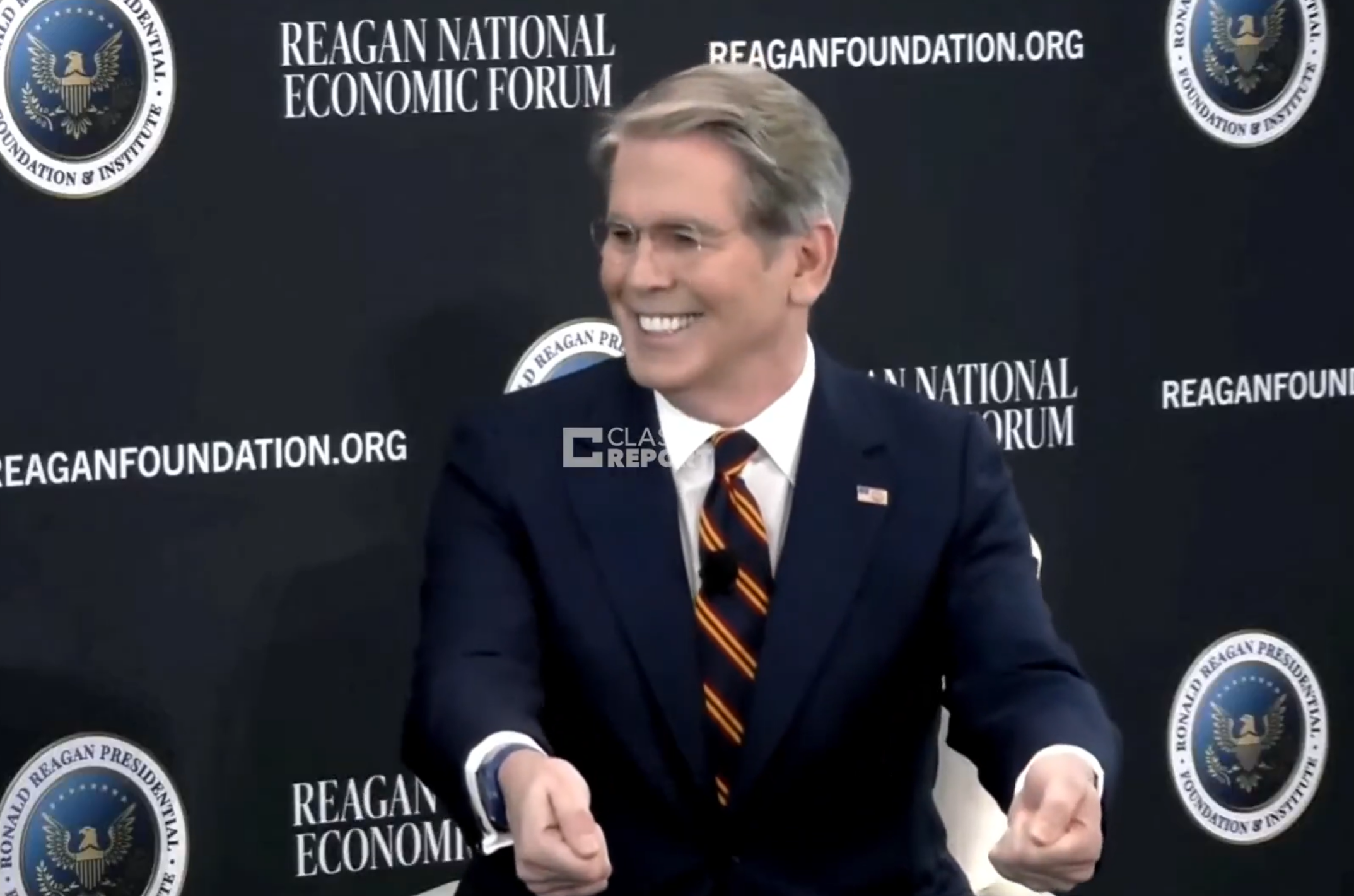
The U.S. Treasury has confirmed the seizure of roughly $1 billion in cryptocurrency linked to Iran, a move that signals an increasingly assertive use of digital asset enforcement as a sanctions tool. The action matters not only for its scale—described by officials as among the largest crypto-related sanctions operations to date—but also for what it suggests about the practical limits of 'self-custody' when tokens intersect with centralized issuers, exchanges, and compliance choke points.
Speaking on Fox Business’ Kudlow during the Reagan National Economic Forum on Thursday ET, Treasury Secretary Scott Bessent said the United States had “outright grabbed the wallets,” adding that some users “may be typing in right now” without realizing their wallets had already been seized. Bessent framed the assets as “money that’s stolen from the Iranian people,” arguing the United States is effectively safeguarding funds diverted by the regime.
The $1 billion figure reflects cumulative seizures rather than a single, one-off confiscation. According to Bessent, the total stood at around $500 million as of late April, implying the tally has roughly doubled in just over a month. That acceleration underscores a broader shift: Washington is no longer treating crypto sanctions enforcement as episodic, but as a sustained campaign with expanding capacity and tighter coordination with private-sector intermediaries.
A key episode cited in recent enforcement efforts was the freezing of approximately $344 million in Tether (USDT) issued on the Tron (Tron) network in April. U.S. officials have increasingly characterized Tron-based USDT flows as a high-risk rail for sanctions evasion and illicit finance, given its low fees, fast settlement, and deep liquidity in regions facing capital controls.
Bessent said Tehran had been moving an estimated $400 million to $500 million per month through crypto channels before pressure intensified. The Treasury Department has leaned on collaboration with stablecoin issuers such as Tether and blockchain analytics firms to identify wallets tied to Iranian entities and then render funds unusable through freezes, blacklisting, or restrictions at exchange and on-ramp points. In practice, this approach targets the 'gateways' that connect blockchain assets to the real economy—issuers, custodians, and compliant trading venues—rather than relying solely on on-chain interdictions.
The effort is part of the Trump administration’s economic pressure track aimed at Iran’s sanctions-evasion infrastructure, branded 'Operation Economic Fury.' U.S. officials have described it as separate from the earlier military operation 'Operation Epic Fury,' which U.S. and Israeli forces said targeted Iranian nuclear facilities in late February.
Bessent also claimed the sanctions campaign is producing acute strain inside Iran, asserting that “40% to 50%” of Iran’s military is not being paid, police are failing to report for duty, and inflation may have surpassed 200%. Those figures were presented as his assessment and were not accompanied by independently verified statistics.
Still, the episode highlights a central tension in the sanctions debate: while Washington argues it is restricting regime-linked networks, crypto has also served as a financial lifeline for ordinary Iranians navigating currency collapse, high inflation, and periodic disruptions to electricity and internet access. In a country where a significant share of the population uses digital assets, many households have relied on Bitcoin (BTC) and dollar-pegged stablecoins such as USDT as a hedge against the rial’s depreciation and domestic constraints on access to hard currency.
At the same time, analysts tracking illicit finance have warned that the same ecosystem can be exploited by state-linked actors. The report cited a sharp rise in inflows connected to addresses tied to the Islamic Revolutionary Guard Corps (IRGC), claiming receipts increased from roughly $2 billion in 2024 to more than $3 billion in 2025, eventually accounting for over half of Iran’s crypto inflows by year-end. Such claims reflect broader industry estimates that state-linked networks have become more sophisticated in routing funds through stablecoins, OTC brokers, and cross-chain pathways.
Beyond Iran, the U.S. action is already reverberating across the global digital asset industry because it challenges a popular assumption behind 'self-custody'—that holding one’s own private keys guarantees insulation from seizure. Bessent’s blunt description of “grabbing the wallets” points to a more nuanced reality: even when private keys remain outside government reach, assets can be neutralized when issuers can freeze tokens, when exchanges can block off-ramps, and when regulated infrastructure can be compelled to deny service. In other words, censorship resistance is often constrained not by cryptography but by centralized dependencies in the surrounding financial stack.
The focus on Tron-based USDT also adds new urgency to debates around stablecoin design and governance, especially in jurisdictions weighing domestic stablecoin issuance. As stablecoins evolve from mere payment instruments into tools intertwined with 'sanctions enforcement' and geopolitics, questions around issuer freeze authority, compliance controls, and robust anti-money laundering (AML) architecture are becoming foundational rather than optional.
Looking ahead, the Treasury Department is expected to maintain an aggressive posture in the coming months, expanding designations by the Office of Foreign Assets Control (OFAC) and pursuing additional seizures tied to sanctioned entities. Whether economic pressure translates into meaningful political change inside Iran remains uncertain, with officials acknowledging that broader domestic unrest has not yet materialized beyond sporadic episodes.
Article Summary by TokenPost.ai
🔎 Market Interpretation
Sanctions enforcement is becoming a standing capability: The reported ~$1B figure reflects cumulative, accelerating seizures—signaling U.S. crypto enforcement is shifting from occasional actions to an ongoing campaign.
Stablecoins are a primary choke point: The freeze of ~$344M USDT on Tron highlights how issuer-controlled assets can be immobilized quickly, making stablecoin rails central to sanctions strategy.
“Self-custody” is not absolute in practice: Even if private keys remain untouched, funds can be neutralized via issuer freezes, exchange blacklisting, and restricted fiat on/off-ramps.
Tron-based USDT faces rising compliance risk: Officials frame Tron USDT as a high-risk channel due to low fees, speed, and liquidity—potentially increasing scrutiny on related wallets, OTC desks, and exchanges.
Geopolitical premium increases for compliant infrastructure: Regulated exchanges, custodians, and analytics providers gain importance as enforcement partners, while non-compliant venues may see heightened designation risk.
💡 Strategic Points
Expect broader OFAC designations and follow-on seizures: The article signals continued expansion of sanctioned entities/wallets and ongoing coordination with private-sector intermediaries.
Intermediary exposure is the key operational risk: Wallet holders relying on centralized issuers (e.g., stablecoins), major exchanges, or fiat ramps are most vulnerable to freezes and service denials—regardless of self-custody.
Issuer freeze authority is now a core governance feature: Stablecoin projects and jurisdictions considering domestic stablecoins will likely prioritize built-in compliance controls, blacklist processes, and auditability.
Iran use-case remains dual-purpose: Crypto can function as both (a) a household hedge against rial depreciation and (b) a sanctions-evasion tool for state-linked networks—driving policy tension and uneven enforcement outcomes.
Tron/USDT monitoring may intensify: Participants touching Tron-based USDT flows (market makers, OTC brokers, cross-chain bridges) should anticipate tighter screening, enhanced due diligence, and potential counterparty de-risking.
Claims about domestic impact are directional, not verified: Reported figures on inflation and unpaid security forces were presented without independent confirmation; markets should treat them as narrative signals rather than hard data.
📘 Glossary
OFAC (Office of Foreign Assets Control): U.S. Treasury office that administers sanctions programs, including entity/wallet designations and compliance requirements.
Sanctions designation: Official listing that restricts transactions with targeted persons/entities/addresses and can trigger asset freezes and service denial by compliant firms.
Stablecoin: A token designed to track a reference asset (commonly the U.S. dollar). Example: USDT (Tether).
Issuer freeze / blacklisting: The ability of a token issuer to render specific tokens or addresses unusable (e.g., freezing USDT at the contract/issuer level).
Self-custody: Holding crypto with your own private keys instead of using a custodian; does not fully prevent freezes when assets depend on centralized issuers or off-ramps.
On-ramp / off-ramp: Services that convert fiat ↔ crypto (banks, payment processors, exchanges). Key enforcement choke points.
Tron (TRON network): A blockchain frequently used for USDT transfers due to low fees and fast settlement.
OTC broker (Over-the-counter): A broker facilitating large trades privately, often used to source liquidity outside public exchanges.
Blockchain analytics: Tools and firms that trace on-chain activity to identify entities, clusters, and risk signals used for compliance and investigations.
IRGC (Islamic Revolutionary Guard Corps): Powerful Iranian military/security organization often referenced in sanctions and illicit-finance tracking contexts.